Ectopic Adrenocorticotropic Hormone Syndrome Secondary to Pulmonary Neuroendocrine Tumor: Medical Stabilization Enables Serial Imaging and Localization
Muhammed Kizilgul, Ilitch Diaz-Gutierrez, Diana Oramas Mogrovejo, Ammar Ahmed, Lynn A. Burmeister, Kidmealem Zekarias

TL;DR
A patient with a rare hormone disorder had a hidden tumor successfully found and removed through medical treatment and repeated imaging.
Contribution
Medical stabilization allows for serial imaging to locate occult tumors causing ectopic ACTH syndrome.
Findings
Medical therapy enabled biochemical control and allowed for tumor localization via serial imaging.
An 8 mm pulmonary carcinoid was identified and surgically removed after being undetectable on functional imaging.
Curative resection was achieved without the need for bilateral adrenalectomy.
Abstract
Ectopic adrenocorticotropic hormone (ACTH) syndrome accounts for 15% to 20% of Cushing syndrome cases with unique diagnostic challenges. Tumor localization remains difficult, with approximately 20% of cases having occult sources despite extensive imaging. This report describes a patient whose initially occult tumor was successfully localized through serial imaging enabled by medical stabilization, resulting in curative surgical resection. Thirty-nine-year-old woman presented with progressive weight gain, new-onset hypertension, hypokalemia, proximal muscle weakness, and cushingoid features. Laboratory evaluation demonstrated severe hypercortisolism with markedly elevated ACTH levels, and inferior petrosal sinus sampling confirmed the diagnosis of ectopic ACTH syndrome. Despite comprehensive imaging—including cross-sectional studies, gallium-68 (68Ga)-DOTA-D-Phe1,Tyr3-octreotate…
Genes, proteins, chemicals, diseases, species, mutations and cell lines named across the full text — each resolved to its canonical identifier and authoritative record.
Click any figure to enlarge with its caption.
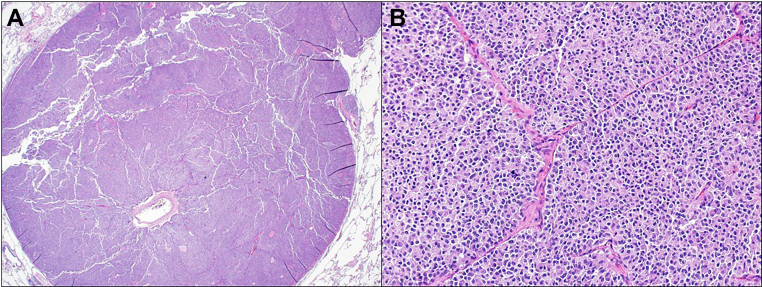 Figure 1
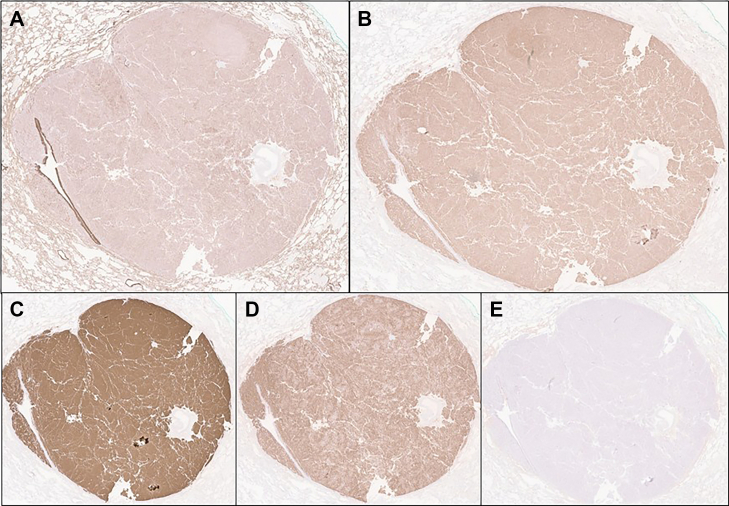 Figure 2
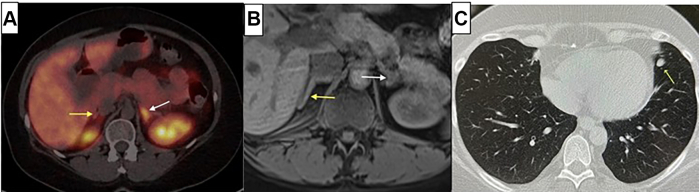 Figure 3
Peer Reviews
No public reviews on file for this paper yet. If you reviewed it on a platform where reviews are public (OpenReview, ICLR, NeurIPS, ICML), you can paste yours below so the community can read it here.
Videos
No videos yet. Explain this paper in a talk, walkthrough, or lecture? Add one.
Taxonomy
TopicsPituitary Gland Disorders and Treatments · Adrenal and Paraganglionic Tumors · Myasthenia Gravis and Thymoma