Pathogenic HNF1A Variant in an Indonesian Family: Atypical Management of MODY3 Guided by Patient Comorbidity
Ardy Wildan, Fergie Marie Joe Grizella Runtu, Mentari Kasih, Selvi Nafisa Shahab, Dicky Levenus Tahapary

TL;DR
A family with a genetic diabetes condition required tailored treatment due to the patient's neurological issues, showing the importance of considering comorbidities in managing genetic diabetes.
Contribution
Demonstrates individualized treatment of HNF1A-MODY based on comorbidities, using a DPP-4 inhibitor instead of standard sulfonylureas.
Findings
A pathogenic HNF1A variant was identified in a family with atypical MODY3 management.
Dipeptidyl peptidase-4 inhibitors provided effective glycemic control and potential neurocognitive benefits.
Treatment was successfully transitioned from insulin to sitagliptin monotherapy after genetic confirmation.
Abstract
Maturity-onset diabetes of the young (MODY) is an autosomal dominant form of monogenic diabetes frequently misdiagnosed as type 1 or type 2 diabetes. Identifying the specific subtype is crucial, as several subtypes, such as HNF1A-MODY (MODY-3), are typically well-controlled with sulfonylureas. A 19-year-old male with a history of diabetes presented with right-sided weakness, aphasia, and facial asymmetry. He was admitted for gamma knife radiosurgery to treat a left basal ganglia arteriovenous malformation. One month prior to this admission, he had undergone surgical evacuation of an intracranial hemorrhage—a complication of his arteriovenous malformation—at another hospital. He was discharged on a basal-bolus insulin regimen due to hyperglycemia during that hospitalization and was subsequently referred to our center. During the current admission, glycemic control was achieved, allowing…
Genes, proteins, chemicals, diseases, species, mutations and cell lines named across the full text — each resolved to its canonical identifier and authoritative record.
Click any figure to enlarge with its caption.
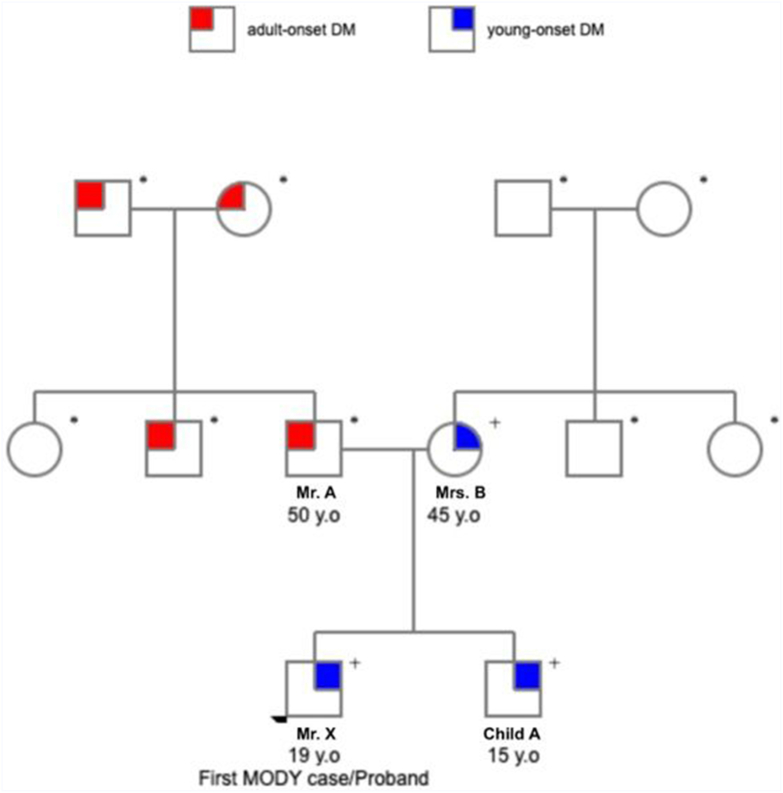 Figure 1
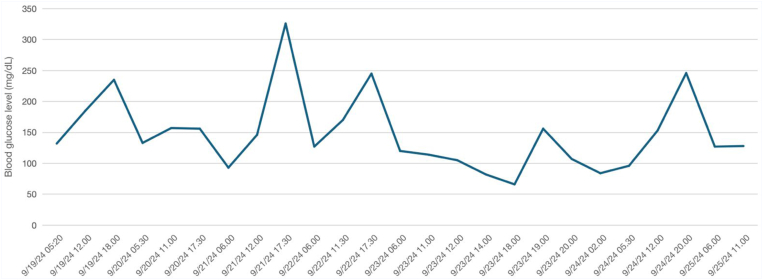 Figure 2
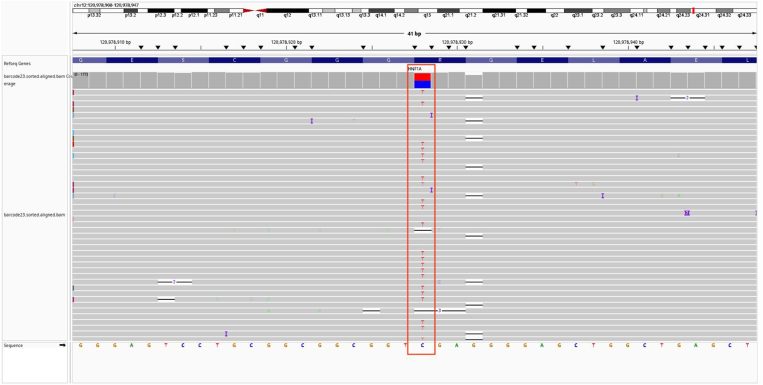 Figure 3
Peer Reviews
No public reviews on file for this paper yet. If you reviewed it on a platform where reviews are public (OpenReview, ICLR, NeurIPS, ICML), you can paste yours below so the community can read it here.
Videos
No videos yet. Explain this paper in a talk, walkthrough, or lecture? Add one.
Taxonomy
TopicsPancreatic function and diabetes · Diabetes and associated disorders · Genetics and Neurodevelopmental Disorders