The dual role of urinary C-peptide/creatinine ratio: predicting insulin resistance in non-diabetic adults and microvascular complications risk in patients with type 2 diabetes
Shufen Yin, Ling Zhong, Lanyu Gao, Qing Shao, Liu Wang, Yuwei Zhang

TL;DR
This study shows that the urinary C-peptide/creatinine ratio can help detect insulin resistance in non-diabetic adults and predict diabetes complications in type 2 diabetes patients.
Contribution
The study demonstrates the dual utility of UCPCR as a non-invasive marker for insulin resistance and microvascular complication risk.
Findings
0hUCPCR and 2hUCPCR were higher in insulin-resistant non-diabetic individuals and lower in diabetic patients with complications.
2hUCPCR predicted microvascular complications in T2DM patients with an AUC of 0.751 and 70.7% sensitivity.
UCPCR showed strong negative correlations with insulin resistance markers and positive correlations with beta-cell function in T2DM patients.
Abstract
Insulin resistance (IR) is a key driver of type 2 diabetes mellitus (T2DM) onset, and diabetic microvascular complications (DMC) represent its poor prognosis. However, simple and non-invasive screening methods for detection of IR and DMC are limited. The urinary C-peptide/creatinine ratio (UCPCR) can be used to measure β-cell function, and we aimed to evaluate its utility as a surrogate marker for IR in non-diabetic individuals and for DMC risk in patients with T2DM. This cross-sectional study enrolled 447 individuals (255 non-diabetic adults and 192 T2DM patients) from November 2023 to September 2025. The non-diabetic cohort was divided into IR and non-IR groups according to the Matsuda index. The diabetic cohort was divided into DMC and non-DMC groups. Fasting UCPCR (0hUCPCR) and 2-h post-OGTT/steamed bread meal (2hUCPCR) were measured. Multiple regression analysis was used to…
Genes, proteins, chemicals, diseases, species, mutations and cell lines named across the full text — each resolved to its canonical identifier and authoritative record.
Click any figure to enlarge with its caption.
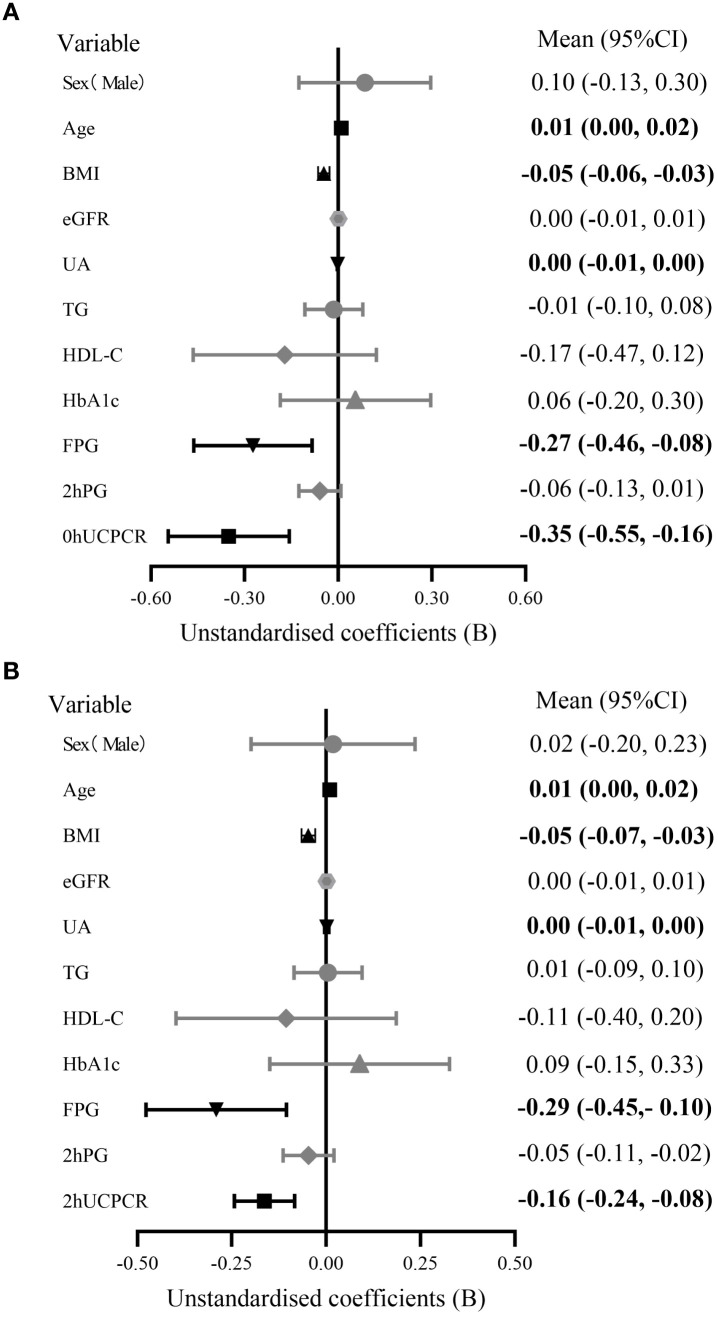 Figure 1
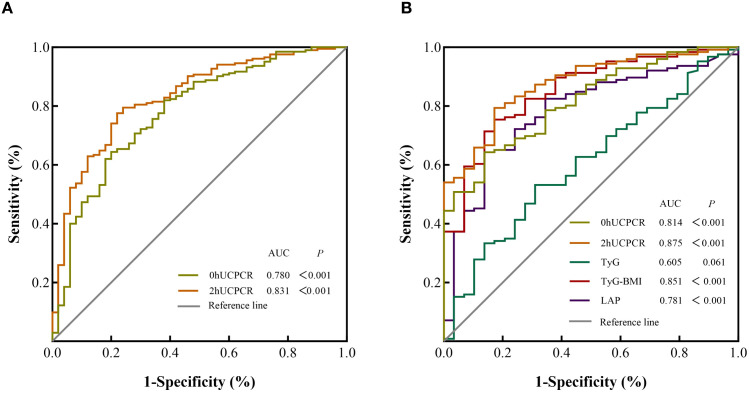 Figure 2
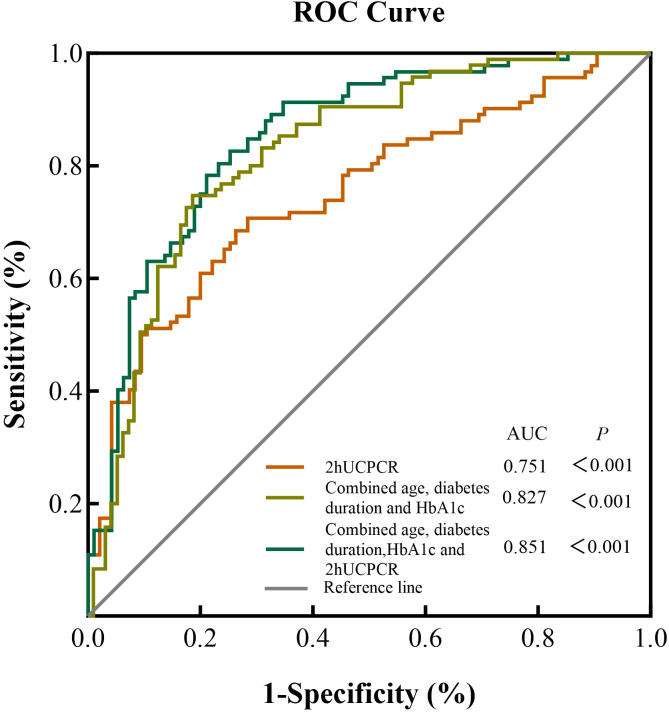 Figure 3
Peer Reviews
No public reviews on file for this paper yet. If you reviewed it on a platform where reviews are public (OpenReview, ICLR, NeurIPS, ICML), you can paste yours below so the community can read it here.
Videos
No videos yet. Explain this paper in a talk, walkthrough, or lecture? Add one.
Taxonomy
TopicsDiabetes and associated disorders · Adipokines, Inflammation, and Metabolic Diseases · Chronic Kidney Disease and Diabetes