Prognostic implications of body composition changes in patients with non-metastatic pancreatic adenocarcinoma treated with mFOLFIRINOX
Jong Hyuk Lee, Yousun Ko, Seongwon Na, Kyung Won Kim, Hyunseok Yoon, Changhoon Yoo, Kyu-pyo Kim, Tae Won Kim, Hyehyun Jeong, Sun Young Kim

TL;DR
This study shows that changes in body composition during chemotherapy can predict outcomes in pancreatic cancer patients.
Contribution
The study introduces a novel use of serial CT scans with AI tools to assess body composition changes as a prognostic indicator in pancreatic cancer treatment.
Findings
Body composition metrics like skeletal muscle index and visceral fat area significantly decline during treatment, especially in patients with progressive disease.
Baseline visceral obesity is linked to worse survival in resected patients, while greater declines in body composition metrics correlate with poorer outcomes in non-resected patients.
Abstract
Computed tomography (CT) enables non-invasive, comprehensive assessment of body composition in patients with cancer. In pancreatic ductal adenocarcinoma (PDAC), where weight and body composition change during treatment are common, serial CT evaluation may provide prognostic insights. Patients with non-metastatic PDAC treated with first-line mFOLFIRINOX between January 2017 and December 2020 were retrospectively included. Body composition at the L3 vertebral level was quantified at baseline and 12-week CT scans using a previously validated AI tool (AID-U™; iAID Inc.). Skeletal muscle area, muscle attenuation, and body fat area were used to derive skeletal muscle index (SMI), normal-to-total attenuation muscle area ratio (NAMA/TAMA), visceral fat area (VFA), and subcutaneous fat index (SFI), representing muscle mass, muscle quality, and visceral and subcutaneous adiposity, respectively.…
Genes, proteins, chemicals, diseases, species, mutations and cell lines named across the full text — each resolved to its canonical identifier and authoritative record.
Click any figure to enlarge with its caption.
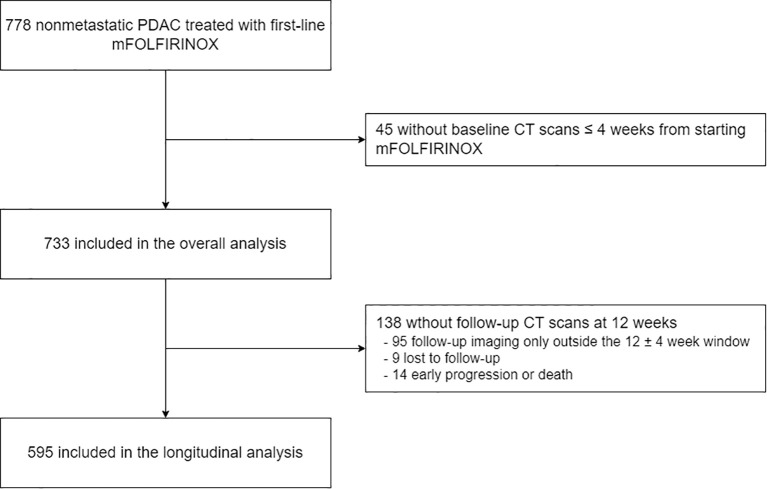 Figure 1
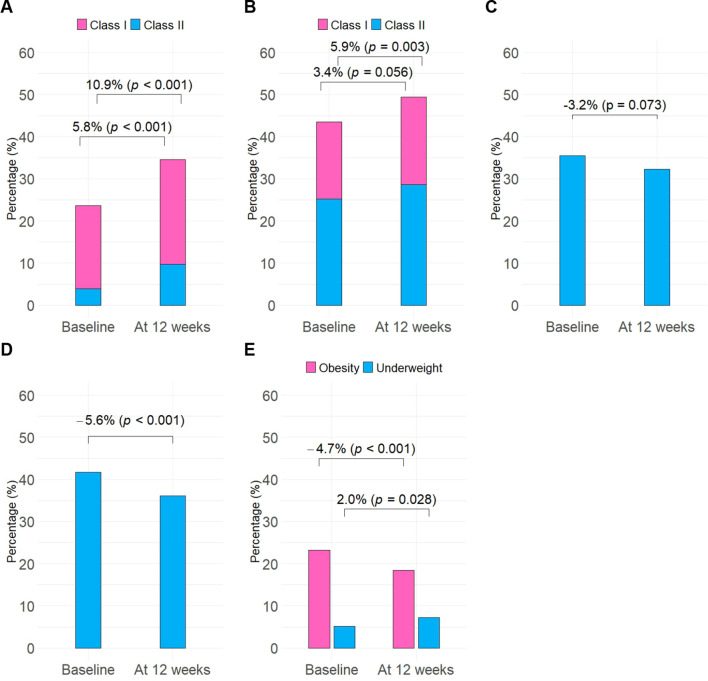 Figure 2
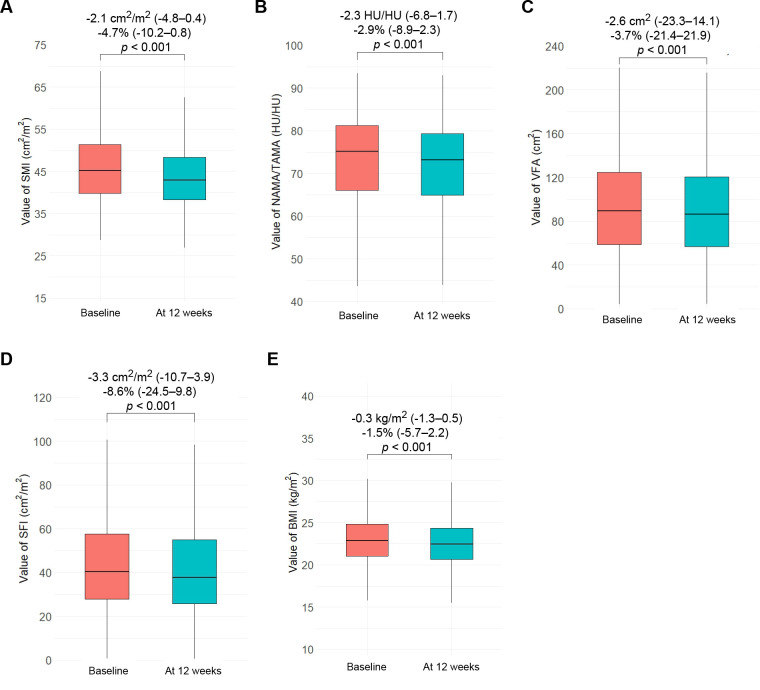 Figure 3
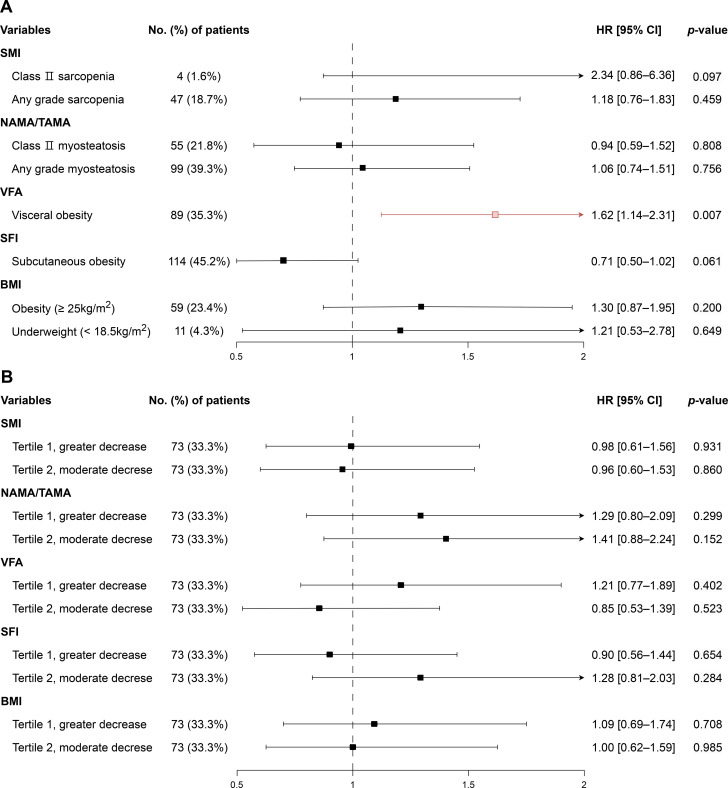 Figure 4
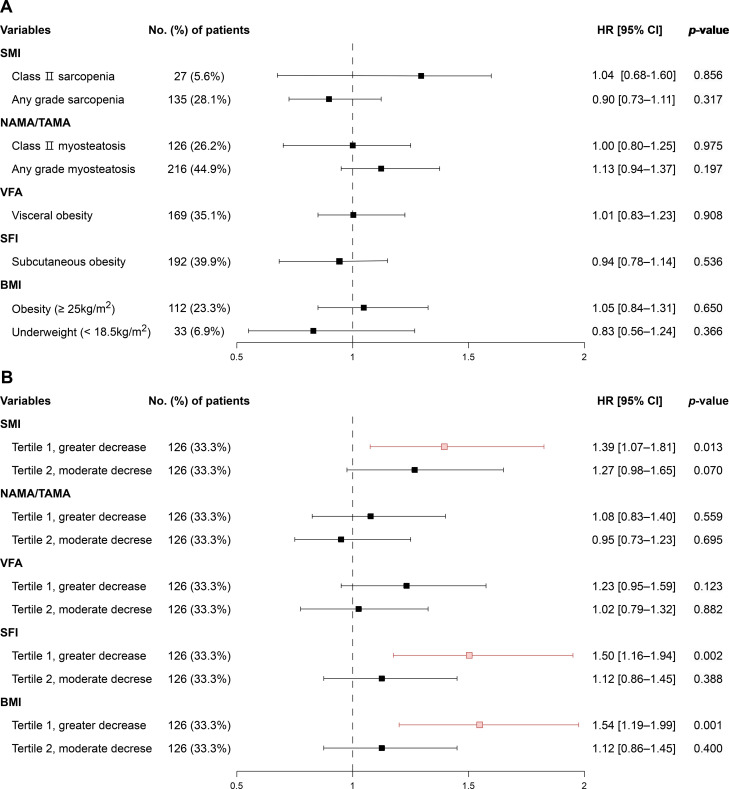 Figure 5
Peer Reviews
No public reviews on file for this paper yet. If you reviewed it on a platform where reviews are public (OpenReview, ICLR, NeurIPS, ICML), you can paste yours below so the community can read it here.
Videos
No videos yet. Explain this paper in a talk, walkthrough, or lecture? Add one.
Taxonomy
TopicsNutrition and Health in Aging · Pancreatic and Hepatic Oncology Research · Inflammatory Biomarkers in Disease Prognosis