A haplotype-complete chromosome-level assembly of octoploid Urochloa humidicola cv. Tully reveals multiple genomic compositions and evolutionary histories in the species
Jose J De Vega, Alex Durrant, Naomi Irish, Tom Barker, Rosa N Jauregui

TL;DR
This paper presents a detailed genome assembly of the octoploid grass Urochloa humidicola, revealing its complex genetic structure and evolutionary history.
Contribution
The study provides the first haplotype-resolved, chromosome-level genome assembly of Urochloa humidicola, revealing its octoploid structure and multiple ancestral origins.
Findings
The Urochloa humidicola genome is octoploid with an AABBBBCC structure and three ancestral lineages.
Comparative analysis suggests U. dictyoneura and U. arrecta as progenitors of the B and C subgenomes.
Sexual U. humidicola are likely autopolyploid from the B ancestry, and the genome provides a foundation for studying apomixis and breeding.
Abstract
We developed a haplotype-resolved, chromosome-scale genome assembly of the Urochloa humidicola (Rendle) Morrone & Zuloaga cultivar Tully, an apomictic C4 forage grass cultivated in the tropics worldwide. We assembled a 4.1 Gb genome into 48 chromosomes (2n = 8× = 48), capturing 99.5% of the BUSCO markers and annotating 259,254 protein-coding genes. Subgenome assignment revealed an octoploid AABBBBCC structure with 3 ancestral lineages (A, B, C), and an aneuploid composition of 14A, 22B, and 12C chromosomes. Comparative analyses with related Urochloa species identified U. dictyoneura and U. arrecta as potential progenitors of the B and C subgenomes, respectively. The likely progenitor of the A subgenome remains an unknown wild species from the Humidicola clade. Analysis of long terminal repeats (LTR) retrotransposons and gene collinearity further indicated a close relationship between A…
Genes, proteins, chemicals, diseases, species, mutations and cell lines named across the full text — each resolved to its canonical identifier and authoritative record.
Click any figure to enlarge with its caption.
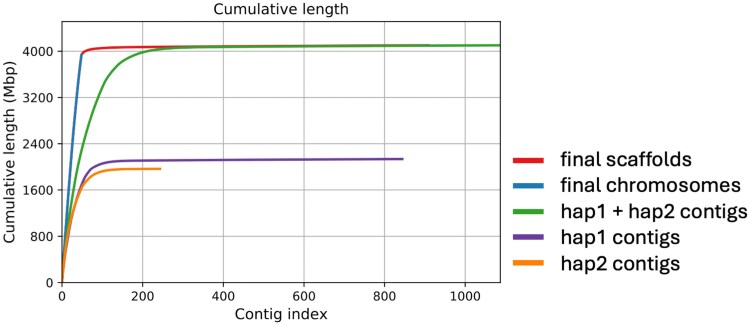 Fig. 1
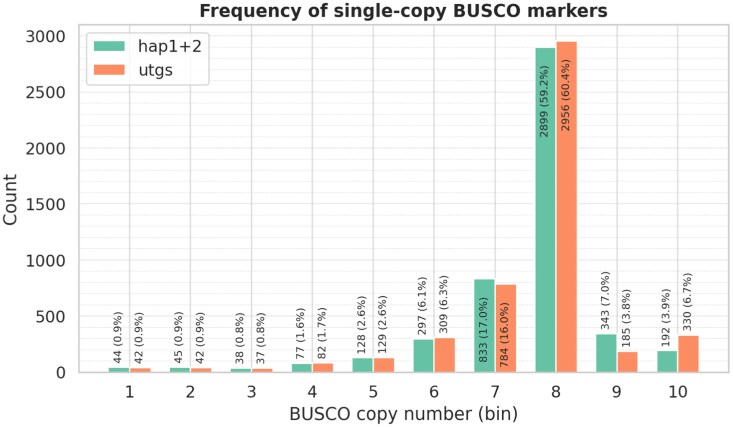 Fig. 2
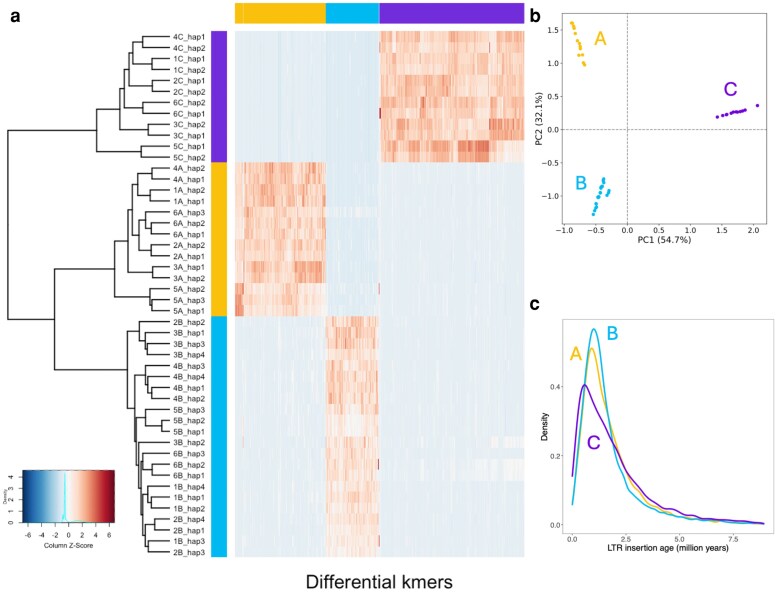 Fig. 3
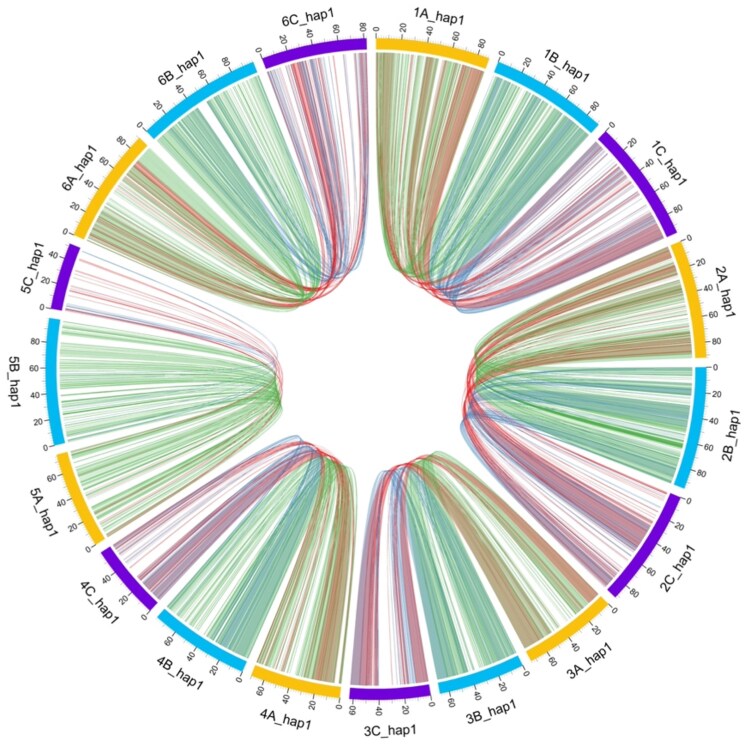 Fig. 4
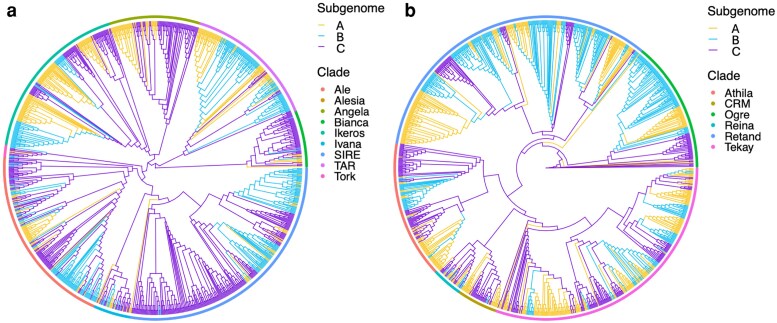 Fig. 5
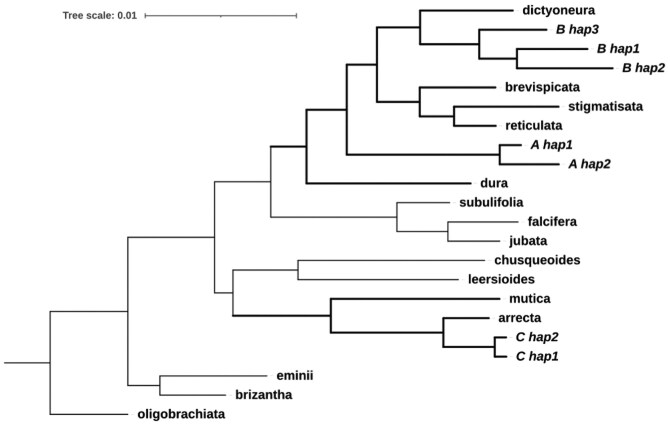 Fig. 6
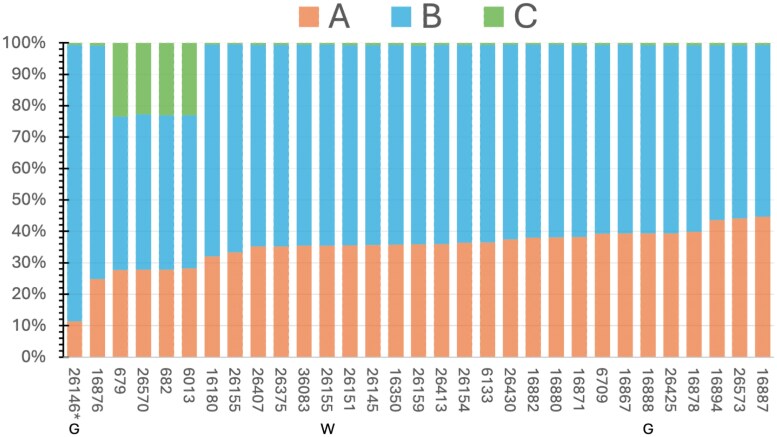 Fig. 7
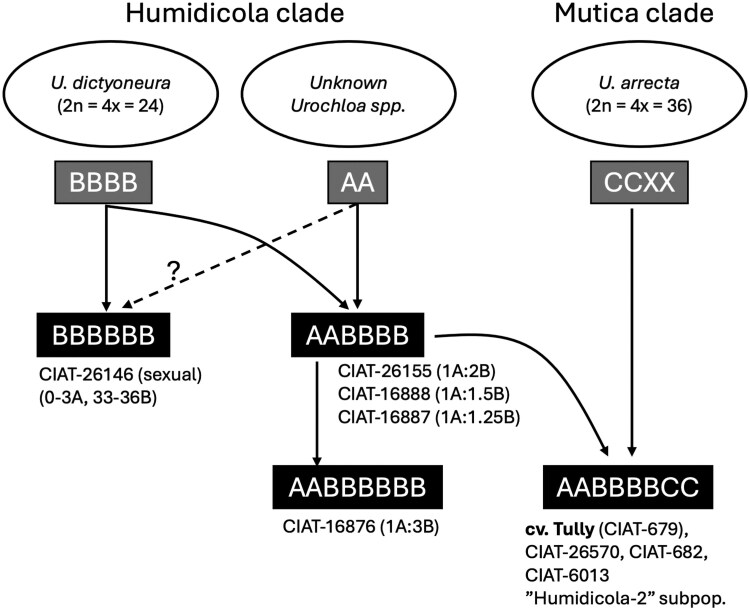 Fig. 8
| Statistics | Final genome | Chromosomes | Contigs hap1 + hap2 | Contigs hap1 | Contigs hap2 | Primary contigs | Unitigs |
|---|---|---|---|---|---|---|---|
| Number contigs | 910 | 48 | 1,087 | 844 | 243 | 754 | 8,785 |
| Number contigs (≥ 25 kbp) | 888 | 48 | 1,065 | 823 | 242 | 726 | 7,233 |
| Number contigs (≥ 50 kbp) | 357 | 48 | 534 | 333 | 201 | 277 | 2,423 |
| Largest contig (Mb) | 106.79 | 106.79 | 98.63 | 98.63 | 95.29 | 93.65 | 56.63 |
| Total length (Gbp) | 4.102 | 3.93 | 4.102 | 2.136 | 1.966 | 2.317 | 4.193 |
| Total length (≥ 25 kbp) | 4.101 | 3.93 | 4.101 | 2.135 | 1.966 | 2.317 | 4.16 |
| Total length (≥ 50 kbp) | 4.081 | 3.93 | 4.081 | 2.117 | 1.964 | 2.299 | 3.993 |
| N50 | 86.792 | 88.436 | 32.755 | 32.755 | 31.873 | 55.243 | 85.232 |
| N75 | 73.268 | 73.95 | 18.507 | 19.622 | 17.884 | 28.097 | 3.793 |
| L50 | 22 | 21 | 41 | 23 | 19 | 17 | 132 |
| L75 | 35 | 33 | 83 | 44 | 39 | 32 | 314 |
| GC (%) | 45.76 | 45.73 | 45.76 | 45.72 | 45.81 | 45.71 | 45.76 |
| N's | 10,263,851 | 9,114,431 | 10,246,151 | 6,011,896 | 4,234,255 | 0 | 0 |
| N's per 100 kbp | 250.23 | 231.91 | 249.8 | 281.47 | 215.4 | 0 | 0 |
| Count | Length (bp) | % | ||
|---|---|---|---|---|
| LTR | Copia | 150,248 | 198,461,341 | 5.06 |
| Gypsy | 375,261 | 614,491,907 | 15.67 | |
| Unknown | 239,025 | 236,103,239 | 6.02 | |
| TIR | CACTA | 180,577 | 109,309,372 | 2.79 |
| Mutator | 171,399 | 80,258,412 | 2.05 | |
| PIF_Harbinger | 108,412 | 32,453,696 | 0.83 | |
| Tc1_Mariner | 159,314 | 53,031,681 | 1.35 | |
| hAT | 84,620 | 30,158,398 | 0.77 | |
| nonTIR | Helitron | 689,211 | 365,259,293 | 9.32 |
| Totals | Repeats | 2,158,067 | 1,719,527,339 | 43.85 |
| Genome | 3,921,057,692 | 100.00 |
- —Biotechnology and Biological Sciences Research Council (BBSRC)10.13039/501100000268
- —UK Research and Innovation (UKRI)10.13039/100014013
- —Earlham Institute’s Strategic Programme Grant (Decoding Biodiversity)
- —Core Strategic Programme Grant
- —(Genomes to Food Security)
- —Biotechnology and Biological Sciences Research Council (BBSRC)
- —UK Research and Innovation, Core Capability
Peer Reviews
No public reviews on file for this paper yet. If you reviewed it on a platform where reviews are public (OpenReview, ICLR, NeurIPS, ICML), you can paste yours below so the community can read it here.
Videos
No videos yet. Explain this paper in a talk, walkthrough, or lecture? Add one.
Taxonomy
TopicsPlant Taxonomy and Phylogenetics · Botanical Research and Chemistry · Mediterranean and Iberian flora and fauna
Introduction
Urochloa humidicola is a perennial C4 tropical forage grass of major economic and ecological importance in tropical livestock systems. Native to African savannas and now widely cultivated across Latin America, Africa, Asia, and Oceania, it is particularly valued for its persistence in low-fertility and waterlogged soils, and tolerance to grazing (Ferreira et al. 2021). Despite its agronomic success, U. humidicola poses exceptional challenges for genetic improvement. The species exhibits complex polyploidy (Higgins et al. 2022; Tomaszewska et al. 2023), with cytotypes ranging from hexaploid to nonaploid (2n = 6×–9× = 36–54).
U. humidicola reproduces predominantly through gametophytic apomixis, producing clonal seeds without fertilization (da Costa Lima Moraes et al. 2023). Apomixis has long been regarded as a transformative trait that could fix heterosis through clonal seed production, enabling elite hybrid genotypes in important seed crops to be perpetually reproduced through biotechnological approaches (Underwood and Mercier 2022). U. humidicola and related Urochloa species serve as an excellent model for exploring the genomic basis of apomixis in polyploid grasses (Cervantes-Díaz et al. 2024).
Furthermore, U. humidicola exhibits biological nitrification inhibition (BNI) activity, a unique physiological trait that suppresses soil nitrification and mitigates nitrogen losses following fertilizing (Nuñez et al. 2018; Egenolf et al. 2020; Vázquez et al. 2020). Understanding the genetic basis of BNI offers a promising route to develop biological inhibitors to reduce nitrogen leakage in arable systems (Issifu et al. 2024).
U. humidicola holds significant potential for climate-smart livestock production. Molecular breeding, such as marker-assisted and genomic selection, can accelerate the development of cultivars with improved nutritional quality and increased productivity (Ferreira et al. 2021). The intensification of livestock systems can reduce the land footprint of pasture expansion in the tropics, and enhanced fiber digestibility in Urochloa forages has been linked to lower methane emissions from ruminants, aligning breeding goals for this species with global targets to decrease greenhouse gas emissions from agriculture (Arango et al. 2020).
Here, we report a haplotype-complete, chromosome-level genome assembly of the apomictic U. humidicola cv. Tully. This reference genome provides the first comprehensive view of the subgenomic structure and evolutionary relationships within this complex polyploid species. It represents a valuable resource for the forage genomics community, enabling future studies on genome evolution, the genetic control of apomixis and BNI, and the deployment of genomic tools for breeding improved climate-resilient forages.
Methods and materials
Sample collection, DNA extraction, and sequencing
U. humidicola cv. Tully plants were grown for 8 wk before DNA was extracted from seeds of accession APG 58384, obtained from the Australian Pastures Genebank. Tully is an apomictic genotype found worldwide; it was introduced into Australia in 1952 by J.F. Miles as accession CPI 16707 (AusTRCF 16707) from Rietondale Experimental Stations, Pretoria, South Africa (−25.7283, 28.236, 1,300 m elevation, 700 mm rainfall). It was later introduced to Fiji and Papua New Guinea; from there, clonal material was reintroduced from Papua New Guinea to the Tully region of North Queensland in 1973, and it was officially registered for commercial release as “Tully” in 1981 (Miles 1996). The seed of cv. Tully (APG 58384) used for sequencing comes from this reintroduced material. In America, the cultivated material is known as “pasto humidicola” or “Chetumal” (CIAT 679, PI 499378, BRA 001627, INIAP-NAPO 701), which are apomictic clones of the sequenced accession.
After 8 wk, leaf material was harvested following 2 d in dark conditions. Extraction of high molecular weight (HMW) DNA was performed using the Nucleon PhytoPure kit, with a variation of the recommended protocol optimized for DNA fragment size, yield, and purity. 1 g snap-frozen leaf tissue was ground under liquid nitrogen for 9 min, with the mortar refilled with LN2 between every 90 s of grinding. The resulting powder was thoroughly mixed into Reagent 1 (with 4 µl of 100 mg/ml RNase A) in a 15 ml tube using a bacterial spreader loop. The sample was incubated in a ThermoMixer at 37 °C for 30 min. Reagent 2 was then added, and the tube was gently inverted until the contents appeared homogeneous, at which point the tube was incubated in a ThermoMixer at 65 °C for 10 min.
Following the post-lysis ice incubation, 2 ml of chloroform and 300 µl of resin were added, and the sample was mixed on a 3D platform rocker for 10 min at room temperature. Subsequently, the sample was centrifuged at 1,300 g for 10 min. The upper phase was mixed with 1 volume of 25:24:1 phenol:chloroform:isoamyl alcohol, mixed on a 3D platform rocker for 10 min at 4 °C, and centrifuged (3,000 g) for 10 min. The upper phase was transferred to another 15 ml Falcon tube and precipitation proceeded as recommended by the manufacturer’s protocol. The final elution was left open in the chemical safety cabinet for 1.5 h to allow residual ethanol to evaporate, after which the DNA sample was left at room temperature overnight.
11.5 µg of gDNA was manually sheared with the Megaruptor 3 instrument (Diagenode, P/N B06010003) according to the Megaruptor 3 operations manual, with a speed setting of 31 and input of 18 ng/µl in 150 µl. The sheared sample then underwent AMPure® PB bead (PacBio®, P/N 100-265-900) purification and concentration (0.45×, eluted in 95 µl of EB) before undergoing library preparation using the SMRTbell® Express Template Prep Kit 2.0 (PacBio®, P/N 100-983-900). The HiFi library was prepared according to the HiFi protocol version 03 (PacBio®, P/N 101-853-100), and the final library was size fractionated using the SageELF® system (Sage Science®, P/N ELF0001), 0.75% cassette (Sage Science®, P/N ELD7510), with a 4.55 h program. The library was quantified by fluorescence (Invitrogen Qubit™ 3.0, P/N Q33216), and the size of the library fractions was estimated from a smear analysis performed on the FEMTO Pulse® System (Agilent, P/N M5330AA).
The loading calculations for sequencing were completed using the PacBio® SMRT®Link Binding Calculator v 11.1.0.166339. The 2 largest ELF fractions proceeded to sequencing as separate libraries, and Sequencing primer 3.2 was annealed to the adapter sequence of each HiFi library. Each library was bound to the sequencing polymerase with the Sequel® II Binding Kit v3.2. Calculations for primer and polymerase binding ratios were kept at default values for the library type. Sequel® II DNA internal control 3.2 was spiked into each fraction at the standard concentration before sequencing. The sequencing chemistry used was Sequel® II Sequencing Plate 2.0 (PacBio®, P/N 101-820-200) and the Instrument Control Software v11.0.1.162970. The library was sequenced on the Sequel IIe across 3 Sequel II SMRT®cells 8 M. The parameters for sequencing per SMRT cell were adaptive loading (set to 0.85 target for 2 h), 30-h movie, 2-h pre-extension time, and 90pM on plate loading concentration.
Genome assembly and quality check
Unitigs and contigs were assembled from the raw HiFi reads using HiFiasm v0.20 (Cheng et al. 2021). The quality of the assembly was assessed using several measures; contiguity was evaluated with Quast v. 5.0.2 (Gurevich et al. 2013), assembly completeness was assessed with BUSCO v5.3.2 analysis (Seppey et al. 2019) using the poales v10 database and OMArk v0.3.0 (Nevers et al. 2025) using the whole OMA database (LUCA.h5); and Merqury v1.3 (Rhie et al. 2020) was used to generate kmer completeness metrics and kmer spectra plots to confirm the assembly captured all the content from the reads.
Scaffolding through synteny within the genome
Firstly, the contigs from each haplotype assembled by HiFiasm, haplotype 1 (hap1), and haplotype 2 (hap2) were compared separately using RagTag v2.1.0 (Alonge et al. 2022) to the “primary contigs” produced by HiFiasm. These “primary contigs” were constructed by HiFiasm with the criteria of maximizing continuity, resulting in longer sequences but mixed haplotypes. For each hap1 or hap2, the PAF file internally generated by RagTag (by running Minimap 2.22 with the “-x asm5” option) was visualized as a dotplot with dotPlotly, using a minimum alignment length of 10 kb (Supplementary file 1). Links in the AGP file with query or target having more than one alignment were manually filtered out.
Secondly, we compared the resulting hap1 and hap2 to each other using RagTag, as before. Then generated a new dotplot from the alignment file and manually filtered any entries from the AGP where the query or target had more than one alignment.
Thirdly, we created a synthetic genome of Urochloa fusca with 6 chromosomes (instead of the real 9) by combining chromosomes 2 and 4, chromosomes 5 and 6, and chromosomes 1 and 7 from the available U. fusca genome v1.0 downloaded from Phytozome 13. The humidicola clade has a base chromosome number of 6, unlike most Paniceae clades, which have 9. The x = 6 base number in humidicola is well established (Jungmann et al. 2010; Vigna et al. 2016). A previous analysis (Worthington et al. 2019) using a genetic map from a biparental population to compare U. humidicola to Setaria italica (x = 9), a Paniceae reference. This analysis revealed the 3 chromosome fusion events in U. humidicola (1 + 7, 2 + 4, 5 + 6). We then compared haplotype 1 and haplotype 2 from the previous step to this synthetic genome and selected the U. humidicola sequence that showed the longest alignment to each chromosome with the synthetic U. fusca genome. Finally, we compared the hap1 and hap2 resulting from the second step against the 6 “longest” sequences from U. humidicola using RagTag, following the same procedure as before; first analyzing each haplotype independently, then together. In total, 225 contigs were scaffolded into 48 chromosomes. Dotplots comparing the final genome to different relatives were done similarly with Minimap v2.22 and dotPlotly.
Gene annotation
The genome was soft-masked using the EI-Repeat pipeline (EI-CoreBioinformatics; https://github.com/EI-CoreBioinformatics/eirepeat). The gene annotation was completed with Braker v3.0.8 (Gabriel et al. 2024), with default options, using as inputs the soft-masked genome, the proteins from the reference genomes of Setaria italica, S. viridis, Sorghum bicolor, Panicum halli, and U. fusca, all downloaded from Phytozome v13, and all RNA-seq libraries from U. humidicola accessions from our previous paper (Higgins et al. 2022). The resulting annotation from Braker v3 (Gabriel et al. 2024) was used as input to Mikado v2.3.3 (Venturini et al. 2018), together with the Stringtie assemblies generated by Braker and an exon/intron junctions file generated with Portcullis v1.2.4 (Mapleson et al. 2018) from the same RNA-seq libraries. The output from Mikado was used as the final gene annotation.
Subgenome assignment and ancestry
We used SubPhaser v20230401 (Jia et al. 2022; Zhang et al. 2024) to assign chromosomes into subgenomes (A, B, C) by counting kmers and test the enrichments of subgenome-specific kmers (differential kmers), identify and compare LTR-RTs by running LTRharvest and LTRfinder followed by TEsorter for LTR classification, and compare haplotype blocks by alignment between chromosomes with Minimap2 to identify homoeologous blocks. Subphaser required the reference and a list of chromosomes certain to be homologous (eg, A_hap1, B_hap1, C_hap1). As we were not certain of the ancestry of some chromosomes, only the 18 chrs in hap1 were included initially. Additional homologous triads were entered iteratively until all haplotypes were included.
We downloaded the protein sequences of the “Angiosperms 353” (A353) markers from the “Tree of Life” project (Johnson et al. 2019). We also retrieved reads from the European Bioinformatics Institute (EBI)'s ENA (European Nucletype Archive) for these markers, which were generated for 18 Urochloa species in 2 prior studies (Baker et al. 2022; Masters et al. 2024). We preprocessed them with Trim Galore v0.6.10 (Krueger 2021) with default options and trimmed 5 bps from each read end. Using the A353 protein sequences and the clean reads for each species, we employed Hybpiper (Johnson et al. 2016) to assemble the protein “Angiosperms 353” sequences for the 18 Urochloa species. In parallel, we generated the cv. Tully proteome based on the gene annotation and divided it into subsets by subgenome and haplotype (A hap1, A hap2, B hap1, etc.). A hap 3 and B hap 4 were excluded, as they were not present in all 6 chromosomes. We then compared these subsets from U. humidicola against the “Angiosperms 353” targets using Diamond v2.0.9 (Buchfink et al. 2021) and selected all queries with over 90% coverage using Seqtk v1.4.122, to extract the A353 homologs in each U. humidicola subgenome and haplotype. Finally, these subsets extracted from U. humidicola, along with the 18 sets assembled by Hybpiper (all corresponding to “Angiosperms 353” homologs), were clustered and analyzed with Orthofinder v3.0 to construct a phylogenetic tree, which was visualized using the online tool iTOL v6 (Letunic and Bork 2024).
Composition in other U. humidicola accessions
Public DNA-seq data were downloaded from EBI's ENA, including accessions CIAT 16888 (SRR8321580), CIAT 26155 (SRR16327314), and CIAT 26146 (13 read files from PRJNA509199), which is a sexual accession. These 3 datasets were preprocessed using Trim Galore v.0.6.10 (default parameters), then aligned to the assembled chromosomes with Bowtie v2.4.1 using the options “-X 500 –no-unal –no-mixed –no-discordant –no-contain –no-overlap”, ensuring only concordant paired reads were retained. The aligner's default behavior, where reads are aligned to their “top best” position, was applied. Since our alignment parameters only permit a read pair to align to their “top best” position, this results in a competitive mapping analysis where reads mainly map to their original subgenome for composition estimation. A coverage table was generated from the alignment files using Samtools coverage v1.51.1 (Danecek et al. 2021).
We also aligned the 32 RNA-seq libraries from U. humicola accessions in our previous paper (Higgins et al. 2022) to the assembled chromosomes using Tophat v2.0.13 (Trapnell et al. 2009). The behavior of this aligner is comparable to Bowtie but is designed for RNA reads. A coverage table was generated from the “accepted hits” alignment file using Samtools v1.51.1.
Results and discussion
Genome assembly
We generated a genome assembly from PacBio HiFi reads alone, using the assembler's default settings. The resulting primary unitigs (p_utg) had a total length of 4,193 Gbp across 8,785 unitigs. The concatenated contigs from both haplotype files (hap1 + hap2) consisted of 1,087 contigs with a total length of 4,102 Gbp, and a N50 of 32,75 Mbp. 87% of the genome (3.569 Gb) was assembled into 115 contigs longer than 10 Mbp, and the longest 200 contigs accounted for 97% (3.98 Gb) of the genome (Table 1 and Fig. 1).
Distribution of cumulative sequence lengths before and after anchoring across different subsets: within the contigs of each haplotype (hap1, hap2), the combined contigs (hap1 + hap2), and in the 48 chromosomes after anchoring, as well as unanchored contigs. Sequences are ordered from longest to shortest along the x-axis.
We aligned the Poaceae BUSCO markers to both unitigs and contigs, achieving 99.5% alignment success, with 99.1% being duplicated in both cases. We counted how many times each single-copy BUSCO marker aligned in the contigs (Fig. 2); 59.2% of the markers aligned 8 times (2899 markers out of 4875), indicating that most haplotypes were present 8 times. Assuming a base chromosome number of 6, this led to an initial estimation of 48 chromosomes. We did not observe significant differences between haplotypes (Supplementary Table 1).
Distribution of BUSCO copy numbers across unitigs (utgs) and contigs (hap1 + hap2). The histogram shows the number of alignments for each BUSCO marker, indicating that about 59% of the markers are present 8 times, consistent with an octoploid genome structure.
Since the contiguity of the contigs was high (Table 1), and we expected 48 chromosomes, we concluded that most chromosomes would be contained within a few contigs each. Consequently, we decided to scaffold them using synteny, as detailed in the methods; firstly, comparing the hap1 and hap2 contigs to the primary contigs assembled by Hifiasm, then by comparing the “hap1” to the “hap2” homologs to each other, and finally by comparing to the longest assembled haplotype in each chromosome (often a full chromosome at this stage). In total, 225 contigs were scaffolded in 48 chromosomes. Three chromosomes were assembled in 1 contig and 9 more in 2 contigs. Only 6 chromosomes were assembled in 7 or more contigs. While most polyploid assemblies use high-throughput chromosome conformation capture (Zeng et al. 2024), such as Hi-C or Omni-C, the clear separation between the 3 subgenomes resulted in a highly contiguous assembly with HIFI alone that enabled our strategy.
We annotated 259,254 genes and 277,99 transcripts. 249,665 genes (96.3%) were in chromosomes, and the rest were in contigs. The OMArk's “completeness assessment” for the annotated proteome was 3.89% complete unique, 93.68% complete duplicated, and 2.42% missing; the “consistency assessment” was 85.48% consistent, 6.52% inconsistent, 8% unknown, and 0% contaminants. However, this analysis is limited because the closest relative in the database was the not-so-close Setaria italica genome. We also annotated repeat elements (Table 2 and Supplementary Table 2).
Differences between ancestries
Chromosomes were assigned to ancestries based on differential k-mer analysis among chromosome sets. The SubPhaser tool clusters the subgenomes using k-means, from which it constructs a hierarchical dendrogram and heatmap (Fig. 3a) based on the presence–absence variation of these differential k-mers, as well as a PCA (Fig. 3b). The composition of cv. Tully was AABBBBCC for chromosomes 1 to 4 and AAABBBCC for chromosomes 5 and 6. This can also be expressed as 14A 22B 12C or 12A + 2 24B-2 12C.
Subgenome classification of the 48 chromosomes in U. humidicola. a) Hierarchical clustering heatmap based on differential Kmers, and b) Principal-component analysis (PCA) based on differential Kmers. Both analyses differentiate chromosomes into 3 subgenomes (A, B, and C). c) Insertion age distribution of LTR retrotransposons reveals overlapping peaks for A and B and older insertions for C, pointing to distinct evolutionary histories.
A haplotype analysis based on chromosome alignments with Minimap2 allowed to identify conserved homoeologous blocks. It showed the shared synteny between subgenomes (Fig. 4). The A and B copies of each chromosome were highly similar (green links in Fig. 4). The C subgenome exhibited lower synteny to the previous (red links in Fig. 4).
Comparative synteny among subgenomes. Circos plot illustrating shared syntenic blocks among the A, B, and C subgenomes. Green ribbons represent A–B synteny, yellow ribbons denote B–C, and red ribbons show A–C relationships; reduced collinearity of C-subgenome chromosomes is evident near centromeres.
Subphaser was also used to analyze the LTR-RT elements by subgenome by enrichment analysis of LTR-RTs detected by several classification tools. The insertion age was estimated per subgenome (Fig. 3c), which supported a closer relation between subgenomes A and B than with C. We also obtained phylogenetic trees of subgenome-specific LTR/Gypsy and LTR/Copia elements (Fig. 5). In most LTR clades, there was a clear pattern where A and B clustered together, sometimes mixed, and C clustered separately.
Distribution and phylogeny of LTR retrotransposons. Bar plots show the relative abundance of Gypsy (a) and Copia (b) elements in each subgenome, and maximum-likelihood trees depict their relationships. Clustering of A and B LTR lineages and separation of C elements support a shared transpositional history between A and B subgenomes.
The clear clustering of A and B subgenomes in both differential k-mer and LTR analyses indicates that these 2 ancestries diverged more recently from each other than from the C genome donor. The shared peaks of amplification for Copia and Gypsy elements suggest that A and B lineages experienced similar transpositional bursts, possibly during a common polyploidization event. In contrast, the C subgenome shows a different repeat composition and older insertion ages, which align with a long history of independent evolution before its introgression. Collectively, these findings support a stepwise allopolyploid origin for U. humidicola, with the A–B component forming first, followed by the later addition of the diverging C genome.
Ancestral origins
Most Urochloa species, particularly wild ones, lack WGS data. This led us to use the “Angiosperms 353” (A353) markers from the “Tree of Life” project, which had been generated for at least 15 Urochloa species (Baker et al. 2022; Masters et al. 2024). For this, we identified and extracted the homologs to the A353 marker from the new genome in each U. humidicola subgenome and haplotype. The tree we obtained (Fig. 6) consistently placed the B subgenome with U. dictyoneura and separated it from other wild relatives in the same clade. This suggests that U. dictyoneura is the ancestor of the B subgenome. These 2 species are known to intercross and share the same base chromosome number of 6. The A subgenome was included in the Humidicola clade but was not one of the wild relatives for which we had markers. The C subgenome is phylogenetically distant from the previous and is likely U. arrecta from the Mutica clade (Fig. 6).
Phylogenetic placement of U. humidicola subgenomes haplotypes (named by ancestry and haplotype number, eg, A_hap1) among related Urochloa species (named by species name omitting genus, eg, dura for Urochloa dura). The maximum-likelihood tree, constructed using 353 protein markers (“Angiosperms 353”), shows the B subgenome grouping with U. dictyoneura and the C subgenome with U. arrecta, while A subgenome sequences cluster independently within the Humidicola clade.
This phylogenetic framework implies a historical hybridization across clade boundaries, underscoring the reticulate nature of Urochloa evolution. These relationships provide a robust basis for revising taxonomic relationships within the species and genus. Our results highlight an evolutionary trajectory of repeated hybridization events, at least as complex as in the Brizantha complex.
Genomic composition in U. humidicola
We aligned the publicly available DNA-seq and RNA-seq data from U. humidicola to the reference genome. Our alignment parameters allowed each read to align only to its “top best” position (Fig. 7). The approach was experimentally validated when we analyzed the downloaded RNA-seq data from cultivar Tully, where the observed proportions of reads (Fig. 7) were 23% for the C subgenome, 28% for the A subgenome, and 49% for the B subgenome. These closely matched the expected proportions: 25% for the C subgenome (12/48 chromosomes), 29% for the A subgenome (14/48), and 46% for the B subgenome (22/48). CIAT-26155 (SRR16327314) underwent whole-genome resequencing and was identified as hexaploid through k-mer analysis (Tomaszewska et al. 2023). Among the reads, 15,646,090 aligned to a chromosome from the A subgenome (33.32%), 31,076,742 to a chromosome from the B subgenome (66.19%), and 230,974 to a chromosome from the C subgenome (0.005%). The ratio of reads between the A and B subgenomes was clearly 1A:2B, supporting a composition of 12A and 24B (AABBBB) for CIAT-26155. Conversely, accession 16888, expected to be an aneuhexaploid (Worthington et al. 2019), showed about 40% of the reads aligned to A subgenome chromosomes and roughly 60% to B subgenome chromosomes, resulting in a 1A:1.5B ratio. This indicates an overrepresentation of A chromosomes compared to B, but could also be explained by unbalanced marker density, as this accession was genotyped using genotyping-by-sequencing (GBS). A 1A:1.5B ratio would be equivalent to the 14A 22B composition observed in the genome of cultivar Tully.
Competitive read mapping of public U. humidicola accessions to subgenomes. Stacked bar plots show the proportion of reads aligning to chromosomes of the A, B, and C subgenomes for each accession. They were genotyped using RNA-seq, except 26155 (labelled W for WGS), and 26146 and 16888 (labelled G for GBS). The sexual accession is marked with an asterisk. These ratios mainly reflect the variability in subgenome copy numbers and ploidy levels across different accessions.
The competitive mapping results for the sexual accession CIAT-26146 (Worthington et al. 2019) were markedly different, with only 10% of reads aligning to the A subgenome and 90% to the B subgenome (Fig. 7), resulting in a 1:9 ratio between A and B. This accession was also genotyped using GBS, as before, there may be unbalanced marker density. Accepting the likely hexaploidy (Worthington et al. 2019), this supports an autoploid background (BBBBBB), ranging from none to up to 3 A chromosomes (0-3A, 36-33B).
RNA-seq reads (Higgins et al. 2022) from 4 accessions (Fig. 7), including cv. Tully itself (labelled as CIAT-679), aligned to the C subgenome with a frequency of around 23%. None of the remaining accessions aligned to the C subgenome (<0.01% of the reads). These 4 accessions aligned to the A and B subgenomes with similar proportions, so we should assume a composition similar to cv. Tully. In Higgins et al. 2022, these 4 accessions were grouped into a different subpopulation than the other accession, called “humidicola-2” (Higgins et al. 2022). This evidence supports that these subpopulations were split by the presence or absence of C ancestry.
Among the remaining accessions, most displayed a ratio close to 1A:2B (about 33% reads aligned to A and 66% reads aligned to B), indicating that the most common composition is AABBBB. However, their ratios ranged from 1A:1.25B in CIAT-16887 to 1A:3B in CIAT-16876 (Fig. 7). While coverage analysis from RNAseq is noisier than WGS, as it reflects allelic expression ratios rather than homolog ratios; this variation could equally indicate differing ploidy levels beyond hexaploidy; for example, a composition of AABBBBBB would match the ratio observed in CIAT-16876.
The diversity of subgenomic ratios among accessions indicates ongoing genomic fluidity in U. humidicola populations, reflecting recurrent hybridization and uneven chromosome transmission. Such variation may underlie differences in reproductive mode, as apomictic accessions maintain fixed heterozygosity, whereas sexual forms may reshuffle subgenomic composition through residual meiotic pairing.
Evolution of U. humidicola
We propose a model (Fig. 8) that summarizes the inferred origin and diversification of U. humidicola cytotypes and accessions based on the analysis of this genome reference (Fig. 6) and competitive read-mapping against it (Fig. 7). The ancestors U. dictyoneura (2n = 4× = 24; B subgenome), wild Urochloa from the Humidicola clade (A subgenome), and U. arrecta (2n = 4× = 36; C subgenome) are shown at the top*. U. dictyoneura* is likely autopolyploid (reference), but it could also be allotetraploid.
Evolutionary model based on the phylogenetic placements of the U. humidicola subgenomes (Fig. 6) and inferred composition of U. humidicola accessions (Fig. 7). The model aims to explain the composition among Urochloa humidicola accessions and putative events leading to different U. humidicola cytotypes (black boxes), reflecting the species' complex reticulated evolution. The B-genome donor U. dictyoneura, an A-genome wild Urochloa from the Humidicola clade contributed to the common hexaploid (AABBBB), as well as increasing ploidies, such as octoploid (AABBBBBB). While U. arrecta (C genome) contributed to AABBBBCC lineages, including the apomictic cultivar Tully sequenced.
Initial hybridization between U. dictyoneura (or a very closely related species) and the unknown A genome donor produced the AABBBB-type hexaploids, which are the most common types in the genebank collection. Selected examples include accessions CIAT 26155, CIAT 16888, and CIAT 16887, and variation in the ratios obtained reflecting differential retention of A-origin chromosomes, as observed in cv. Tully. A second lineage derived from U. dictyoneura alone generated BBBBBB cytotypes, such as the sexual accession CIAT-26146 (H031). The sexual accession has been suggested to be autopolyploid from analyses of meiotic pairing in 2 independent biparental populations (Worthington et al. 2019; Ferreira et al. 2021; da Costa Lima Moraes et al. 2023). Further hybridization among AABBBB cytotypes likely produced octoploid forms (AABBBBBB), exemplified by CIAT-1673 (12A: 36B), and potentially other ploidy levels.
A subsequent introgression event involving the named C genome from U. arrecta (or a very closely related species) into the AABBBB background led to the creation of the ABC lineage exemplarized by cultivar U. humidicola cv. Tully (AABBBBCC), which serves as the archetype of the “humidicola-2” subpopulation. This subpopulation also includes CIAT-26570, CIAT 682, and CIAT 6013. These accessions retain genetic signatures of the A, B, and C subgenomes, aligning with the structure observed in this cv. Tully assembly. Jungmann et al. (2010) first noted 2 genetically divergent groups within U. humidicola. Higgins et al. (2022) later confirmed and formalized this pattern, naming 2 genomic clusters: “humidicola-1” (AB ancestry) and “humidicola-2” (ABC ancestry).
Although no direct chromosome count exists for cv. Tully, recent cytogenetic work provides strong supporting evidence for an octoploid (8×) cytotype within this genomic background. Tomaszewska et al. (2023) used metaphase imaging and FISH to show that the related accession CIAT 16867 is octoploid (2n = 8× + 2), demonstrating that 8× cytotypes occur within the ABC lineage. Consistent with this result, our competitive read-mapping analysis (Fig. 7) shows that Tully (CIAT 679) and CIAT 16867 share nearly identical A–B–C subgenome proportions, strongly supporting the interpretation that cv. Tully is also octoploid. Broader cytogenetic surveys of U. humidicola showed that the species forms a polyploid series of 6×, 7×, 8×, and 9× cytotypes (Jungmann et al. 2010; Damasceno et al. 2023). Earlier reports of nonaploid (2n = 54) accessions largely correspond to commercial germplasm (Boldrini et al. 2011), but cv. Tully itself was never explicitly counted in these studies. Genome-size profiles and FISH patterns (Damasceno et al. 2023) also support the existence of distinct ploidy classes, with octoploids showing intermediate genome sizes between 6× and 9× cytotypes.
Our results indicate that recurrent hybridization, partial diploidization, and asymmetric subgenome retention have shaped the mosaic ancestry of U. humidicola. The inferred evolutionary model (Fig. 8) reflects the broader pattern of reticulate evolution often observed across tropical forage grasses, where polyploidy and apomixis repeatedly facilitate the stabilization of interspecific hybrids (Hojsgaard and Hörandl 2019). Such processes parallel those seen in Paspalum (Schedler et al. 2023) and Poa (Raggi et al. 2015), suggesting convergent evolutionary solutions underpin the ecological success of polyploid apomictic tropical grasses.
Conclusion
The identification of distinct A, B, and C ancestries in U. humidicola now enables subgenome-specific analyses of gene expression, methylation, and apomixis regulation, which were previously obscured by the lack of a complete reference. Researchers working with hexaploid U. humidicola panels or families simply need to remove the C ancestry chromosomes to obtain an accurate reference for their system. The haplotype-complete assembly offers a framework to locate and characterize the chromosomal regions associated with apomixis, previously mapped only through low-resolution markers (Worthington et al. 2019). Beyond evolutionary insights, the genome provides practical targets for breeding. The clear delineation of subgenomes allows genome-wide association studies and marker development for traits such as forage digestibility and BNI. These advances align with global efforts to enhance tropical pasture productivity while reducing methane emissions and nitrogen losses, positioning U. humidicola as a model for genomic strategies toward low-carbon livestock systems. This genome represents a foundational resource for the Urochloa research community. It supports future comparative genomics across tropical forage species, informs efforts to engineer apomixis in crops, and contributes to global initiatives for climate-resilient agriculture.
Supplementary Material
jkag033_Supplementary_Data
The reference list from the paper itself. Each links out to its DOI / PubMed record.
- 1Alonge M et al 2022. Automated assembly scaffolding using Rag Tag elevates a new tomato system for high-throughput genome editing. Genome Biol. 23:258. 10.1186/s 13059-022-02823-7.36522651 PMC 9753292 · doi ↗ · pubmed ↗
- 2Arango J et al 2020. Ambition meets reality: achieving GHG emission reduction targets in the livestock sector of Latin America. Front Sustain Food Syst. 4:65. 10.3389/fsufs.2020.00065. · doi ↗
- 3Baker WJ et al 2022. A comprehensive phylogenomic platform for exploring the angiosperm tree of life. Syst Biol. 71:301–319. 10.1093/sysbio/syab 035.33983440 PMC 8830076 · doi ↗ · pubmed ↗
- 4Boldrini KR et al 2011. Meiotic behavior in nonaploid accessions of Brachiaria humidicola (Poaceae) and implications for breeding. Genet Mol Res. 10:169–176. 10.4238/vol 10-1gmr 990.21308658 · doi ↗ · pubmed ↗
- 5Buchfink B, Reuter K, Drost H-G. 2021. Sensitive protein alignments at tree-of-life scale using DIAMOND. Nat Methods. 18:366–368. 10.1038/s 41592-021-01101-x.33828273 PMC 8026399 · doi ↗ · pubmed ↗
- 6Cervantes-Díaz CI, Oyama K, Cuevas E. 2024. Ecological and evolutionary implications of hybridization, polyploidy and apomixis in angiosperms. Bot Sci. 102:1043–1061. 10.17129/botsci.3583. · doi ↗
- 7Cheng H et al 2021. Haplotype-resolved de novo assembly using phased assembly graphs with hifiasm. Nat Methods. 18:170–175. 10.1038/s 41592-020-01056-5.33526886 PMC 7961889 · doi ↗ · pubmed ↗
- 8da Costa Lima Moraes A et al 2023. Advances in genomic characterization of Urochloa humidicola: exploring polyploid inheritance and apomixis. Theor Appl Genet. 136:238. 10.1007/s 00122-023-04485-w.37919432 · doi ↗ · pubmed ↗