The genome of Istocheta aldrichi (Diptera: Tachinidae), a parasitoid of the Japanese beetle, Popillia japonica (Coleoptera: Scarabaeidae)
Pablo A Stilwell, Jack A Culotta, William D Hutchison, Amelia R I Lindsey

TL;DR
This paper presents the genome of Istocheta aldrichi, a parasitic fly used to control Japanese beetles, providing a valuable resource for biological control research.
Contribution
The study provides a high-quality reference genome and identifies unique genetic features of I. aldrichi compared to other tachinid flies.
Findings
The genome assembly is 875.3 Mbp with high completeness and large scaffold size.
I. aldrichi shows gene family expansions related to metal ion transport.
Tachinids have experienced rapid copy number changes in gene families linked to metabolism and morphogenesis.
Abstract
Istocheta aldrichi Mesnil 1953 (Diptera: Tachinidae) is native to Japan and has recently become an important biological control agent of the Japanese beetle, Popillia japonica (Coleoptera: Scarabaeidae), a pest with >300 host plants, including roses, linden trees, and numerous agricultural crops. During the past decade, I. aldrichi's range has greatly expanded across North America, particularly in Quebec and Ontario, Canada, and in the Midwest United States. In Minnesota, parasitism of Japanese beetles by I. aldrichi was documented in commercial apple orchards in 2021 and has since spread to multiple locations, highlighting its importance as a natural enemy. To facilitate research on I. aldrichi and other tachinid flies, we present a haploid reference genome generated from a single unsexed individual. The final genome assembly is 875.3 Mbp, contained in 1,041 scaffolds, with an N50 of…
Genes, proteins, chemicals, diseases, species, mutations and cell lines named across the full text — each resolved to its canonical identifier and authoritative record.
Click any figure to enlarge with its caption.
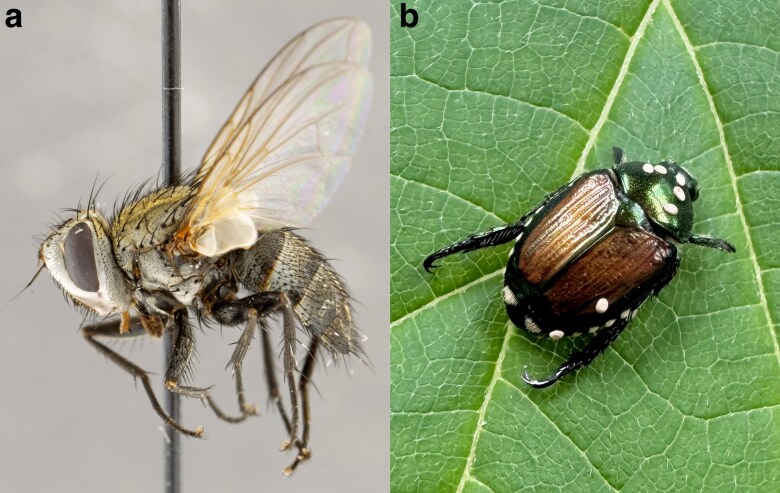 Fig. 1
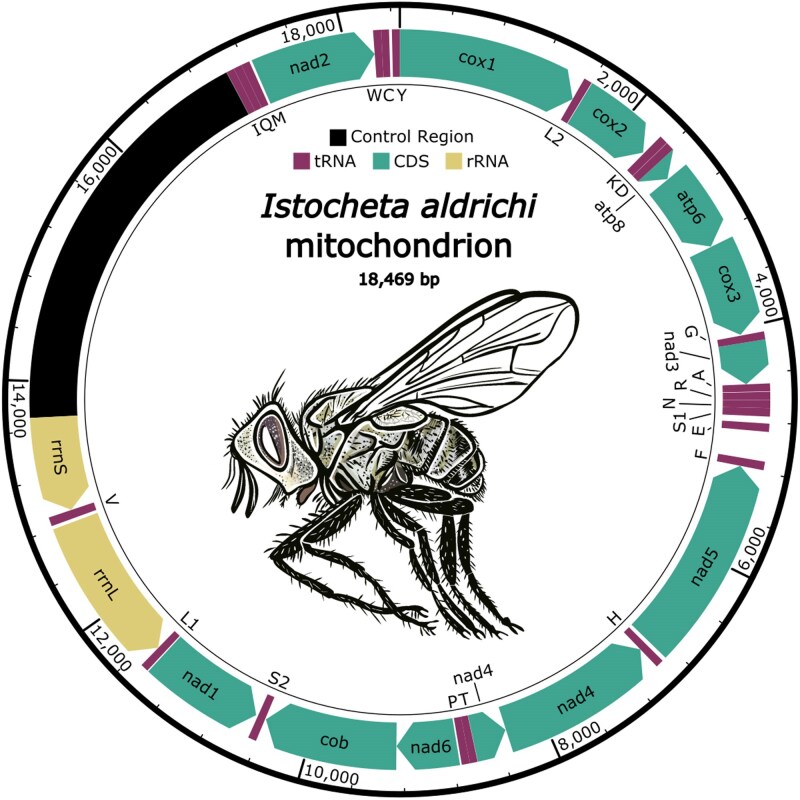 Fig. 2
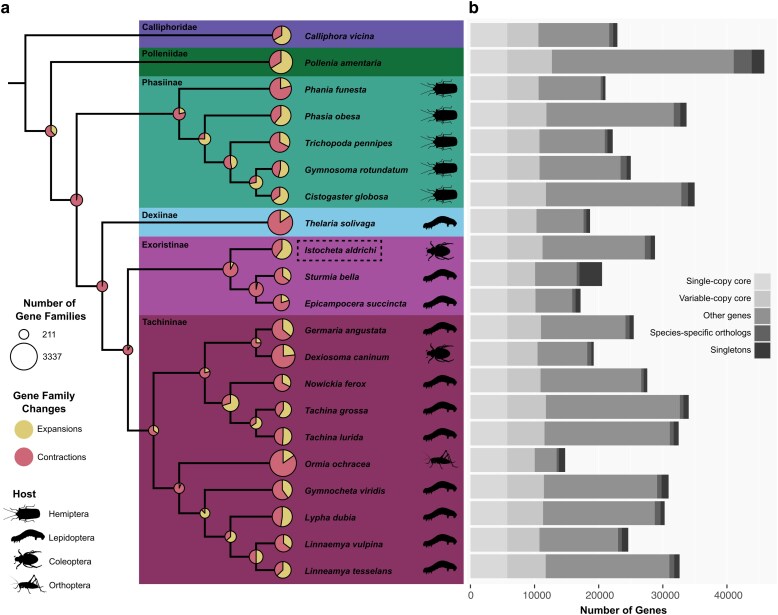 Fig. 3
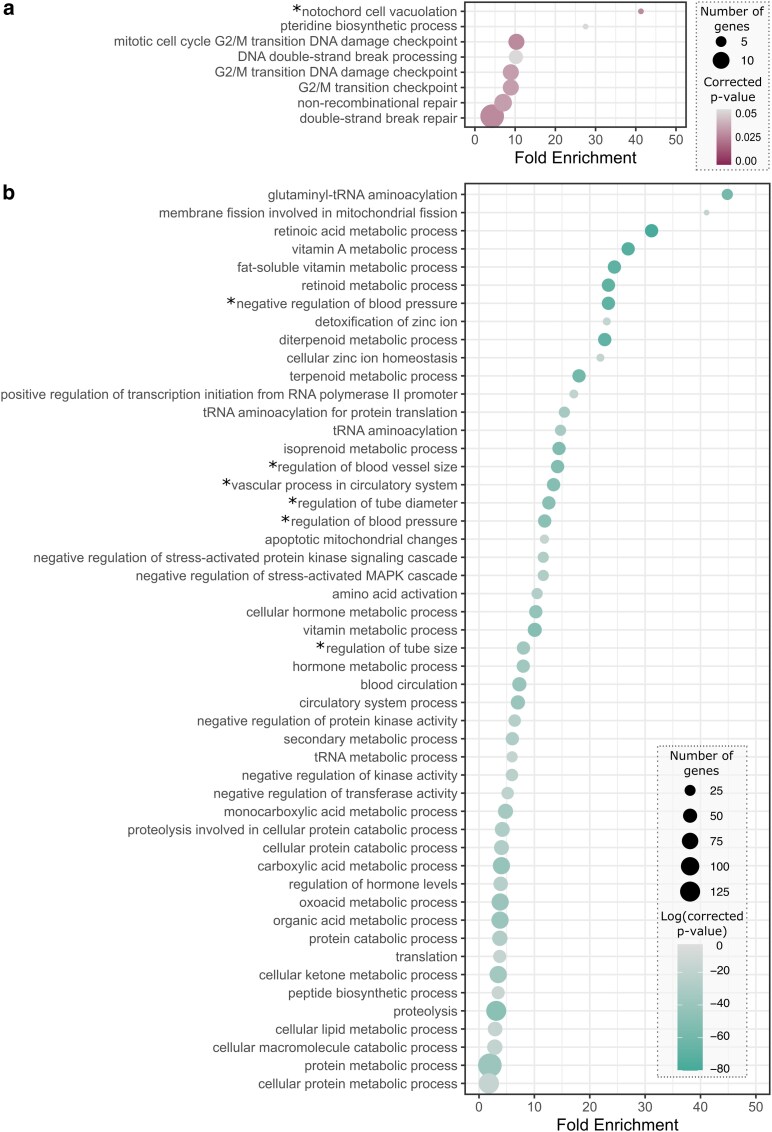 Fig. 4
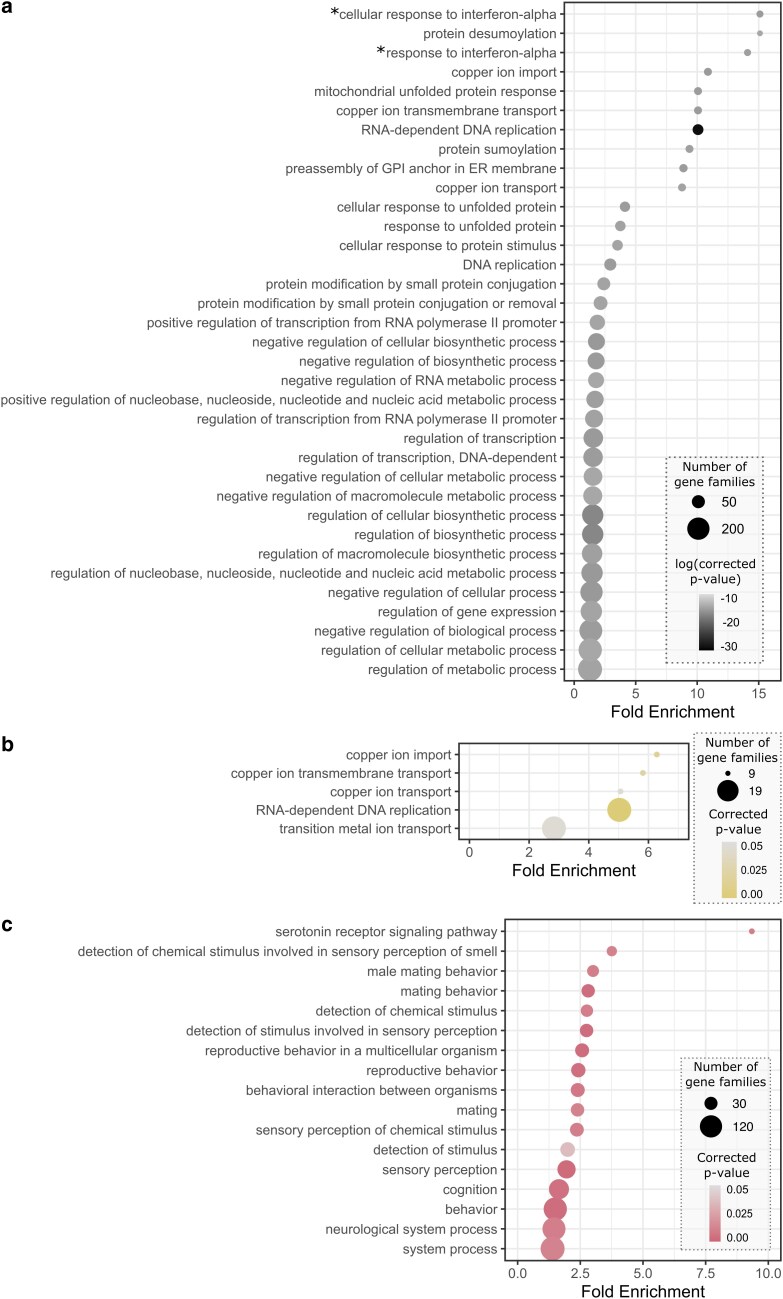 Fig. 5
| Accession | Species | Clade | Genome size (Mbp) | Host(s) | Completeness |
|---|---|---|---|---|---|
| GCF_958450345.1 |
| Family Calliphoridae | 706.5 | N/A ( | 97.17 |
| GCA_943735925.1 |
| Family Polleniidae | 1,270.7 | N/A ( | 93.67 |
| GCA_963932375.1 |
| Phasiinae | 557.4 | Shieldbugs (Hemiptera: Cydnidae) ( | 96.68 |
| GCA_949628195.1 |
| Phasiinae | 876.8 | Several families of Hemiptera ( | 94.22 |
| GCA_030448955.1 |
| Phasiinae | 670.3 | Several families of Hemiptera ( | 96.5 |
| GCA_916610165.2 |
| Phasiinae | 779.1 | Hemiptera: Pentatomidae ( | 95.61 |
| GCA_937654795.1 |
| Phasiinae | 837.8 |
| 95.53 |
| GCA_947397855.1 |
| Dexiinae | 429.3 | Lepidoptera: Erebidae ( | 97.72 |
| GCA_963662145.1 |
| Exoristinae | 437.8 | Nettle-feeding nymphalid butterflies ( | 95.46 |
| GCA_932526305.1 |
| Exoristinae | 398.1 | Several families of Lepidoptera ( | 97.51 |
| GCA_963681545.1 |
| Tachininae | 586.5 |
| 96.8 |
| GCA_963924685.1 |
| Tachininae | 517.1 | Unknown. Other tribe Microphthalamini parasitize | 96.59 |
| GCA_936439885.1 |
| Tachininae | 670.7 |
| 95.28 |
| GCA_949987645.1 |
| Tachininae | 936.9 | Lepidoptera: Lasiocampidae ( | 93.79 |
| GCA_944452675.1 |
| Tachininae | 899.2 | Several families of Lepidoptera ( | 92.7 |
| GCA_963402855.1 |
| Tachininae | 330.9 | Orthoptera: Gryllidae ( | 96.93 |
| GCA_956483585.1 |
| Tachininae | 600.3 | Stem-boring Noctuids ( | 96.01 |
| GCA_947311025.1 |
| Tachininae | 645.0 | Several families of Lepidoptera ( | 95.8 |
| GCA_963675445.1 |
| Tachininae | 554.0 | Lepidoptera: Noctuidae ( | 96.32 |
| GCA_951800035.1 |
| Tachininae | 709.9 | Assumed, Lepidoptera: Noctuidae ( | 96.26 |
| Metric | Draft | Final (contigs) | Final (scaffolds) |
|---|---|---|---|
| Sequences | 2,297 | 1,063 | 1,041 |
| Total assembly length (bp) | 916,858,228 | 875,160,985 | 875,256,404 |
| Min sequence length | 5,340 | 5,340 | 5,340 |
| Mean sequence length | 399,155 | 823,293 | 840,784 |
| Max sequence length | 16,220,652 | 17,929,400 | 17,929,400 |
| N50 | 3,182,884 | 4,766,515 | 4,769,057 |
| L50 | 81 | 56 | 55 |
| %GC | 30.62 | 30.42 | 30.42 |
| Compleasm | Complete: 99.5%, 3,270 | Complete: 99.5%, 3,269 | |
| Name | Number | Length (bp) | Percent (%) |
|---|---|---|---|
| Retroelements | 126,476 | 73,636,889 | 8.41 |
| Penelope class | 7,988 | 3,512,242 | 0.40 |
| LINE class | 92,362 | 45,926,233 | 5.25 |
| L2/CR1/Rex | 28,620 | 10,768,381 | 1.23 |
| R1/LOA/Jockey | 4091 | 2,630,147 | 0.30 |
| R2/R4/NeSL | 95 | 102,292 | 0.01 |
| LTR class | 34,114 | 27,710,656 | 3.17 |
| BEL/Pao | 6,335 | 5,393,792 | 0.62 |
| Ty1/Copia | 1,751 | 1,533,512 | 0.18 |
| Gypsy/DIRS1 | 25,970 | 20,764,846 | 2.37 |
| DNA transposons | 197,900 | 87,342,017 | 9.98 |
| hobo-Activator | 57,782 | 17,658,477 | 2.02 |
| Tc1-IS630-Pogo | 73,612 | 33,272,189 | 3.80 |
| Rolling-circles | 171 | 42,189 | 0.00 |
| Unclassified | 1,900,031 | 442,956,545 | 50.61 |
| Total interspersed repeats | 603,935,451 | 69.01 | |
| Simple repeats | 168,984 | 8,707,703 | 0.99 |
| Low complexity | 41,205 | 1,981,500 | 0.23 |
| Bases masked | 614,668,413 | 70.23 |
| Metric | Value |
|---|---|
| Number of genes | 28,569 |
| Number of mRNAs | 32,005 |
| Number of exons | 97,869 |
| Number of introns | 65,966 |
| Mean exons per mRNA | 3 |
| Total gene length | 162,778,123 bp |
| Longest gene | 224,090 bp |
| Mean gene length | 5,698 bp |
| Longest CDS | 66,945 bp |
| Mean CDS length | 1,280 bp |
| Longest exon | 32,355 bp |
| Mean exon length | 427 bp |
| Compleasm | Complete: 94.24%, 3,096 |
- —USDA10.13039/100000199
- —Minnesota Department of Agriculture Specialty Crop Block
- —Minnesota Agricultural Experiment Station10.13039/100019553
- —University of Minnesota10.13039/100007249
Peer Reviews
No public reviews on file for this paper yet. If you reviewed it on a platform where reviews are public (OpenReview, ICLR, NeurIPS, ICML), you can paste yours below so the community can read it here.
Videos
No videos yet. Explain this paper in a talk, walkthrough, or lecture? Add one.
Taxonomy
TopicsInsect-Plant Interactions and Control · Insect Resistance and Genetics · Insect behavior and control techniques
Introduction
The parasitic fly, Istocheta aldrichi (Fig. 1a), is a member of the family Tachinidae: one of the largest families in the order Diptera (true flies) and the largest family of parasitoids outside of Hymenoptera (Stireman III et al. 2006, 2019). As is characteristic of parasitoids, tachinids complete their development as parasites in or on a host but are free-living as adults. The subfamily to which I. aldrichi belongs, Exoristinae, primarily consists of parasitoids of caterpillars (Stireman III et al. 2006). However, within the Exoristinae tribe Blondeliini, there have been a suite of shifts to diverse and distantly related orders of hosts (Stireman III et al. 2019). As a specialist parasitoid of the Japanese beetle (Popillia japonica, Coleoptera: Scarabaeidae), I. aldrichi is one such example. Compared to other tachinids with small eggs (microtype), I. aldrichi is known for its characteristic oviposition of large, macrotype, spherical white eggs placed on the pronotum (“back”) of P. japonica (Fig. 1b) (Pelletier et al. 2023). Also known as the “Winsome fly,” the species is oviparous, endoparasitic, and is known for superparasitism, where up to 8 eggs may be oviposited on a single beetle (Gagnon et al. 2023; Pelletier et al. 2023).
Istocheta aldrichi. a) Female I. aldrichi (Canadian National Collection of Insects specimen ID CNC1711728). Image provided by the Canadian National Collection of Insects, Arachnids, and Nematodes (CNC), ©His Majesty The King in Right of Canada, as represented by the Minister of Agriculture and Agri-Food, licensed under the Open Government Licence—Canada. b) I. aldrichi eggs laid on the dorsum of its host, Popillia japonica. There are 5 eggs placed on the beetle's pronotum (the typical oviposition location), and 2 additional eggs present on the right elytra (considered “misplaced”). Photo credit and permissions: Ellie R. Hutchison Cervantes.
Popillia japonica is an invasive pest that was first detected in the United States in 1916 and can damage over 300 plants (Clausen et al. 1927; Shanovich et al. 2019). Since invading, the beetle has spread throughout the eastern United States (Althoff and Rice 2022), with additional detections in several western states, and British Columbia, Canada—often prompting eradication efforts (Zhu et al. 2023; Makovetski and Abram 2024). Moreover, beginning in 2014, P. japonica was detected in Italy (Pavesi 2014; Gotta et al. 2023), with subsequent establishment in Switzerland (Graf et al. 2023). Early in the invasion process, eradication and crop protection relied heavily on pest trapping and insecticide use (Santoiemma et al. 2021; Venette and Hutchison 2021). However, for long-term sustainability, biological control, including the conservation or release of natural enemies, continues to be one of the most promising alternatives to chemicals for managing P. japonica (Althoff and Rice 2022; Abram et al. 2024; Brodeur et al. 2024).
As part of a classical biocontrol program in the 1920s, I. aldrichi was identified in Japan and released in several northeastern US states for P. japonica control (Clausen et al. 1927; Fleming 1968). Among the many parasitoid species released against P. japonica, I. aldrichi was one of the primary agents that successfully established and became widespread (Clausen et al. 1927; Fleming 1968). The recent range expansion of I. aldrichi in North America also portends considerable biocontrol potential (Gagnon et al. 2023; Hutchison et al. 2024; Makovetski and Abram 2024). For example, in Quebec, Canada, total seasonal parasitism rates ranged from 3.2% to 27.3% across 8 locations (Gagnon et al. 2023). Furthermore, there is recent interest in introducing I. aldrichi to Europe for biological control of P. japonica (CABI 2021). Istocheta aldrichi exhibits several life history traits that are advantageous for biocontrol, including: (i) a tendency for high parasitism rates at low host densities, suggesting efficient searching behavior by females (Shanovich et al. 2021), (ii) rapid mortality of host beetles following egg hatch of the fly (death within 5 to 7 d), and (iii) that parasitized beetles stop feeding within 3 to 5 d of parasitization, which may help reduce defoliation and crop injury (Clausen et al. 1927; Brodeur et al. 2024; Hutchison et al. 2024). Additionally, Makovetski et al. (2025) recently examined thousands of crowdsourced observations of parasitoid oviposition on Scarabaeidae species and concluded that the incidence of nontarget attacks by I. aldrichi is likely negligible as a risk to other Scarabaeidae species.
Here, we provide a reference genome for I. aldrichi: the first available for any species in the tribe Blondeliini. As I. aldrichi continues to expand in range across North America, the parasitoid offers many biocontrol attributes that should facilitate a growing impact on one of the most damaging invasive pests, P. japonica. The genome sequence will provide a research base to assist with (i) evaluating biological characteristics, such as overwintering ability and diapause biology, (ii) understanding the population genetics related to I. aldrichi establishment, (iii) generating tools for accurate identification and monitoring, and (iv) more broadly, improving our understanding of tachinid evolution.
Materials and methods
Species origin and sampling strategy
Istocheta aldrichi pupae were obtained from parasitized P. japonica beetles that had been field collected 14 d prior, from the foliage of wild grapes (Vitis vinifera), in Shoreview, Minnesota, United States (45.1321 N, −93.11875 W), July 20, 2024, following published sampling procedures (Gagnon and Giroux 2019; Shanovich et al. 2021). This is the peak period of I. aldrichi activity in southern Minnesota (Hutchison et al. 2024), when the beetles are abundant, and beetles with eggs on their pronota are common. As noted by Brodeur et al. (2024), no other tachinid species to date, with similar oviposition behavior or egg shape, have been observed ovipositing on P. japonica adults in North America. Additionally, the high host specificity of I. aldrichi on P. japonica was recently supported (Makovetski et al. 2025). The species was also verified via the mitochondrial COX1 barcode (see below).
A cohort of 20 beetles, all having at least one characteristic I. aldrichi egg deposited on their pronota (Fig. 1b), were placed individually in 475 ml plastic, ventilated cups, at 22 °C and 16:8 (light:dark). Rearing cups were provisioned with fresh grape leaves for beetle nutrition (leaves changed daily), and moist filter paper for humidity. Although superparasitism (i.e. multiple parasitoid eggs deposited in or on a single host) by I. aldrichi is common, for the vast majority of cases, only one parasitoid larva successfully develops within the host's thorax/abdomen (Clausen et al. 1927; Pelletier et al. 2023). At 14 to 20 d post-collection, the I. aldrichi larvae had either exited the host cadaver to pupate or had pupated inside the host. Within 24 h after pupation, a total of 6 I. aldrichi pupae that had exited the host to pupate were collected and transferred to a −80 °C freezer prior to DNA extraction. A single random pupa of unknown sex was selected for sequencing.
Sequencing methods and sample preparation
We extracted DNA from a single pupa that had been rinsed with nuclease-free water using the Qiagen MagAttract kit following the manufacturer's protocols. DNA was concentrated to 25 μL using Sergi Lab Supplies magnetic beads and the PacBio SRE kit was used to deplete fragments shorter than 10 kb. The sample was barcoded, library prepped with the ONT SQK-NBD114.24 kit, and sequencing was performed on an Oxford Nanopore P2 Solo instrument on a single flowcell (v.10.4.1). Libraries were recovered, and flowcells were flushed with nuclease (EXP-WSH004 kit) prior to reloading every 24 h. Data were basecalled using dorado v.0.7.3 and basecalling model [email protected] (https://github.com/nanoporetech/dorado).
Nuclear genome assembly, curation, and quality control
Full details and code for all bioinformatics steps are available in Supplementary File 1. After sequencing, reads were further processed with “dorado correct” V.0.8.3 + 98456f7 (https://github.com/nanoporetech/dorado) and used for generating a primary assembly with Hifiasm v.0.19.9 (Cheng et al. 2021). The primary assembly was scaffolded using 3 rounds of ntLink v.1.3.11 (Coombe et al. 2023) with gap filling. Contamination screening and removal were performed with Blobools v1.1.1 (Challis et al. 2020) and both NCBI Foreign Contamination Screens: (i) FCS-adaptor to remove adaptor contamination, and (ii) the FCS-GX Genome Cross-Species Aligner (Astashyn et al. 2024) with the taxonomic ID NCBI:txid2500616 (I. aldrichi). Purge_dups v1.2.5 was used to remove redundant haplotigs and overlaps from the genome assembly (Guan et al. 2020). Genome completeness was assessed with Compleasm v0.2.6 (Huang and Li 2023), which scored assemblies against the Diptera_odb10 database of 3,285 benchmarking single-copy orthologs (BUSCOs) and Merqury v1.3 (Rhie et al. 2020).
Repeat assembly techniques
Repeat families were identified de novo using RepeatModeler v2.0.1 (Flynn et al. 2020). RepeatMasker v4.1.1 (Tarailo-Graovac and Chen 2009) was used to soft mask genomes with the de novo generated repeat libraries using slow search mode.
Gene finding methods
Gene prediction was performed with BRAKER v3.0.8 (Brůna et al. 2021) using soft-masked genomes against a curated protein database of Arthropoda proteins from OrthoDB (Kuznetsov et al. 2023). Gene function and domain annotation was performed by InterProScan v5.75-106.0 (Jones et al. 2014) and eggNOG-mapper v2.1.13 (Huerta-Cepas et al. 2019), utilizing the following databases: AntiFam v8.0, CDD v3.21, Coils v2.2.1, FunFam v4.3.0, Gene3D v4.3.0, Hamap v2025_01, MobiDBLite v4.0, NCBIfam v17.0, PANTHER v19.0, Pfam v37.4, PIRSF v3.10, PIRSR v2025_01, PRINTS v42.0, ProSitePatterns v2025_01, ProSiteProfiles v2025_01, SFLD v4, SMART v9.0, SUPERFAMILY v1.75, and eggNOG v5.0.2. Functional annotations and database references including gene ontology (GO) terms from the 2 programs were merged with the structural gene annotation from BRAKER to produce the final generic feature file.
Comparative genomics and gene family evolution
Genomes of 18 other tachinids plus 2 outgroups (from the families Polleniidae and Calliphoridae) were used in comparative analyses (Table 1). Genome assemblies were retrieved from NCBI, and each assembly was annotated following the same pipeline as described above for I. aldrichi, including de novo repeat identification and masking, and annotation with BRAKER. Completeness of each genome annotation was determined with Compleasm v0.2.6 (Huang and Li 2023), which scored annotations (longest transcript variant protein sequences for each coding gene) against the Diptera_odb10 BUSCO database.
Orthologous groups of proteins (i.e. gene families) were clustered with OrthoFinder v2.5.4 (Emms and Kelly 2019), based on the longest transcript variant for each protein coding gene. The species tree generated by OrthoFinder was converted to an ultrametric tree via the chronos function in the ape package v.5.8-1 (Paradis et al. 2019), and used in combination with the gene family counts to estimate significant gene family contractions and expansions across the phylogeny with CAFE v5.1 (Mendes et al. 2020). CafePlotter v0.2.0 (https://github.com/moshi4/CafePlotter) was used to extract gene families from the resulting CAFE output files.
To determine significant enrichments of GO terms within sets of genes or gene families, we followed previously developed methods (Lindsey et al. 2018). In brief, statistical testing was performed with BiNGO v 3.0.5 (Maere et al. 2005), implemented in Cytoscape v3.9.1 (Shannon et al. 2003), using hypergeometric tests and Benjamini & Hochberg FDR correction, at a corrected significance level of 0.05. The background set of GO terms differed depending on the comparison. For comparisons within one genome, the background included all genes in that genome. To test for GO term enrichment in a set of gene families, we first annotated all proteins used in orthogroup clustering with OrthoFinder via the EMBL web eggNOG mapper-2.1.12 (Huerta-Cepas et al. 2019) (http://eggnog-mapper.embl.de/) to generate GO terms. Then, we created a custom background set of GO terms for each gene family, in which the GO terms included those represented by at least 40% of the genes in that family.
Mitochondrial genome
The mitochondrial genome was assembled using MitoHiFi v3.2.2 (Uliano-Silva et al. 2023) using the dorado-corrected reads as input, and the findMitoReference function by specifying the species I. aldrichi and min_length 14,000. The MitoHifi assembled genome was circularized using Circlator v1.5.5 fixstart function (Hunt et al. 2015) and annotated using MITOS2 implemented on the Galaxy web server (Bernt et al. 2013; Donath et al. 2019). The resulting COX1 sequence was extracted and queried against the Barcode of Life Database (Ratnasingham and Hebert 2007) (BOLD; https://boldsystems.org/) to further validate sample identity.
Results and discussion
Sequencing and assembly
We extracted high molecular weight DNA from a single I. aldrichi pupa and used Oxford Nanopore sequencing to generate a total of 10.6M reads totaling 49.9 Gbp with a read N50 of 11,980 bp (Supplementary Table 1). Error-corrected reads were then used to assemble a draft genome with Hifiasm. The draft genome of 916.9 Mbp was contained in 2,297 contigs with an N50 of 3.18 Mbp (Table 2). After scaffolding, decontamination, and purging haplotigs, the final genome assembly was 875.3 Mbp, contained in 1,041 scaffolds (1,063 contigs), with a scaffold N50 of 4.77 Mbp (Table 2, Supplementary File 3). The final genome assembly was relatively complete, with a 99.5% Compleasm score for dipteran BUSCOs. At 875.3 Mbp, I. aldrichi has the fourth largest genome of sequenced tachinid species (n = 22). Compared to similarly sized tachinid genomes (e.g. Phasia obesa, 876.8 Mbp, see Table 1), this assembly of I. aldrichi has fewer contigs (1,063 vs 3,378) and a larger contig N50 (4.77 Mbp vs 0.47 Mbp, respectively). While I. aldrichi has not been scaffolded onto chromosomes like many of the other tachinid genomes (including P. obesa, see references in Table 1), the I. aldrichi assembly here is nevertheless of high quality.
Mitochondrial genome
We assembled and annotated a complete 18,469 bp mitochondrial genome from I. aldrichi. We identified a complete gene set including small and large rRNAs, 22 tRNAs, and 13 protein coding genes (Fig. 2). The gene arrangement, like most other dipterans and tachinids, is the same as the ancestral insect mitochondrial genome (Cameron 2014; Pei et al. 2024). We cross-referenced the COX1 sequence from the mitochondrial genome assembly with the BOLD barcode database and determined that the mitogenome sequenced here was identical to published I. aldrichi barcodes at COX1 (sequences in BIN:ADE2384, see also Shanovich et al. (2021)).
Istocheta aldrichi mitochondrial genome. (I. aldrichi drawing: Melissa Schreiner, Colorado State University-Extension, Grand Junction, Colorado). The complete mitochondrial genome of I. aldrichi, with annotated rRNAs, tRNAs, coding sequences (CDS), and the predicted control region (defined based on relatives, Cameron 2014; Pei et al. 2024). tRNAs are indicated with single-letter IUPAC-IUB abbreviations corresponding to the amino acid. The mitochondrial genome and annotations are available at NCBI under accession number PX213662.
Repeats
Greater than 70% of the I. aldrichi genome was derived from repetitive elements (Table 3). The majority of repeats, corresponding to 50.6% of the genome length, were unclassified, which is not atypical for nonmodel insect species (Petersen et al. 2019; Sproul et al. 2023). Retroelements and DNA transposons were the largest categories of identified elements, and accounted for 8.4% and 10% of the genome, respectively.
Gene finding
Structural annotation of the I. aldrichi genome characterized 32,005 mRNAs representing 28,569 genes (Table 4), which is only slightly above the average gene number for tachinids based on our annotations (mean = 25,816; Supplementary File 2). In contrast, the cricket parasitoid Ormia ochracea had the fewest genes (n = 14,670), whereas Cistogaster globosa, a stinkbug specialist, was the most gene rich of the tachinids (n = 34,717, Fig. 3b). Completeness metrics for the I. aldrichi annotation are high, with 94.24% complete dipteran BUSCOs present (Table 1). Annotation completeness was similarly high across the tachinid and outgroup species, with an average of 95.75% (+/− 1.36%) of complete dipteran BUSCOs (Table 1, Supplementary Table 2). The lowest completeness score was for Calliphora vicina (93.67%). The duplicated score for the I. aldrichi annotation was 5.78%, which is consistent with others in the dataset (mean = 5.45% +/− 0.32%, see Supplementary Table 2). Taken together, this is a robust dataset for inferring patterns of gene family evolution in this group.
Tachinid genome evolution. a) Phylogeny representing all Tachinidae subfamilies and select outgroups, showing superfamily wide gene family size changes and tachinid host associations. Circles at each node correspond to the total number of gene families that contracted or expanded in size. Colors within each circle indicate the proportion of those gene families that either expanded or contracted. Istocheta aldrichi is indicated with a dashed-line box. b) Stacked bar-chart reflecting the composition of genes associated with different levels of gene family conservation.
A total of 27,877 I. aldrichi proteins were functionally annotated by eggNOG-mapper, with 2,559 annotated by eggNOG-mapper alone. Using InterProScan, 27,692 proteins were functionally annotated, with 2,374 characterized by InterProScan but not eggNOG-mapper. Finally, 25,318 proteins were functionally annotated by both programs. Results from both functional annotation programs were merged.
Comparative genomics of tachinids
We leveraged the published genomes of 18 additional tachinids and 2 outgroup species for comparative analyses (Table 1, Fig. 3). Phylogenetic reconstruction recapitulated most relationships that are well-supported by more in-depth analyses of Diptera and Tachinidae evolution (Stireman III et al. 2019; de Paula et al. 2024). Specifically, each tachinid subfamily was recovered as monophyletic, and the sister relationships of the subfamilies agreed with recently published phylogenies, except for the placement of the single representative species of Dexiinae, as this subfamily is generally accepted to be sister to Phasiinae (Stireman III et al. 2019; de Paula et al. 2024). Istocheta aldrichi was sister to the other 2 species within the Exoristinae (Sturmia bella + Epicampocera succincta), and Exoristinae was sister to Tachininae (Fig. 3).
Across the 21 genomes, 538,711 genes (96.4% of the total 558,763) were clustered into 24,885 gene families (Supplementary Tables 3 and 4). The largest gene family contained 1,305 genes, had between 1 and 208 paralogs per species, and was represented by all species except for Sturmia bella. A total of 8,935 gene families contained genes from all species, and of these, 5,707 gene families consisted entirely of single-copy genes. In total, 3,565 gene families (15,289 genes in total) contained genes exclusively derived from the same genome (i.e. species-specific families). A total of 9,001 gene families were present in all tachinid species, only one of which was also not present in both outgroups. The subfamily to which I. aldrichi belongs, Exoristinae, were uniquely missing 4 gene families that were present in all other species. All Exoristinae species also had genes in 33 gene families that were unique to the Exoristinae. Finally, for I. aldrichi, 97.5% of the 28,575 genes were assigned to gene families, and of these, there were 878 genes in 211 species-specific gene families. 702 I. aldrichi genes were defined as singletons, and there were 81 gene families that were uniquely lost in this lineage but present in all other species.
Curiously, one of the gene families missing in Exoristinae encoded for centromeric H3 (CENH3, “Cid” in Drosophila melanogaster, “CEN-P” in yeast). On further inspection, we determined that the Exoristinae CENH3 proteins were not missing, but instead clustered with canonical H3 variants of the other species due to their short N-terminus relative to the other tachinid CENH3 proteins. These Exoristinae proteins were clearly identifiable as centromeric H3 variants due to the Q69A and F85Y amino acid substitutions (relative to the highly conserved canonical H3), and a longer loop 1 region in the histone fold domain by one amino acid (Malik and Henikoff 2003; Drinnenberg et al. 2014). However, there did not appear to be any Exoristinae canonical H3 proteins present in that same gene family. Blastp searches against the annotated I. aldrichi proteome (query: Drosophila melanogaster H3, GenBank CAA32434.1) similarly did not recover any canonical H3 proteins, only CENH3. Finally, we determined that the H3 proteins were encoded in the genome, but they had undergone numerous duplications to the point that they had been masked during repetitive element analyses. Indeed, we identified 131 open reading frames across 5 contigs, which encoded for identical H3 proteins. While having numerous gene copies of histones is not unusual (Rooney et al. 2002), it seems the recent copy number expansion in this lineage is distinct from other clades in the family and also paired with a more divergent CENH3 N-terminus. Perhaps related to the signatures of histone evolution, the singleton genes unique to I. aldrichi were significantly enriched for 8 GO terms, 6 of which were related to mitosis and DNA repair (Fig. 4a, Supplementary Table 4), such as G2/M cell cycle checkpoints and double-stranded break repair and processing. In contrast to the I. aldrichi singletons, genes in I. aldrichi-specific gene families were significantly enriched for metabolic functions, especially those related to vitamin A, terpenoids, protein catabolism, mitochondrial biology, and the circulatory system (Fig. 4b, Supplementary Table 5).
Significantly overrepresented GO terms for genes unique to Istocheta aldrichi. a) Overrepresented GO terms for singleton genes unique to I. aldrichi. Full details can be found in Supplementary Table 4. b) The top 50 most significant overrepresented GO terms for genes in I. aldrichi-specific gene families. Full details can be found in Supplementary Table 5. The asterisks () denote GO terms with descriptions of vertebrate processes that do not occur in insects, but that involve conserved genes present in many metazoans.*
Gene family size evolution
In addition to identifying gene families that had been completely gained or lost, we also identified gene families that underwent changes in copy number at specific points across the phylogeny and characterized each one as either “expanding” (e.g. gaining paralogs) or “contracting” (e.g. losing paralogs) at a given node or leaf (Fig. 3a). First, we identified 935 gene families which experienced significant changes in the rate of gene gain and loss across the tachinid phylogeny. These families were significantly overrepresented for a suite of GO terms, largely involving metabolic functions and morphogenesis (Fig. 5a, Supplementary Table 6), which may relate to the evolution of parasitism in this group, especially in the context of host switches. We determined that at the root of Tachinidae, 618 gene families changed in size, and these were primarily contracting families (n = 607). In fact, this node had the lowest percentage of expanding gene families (relative to all changing families at a node) across the phylogeny. The nodes representing the ancestors of each subfamily were also characterized by a relatively high level of gene family contractions (C) relative to expansions (E): Phasiinae [C:516, E:140], Dexiinae [C:2,535, E:462], Exoristinae [C:1,074, E:92], Tachininae [C:169, E:92]. In contrast, I. aldrichi had an especially high number of gene families that expanded in size on this branch (n = 1,261); the second highest number across the extant species (second to P. obesa, n = 1,302). An additional 833 gene families were determined to have contracted in the I. aldrichi lineage. Istocheta aldrichi was one of only 4 tachinid species where >60% of significant families underwent lineage-specific expansions (along with P. obesa, Linnaemya tessellans, and C. globosa). The gene families that increased in size on the I. aldrichi branch were significantly overrepresented for 5 GO terms (Fig. 5b, Supplementary Table 7), 4 of which were related to copper/metal ion transport. The fifth overrepresented GO term was for RNA-dependent DNA replication, likely indicative of viral genes. Finally, gene families that contracted in size on the I. aldrichi branch were significantly overrepresented for 17 GO terms, all of which related to neurological processes such as sensory perception, mating/reproductive behavior, and cognition (Fig. 5c, Supplementary Table 8).
Significantly overrepresented GO terms for dynamic gene families. a) Top 35 most significantly overrepresented GO terms for gene families with significant changes in the rate of gene gain and loss across the tachinid phylogeny. Full details can be found in Supplementary Table 6. b) Overrepresented GO terms for gene families that increased in size on the I. aldrichi branch. Full details can be found in Supplementary Table 7. c) Overrepresented GO terms for gene families that contracted in size on the I. aldrichi branch. Full details can be found in Supplementary Table 8. The asterisks () denote GO terms with descriptions of vertebrate processes that do not occur in insects, but that involve conserved genes present in many metazoans.*
Summary
The sequencing and analyses of the I. aldrichi genome presented herein represent the first available reference genome for the tribe Blondeliini, and the first functional genomic comparisons across the family Tachinidae, the second largest dipteran family in terms of numbers of species descriptions (Stireman III et al. 2019). For I. aldrichi, this will facilitate further research on the biological control of P. japonica. Of particular interest, this reference genome will support research on population genetics related to the recent spread of this fly. In addition to the importance of tachinids as biological control agents of many insect pests (Grenier 1988), their evolutionary history affords myriad opportunities to understand rapid speciation, parasitism, and major transitions between feeding ecologies and host associations (Stireman III et al. 2019). Indeed, others have estimated that Tachinidae may be one of the most rapidly diversifying lineages across all of metazoa (Scholl and Wiens 2016), and our work here provides a foundation to explore this diversity.
The reference list from the paper itself. Each links out to its DOI / PubMed record.
- 1Abram PK et al 2024. Weighing consequences of action and inaction in invasive insect management. One Earth. 7:782–793. 10.1016/j.oneear.2024.04.013. · doi ↗
- 2Althoff ER, Rice KB. 2022. Japanese beetle (Coleoptera: Scarabaeidae) invasion of North America: history, ecology, and management. J Integr Pest Manag. 13:2. 10.1093/jipm/pmab 043. · doi ↗
- 3Astashyn A et al 2024. Rapid and sensitive detection of genome contamination at scale with FCS-GX. Genome Biol. 25:60. 10.1186/s 13059-024-03198-7.38409096 PMC 10898089 · doi ↗ · pubmed ↗
- 4Barclay MVL, Falk S, Sivell O. 2024. The genome sequence of a tachinid fly, Gymnocheta viridis (Fallén, 1810). Wellcome Open Res. 9:714. 10.12688/wellcomeopenres.23435.1.39931113 PMC 11809156 · doi ↗ · pubmed ↗
- 5Bernt M et al 2013. MITOS: improved de novo metazoan mitochondrial genome annotation. Mol Phylogenet Evol. 69:313–319. 10.1016/j.ympev.2012.08.023.22982435 · doi ↗ · pubmed ↗
- 6Bogale M et al 2023. First description of the nuclear and mitochondrial genomes and associated host preference of Trichopoda pennipes, a parasitoid of Nezara viridula. Genes (Basel). 14:1172. 10.3390/genes 14061172.37372352 PMC 10298747 · doi ↗ · pubmed ↗
- 7Brodeur J, Doyon J, Abram PK, Parent J-P. 2024. Popillia japonica Newman, Japanese Beetle/Scarabée japonais (Coleoptera: Scarabaeidae). In: Biological control programmes in Canada, 2013–2023. CABI GB. p. 343–350.
- 8Brůna T, Hoff KJ, Lomsadze A, Stanke M, Borodovsky M. 2021. BRAKER 2: automatic eukaryotic genome annotation with Gene Mark-EP+ and AUGUSTUS supported by a protein database. NAR Genom Bioinform. 3:lqaa 108. 10.1093/nargab/lqaa 108.33575650 PMC 7787252 · doi ↗ · pubmed ↗