A comprehensive map of key aroma-active compounds in cigar tobacco via GC-IMS and GC-O-MS
Xue Wu, Shimin Liu, Zhongcheng Guo, Fengfeng Zhang, Tianze Liu, Yuqing Dou

TL;DR
This study identifies key aroma compounds in cigar tobacco using advanced analytical techniques to better understand and improve cigar quality.
Contribution
The study provides a comprehensive map of aroma-active compounds in cigar tobacco using GC-IMS and GC-O-MS.
Findings
Fifteen compounds were identified as aromatic active based on odor activity values.
Characteristic aromas include 'fatty', 'grass', 'fruity', and 'citrus' among others.
Compounds like D-limonene and Geraniol are linked to specific aromatic attributes.
Abstract
The aromatic characteristics of cigar tobacco leaves are the result of the release of aromatic compounds, but research on the distinctive aromatic profiles of cigars has been limited. This study employed GC–IMS combined with PCA to reveal differences in volatile components in cigar tobacco leaves. Additionally, HS-SPME and SBSE were used to extract volatile components from cigar tobacco leaves, which were then identified using GC–O–MS. Based on odor activity values, 15 out of 120 compounds were classified as aromatic active compounds. GC-IMS and GC-MS experiments indicated that “fatty” “grass” “fruity” “ammonia” “citrus” “chocolate odor” and “mint and camphor” were identified as characteristic aromatic attributes of cigar tobacco leaves. These characteristic aromas were associated with compounds such as Ammonia, 3-Methylbutanal, Pentanal, 2-Butanone, D-limonene, Nonanal,…
Genes, proteins, chemicals, diseases, species, mutations and cell lines named across the full text — each resolved to its canonical identifier and authoritative record.
Click any figure to enlarge with its caption.
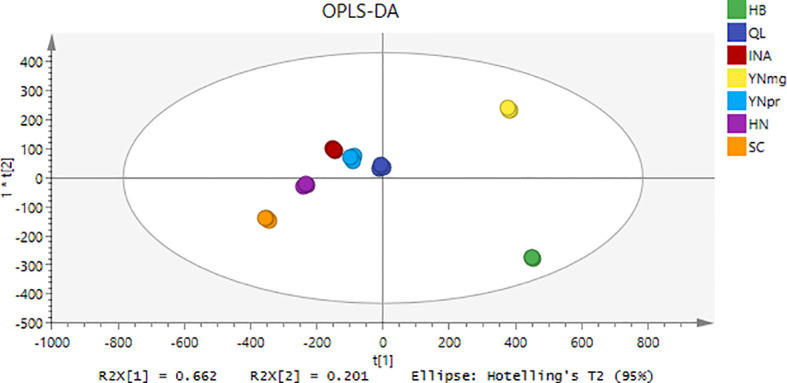 Figure 1
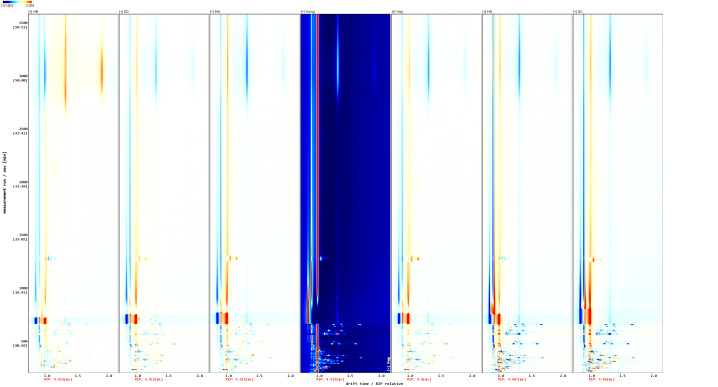 Figure 2
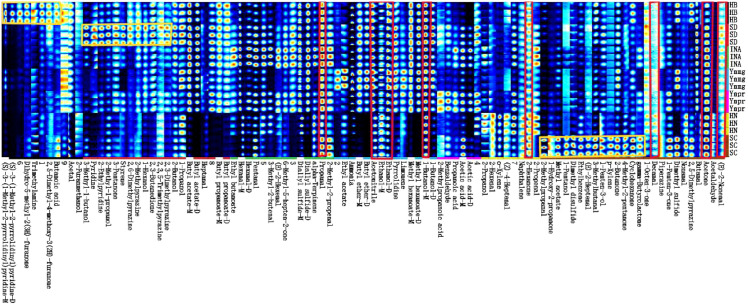 Figure 3
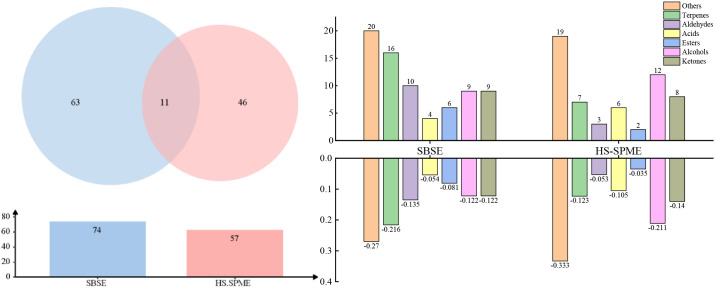 Figure 4
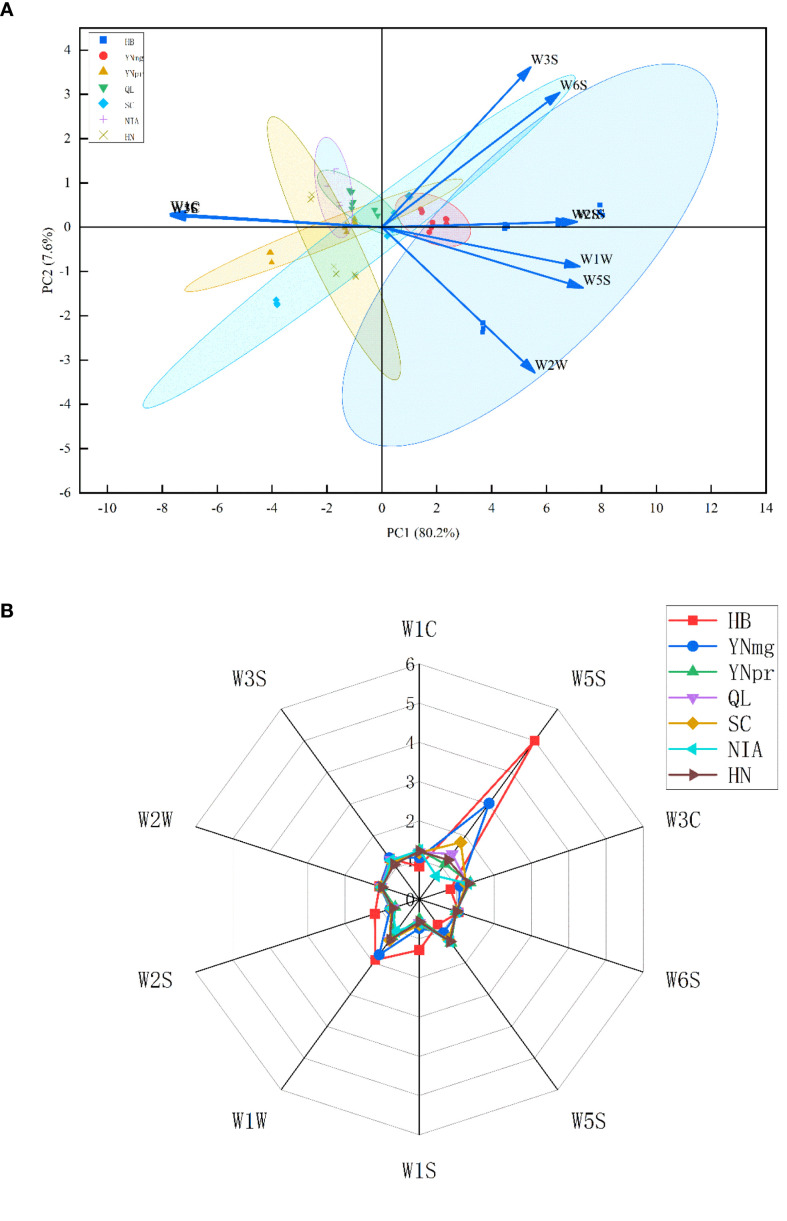 Figure 5
| Index | Production areas | Variety/type | Sample quantity | Harvest year | Processing methods | Aging period (months) | Key selection criteria |
|---|---|---|---|---|---|---|---|
| YN-pr | Yunnan Pu’er | ‘Yunxue’ No. 1 | 1 | 2021 | Air-drying | 18-24 | Typical Yunnan light-aroma style, fully matured |
| YN-mg | Baoshan Maguan, Yunnan | ‘Yunxue’ No. 3 | 1 | 2021 | Sun-drying | 18-24 | Rich aroma with pronounced sweetness |
| HB | Enshi, Hubei | ‘Eyan’ Series | 1 | 2021 | Air-drying | 12-18 | Mellow aroma with ample intensity |
| NIA | Indonesia (East Java) | Besuki NO | 1 | Import Batch | Traditional Air-drying | >24 | Imported primary ingredients, distinctive flavor profile, serving as international reference |
| HN | Danzhou, Hainan | ‘Haixue’ Series | 1 | 2021 | Air-drying | 12-18 | Tropical climate characteristics, vivid aroma |
| SC | Panzhihua, Sichuan | ‘Chuanyan’ Series | 1 | 2021 | Air-drying | 12-18 | Mountainous region characteristics, unique aroma |
| QL | Yishui, Shandong | ‘Zhongxue’ No. 1 | 1 | 2021 | Air-drying | 6-12 | Representative of northern production areas, serving as geographical and climatic reference |
| Number | Name of oxide sensor | Performance description |
|---|---|---|
| MOS1 | W1C | Aromatic Compounds (Benzene Series) |
| MOS2 | W5S | High sensitivity, particularly responsive to nitrogen oxides |
| MOS3 | W3C | Sensitive to amine-based aromatic compounds(Ammonia) |
| MOS4 | W6S | Primarily detect hydrides(Hydrogen) |
| MOS5 | W5S | Alkane Aromatics (Short-Chain Alkanes) |
| MOS6 | W1S | Sensitive to methane (methyl group) |
| MOS7 | W1W | Sensitive to sulfides (inorganic sulfides) |
| MOS8 | W2S | Sensitive to ethanol (alcohols) |
| MOS9 | W2W | Aromatic component, sensitive to organic sulfides |
| MOS10 | W3S | Sensitive to alkanes (long-chain alkanes) |
| Compounds | ODA | VIP | Probability | ||||||
|---|---|---|---|---|---|---|---|---|---|
| QL | INA | YNmg | YNpr | HN | SC | HB | |||
| Ammonia | Ammoniacal | 4.93 | 0.00002 | 0.000 | 0.000 | 0.000 | 0.000 | 0.000 | 0.000 |
| (S)-3-(1-Methyl-2-pyrrolidinyl)pyridine-M | Strong pungent, Woody | 4.34 | 0.004 | 0.0012 | 0.013 | 0.002 | 0.0013 | 0.0014 | 0.000 |
| (S)-3-(1-Methyl-2-pyrrolidinyl)pyridine-D | Strong pungent, Woody | 2.90 | 0.020 | 0.017 | 0.027 | 0.018 | 0.017 | 0.0175 | 0.015 |
| Acetic acid-M | Spicy sour | 1.88 | 0.000 | 0.000 | 0.000 | 0.000 | 0.0003 | 0.000 | 0.000 |
| Diallyl sulfide-D | Garlic | 1.70 | 0.0003 | 0.089 | 0.28 | 0.0005 | 0.000 | 0.000 | 0.000 |
| Dimethyl sulfide | Cabbage, Sulfur, Marine | 1.66 | 0.000 | 0.000 | 0.002 | 0.000 | 0.000 | 0.000 | 0.000 |
| Acetic acid-D | Spicy sour | 1.53 | 0.0001 | 0.002 | 0.000 | 0.000 | 0.99 | 0.000 | 0.000 |
| 3-Methylbutanal | Chocolate, Green, Pungent | 1.42 | 0.0033 | 0.000 | 0.000 | 0.0004 | 0.000 | 0.00017 | 0.000 |
| Pentanal | Green grassy, faint banana, Pungent | 1.14 | 0.0001 | 0.000 | 0.0002 | 0.000 | 0.028 | 0.0002 | 0.000 |
| 2-Butanone | Fruity, Camphor, Mint | 1.08 | 0.045 | 0.99 | 0.002 | 0.059 | 0.001 | 0.00009 | 0.000 |
| Compounds | Name | RT | Fragrant melody | Growing region | Threshold | ||
|---|---|---|---|---|---|---|---|
| aroma description | OI | Air | Water | ||||
| Acids | |||||||
| A1 | 2-Aminophenacetic acid | 10.462 | Faint amine odor | 1 | INA, HB | ||
| A2 | cis-13-Octadecenoic acid | 16.791 | green | 1 | INA, HN | ||
| A3 | Acetic acid | 17.77 | Fruity, green, sweet | 1 | QL, INA, HB, YNmg, HN, SC | 99.00 | |
| A4 | Propanoic acid | 19.25 | Sweet, fruity, apricot | 1 | QL, INA, HB, , HN, SC | 2.19 | |
| A5 | Butanoic acid | 20.72 | Sweaty, acid, rancid | 2 | YNpr | ||
| A6 | Butanoic acid, 3-methyl- | 21.37 | Sweaty, acid, rancid | 1 | YNpr, SC | 0.06 | |
| A7 | 5-Methylhexanoic acid | 22.94 | – | – | QL | 4.60 | |
| A8 | Pentanoic acid, 3-methyl- | 22.96 | Putrid cheese | 2 | QL, INA, YNpr | 0.05 | |
| A9 | 8-Hydroxy-2,2,8-trimethyldeca-5,9-dien-3-one | 25.637 | Fruity, oily richness | 2 | QL | ||
| A10 | Tetradecanoic acid | 37.138 | – | – | YNmg, YNpr , HN, HB, SC, QL, INA | 10 | |
| Alcohols | |||||||
| B1 | trans-Farnesol | 11.257 | Floral, herbal | – | INA, YNmg, YNpr | ||
| B2 | Benzenemethanol, 2,4,5-trimethyl- | 14.988 | Woody, sweet | 2 | HN | ||
| B3 | cis-p-Mentha-2,8-dien-1-ol | 16.465 | – | – | INA, HB, SC, HN | ||
| B4 | 2-Pentanone, 4-hydroxy-4-methyl- | 16.49 | – | – | QL | 44.12 | |
| B5 | 3,6,9,12-Tetraoxatetradecan-1-ol | 19.81 | – | – | QL | ||
| B6 | 3,4-Dihydroxyphenylglycol, 4TMS derivative | 20.11 | – | – | QL | ||
| B7 | Hexaethylene glycol | 23.38 | – | – | QL | ||
| B8 | Geraniol | 23.50 | Sweet, floral, fruity, rose, waxy, citrus | 3 | YNmg, YNpr , HN, HB, SC, QL, INA | 0.01 | |
| B9 | 2,6-Octadien-1-ol, 3,7-dimethyl- | 23.52 | – | – | QL | ||
| B10 | 1H-Benzocyclohepten-7-ol, 2,3,4,4a,5,6,7,8-octahydro-1,1,4a,7-tetramethyl-, cis- | 25.139 | Medicinal fragrance, ambergris | 1 | YNmg, HN, HB | ||
| B11 | 2-[2-[2-[2-[2-[2-[2-(2-Hydroxyethoxy)ethoxy]ethoxy]ethoxy]ethoxy]ethoxy]ethoxy]ethanol | 24.87 | – | – | YNpr, YNmg, HN, HB, SC, QL, INA | ||
| B12 | 2-Methyl-4-(2,6,6-trimethylcyclohex-1-enyl)but-2-en-1-ol | 26.318 | Woody, flaral, citrus | 1 | YNmg, HN, HB, SC, QL, INA | ||
| B13 | 3-Pyridinemethanol, 4,5-dihydroxy-6-methyl- | 27.766 | Medicinal fragrance | 1 | YNmg, YNpr | ||
| B14 | 1-Dodecanol, 3,7,11-trimethyl- | 35.324 | Sweet, woody | – | YNmg, YNpr, HB, QL, INA | ||
| B15 | 3,7,11,15-Tetramethyl-2-hexadecen-1-ol | 39.305 | Green | – | HB, SC | ||
| Aldehydes | |||||||
| C1 | Cyclopropanecarboxaldehyde, 2-methyl-2-(4-methyl-3-pentenyl)-, trans-(.+-.)- | 8.288 | Fruity Citrus Lemon | 1 | YNmg, YNpr, HB | ||
| C2 | Benzaldehyde | 10.365 | sweet, bitter, almond, cherry | – | YNmg, YNpr, INA, SC | 0.085 | 0.75 |
| C3 | Nonanal | 15.44 | Citrus, Fatty | 1-2 | YNmg, YNpr, INA, HB | 0.003 | 0.001 |
| 7C4 | 4-(2,2-Dimethyl-6-methylenecyclohexyl)butanal | 15.738 | Woody, citrus, resin | 2 | YNmg, YNpr, HB, HN | ||
| C5 | 1-Cyclohexene-1-carboxaldehyde, 5,5-dimethyl-3-oxo- | 16.968 | Herbal fragrance, fresh | – | YNpr | ||
| C6 | 1,3-Cyclohexadiene-1-carboxaldehyde, 2,6,6-trimethyl- | 18.777 | Woody, citrus | – | HB | ||
| C7 | Decanal | 19.079 | fresh, waxy | 2 | YNmg, YNpr , HB, SC | 0.003 | 0.03 |
| C8 | 1-Cyclohexene-1-carboxaldehyde, 2,6,6-trimethyl- | 19.571 | Fresh, fruity | 1 | YNpr, SC, HB, INA | ||
| C9 | 4-(2,2-Dimethyl-6-methylenecyclohexyl)butanal | 23.314 | – | – | INA, HB | ||
| C10 | Phenylethyl Alcohol | 24.3 | Fruity, rose, sweet, apple | 2-3 | YNmg, YNpr , HN, HB, SC, QL, INA | 0.14 | |
| Ketones | |||||||
| D1 | 5-Hepten-2-one, 6-methyl- | 11.16 | herbal, green, citrus, musty, lemon grass | 1 | INA, HB | ||
| D2 | 3-Penten-2-one, 4-methyl- | 12.28 | Sweet, chemical | – | QL,HB,YNMG,YNPR | 0.2 | |
| D3 | 3-Hexen-2-one | 13.8 | – | – | HB | ||
| D4 | 6-Methyl-5-heptadiene-2-one | 15.515 | Fruity, Green, woody | 1 | INA | 0.1 | |
| D5 | Ethanone, 1-(2-methylphenyl)- | 18.484 | sweet, hawthorn, powdery, anisic, coumarin, phenol, burnt, nutty, honey | 1 | YNPR,INA,SC | ||
| D6 | 6-Methyl-5-heptadiene-2-one | 20.45 | Fruity, Green, woody | 1 | YNmg, YNpr , HN, HB, SC, QL, INA | 0.1 | |
| D7 | 4,8-Dimethylnona-3,8-dien-2-one | 21.3 | Bergamot, cedarwood, rose | – | YNPR,INA | ||
| D8 | 2-Undecanone, 6,10-dimethyl- | 21.71 | – | – | YNpr | ||
| D9 | 2-Pyrrolidinone, 1-methyl- | 21.95 | – | – | QL,YNpr | ||
| D10 | Dehydromevalonic lactone | 25.64 | – | – | HB | ||
| D11 | 2-Buten-1-one, 1-(2,6,6-trimethyl-1-cyclohexen-1-yl)- | 26.278 | Woody, fruity | 1 | QL,SC,HB | ||
| D12 | 5,6-Dihydro-2(1H)-pyridinone | 27.18 | – | – | QL | ||
| D13 | 5,9-Undecadien-2-one, 6,10-dimethyl-, (Z)- | 27.228 | Citrus, pine, rose | 1 | YNmg, YNpr , HN, HB, SC, QL, INA | ||
| D14 | Megastigmatrienone | 31.508 | – | – | YNmg, YNpr , HN, HB, SC, QL, INA | ||
| D15 | 7-Isopropenyl-1,4a-dimethyl-4,4a,5,6,7,8-hexahydro-3H-naphthalen-2-one | 37.528 | Ambergris, Cedarwood | – | INA,SC | ||
| D16 | 2-Pentadecanone, 6,10,14-trimethyl- | 38.878 | Oily, herbal, jasmin, celery, woody | – | QL | ||
| Esters | |||||||
| E1 | Cyclohexene, 1-methyl-4-(1-methylethyl)- | 12.545 | Nutty | 1 | YNmg, YNpr , HN, HB, SC, QL, INA | ||
| E2 | Cyclohexanol, 1-methyl-4-(1-methylethenyl)-, acetate | 13.077 | Pine, citrus, herbal | 1 | YNpr , HN, HB, SC, QL, INA | ||
| E3 | Benzoic acid, 4-isopropenylcyclohexenylmethyl ester | 17.706 | Green | – | YNpr | ||
| E4 | Bicyclo[3.1.1]hept-2-en-6-ol, 2,7,7-trimethyl-, acetate, [1S-(1α,5α,6β)]- | 18.364 | Bitter (almond-like), nutty | 2 | YNmg, QL, HB | ||
| E5 | Ethyl 5-amino-1,2,3-thiadiazole-4-carboxylate | 22.08 | – | – | QL,HB | ||
| E6 | Acetic acid, 1-[2-(2,2,6-trimethyl-bicyclo[4.1.0]hept-1-yl)-ethyl]-vinyl ester | 25.242 | Fruity, freash | 2 | YNmg | ||
| E7 | Octaethylene glycol monododecyl ether | 27.39 | – | – | YNmg | ||
| E8 | Cyclopropaneoctanoic acid, 2-[(2-pentylcyclopropyl)methyl]-, methyl ester, trans,trans- | 39.089 | Resinous, smoky | – | YNmg, YNpr, QL | ||
| Terpenes | |||||||
| F1 | 1,3-Cycloheptadiene | 4.832 | – | – | YNmg, QL | ||
| F2 | 3-Methylenecyclohexene | 4.86 | – | – | YNmg, HN, HB, INA | ||
| F3 | p-Xylene | 7.378 | strong, sweetish | – | YNmg, YNpr , HN, HB, SC, QL, INA | 0.25 | 1 |
| F4 | Cyclohexene, 3-(1-methylethyl)- | 7.71 | Pine, citrus, spicy | – | YNmg, YNpr , HN, HB, SC, INA | ||
| F5 | Cyclohexene, 6-(2-butenyl)-1,5,5-trimethyl-, (E)- | 9.289 | Nutty | 2 | YNmg, YNpr, INA | ||
| F6 | Cyclohexene, 3-methyl-6-(1-methylethyl)-, trans- | 9.878 | Green (unripe/vegetal) | – | YNmg, YNpr , HN, HB, SC, QL, INA | ||
| F7 | Cyclohexene, 1-methyl-4-(1-methylethenyl)-, (S)- | 10.268 | Terpene, pine, herbal, peppery | 1 | HB, QL | 0.034 | |
| F8 | 1,5,5-Trimethyl-6-methylene-cyclohexene | 11.407 | Citrus, woody | 1 | SC | ||
| F9 | Bicyclo[3.1.0]hex-2-ene, 2-methyl-5-(1-methylethyl)- | 11.881 | Pine, woody | 1 | YNmg, YNpr , HN, HB, SC, INA | ||
| F10 | D-Limonene | 12.905 | Citrus | 2 | YNmg, YNpr , HN, HB, SC, QL, INA | 0.03 | |
| F11 | Eucalyptol | 13.69 | Sweet, Mint | 2-3 | YNmg, YNpr , HN, HB, SC, QL, INA | 0.02 | |
| F12 | 1,5,9,11-Tridecatetraene, 12-methyl-, (E,E)- | 13.781 | Green (cucumber-like) | – | YNmg, YNpr | ||
| F13 | beta.-Ocimene | 14.32 | Apple, pear, fruity | 1 | YNmg, YNpr , HN, HB, SC, QL, INA | 0.03 | |
| F14 | Styrene | 14.36 | Penetrating, balsamic, gasoline | – | YNmg, YNpr , HN, HB, SC, QL, INA | 3 | |
| F15 | Caryophyllene oxide | 17.992 | Sweet, fresh, dry, woody, spicy | 1 | YNpr | 0.41 | |
| F16 | 4-Nonene, 5-butyl- | 25.494 | Fat, grassy | 1 | QL, HN | ||
| F17 | n-Octylpentaoxyethylene | 27.91 | – | QL, INA | |||
| F18 | α-Dehydro-ar-himachalene | 38.935 | Woody, resinous | 1 | QL | ||
| F19 | Isolongifolene, 4,5,9,10-dehydro- | 39.267 | – | – | HN | ||
| Others | |||||||
| G1 | Geranyl vinyl ether | 11.189 | Floral, herbal | – | YNmg, HN, HB, QL | ||
| G2 | 1H-3a,7-Methanoazulene, octahydro-1,4,9,9-tetramethyl- | 11.196 | Nutty | 1 | YNmg | ||
| G3 | Bicyclo[3.1.1]heptane, 6,6-dimethyl-2-methylene-, (1S)- | 11.996 | Dry, woody, fresh, pine, Hay, green, resinous | 1 | QL | ||
| G4 | 3-Hydroxy-N,N-dimethylpropanamide | 12.76 | – | – | HN, SC, INA | ||
| G5 | 1-Isopropenyl-3-propenylcyclopentane | 13.851 | Woody, pine, citrus | 1 | HB, SC, INA | ||
| G6 | Pyridine, 2-methyl- | 13.87 | – | – | QL | ||
| G7 | Benzene, 4-ethyl-1,2-dimethyl- | 14.39 | – | – | QL | 0.003 | |
| G8 | 3-Hydroxy-N,N-dimethylpropanamide | 14.82 | – | – | HN, SC, INA | ||
| G9 | Benzenamine, 2-ethyl-6-methyl- | 14.857 | Nutty | 2 | YNmg, HN | ||
| G10 | Benzenamine, N-ethyl-3-methyl- | 14.971 | Nutty | 2 | YNmg, YNpr , HN, HB, SC, QL, INA | ||
| G11 | Benzene, 1-methyl-4-(1-methylethenyl)- | 15.149 | Phenol, spicy, clove, guaiacol | 1 | YNpr, INA | 0.085 | |
| G12 | 3-Hydroxybenzoic acid, 2TMS derivative | 15.257 | Coffee, fatty, grassy | 2 | YNmg, YNpr , HN, HB, SC | ||
| G13 | N-(2-Ethylphenyl)-3-(isonicotinoylhydrazono)butyramide | 15.864 | Coffee | 3 | YNmg, YNpr | ||
| G14 | Ethanone, 1-(3-pyridinyl)- | 15.91 | Popcorn, tobacco, or roasted grains (coffee) | 1 | HN, INA | ||
| G15 | Pyridine, 3,5-dimethyl- | 16.07 | Sweet | 1 | INA | ||
| G16 | Pyrazine, 2-methoxy-3-(1-methylethyl)- | 17.6 | – | – | QL | 0.0000039 | |
| G17 | Octadecane, 6-methyl- | 19.177 | – | – | YNmg, HB | ||
| G18 | Aromadendrene oxide-(2) | 22.976 | – | – | YNmg, YNpr , HN, HB | ||
| G19 | 1,4-Bis(trimethylsilyl)benzene | 22.891 | Fruity, smoky, sweet, floral | 1 | YNpr | ||
| G20 | Hexaethylene glycol monododecyl ether | 23.37 | – | – | QL | ||
| G21 | Ethanone, 1-(4-pyridinyl)- | 23.68 | – | – | QL | ||
| G22 | Pyridine, 2-(1-methyl-2-pyrrolidinyl)- | 24.06 | – | – | YNmg, QL | ||
| G23 | Pyridine, 3-(1-methyl-2-pyrrolidinyl)-, (S)- | 24.39 | Burnt, smoky | 3 | YNmg, YNpr , HN, HB, SC, QL, INA | ||
| G24 | Caryophyllene oxide | 26 | Sweet, fresh, dry, woody, spicy | 2 | YNpr | 0.41 | |
| G25 | Pyridine, 3-(3,4-dihydro-2H-pyrrol-5-yl)- | 26.747 | – | – | YNmg, YNpr , HN, HB, SC, QL, INA | ||
| G26 | Myosmine | 27.12 | – | – | YNmg, YNpr , HN, HB, SC, QL, INA | ||
| G27 | Nicotyrine | 28.17 | – | – | YNmg, YNpr , HN, HB, SC, QL, INA | ||
| G28 | 6-Quinolinamine, 2-methyl- | 28.349 | Ammoniacal | 1 | YNmg, YNpr , HB | ||
| G29 | 2,3’-Dipyridyl | 30.009 | – | – | YNmg, YNpr , HN, HB, SC, QL, INA | ||
| G30 | Neophytadiene | 38.237 | Woody, Green | 1-2 | YNmg, YNpr , HN, HB, SC, QL, INA | ||
| No. | Compounds | Descriptors of the actual smell | SBSE | HS-SPME | ||||
|---|---|---|---|---|---|---|---|---|
| ROAV | VIP | OI | ROAV | VIP | OI | |||
| 1 | Cyclohexene, 1-methyl-4-(1-methylethenyl)-, (S)- | Terpene, pine, herbal, peppery | 1.63 | 1.11745 | 1 | 1.63 | 1 | |
| 2 | D-Limonene | Citrus, Woody | 100 | 1.1824 | 2 | 1.33 | 2 | |
| 3 | Nonanal | Citrus, Fatty | 35.4 | 2 | 1 | |||
| 4 | 3-Penten-2-one, 4-methyl- | Sweet, chemical | 14.92 | |||||
| 5 | Eucalyptol | Sweet, Mint | 14.87 | 2-3 | ||||
| 6 | 2,6-Lutidine | A pungent alkaline odor similar to pyridine | 27.12 | 1 | ||||
| 7 | 6-Methyl-5-heptadiene-2-one | Fruity, Green, woody | 3.59 | 1 | ||||
| 8 | Pentanoic acid, 3-methyl- | Putrid cheese | 24.61 | 2 | ||||
| 9 | Geraniol | Sweet, floral, fruity, rose, waxy, citrus | 8.31 | 3 | ||||
| 10 | Phenylethyl Alcohol | Fruity, rose, sweet, apple | 31.89 | 2-3 | ||||
| 11 | Pyridine, 3-(1-methyl-2-pyrrolidinyl)-, (S)- | Burnt, smoky | 7.68365 | 3 | 3.23684 | 3 | ||
| 12 | 2,3’-Dipyridyl | – | 1.94808 | 2 | ||||
| 13 | 6-Quinolinamine, 2-methyl- | Ammoniacal | 1.51212 | 1 | ||||
| 14 | Bicyclo[3.1.1]heptane, 6,6-dimethyl-2-methylene-, (1S)- | Dry, woody, fresh, pine, Hay, green, resinous | 1.02458 | 1 | ||||
| 15 | Neophytadiene | Woody, Green | 2 | 1.76481 | 1 | |||
Peer Reviews
No public reviews on file for this paper yet. If you reviewed it on a platform where reviews are public (OpenReview, ICLR, NeurIPS, ICML), you can paste yours below so the community can read it here.
Videos
No videos yet. Explain this paper in a talk, walkthrough, or lecture? Add one.
Taxonomy
TopicsFermentation and Sensory Analysis · Plant Gene Expression Analysis · GABA and Rice Research
Introduction
1
Unlike traditional cigarettes, which contain a mixture of tobacco and other additives, cigars are a unique tobacco product made entirely from rolled tobacco leaves. They are characterized by their robust strength, rich tobacco flavor, and strong spicy (Shao et al., 2015; Wang et al., 2009), while having relatively lower levels of tar and nicotine. The international market has seen a steady rise in cigar sales (Qin et al., 2012), with the global cigar market now valued at $20 billion (Kowitt et al., 2023; Wu et al., 2023). Based on their functional roles, cigar tobacco leaves can be divided into two main parts: the filler and the wrapper, with the wrapper further subdivided into the binder and the outer wrapper. As the core raw material of cigars, the quality and aroma characteristics of the tobacco leaves directly determine the overall flavor profile of the cigar (Wirtz, 2012; Jin, 1982).
The aroma of cigars primarily stems from volatile compounds in the tobacco leaves, which not only impart distinctive flavors but also influence the sensory experience of consumers. In recent years, increasing attention has been paid to the types of volatile compounds in cigar tobacco leaves. These aroma compounds can be classified by their functional groups into acids, alcohols, esters, ketones, aldehydes, and heterocyclic compounds. Over 450 organic acids (Shen and Xian, 2003), more than 300 alcohols (Tang et al., 2007), over 500 esters (Zhao et al., 2019), more than 100 aldehydes, and over 500 ketones (Yan et al., 2020; Kunjapur et al., 2014; Ni et al., 2018) have been identified in tobacco. Additionally, tobacco contains various heterocyclic compounds such as pyrroles, furans, pyridines, pyrazines, indoles, quinolines, and carbazoles (Xu et al., 2014). The complex interplay of these volatile components forms the aromatic profile of cigar tobacco leaves. In 2013, Cigar Aficionado magazine first proposed eight major flavor categories for cigar tobacco leaves (Noble et al., 1984), including vegetal, spicy, floral, nutty, fruity, earthy, other distinctive flavors, and non-flavor characteristics. Building on this framework, ZHENGTF et al (Zhang et al., 2022). further refined the classification into subcategories such as nutty, beany, woody, peppery, fruity, caramel, honey, sweet, floral, herbal, milky, creamy, resinous, roasted, earthy, hay-like, leathery, sour, and powdery. Volatile organic compounds (VOCs) serve as the foundation of tobacco aroma, and their aromatic profiles play a crucial role in determining quality (Wampler, 2020; Starowicz, 2021).
The analysis of volatile compounds and aromatic profiles in cigar tobacco leaves can be conducted using techniques such as gas chromatography-ion mobility spectrometry (GC-IMS), gas chromatography-mass spectrometry (GC-MS), gas chromatography-olfactometry (GC-O), and electronic nose (e-nose) methods. GC-IMS is a volatile compound detection technology that combines the separation advantages of gas chromatography with the ability of ion mobility spectrometry to identify compounds based on differences in ion migration rates under an electric field (Wang S, et al., 2020; Gu et al., 2021; Liu et al., 2021). However, due to its nonlinear response, the IMS detector is less effective for precise quantitative analysis (Wang S. et al., 2020). Therefore, different sample pretreatment methods, along with GC-MS analysis, are still required for more accurate identification of volatile flavor compounds in various food and tobacco products (Chen et al., 2021). Common pretreatment methods for tobacco aroma analysis include simultaneous distillation extraction (SDE) and solid-phase microextraction (SPME). More recently, stir bar sorptive extraction (SBSE) has been introduced, though it remains less frequently reported. SPME is widely used in cigar tobacco aroma analysis due to its environmentally friendly nature and operational simplicity (Zhu et al., 2015; Qi et al., 2018). In contrast, SBSE replaces the SPME fiber with a stir bar, increasing the coating thickness while maintaining the same “like dissolves like” principle (Perestral et al., 2010). Compared to SPME, SBSE offers lower detection limits (Castro and Ross, 2015) and improves the accuracy of adsorbing semi-volatile compounds from aqueous solutions (Guerreroe et al., 2006), making it a promising technique for future applications.
Although existing research has revealed the contributions of certain volatile compounds to cigar aroma, a comprehensive understanding of the dominant aromatic profiles in cigar tobacco leaves remains incomplete. There is a lack of systematic studies integrating multiple analytical techniques to differentiate the characteristic aromas of cigars from those of traditional cigarettes. Therefore, this study employed HS-GC-IMS to evaluate volatile compounds in cigar tobacco leaves from different regions, clarifying variations and differences in their volatile compositions. Additionally, headspace solid-phase microextraction (HS-SPME) and stir bar sorptive extraction (SBSE) were used to extract and analyze aroma volatiles, identifying and quantifying key aroma-active compounds. GC-O and electronic nose techniques were also applied to characterize the primary aromatic profiles. The findings provide a theoretical foundation and practical guidance for developing the distinctive aromatic styles of cigars.
Materials and methods
2
Materials and equipment
2.1
Fourteen representative cigar tobacco leaf samples were selected from seven major production regions. All samples were provided by the Shandong Provincial Tobacco Administration, ensuring their varietal characteristics, curing, and aging conditions met industrial production standards. Detailed sample information is presented in Table 1. Sample Preparation and Storage: Upon arrival at the laboratory, all samples were immediately equilibrated for 72 hours in a constant temperature and humidity chamber (20 ± 2 °C, 60 ± 5% RH). Subsequently, leaves were destemmed and ground into powder using a specialized tobacco cyclone mill, then sieved through a 60-mesh screen. After thorough mixing, each sample was divided into three identical portions stored in brown glass bottles with sealing pads. Samples were kept in a -20 °C refrigerator under light-protected conditions until analysis to maximize stability of aromatic compounds. All chemical analyses were completed within two weeks of sample preparation.
Normal ketones: 2-butanone, 2-pentanone, 2-hexanone, 2-heptanone, 2-octanone, and 2-nonanone (all analytical grade), Aladdin Company; C7-C30 n-alkanes purchased from Shanghai Sigma-Aldrich Trading Co., Ltd., 99.999% nitrogen; 20 mL headspace vials, Shandong Haineng Scientific Instrument Co., Ltd.; DB-5MS quartz capillary column (30 m × 0.25 mm, 0.25 μm), MXT-WAX capillary column (30 m × 0.53 mm, 1.0 μm), Restek Corporation, USA. Gas chromatography-olfactometry-mass spectrometry (GC-O-MS) system (Agilent 8890 GC + 7000D + Olfactometry Port), extraction head (120 μm DVB/CWR/PDMS), Agilent Technologies, USA. FlavourSpec^®^ gas ion mobility spectrometry, G.A.S. GmbH (Germany, Dortmund); CTC-PAL 3 static headspace autosampler, CTC Analytics AG (Switzerland, Zwingen); VOCal data processing software (0.4.03), G.A.S. (Germany, Dortmund).
Methods
2.2
HS-SPME-GC-IMS
2.2.1
HS-SPME Analysis Conditions: After thoroughly mixing the sample, accurately weigh 1 g of the sample and place it in a 20 mL headspace vial. Add 10 µL of the internal standard 2-methyl-3-heptanone (100 ppm), incubate at 60 °C for 15 minutes, then inject the sample. Injection volume: 500 µL; no split injection; incubation speed: 500 rpm; Injection needle temperature: 85 °C; each sample is analyzed in triplicate.
GC Conditions: Column temperature: 60 °C; carrier gas: high-purity nitrogen (purity ≥ 99.999%); Programmed flow rate: initial flow rate of 2.00 mL/min maintained for 2 min, linearly increased to 10.00 mL/min over 8 min, linearly increased to 100.00 mL/min over 10 min, and maintained for 20 min. Chromatography runtime: 40 min; Injection port temperature: 80 °C.
IMS conditions: Ionization source: tritium source (³H); migration tube length: 53 mm; electric field strength: 500 V/cm; migration tube temperature: 45 °C; drift gas: high-purity nitrogen gas (purity ≥ 99.999%); flow rate: 150 mL/min; positive ion mode.
HS-SPME/SBSE-GC-MS/O
2.2.2
HS-SPME Analysis Conditions: Thoroughly mix the sample. Accurately weigh 3 g of sample and 20 µL of internal standard 3-Hexanone-2,2,4,4-d4 (10 µg/mL) into a 20 mL headspace vial. Incubate at 60 °C for 15 min before injection. Three parallel replicates were analyzed per sample. Extraction was performed for 30 min using a 120-μm DVB/CAR/PDMS extraction head.
SBSE Analysis Conditions: Weigh 500 mg of sample into a 20 mL headspace vial. Add 20 μL internal standard 3-Hexanone-2,2,4,4-d4 (10 μg/mL) and 15 mL boiling water at 60 °C. Attach the PDMS magnetic stirring adsorption rotor, then seal the vial. Place the headspace vial in a 60 °C constant-temperature water bath magnetic stirrer. After 30 min of adsorption by the rotor, remove the vial. Clean residuals from the stirrer rotor surface with pure water, wipe dry, and immediately transfer to a gas chromatography vial for analysis. Place the gas chromatography vial containing the stirrer rotor in the thermal desorption unit to desorb the rotor material.
GC-MS analysis conditions: DB-5MS quartz capillary column (30 m × 0.25 mm, 0.25 μm); carrier gas: high-purity helium; column flow rate: 1.2 mL/min (constant flow mode); Injection port temperature: 25 °C; injection mode: splitless injection; injection volume: 2 μL; temperature program: start at 40 °C, hold for 3.5 minutes, then increase to 100 °C at 10 °C/min, then to 180 °C at 7 °C/min, and finally to 280 °C at 25 °C/min, holding for 5 minutes. Ion source: EI source; ionization voltage: 70 eV; ion source temperature: 230 °C; transmission line temperature: 280 °C; scan mode: full scan; scan range: 29–400 amu. Qualitative analysis was performed based on the total ion current chromatogram, peak retention time, spectral library (NIST 17 library), and retention index. Quantitative analysis was conducted using the internal standard hexane.
GC-O
2.2.3
MS quadrupole temperature 150 °C, electron impact ion source, transmission line temperature 290 °C, electron energy 70 eV, scan range same as MS conditions. The split ratio between the odor detection port and the MS end is 1:1, odor detection port temperature 280 °C. GC-MS/O analysis was performed by five members who described the odor of the same sample to avoid subjectivity, recording odor characteristics and retention times.
Odor Activity Value (OVA) calculation: The concentration of key compounds is quantified by GC-MS, combined with the literature threshold (odor threshold), and OVA is calculated as concentration/threshold. An OVA >1 indicates a significant contribution to the fragrance.
E-nose
2.2.4
Weigh 3 g of sample (such as tobacco dust or tobacco shreds), place the sample in a 20 mL headspace vial, seal it with a sealing membrane, and heat it at 60 °C for 30 minutes to fully release the volatile components in the sample. Place the pretreated sample in the sample chamber of the electronic nose. Start the electronic nose device to allow odor molecules in the sample chamber to enter the sensor array with the airflow. Sensors are sensitive to specific types of odor molecules, reacting with them physically or chemically to generate electrical signals. The electrical signals produced by the sensors are amplified, filtered, digitized, and transmitted to a computer. The computer uses algorithms to extract odor feature information. The extracted odor feature information is compared with a known odor database to identify the odor components in the sample, for details, please refer to Table 2.
Data processing
2.3
GC-IMS: Detect a mixture of six ketones, establish calibration curves for retention time and retention index, then calculate the retention index of the target compound based on its retention time. Use the built-in GC retention index (NIST 2020) database and IMS migration time database in the VOCal software to search and compare, thereby performing qualitative analysis of the target compound. Utilize plugins such as Reporter, Gallery Plot, and Dynamic PCA in the VOCal data processing software to generate three-dimensional spectra, two-dimensional spectra, difference spectra, fingerprint spectra, and PCA diagrams of volatile components, respectively, for comparing volatile organic compounds between samples.
GC-MS: Qualitative analysis of volatile substance components primarily relies on mass spectrometry standard libraries and retention index (RI) qualitative analysis. Retrieve the NIST standard library (NIST Chemistry WebBook, SRD 69) to identify the CAS numbers of the substance components. The retention indices recorded for the polar capillary column used in the experiment are compared with the calculated retention indices (RIs). If the error is less than 50, the retention is retained, indicating qualitative confirmation of the volatile components. The RIs of unknown compounds are calculated using the retention times obtained from n-alkanes C7 to C30 under the same gas chromatography-mass spectrometry (GC-MS) parameters.
Following the calculation method described in (Liu et al., 2021), the relative odor activity value (ROAV) is used to assess the contribution of each volatile component to the aroma of the cigar tobacco leaf sample.
All data were processed using SPSS 27 software. GC-MS data were primarily analyzed using the Maiwei Metabolism Cloud Platform, and Origin 2019 software was used to plot grid diagrams and correlation heat maps. Experimental results are expressed as mean ± standard error.
Results and discussion
3
Analysis of changes in volatiles in cigar tobacco leaves from different production areas using HS-GC-IMS
3.1
To investigate the differences in aroma components among cigars from different regions, a supervised pattern recognition method, Partial Least Squares-Discriminant Analysis (PLS-DA), was employed. The results are shown in Figure 1. As depicted in Figure 1, the seven groups of samples achieved significant separation, a result consistent with the classification model analysis conducted using the PCA model integrated into the FlavourSpec^®^ food flavor analyzer. The three key indicators for establishing the PLS-DA model—R²_X (proportion of X matrix information explained), R²_Y (proportion of Y matrix information explained), and Q² (model predictive capability)—were 0.662, 0.201, and 0.95, respectively, indicating that the model has good predictive capability and explanatory power for the data.
OPLS-DA diagram of cigar tobacco leaves from different production areas.
To visually compare the relative differences in volatile organic compounds among different samples, the GC-MS spectrum of the Yunnan Maguan sample (Ynmg) was used as the reference baseline. The relative difference spectra of each sample were obtained using the subtraction algorithm (Formula 1) to generate Figure 2. Based on normalization processing (peak area sum standardization), the color coding rules are as follows: white region (ΔI = 0): the target component concentration is consistent with the reference; red gradient (ΔI > 0): the target component concentration is significantly higher than the reference (color depth is positively correlated with log_2_(fold change)); blue gradient (ΔI < 0): the concentration of the target component is significantly lower than the reference (color intensity is negatively correlated with log_2_(fold change)). A significant number of red dots were observed in other smoke regions with retention times of 500–1000 seconds, indicating that the concentrations of these volatile compounds are higher in these regions compared to Ynmg (Figure 2). For the HN and SC smoke zones, red dots were also observed within retention times of 1000–1500 seconds. Additionally, a large number of blue dots were observed, indicating that the concentrations of these compounds were lower compared to Ynmg (Figure 2).
Two-dimensional GC-IMS spectrum of volatile components in the sample.
Using GC-IMS technology to determine the volatile components in the samples, as shown in Figure 3, each row displays all the selected signal peaks in a single sample, and each column displays the signal peaks of the same volatile compounds in different samples. Brighter colors indicate higher concentrations, while darker colors indicate lower concentrations. A total of 78 volatile compounds were detected in the cigar tobacco leaf samples, including 16 aldehydes, 13 alkaloids, 11 alcohols, 11 ketones, 8 esters, 5 aromatic hydrocarbons, 4 acids, 2 terpenes, 3 sulfides, 2 ethers, and 3 unidentified compounds. The number of detected compounds was more diverse than reported in previous studies. The compounds highlighted in red are those present at high concentrations in all tested samples, including (E)-2-Hexenal (trans-2-hexenal), acetonitrile, decanal, 2-hexanone, 1-butanol-M, ethanol-M, ethanol-D, acetaldehyde, and propanal (Shi et al., 2023). These compounds, marked with yellow rectangles (Figure 3), may be unique aromatic characteristic substances of cigar tobacco leaves from various smoking regions. This study found that although there are some differences from previous studies on aromatic components, ketones, aldehydes, and alcohols are the main aromatic components in cigar tobacco leaves (Wang et al., 2014; Shi et al., 2006). The volatility of ethanol aids in the diffusion of aromatic molecules, particularly highlighting the “clear and crisp” characteristic in light-aroma baijiu. Previous studies have shown that aldehydes such as propionaldehyde and acetaldehyde possess pleasant fruity, fresh, and nutty roasted aromas (Brunton et al., 2000), while decanal is positively correlated with citrus-woody aromas in cigar tobacco leaves (Zheng, 2022). Aldehydes such as acetaldehyde, propionaldehyde, and decanal are primarily produced through amino acid degradation and microbial conversion (Kunjapur et al., 2014). In the Maillard reaction, amino acids undergo deamination and decarboxylation, leading to the formation of aldehydes (Wang et al., 2019). Amino acid degradation, microbial conversion, and the Maillard reaction are influenced by reaction time, temperature, and humidity (Kunjapur et al., 2014; Wang et al., 2019).
Fingerprint spectrum of volatile components in the sample.
The VIP values for each variable xk of the volatile components in the sample were calculated by summing the squares of the PLS weight coefficients wak. When the Variable Importance in Projection (VIP) value exceeds 1, it indicates that the variable makes a significant contribution to the overall model. As shown in Table 3, VIP > 1 and P ≤ 0.05: these variables are deemed important. The important substances include Ammonia, (S)-3-(1-Methyl-2-pyrrolidinyl)pyridine-M, (S)-3-(1-Methyl-2-pyrrolidinyl)pyridine-D, Acetic acid-M, Diallyl sulfide-D, Dimethyl sulfide, Acetic acid-D, 3-Methylbutanal, Pentanal, and 2-Butanone. The primary aroma profiles include ammonia-like odor (ammoniacal), strong pungent odor, garlic odor (garlic), cabbage, sulfur, gasoline (cabbage, sulfur, gasoline), spicy flavor (spicy), chocolate, fatty flavor (chocolate, fat), green grassy odor with a faint banana scent (green grassy, faint banana, pungent), fruity aroma, and camphor scent (fruity, camphor). The main aromatic compounds extracted from cigar tobacco leaves include 10 types, but there are differences compared to the high-content aromatic components mentioned above. They exhibit a pattern where compounds with smaller aromatic contributions have higher concentrations, while those with larger aromatic contributions have lower concentrations. The reason for this may be that compounds such as alcohols, aldehydes, ketones, and esters may interact through synergistic or additive effects (Zhong et al., 2022).
Analysis of volatile compounds in cigar tobacco leaves from different production areas using HS-SPME/SBSE-GC-O-MS
3.2
HS-SPME performs extraction by placing an adsorbent-coated fiber above the sample (headspace), primarily relying on volatile compounds diffusing from the sample matrix into the headspace before adsorbing onto the fiber. This method exhibits high extraction efficiency for volatile organic compounds (VOCs) such as aldehydes, ketones, alcohols, esters, and terpenes. Submerged-Bulk Solid-Phase Microextraction (SBSE) employs stirring bars coated with polydimethylsiloxane (PDMS) or other adsorbents immersed in the sample solution for extraction. As a liquid-phase extraction technique, it transfers analytes from the aqueous phase to the adsorbent via partitioning. Compared to HS-SPME, SBSE typically offers higher extraction capacity and is particularly suitable for medium-volatility and semi-volatile organic compounds (SVOCs), such as sesquiterpenes, long-chain fatty acid esters, and more complex heterocyclic compounds. Due to differences in extraction selectivity between HS-SPME and SBSE, these two methods are often considered complementary. By employing both techniques simultaneously, researchers can more comprehensively capture volatile compounds in cigar tobacco leaves, thereby obtaining a more complete aroma fingerprint.
Pre-treatment techniques play a crucial role in the extraction and concentration of aromatic compounds in cigar tobacco leaves. Volatile compounds obtained using different extraction methods exhibit significant differences in both variety and concentration. As shown in the Venn diagram in Figure 4, a total of 120 compounds were identified (Yu et al., 2021; Zhou et al., 2024). Among these, HS-SPME and SBSE jointly detected 10 volatile substances, with 63 and 46 different types of aromatic compounds detected, respectively. The volatile compounds contained in cigar tobacco leaves are shown in Table 4. Interestingly, many aromatic compounds detected in cigar tobacco leaf aromas extracted using the SBSE method were not detectable by the SPME method. The results indicate that a single extraction method is insufficient for analyzing the profile of cigar tobacco leaves. Therefore, multiple pretreatment methods and GC-MS are required (Yao et al., 2021). SBSE, as an immersion enrichment extraction method characterized by simplicity, high sensitivity, good reproducibility, and low detection thresholds (Zhao C, et al., 2021), has been applied to some teas, such as roasted stem tea and Longjing tea, which are highly sensitive to volatile and semi-volatile flavors in liquid food materials (Wang M, et al., 2020, Diez-Simon et al., 2021).
Distribution map of volatile compounds in cigar tobacco leaves under HS-SPME and SBSE treatment.
The influence of volatiles on flavor characteristic formation depends not only on their concentration levels but also on the odor threshold of the substance. Based on the odor contribution theory, to characterize the flavor profiles of different cigar tobacco leaves and identify the key odor compounds that distinguish their stylistic differences, the odor contribution of each volatile compound was calculated using concentration data combined with literature-reported odor threshold information (Odor threshold) (Table 5), and the compounds contributing most significantly to the aromatic characteristics of cigar tobacco leaves were screened out (ROAV ≥1; VIP ≥1, P ≤ 0.05) (Jeleń et al., 2013; Liu et al., 2018). These compounds, along with OI, are shown in Table 4. Eleven and seven substances were identified as aromatic active compounds via HS-SPME and SBSE, respectively. Aroma components in tobacco originate from the transformation of precursor molecules or are generated through chemical reactions (Chen J, et al., 2023). Based on their origin pathways, they can be systematically classified into five causative groups: chlorophyll degradation products, carotenoid degradation products, Maillard reaction products, phenylalanine degradation products, camphene degradation products, and labdane degradation products (Yu et al., 2021). Ketones are renowned for their key role in tobacco aroma, with 6-methyl-5-hepten-2-one and 4-methyl-3-pentene-2-one contributing a range of sweet, fruity, woody, and grassy aromas. Notably, 6-methyl-5-hepten-2-one is recognized for its fruity aroma, primarily produced through the oxidation of unsaturated fatty acids and the Maillard reaction (Zhang et al., 2022). Nonanal exhibits lipid and citrus aromas (Lee et al., 2014). Several alcohols have also been identified, primarily including geraniol and phenethyl alcohol, which can regulate the hygroscopicity and mouthfeel of tobacco products. Additionally, heterocyclic compounds, including pyrrole, pyridine, furan, and pyrazine, are known for their strong roasted, nutty, and caramel aromas (Xie et al., 2002).
The aromatic profiles of cigar tobacco leaves have been widely studied both domestically and internationally (Barata et al., 2011; Zhao Y, et al., 2021; Zhen et al., 2020). Aromatic descriptions are categorized into fruit-like aromatic profiles, floral aromatic profiles, sweet aromatic profiles, green aromatic profiles, woody aromatic profiles, roasted aromatic profiles, waxy aroma, and tobacco aroma (Chen Q, et al., 2023; Ni et al., 2019; Wang, 2002; Shi and Liu, 1998). This study identified 11 primary aroma profiles, including ammoniacal, sweet, citrus, Woody, Rose, Fatty, Green grassy, Fruity, Camphor, Mint, Putrid cheese, and Tobacco-like aromas. The main aroma profiles consistent with GC-IMS measurements include ammoniacal, fatty (chocolate, fat), green grassy, fruity, and camphor. Compared to previous studies, additional aromas include ammonia, citrus, mint, and camphor. The formation of ammonia is associated with the fermentation and aging of cigar tobacco leaves (Shi et al., 2023); mint and camphor aromas are typically accompanied by woody scents and are primarily associated with terpenoid compounds. Compared to flue-cured tobacco aromas, additional aromas include ammonia, citrus, rotten cheese, mint, and camphor (Guan et al., 2023).
Analysis of changes in volatiles in cigar tobacco leaves from different production areas using an electronic nose
3.3
PCA, as a pattern recognition method, can reveal differences in data. The greater the total variance of PCA, the better it reflects the original data. Volatile aromatic components from cigar tobacco leaves of different regions were collected using an E-nose, and stable response values at 58, 59, and 60 seconds were used for PCA. Principal component analysis showed that the cumulative contribution rate of the first two principal components reached 87.8% (PC1 = 80.2%, PC2 = 7.6%, λ1/λ2 = 2 = 10.55). Based on the Kaiser criterion (λ > 1), these two components were retained. As shown in Figure 1, the samples from the six regions exhibited a clustered distribution in the PC1-PC2 space.
As shown in Figure 5, the volatile aroma compounds extracted from each production area exhibited higher response values on the W5S (nitrogen oxide sensor) and W1C (sulfide sensor) compared to other sensors. The high sensor responses indicate that the cigar tobacco leaves contain elevated concentrations of nitrogen oxides and/or sulfide compounds. These substances may be responsible for olfactory characteristics in the cigar’s distinctive aroma profile, such as ammonia odor, strong pungent smell, spiciness, garlic odor, cabbage, sulfur, and gasoline notes(1). An electronic nose is an instrument that simulates the human olfactory system, performing pattern recognition of volatile compounds through a sensor array to provide a comprehensive fingerprint of volatile substances (Zhang et al., 2024). The high responsiveness of the W5S sensor is primarily attributed to the abundance of basic nitrogen-containing heterocyclic compounds in tobacco volatiles (Zhou et al., 2024). The nitrogen atoms in these molecules possess lone pair electrons, enabling strong adsorption on the sensor surface and potentially catalyzing oxidation reactions, resulting in significant changes in W5S conductivity (Zhou et al., 2024). These substances are key components of tobacco’s characteristic flavor and physiological activity. For instance, nicotine (Pyridine, 3-(1-methyl-2-pyrrolidinyl)-, (S)-) is a major alkaloid in tobacco, present in high concentrations and closely correlated with the response of the W5S sensor in the e-nose (Wu et al., 2024). The high response of W1C sensors primarily stems from the abundant reductive terpenes, alcohols, and aldehyde-ketone compounds in tobacco volatiles². The unsaturated bonds or functional groups like hydroxyl and carbonyl groups in these compounds exhibit strong reducing properties, undergoing oxidation reactions on the W1C sensor surface and causing increased conductivity. These volatiles contribute floral, fruity, and woody aroma characteristics to tobacco, serving as a key source of its flavor diversity (Jiang et al., 2024). For instance, D-limonene is often associated with citrus notes, eucalyptol imparts mint and camphor aromas, while geraniol contributes rose and floral scents. It is important to note that cross-sensitivity is also a significant consideration. Certain oxygen-containing compounds (e.g., aldehydes, alcohols) may elicit responses from both W1C and W5S, while some nitrogen-containing heterocyclic compounds may also produce signals on W1C due to their reductive groups. Consequently, the response of electronic nose sensors reflects the synergistic interaction of multiple volatile components in cigar tobacco, rather than the specific response to a single compound (Lin et al., 2025).
(A) Principal Component Analysis (PCA) Score Plot. The figure displays the scores of 10 metal oxide sensors (W1C, W5S, W3C, W6S, W1S, W1W, W2S, W2W, W3S) in a reduced-dimensional space defined by the first principal component (PC1, variance contribution rate 80.2%) and the second principal component (PC2, variance contribution rate 7.6%). The clustering and separation trends of different sensors on the score plot intuitively reflect their similarity and specificity in gas response characteristics. (B) Response Intensity Grid Map. This map visually displays the response intensity of each sensor to seven different samples (HB, YNmg, YNpr, QL, SC, NIA, HN) using color coding. Response values range from 0 to 6, revealing the sensitivity differences of the sensor array toward various samples.
Conclusion
4
This study integrated multidimensional sensory chemistry techniques including GC-IMS, GC-MS/O, and electronic nose to systematically characterize the volatile aroma compound profile during the “cold aroma” stage of cigar tobacco leaves, identifying a total of 120 volatiles. Based on PCA and dual-indicator screening (ROAV/VIP), 15 compounds were identified as high-impact key aroma carriers. These primarily include Cyclohexene, 1-methyl-4-(1-methylethenyl)-, (S)-, D-Limonene, Nonanal, 3-Penten-2-one, 4-methyl-, Eucalyptol, 2,6-Lutidine, 6-Methyl-3,5-heptadiene-2-one, Pentanoic acid, 3-methyl-, Geraniol, Phenylethyl Alcohol, Pyridine, 3-(1-methyl-2-pyrrolidinyl)-, (S)-, 2,3’-Dipyridyl, 6-Quinolinamine, 2-methyl-, Bicyclo[3.1.1]heptane, 6,6-dimethyl-2-methylene-, (1S)-, Neophytadiene. Conferring a multifaceted aroma profile to cigars: ammoniacal, sweet, citrusy, woody, rose-like, fatty, green grassy, fruity, camphor, mint, putrid cheese, and tobacco-specific characteristics. Electronic nose responses further reveal characteristic zones for nitrogen oxides and sulfides (W5S/W1C) sensors.
It should be noted that the 60 °C headspace fingerprint only reveals the “cold aroma prototype” of unburned tobacco leaves and some thermal aroma precursors, without addressing subsequent transformations such as combustion, aging, and mouthfeel. While this cold aroma profile cannot directly predict smoking flavor, it serves as a targeted indicator for raw material selection and fermentation/aging process optimization, indirectly and directionally shaping the consumer-end aroma profile. Future work will integrate time-resolved pyrolysis, smoke analysis, and sensory omics to construct a comprehensive “cold aroma-hot aroma-aftertaste” prediction model, enabling precise design and iterative enhancement of cigar aroma quality.
The reference list from the paper itself. Each links out to its DOI / PubMed record.
- 1Barata A. Campo E. Malfeito-Ferreira M. V Loureiro V. Cacho J. Ferreira V. . (2011). Analytical and sensorial characterization of the aroma of wines produced with sour rotten grapes using GC-O and GC-MS: Identification of key aroma compounds. J. Agric. Food Chem. 59, 2543–2553. doi: 10.1021/jf 104141 f, PMID: 21348497 · doi ↗ · pubmed ↗
- 2Brunton N. P. Cronin D. A. Monahan F. J. Durcan R. (2000). A comparison of solid-phase microextraction (SPME) fibres for measurement of hexanal and pentanal in cooked Turkey. Food Chem. 68, 339–345. doi: 10.1016/S 0308-8146(99)00203-4 · doi ↗
- 3Castro L. F. Ross C. F. (2015). Determination of flavour compounds in beer using stir-bar sorptive extraction and solid-phase microextraction. J. Institute Brewing 121, 197–203. doi: 10.1002/jib.219, PMID: 41823357 · doi ↗
- 4Chen Y. Li P. Liao L. Qin Y. Jiang L. Liu Y. (2021). Characteristic fingerprints and volatile flavor compound variations in Liuyang Douchi during fermentation via HS-GC-IMS and HS-SPME-GC-MS. Food Chem. 361, 130055. doi: 10.1016/j.foodchem.2021.130055, PMID: 34023693 · doi ↗ · pubmed ↗
- 5Chen J. Liu Y. Yang M. Shi X. Mei Y. Li J. . (2023). Analysis of the differences in volatile organic compounds in different rice varieties based on GC-IMS technology combined with multivariate statistical modelling. Molecules 28, 7566. doi: 10.3390/molecules 28227566, PMID: 38005287 PMC 10673298 · doi ↗ · pubmed ↗
- 6Chen Q. Liu S. Zhan S. Pan G. Liu B. Gao F. . (2023). Identification of key aroma compounds in four Wuyi rock teas based on HS-SPME-GC-MS and OAV. Sci. Technol. Food Industry 44, 296–303.
- 7Diez-Simon C. Eichelsheim C. Jacobs D. Mumm R. Hall R. (2021). Stir bar sorptive extraction of aroma compounds in soy sauce: Revealing the chemical diversity. Food Res. Int. 144, 110348. doi: 10.1016/j.foodres.2021.110348, PMID: 34053541 · doi ↗ · pubmed ↗
- 8Gu S. Zhang J. Wang J. Wang X. Du D. (2021). Recent development of HS-GC-IMS technology in rapid and non-destructive detection of quality and contamination in agri-food products. Tr AC Trends Anal. Chem. 144, 116435. doi: 10.1016/j.trac.2021.116435, PMID: 41815951 · doi ↗