Pembrolizumab for high TMB castration-resistant prostate cancer: A precision medicine case report
Vincenzo Terrano, Erica Perri, Chiara Cioffo, Giusi Mastroianni, Maria Antonina Palumbo, Fortunato Ciardiello, Teresa Troiani, Stefania Napolitano

TL;DR
A 68-year-old man with two cancers showed a strong response to pembrolizumab after a liquid biopsy revealed high tumor mutational burden.
Contribution
Demonstrates successful off-label use of pembrolizumab in high TMB mCRPC guided by precision medicine and liquid biopsy.
Findings
Patient with high TMB and multiple mutations responded well to pembrolizumab.
Target lung metastases disappeared and durable remission was maintained.
Only mild side effects were observed during treatment.
Abstract
This case report describes the clinical management of a 68-year-old man with concurrent invasive melanoma and metastatic castration-resistant prostate cancer (mCRPC). Initially diagnosed with BRAF V600E-mutated melanoma, he received Dabrafenib and Trametinib. Later, prostate cancer was diagnosed with bilateral pulmonary metastases. Despite initial treatment with Triptorelin, Docetaxel, and Abiraterone, disease progression occurred. A liquid biopsy revealed an extremely high Tumor Mutational Burden (TMB) and mutations including POLE, BRCA2, ATM, and TP53. Due to the high TMB, off-label Pembrolizumab was initiated. Radiological evaluations at 3 and 6 months showed a marked response, with disappearance of target lung metastases and durable remission maintained through February 2025. Only grade 1 asthenia was reported, without significant treatment interruptions. This case illustrates the…
Genes, proteins, chemicals, diseases, species, mutations and cell lines named across the full text — each resolved to its canonical identifier and authoritative record.
Click any figure to enlarge with its caption.
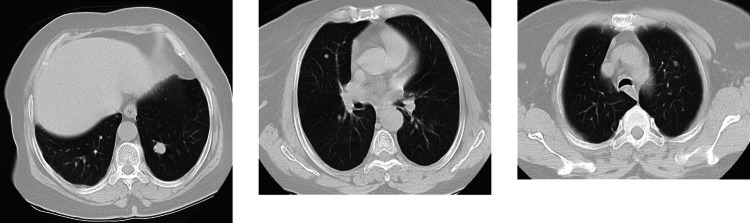 Figure 1
- —Università degli Studi della Campania Luigi Vanvitelli
Peer Reviews
No public reviews on file for this paper yet. If you reviewed it on a platform where reviews are public (OpenReview, ICLR, NeurIPS, ICML), you can paste yours below so the community can read it here.
Videos
No videos yet. Explain this paper in a talk, walkthrough, or lecture? Add one.
Taxonomy
TopicsMelanoma and MAPK Pathways · Cancer Immunotherapy and Biomarkers · Prostate Cancer Treatment and Research
Introduction
Prostate cancer is one of the most common neoplasms in men, often characterized by heterogeneous biology and, in advanced cases, complex therapeutic management. This complexity is magnified when there are concurrent oncological diseases, which pose significant challenges in terms of treatment sequencing, toxicity, and overall prognosis. In such scenarios, the choice of the most appropriate therapies—together with the integration of innovative diagnostic and therapeutic approaches—becomes crucial to optimize patient outcomes. We present the clinical case of a patient with a diagnosis of both invasive melanoma and metastatic prostate cancer, treated off-label with pembrolizumab, highlighting the importance of a multidisciplinary strategy, the use of liquid biopsy and personalized molecular therapy, and the role of comprehensive genomic profiling in the management of such complex cases. This case underscores how modern oncology increasingly relies not only on the standard algorithms of prostate cancer management (which increasingly include novel systemic therapies for advanced disease) but also on tailoring treatment to the unique molecular and immunological profile of each patient, particularly when dealing with multiple malignancies and overlapping therapeutic landscapes.
Case report
Initial diagnosis of melanoma
A 68-year-old man underwent an excisional biopsy of a melanocytic lesion on his right thigh on December 9, 2020. The lesion was diagnosed as an invasive melanoma. Breslow thickness: 2 mm. Ulceration: present. Mitosis: 3/mm 2. Microscopic satellitosis: absent. Regression: not evident. Tumor-infiltrating lymphocytes (TILs): absent. Perineural infiltration: absent. Neoplastic vascular embolism: absent. Margins of exeresis: absent. On February 4, 2021, he underwent a radical surgical procedure and a sentinel lymph node biopsy in the right inguinal region. The biopsy revealed the presence of melanoma metastases, classifying his stage as pT3bN1a, IIIC, with a BRAF V600E mutation [1]. After the diagnosis, the patient underwent a radiological staging through a total body computerized tomography (CT) scan and 18- Fluorodeoxyglucose (FDG) computerized tomography (CT)/positron emission tomography PET scan which revealed the presence of a single pulmonary lesion with increased metabolic grading.
Targeted therapy and onset of urinary symptoms
Starting from April 2021, after discussion at the multidisciplinary group, considering the stage and molecular characteristics of disease, as well as the patients wish, he began first-line targeted therapy with Dabrafenib and Trametinib, a therapeutic combination chosen based on the presence of the BRAF V600E gene driver mutation [2]. In July 2021, the patient presented symptoms of dysuria and stranguria, leading to a urological visit and a multiparametric magnetic resonance imaging (MRI) of the prostate. Even though the prostatic specific antigen (PSA) value was negative, the examination revealed the presence of a large, heterogeneous solid tissue, classified as Prostate Imaging Reporting and Data System (PI-RADS) 5, indicative of a highly suspicious malignant lesion. Concurrently, a total body CT scan showed a doubling of the size of the pulmonary lesion and the appearance of new bilateral solid lesions. The patient’s history of BRAF V600–mutated melanoma and prior treatment with combined BRAF/MEK inhibition may also be relevant to the observed immunotherapeutic response. Beyond its direct antiproliferative effect on tumour cells, it is plausible that the prior dabrafenib/trametinib regimen indirectly contributed to the exceptional subsequent response to pembrolizumab by favorably modulating the tumour immune microenvironment [3]. Indeed, preclinical and clinical data in BRAF-mutant melanoma demonstrate that BRAF and MEK inhibition led to increased tumour-infiltrating lymphocytes (TILs), enhanced antigen presentation and reduced expression of immunosuppressive cytokines (such as IL-6 and IL-8) [3, 4]. These changes effectively convert an immunologically ‘cold’ tumour milieu into a more ‘hot’ and immune-responsive context. While we lack direct immunologic readouts (e.g., TIL quantification, PD-L1 expression) in our patient, the sequence of events – namely, BRAF/MEK targeted therapy, followed by a durable complete remission on anti-PD-1 therapy in a POLE-mutated ultramutated prostate cancer – supports the hypothesis of immune priming by the prior targeted regimen. This suggests that in exceptional responses to immune checkpoint inhibitors, oncologists should consider not only tumour genotype (e.g., POLE mutation, TMB high) but also the history of prior targeted treatments and their possible immunomodulatory impact. Future studies are needed to clarify whether prior MAPK pathway inhibition can synergize with immunotherapy and to better define the interplay between targeted therapy and immunotherapy.
Diagnosis of metastatic prostate cancer
The case was discussed in the multidisciplinary oncology group, where, after reviewing the images, in view of the increased size of the right lung lesion, the patient was candidate for CT-guided fine-needle aspiration cytology (FNAC), in order to make the differential diagnosis. The pulmonary biopsy confirmed the presence of metastases from carcinoma, with a primary prostate origin.
Molecular profiling through liquid and tissue biopsy
On August 24, 2021, the patient underwent a liquid biopsy using the Foundation One CDx test, an advanced genetic test approved by the Food and Drug Administration (FDA) to analyze circulating tumor DNA (ctDNA) in the blood. This test is particularly useful for identifying mutations, genetic rearrangements, and copy number alterations of specific genes related to various types of cancer. In this patients case, the test revealed an extremely high TMB of 421 mutations per megabase (Muts/Mb), likely due to the presence of the pathogenic P286R mutation in the POLE gene, specifically in the proofreading exonuclease domain.
In addition to this mutation, the patient had other significant genetic alterations involving key genes for melanoma and prostate tumors, including BRCA2, ATM, CHEK2, PTEN, SPOP, PIK3CA, PIK3R1, TP53, RB1, ERBB2, NF1, and POLE, while no B-RAF gene mutation was found to be ascribed to melanoma in history. These mutations are not specific to a single type of cancer, but their identification in the patients tumor profile can be crucial for guiding therapeutic decisions, especially in the context of targeted therapies and immunotherapy. The results of the liquid biopsy were supported by a tissue biopsy of the melanoma, which showed mutations in the BRAF V600E, MTAP, CDKN2A/B, P2RY8, and TERT genes, with a TMB of 5Muts/Mb. Moreover, MSI (microsatellite instability) status was assessed on the available prostate tumour specimen using next-generation sequencing (NGS) and microsatellite-loci analysis combined with mismatch-repair (MMR) gene evaluation. The tumour did not meet criteria for MSI-High (MSI-H) (for instance, MSIsensor score < 10, no detected deleterious MMR gene variants and no loss of MMR protein expression on immunohistochemistry). Thus, the tumour was classified as microsatellite stable (MSS) despite the ultramutated phenotype. This finding aligns with emerging evidence that pathogenic POLE-exonuclease-domain mutations can drive a high TMB through a mechanism distinct from classical MMR deficiency and MSI-H [5]. Indeed, in prostate cancer and other tumour types of POLE-mutated cases often show MSS status yet still demonstrate ultra-high mutational burden, suggesting that reliance solely on MSI-H status may underestimate immunogenic potential in such cases [5, 6].
Histological and radiological staging
The prostate biopsy, on the other hand, confirmed the diagnosis of acinar adenocarcinoma with comedonecrosis, classified as grade 10 (5 + 5) according to the Gleason combined score and belonging to group 5 according to the ISUP/Epstein classification. A subsequent total body CT scan confirmed the presence of bilateral pulmonary metastases, while a bone scan did not reveal secondary lesions, thus excluding the presence of bone metastases.
First- and second-line treatments
In October 2021, the case was newly discussed in the multidisciplinary oncology group, where, given the clinical stage, it was considered a priority to start first-line medical oncological treatment for prostate cancer, while the patient was referred for periodic clinical instrumental follow-up for melanocytic pathology. From November 2021 to March 2022, the patient underwent an initial oncological treatment with Triptorelin and Docetaxel, achieving a partial response to the therapies as evidenced by the RECIST criteria (Response Evaluation Criteria in Solid Tumors) [7]. However, in June 2022, due to disease progression in a pulmonary lesion, a second-line treatment was initiated, including Abiraterone, Deltacortene, and Triptorelin, integrated with stereotactic radiotherapy and radiotherapy on the prostatic bed [8].
Disease progression and initiation of immunotherapy
In June 2023, the patient registered further progression of the pulmonary lesions, reducing the available therapeutic options, and requiring the identification of an effective and safe treatment. In response to this, considering the restricted therapeutic alternatives and the high TMB shown in the Foundation liquid biopsy result, off-label administration of Pembrolizumab was started [9, 10]. The choice of this treatment was supported by the results of the Keynote-158 study, which demonstrated the efficacy of Pembrolizumab in patients with advanced and metastatic tumors, especially those with MSI-H status and high-TMB who had already received previous treatments, excluding colorectal tumors. Among these patients, those with prostate cancer were also included, providing a solid basis for the use of this drug in similar clinical cases [11–13].
Radiological response and current status
After three months of treatment, a first radiological evaluation showed a partial response, with a reduction in the size of the pulmonary lesions. This positive response was confirmed by a second evaluation in March 2024, indicating no evidence of target metastatic lesions at the lungs. Successive instrumental evaluations using total body CT scans performed every 3 months, the last one in February 2025, showed the persistence of the beneficial effects of the treatment. During the period of treatment with Pembrolizumab, the patient reported only grade 1 asthenia, a minimal and easily manageable side effect. Despite this, the patient continued with the treatment without significant interruptions, maintaining a good quality of life and effective control of the disease Fig. 1.Fig. 1. Sequential thoracic CT scans showing pulmonary metastases and treatment response. (A) Baseline CT (June 2023): multiple bilateral pulmonary metastases. (B) After 3 months of pembrolizumab (October 2023): partial reduction in lesion size. (C) After 6 months of treatment (March 2024): complete radiologic remission of lung lesions
Follow-up
In September 2025, a FoundationOne CDx tissue biopsy was performed on an archival tumor specimen obtained at the baseline. The genomic profiling revealed a set of mutations that partially overlapped with those identified by the initial liquid biopsy — including POLE P286R and alterations in ATM, CHEK2, PTEN, SPOP, PIK3CA, PIK3R1, RB1, ERBB2, NF1 — confirming a core molecular signature. Nonetheless, certain discordances were observed: notably, the TP53 alteration and the BRCA2 variant found in the liquid biopsy were not detected in the tissue‑based profile, possibly due to assay sensitivity differences or intratumoral heterogeneity. Further updates on the case are expected in the coming months.
Discussion
This case demonstrates the efficacy of pembrolizumab in a patient with metastatic prostate cancer, emphasizing the importance of considering innovative therapeutic options even in off-label regimens. A multidisciplinary management and a personalized approach allowed for excellent treatment tolerance and effective disease control. Moreover, this case underscores the critical role of liquid biopsy and molecular therapy in the management of patients with multiple tumors: the liquid biopsy revealed an extremely high tumour mutational burden (TMB) and significant key mutations, which guided our therapeutic decisions toward a more personalized and effective strategy. The adoption of therapies tailored to the patient’s specific genetic profile significantly improved the clinical outcome, highlighting the promise of precision medicine in complex oncological settings. In the broader clinical context, checkpoint inhibition in MSI-high (MSI-H) or TMB-high prostate cancer — although uncommon — has shown meaningful activity: durable responses to pembrolizumab were observed in selected mCRPC patients with MSI-H—and even in some with TMB-high disease. Our case adds further evidence with a durable complete pulmonary response in a high-TMB mCRPC (driven by POLE mutation) and reinforces the value of comprehensive genomic profiling for optimal treatment selection (Table 1).Table 1. Clinical studies of pembrolizumab in metastatic prostate cancer with MSI-H/dMMR or high TMB ^1^StudySetting/NBiomarkerTreatmentOutcome[14]mCRPC (N = 1)MSI-H/dMMR (somatic EPCAM, MSH2, MSH6 co-deletion)PembrolizumabExceptional response[15]mCRPC (N = 1)MMR-deficientPembrolizumabDurable response[16]mCRPC (MSI-H subset, N = 12)MSI-H/dMMRPembrolizumabPSA50 = 75%; ORR ~ 57% (radiographic)[17]mCRPC (N = 1)MSI-HPembrolizumabPartial response; PSA decline[18]t-NEPC (treatment-related neuroendocrine prostate carcinoma) in CRPC (N = 1)High TMB (tumor mutational burden)Pembrolizumab ~ 75% reduction of retroperitoneal mass[19]mCRPC (N = 1)MSI-High & TMB-HighPembrolizumabMarked PSA reduction and shrinkage of metastasesNotes: a. ORR = overall response rate; PSA50 = prostate-specific antigen decline ≥ 50%.b. Some studies include single-case reports; sample sizes are small.c. Treatment lines prior to pembrolizumab vary across studies.
Materials and methods
Clinical data collection Clinical and pathological data were retrospectively retrieved from medical records, imaging studies, histological reports, and multidisciplinary tumor board discussions. The case was managed at a tertiary referral academic center, and all diagnostic and therapeutic procedures were performed according to standard clinical practice.
Histopathological diagnosis and staging
Melanoma diagnosis and staging were based on the AJCC 8th edition criteria. Prostate cancer was diagnosed as acinar adenocarcinoma and classified according to the ISUP/Epstein grading system. Gleason scoring was performed on biopsy specimens. No bone metastases were detected on bone scintigraphy.
Radiological assessments
Radiological evaluations were performed with total-body computed tomography (CT) scans every three months. Tumor response was assessed using RECIST version 1.1 (Response Evaluation Criteria in Solid Tumors), and findings were reviewed during multidisciplinary tumor board meetings.
Genomic profiling and liquid biopsy
Molecular characterization was performed using FoundationOne® Liquid CDx (Foundation Medicine, Inc., Cambridge, MA), an FDA-approved assay for comprehensive genomic profiling of ctDNA. This test identifies SNVs, copy number variations, gene rearrangements, and genomic signatures such as TMB and MSI. TMB was reported as mutations per megabase (Muts/Mb). In this case, a POLE P286R mutation was identified in the proofreading exonuclease domain, consistent with an ultramutated phenotype. Tissue NGS analysis confirmed additional alterations in genes including BRCA2, ATM, TP53, and others.
Treatment approach
Therapeutic decisions, including the initiation of off-label pembrolizumab, were made in a multidisciplinary context based on disease progression, molecular findings, and limited standard treatment options. All treatments were administered according to institutional protocols and guidelines. Ethical compliance The patient provided written informed consent for off-label treatment administration and for the publication of anonymized clinical data and images.