Bibliometric analysis of stereotactic ablative radiotherapy for oligometastases
Yupeng Di, Zhuo Song, Yingjie Wang, Lingling Meng, Jing Li

TL;DR
This paper analyzes global research trends in using SABR for treating oligometastases, showing growth and key contributors in the field.
Contribution
A comprehensive bibliometric analysis of SABR for oligometastases, identifying trends, key players, and research hotspots.
Findings
Research on SABR for oligometastases has grown significantly since 2006.
The U.S., Italy, and Canada lead in research output, with Humanitas University as a top institution.
Immunotherapy integration and AI are emerging research hotspots in the field.
Abstract
Oligometastases, an intermediate stage of metastatic cancer, are increasingly managed with Stereotactic Ablative Radiotherapy (SABR), a highly precise local therapy representing a pivotal paradigm shift for improving patient outcomes. This study aimed to comprehensively map the research landscape of SABR for oligometastases. We conducted a cross-sectional bibliometric analysis of 1,066 publications from the Web of Science Core Collection and PubMed from January 1, 2006, to December 31, 2025. Publication trends, key contributors, and collaboration networks were quantified and visualized using bibliometrix, VOSviewer, and CiteSpace. Our results indicate significant and consistent growth in this field since 2006, with the United States, Italy, and Canada as leading countries, and Humanitas University among the most productive institutions, alongside key authors like Marta Scorsetti.…
Genes, proteins, chemicals, diseases, species, mutations and cell lines named across the full text — each resolved to its canonical identifier and authoritative record.
Click any figure to enlarge with its caption.
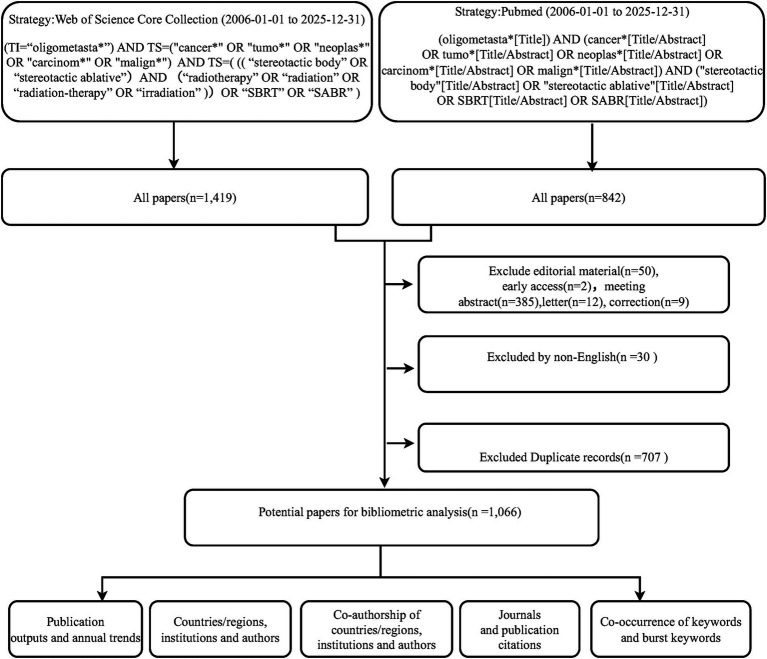 Figure 1
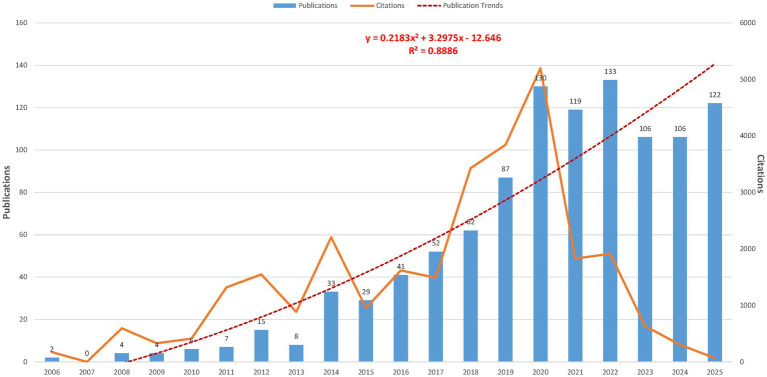 Figure 2
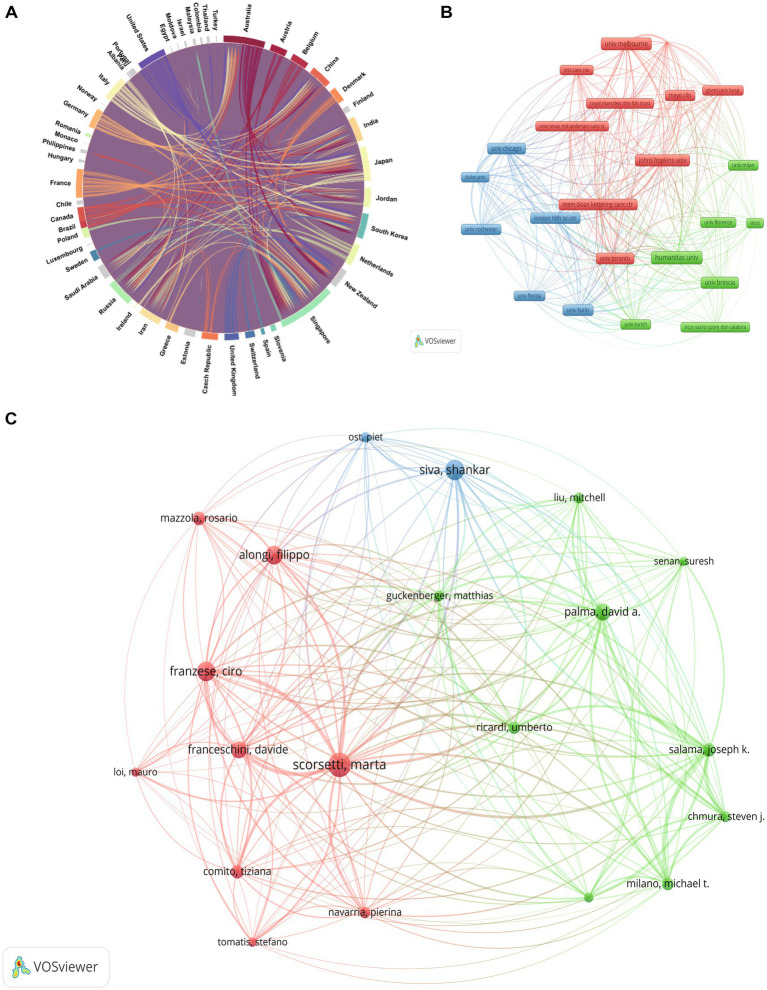 Figure 3
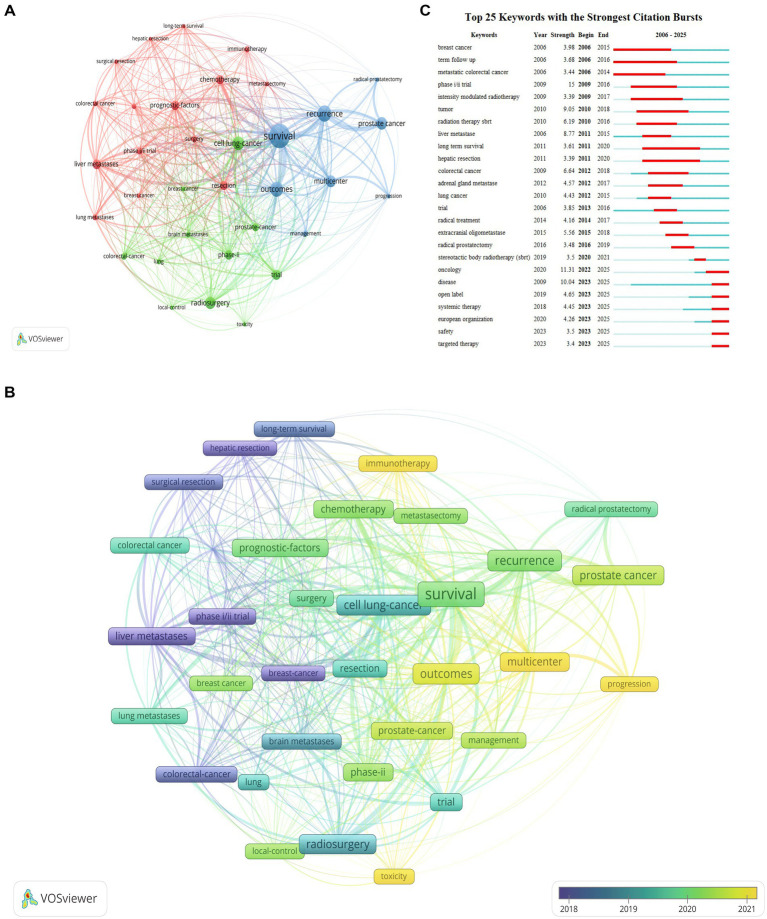 Figure 4
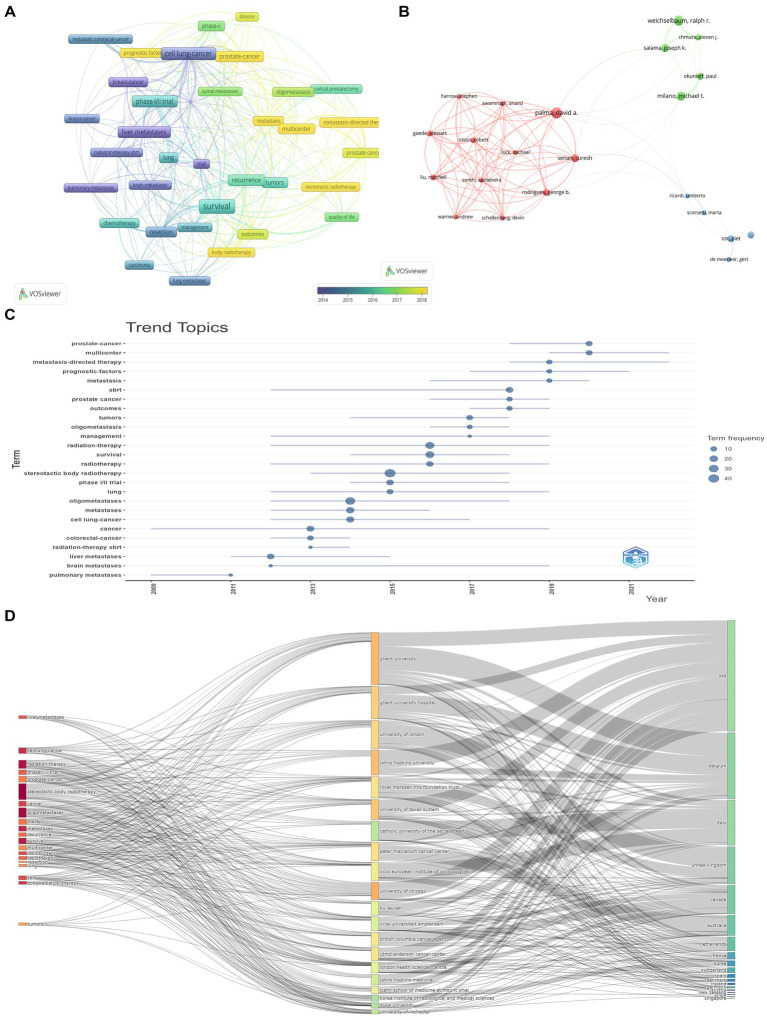 Figure 5
| Rank | Country/Region | Publications | Publications (%) | Citations |
|---|---|---|---|---|
| 1 | United States | 230 | 21.6 | 9,304 |
| 2 | Italy | 140 | 13.1 | 2,816 |
| 3 | Canada | 69 | 6.5 | 4,929 |
| 4 | China | 57 | 5.3 | 594 |
| 5 | Germany | 43 | 4.0 | 901 |
| 6 | Japan | 43 | 4.0 | 926 |
| 7 | France | 38 | 3.6 | 510 |
| 8 | United Kingdom | 36 | 3.4 | 1,110 |
| 9 | Australia | 35 | 3.3 | 1,303 |
| 10 | Belgium | 29 | 2.7 | 3,157 |
| Rank | Institution | Country | Total publications | Citations |
|---|---|---|---|---|
| 1 | Humanitas University | Italy | 38 | 675 |
| 2 | University of Melbourne | Australia | 36 | 1,568 |
| 3 | Peter MacCallum Cancer Centre | Australia | 33 | 1,392 |
| 4 | Johns Hopkins University | United States | 30 | 1850 |
| 5 | University of Brescia | Italy | 29 | 408 |
| 6 | Memorial Sloan Kettering Cancer Center | United States | 28 | 584 |
| 7 | University of Toronto | Canada | 27 | 489 |
| 8 | University of Chicago | United States | 26 | 2,531 |
| 9 | London Health Sciences Centre | Canada | 24 | 4,183 |
| 10 | University of Turin | Italy | 24 | 2,305 |
| Rank | Author | Country | Total publications | Total citations | Average citations | H-index | g-index |
|---|---|---|---|---|---|---|---|
| 1 | Marta Scorsetti | Italy | 36 | 2,224 | 62 | 20 | 48 |
| 2 | Shankar Siva | Australia | 30 | 1,349 | 45 | 17 | 33 |
| 3 | Ciro Franzese | Italy | 29 | 499 | 17 | 15 | 22 |
| 4 | Filippo Alongi | Italy | 28 | 786 | 28 | 16 | 30 |
| 5 | David A. Palma | Canada | 25 | 4,115 | 165 | 17 | 28 |
| 6 | Davide Franceschini | Italy | 25 | 519 | 21 | 14 | 23 |
| 7 | Joseph K. Salama | United States | 20 | 1,563 | 78 | 16 | 21 |
| 8 | Tiziana Comito | Italy | 20 | 526 | 26 | 14 | 23 |
| 9 | Umberto Ricardi | Italy | 19 | 2,205 | 116 | 13 | 22 |
| 10 | Michael T. Milano | United States | 19 | 1781 | 94 | 14 | 19 |
| 11 | Pierina Navarria | Italy | 17 | 549 | 32 | 14 | 22 |
| 12 | Steven J. Chmura | United States | 16 | 1,138 | 71 | 11 | 16 |
| 13 | Matthias Guckenberger | Switzerland | 16 | 1,601 | 100 | 16 | 27 |
| 14 | Mitchell Liu | United States | 16 | 3,234 | 202 | 15 | 19 |
| 15 | Ralph R. Weichselbaum | United States | 15 | 2,103 | 140 | 13 | 15 |
| 16 | Piet Ost | Belgium | 15 | 2,818 | 188 | 14 | 21 |
| 17 | Suresh Senan | Netherlands | 14 | 3,732 | 267 | 12 | 14 |
| 18 | Simon S. Lo | United States | 12 | 651 | 54 | 10 | 12 |
| 19 | Phuoc T. Tran | United States | 12 | 497 | 41 | 12 | 19 |
| 20 | Alexander V. Louie | Canada | 11 | 2,797 | 254 | 11 | 16 |
| Rank | Source | Category | IF (2024) | Number of articles (percentage) | Total citations |
|---|---|---|---|---|---|
| 1 |
| Oncology | 6.5 | 70 (6.6%) | 2,569 |
| 2 |
| Oncology | 5.3 | 44 (4.1%) | 2,140 |
| 3 |
| Oncology | 4.4 | 41 (3.8%) | 268 |
| 4 |
| Oncology | 3.5 | 29 (2.7%) | 447 |
| 5 |
| Oncology | 3.0 | 28 (2.6%) | 536 |
| 6 |
| Oncology | 3.2 | 25 (2.3%) | 916 |
| 7 |
| Oncology | 3.4 | 22 (2.1%) | 1,226 |
| 8 |
| Oncology | 2.7 | 16 (1.5%) | 100 |
| 9 |
| Oncology | 2.5 | 15 (1.4%) | 208 |
| 10 |
| Oncology | 3.2 | 14 (1.3%) | 276 |
| Rank | Title (author) | Year | Journal | Local citations (within analyzed corpus) | Total citations | H-index |
|---|---|---|---|---|---|---|
| 1 | Stereotactic Ablative Radiotherapy Versus Standard of Care Palliative Treatment in Patients with Oligometastatic Cancers (SABR-COMET): a Randomized, Phase 2, Open-Label Trial (Palma DA) | 2019 |
| 294 | 1,473 | 20 |
| 2 | Surveillance or Metastasis-Directed Therapy for Oligometastatic Prostate Cancer Recurrence: a Prospective, Randomized, Multicenter Phase II Trial (Ost P) | 2018 |
| 229 | 1,066 | 17 |
| 3 | Characterization and Classification of Oligometastatic Disease: a European Society for Radiotherapy and Oncology and European Organization for Research and Treatment of Cancer Consensus Recommendation (Guckenberger M) | 2020 |
| 200 | 804 | 16 |
| 4 | Stereotactic Ablative Radiotherapy for the Comprehensive Treatment of Oligometastatic Cancers: Long-Term Results of the SABR-COMET Phase II Randomized Trial (Palma DA) | 2020 |
| 195 | 935 | 20 |
| 5 | Outcomes of Observation | 2020 |
| 174 | 884 | 9 |
| 6 | Oligometastases Revisited (Weichselbaum RR) | 2011 |
| 168 | 774 | 3 |
| 7 | Defining Oligometastatic Disease from a Radiation Oncology Perspective: an ESTRO-ASTRO Consensus Document (Lievens Y) | 2020 |
| 142 | 492 | 13 |
| 8 | Oligometastases Treated with Stereotactic Body Radiotherapy: Long-Term Follow-Up of Prospective Study (Milano MT) | 2012 |
| 122 | 373 | 8 |
| 9 | Stereotactic Body Radiotherapy for Oligometastases (Tree AC) | 2013 |
| 114 | 415 | 14 |
| 10 | Stereotactic Body Radiotherapy for Multisite Extracranial Oligometastases Final Report of a Dose Escalation Trial in Patients with 1 to 5 Sites of Metastatic Disease (Salama JK) | 2012 |
| 102 | 282 | 16 |
| Disease | Clinical trial | Phase | Study group | Primary outcome | Conclusions |
|---|---|---|---|---|---|
| Oligometastatic disease | Phase 2/3 | Patients with oligometastatic tumors (1–5 in bones/internal organs) aged >18 ( | Progression-free survival, 2 years; Time before the current drug line change, 2 years | Recruiting; no results available yet. The study aims to increase the effectiveness of stereotactic radiation therapy for oligometastases compared with palliative therapy. | |
| Metastatic breast cancer | Phase 3 | Patients with breast cancer, oligometastasis, and metastatic breast cancer ( | Overall survival after second registration, 5 years | Recruiting; no results available yet. The trial aims to evaluate the efficacy of metastasis-directed therapy combined with systemic therapy for oligometastatic breast cancer. | |
| Renal cell carcinoma metastatic | Phase 3 | Randomized controlled trial evaluating SBRT efficacy in oligometastatic renal cell carcinoma ( | Progression free survival (PFS), up to 5 years | Recruiting; no results available yet. The study aims to determine if SBRT plus standard systemic therapy prolongs survival and impacts toxicity/QoL compared to standard systemic therapy alone. | |
| Metastatic prostate cancer | Phase 2/3 | Veterans with oligometastatic prostate cancer (1–10 sites) ( | Castration-resistant prostate cancer-free survival (CRPC-free survival), 4 years | Recruiting; no results available yet. The study aims to compare standard systemic therapy with or without PET-directed local therapy in improving CRPC-free survival for Veterans with oligometastatic prostate cancer. | |
| Colorectal neoplasms malignant | Phase 2 | Colorectal cancer patients with newly developed pulmonary oligometastases and NED after surgical resection ( | Time Without Systemic Therapy, 2 years | Recruiting; no results available yet. The study aims to determine if systemic treatment should be added after local treatment for newly developed pulmonary oligometastases in colorectal cancer patients who have achieved No Evidence of Disease (NED). |
Peer Reviews
No public reviews on file for this paper yet. If you reviewed it on a platform where reviews are public (OpenReview, ICLR, NeurIPS, ICML), you can paste yours below so the community can read it here.
Videos
No videos yet. Explain this paper in a talk, walkthrough, or lecture? Add one.
Taxonomy
TopicsHepatocellular Carcinoma Treatment and Prognosis · Prostate Cancer Treatment and Research · Brain Metastases and Treatment
Introduction
1
Oligometastases, a state of limited metastatic disease, represent an intermediate phase between localized and widespread metastatic cancer. Globally, a significant proportion of cancer patients will develop metastases during their disease course. Among these, it is estimated that approximately 20 to 50% of patients with advanced disease—depending on the primary tumor type, such as prostate, breast, or non-small cell lung cancer—initially present with a limited number of metastatic lesions, characterizing the oligometastatic state. This widespread global incidence highlights a crucial clinical challenge and emphasizes the need for specialized management strategies. This concept challenges the traditional dogma that metastatic disease is uniformly incurable, prompting the exploration of aggressive local therapies in conjunction with systemic treatments (1). Stereotactic ablative radiotherapy (SABR), also known as stereotactic body radiation therapy (SBRT), is a highly precise form of radiation therapy that delivers high doses to extracranial tumors with sub-millimeter accuracy, typically in a few fractions (2, 3). Owing to its ability to achieve high rates of local control with minimal toxicity, SABR is positioned as a promising therapeutic modality for patients with oligometastases (4–6). The application of SABR in this setting signifies a paradigm shift in cancer management, offering the potential for improved progression-free survival, overall survival, and even cure in select patients. This transformation is comprehensively illustrated in Supplementary Figure 1.
The rapid evolution and increasing adoption of SABR for oligometastases necessitate a comprehensive understanding of its research landscape. Bibliometric analysis serves as a powerful quantitative tool to map the intellectual structure, identify emerging trends, and evaluate the impact of scientific research within a specific field. By analyzing publication patterns, authorship, institutional collaborations, and citation metrics, bibliometric studies provide invaluable insights into the growth, key players, and thematic development of a research area.
This study aims to provide a comprehensive bibliometric analysis of publications related to SABR for oligometastases, utilizing data extracted from the Web of Science Core Collection (WoSCC) and PubMed up to December 31, 2025. This analysis elucidates publication trends, leading countries, institutions, and authors, as well as influential journals and highly cited articles. Furthermore, it explores the conceptual evolution and key advances in the field, identifies challenges, and discusses future perspectives such as the integration of Artificial Intelligence (AI). The findings will not only enhance our understanding of the current status of SABR research but also provide valuable insights to guide future investigations and clinical applications.
Materials and methods
2
Search strategy and data collection
2.1
This cross-sectional study analyzed publications spanning the period from January 1, 2006, to December 31, 2025. The exact literature search and data download were concurrently conducted on January 5, 2026. To ensure comprehensive and high-quality coverage of the literature, both the Web of Science Core Collection (WoSCC) and PubMed databases were utilized as data sources. For WoSCC, the Science Citation Index Expanded (SCI-EXPANDED) and Social Sciences Citation Index (SSCI) indices were used, and no restrictions were applied to the citation indexes. To avoid analytical bias and ensure data integrity, a rigorous screening and deduplication process was performed. The detailed process of data collection and retrieval is illustrated in Figure 1 and further detailed in a PRISMA-style flow diagram (Supplementary Figure 2). The retrieved publications met the following criteria.
The data collection and retrieval strategy flow chart based on Web of Science and PubMed databases (2006–2025).
First, specific search strings were designed (fully executable search strings are provided in Supplementary File 1). For WoSCC, the query was: (TI = “oligometasta*”) AND TS = (“cancer*” OR “tumo*” OR “neoplas*” OR “carcinom*” OR “malign*”) AND TS = (((“stereotactic body” OR “stereotactic ablative”) AND (“radiotherapy” OR “radiation” OR “radiation-therapy” OR “irradiation”)) OR “SBRT” OR “SABR”). The restriction of the term “oligometasta*” explicitly to the Title field was intentionally applied to precisely capture studies where the oligometastatic state is the central focus, thereby minimizing false-positive results from casual mentions in abstracts. For PubMed, the query similarly restricted “oligometasta*” to Title.
Second, the timeframe was strictly limited to publications from January 1, 2006, to December 31, 2025. Third, regarding document types in WoSCC, meeting abstracts, editorial materials, letters, corrections, and early access records were excluded. Fourth, only articles published in English were included. Finally, following database integration, a rigorous deduplication algorithm was applied using EndNote software; duplicates were removed matching primary Digital Object Identifiers (DOIs), followed by exact title and author matching. Any remaining fuzzy conflicts were resolved manually. Following the removal of 707 duplicate records, a total of 1,066 valid records were ultimately included.
Data analysis and visualization
2.2
The R package bibliometrix (v4.4.1) was used to quantify the number of publications, journals, and local citations (explicitly defined here as citations strictly occurring within the analyzed 1,066-record dataset, distinguishing them from total global database citations) (7–9). VOSviewer software (version 1.6.17) was utilized to create visualized network maps by extracting bibliographic information on authors, institutions, citations, and keywords, detailing their interrelationships (10). CiteSpace (v6.1.R6) was applied to detect keyword citation bursts (11, 12). Journal Impact Factors (IF) were obtained from the 2024 Journal Citation Reports to ensure chronological consistency across tables.
Research ethics
2.3
All data were obtained and downloaded from publicly available databases (WoSCC and PubMed). The study did not interact with human subjects or animals, and no patient-level or identifiable data were used; thus, ethical approval was not required.
Results
3
Analysis of publication outputs and annual publication trends
3.1
In total, 1,066 unique publications related to SABR for oligometastases were retrieved from WoSCC and PubMed up to December 31, 2025. The annual publication trends, along with their citations, are depicted in Figure 2. Research in this domain has exhibited remarkable and consistent growth since 2006. The number of publications has steadily increased, peaking significantly in recent years. The annual publication count demonstrates a strong upward trajectory. The trend is well-described by a quadratic equation: y = 0.2183x^2^ + 3.2975x − 12.646, with a high coefficient of determination (R^2^ = 0.8886), signifying a robust growth pattern.
Annual publication and citation trends regarding SABR for oligometastases research (2006–2025).
Distribution of countries/regions, institutions and authors
3.2
A total of 59 countries/regions contributed to the publications in the current study (Table 1). The United States submitted the highest volume of publications (n = 230, 21.6%), followed by Italy (n = 140, 13.1%), and Canada (n = 69, 6.5%). The strong collaborative networks among these countries are visualized in Figure 3A, where the USA acts as a central, extensively connected node; Italy forms a prominent cluster; and Canada also demonstrates strong connectivity.
Co-authorship network of countries/regions (A), institutions (B), and authors (C). (A) The USA (blue) acts as a central node with extensive connections, indicating its significant role in collaborations. Italy (yellow) forms a prominent collaborative cluster, and Canada (orange-red) also demonstrates strong connectivity. (B) Among 23 institutions, 3 clusters were identified. Cluster 1 includes major research institutions such as Johns Hopkins University and the University of Melbourne. Cluster 2 is primarily composed of Italian institutions like Humanitas University and the University of Brescia. Cluster 3 features institutions such as Duke University and the University of Chicago. (C) Key authors such as Marta Scorsetti, Shankar Siva, and David A. Palma are prominent contributors in this field.
These publications originated from a diverse range of institutions. The top 10 productive institutions are listed in Table 2. Humanitas University (Italy) led with 38 publications. The institutional co-authorship network in Figure 3B categorizes these into 3 clusters: Cluster 1 encompasses major institutions like Johns Hopkins University and the University of Melbourne; Cluster 2 primarily consists of Italian institutions; and Cluster 3 features institutions like Duke University.
The top 20 productive authors are listed in Table 3. Marta Scorsetti (Italy) was the most productive author with 36 publications. Shankar Siva (Australia) followed with 30 publications. Notably, David A. Palma (Canada) achieved an exceptionally high average citation count of 165. The co-authorship network of key authors is presented in Figure 3C, highlighting strong research communities and deep cross-institutional collaborations driving advancements in SABR for oligometastases.
The co-occurrence of keywords and burst keyword detection
3.3
Keyword analysis provides insights into the thematic structure and evolution of the field. Figure 4 illustrates a keyword co-occurrence cluster analysis (A) and burst keyword detection (C). Figure 4A identified 3 clusters. Cluster 1 primarily focuses on cancer types (e.g., breast cancer, colorectal cancer), metastatic sites, and systemic treatments (e.g., chemotherapy, immunotherapy). Cluster 2 emphasizes specific cancers (e.g., brain metastases, lung cancer), local control, and radiosurgery. Cluster 3 revolves around the management and survival outcomes of prostate cancer. Furthermore, Figure 4C highlights emerging research frontiers, including the combined application of SABR with immunotherapy, personalized treatment strategies, and the optimization of SABR for specific sites.
Keyword co-occurrence cluster analysis (A) and burst keyword detection (C). (A) Three clusters were identified. Cluster 1 (15 items) primarily focuses on cancer types (e.g., breast cancer, colorectal cancer), metastatic sites (e.g., liver metastases, lung metastases), surgical interventions and systemic treatments (e.g., chemotherapy, immunotherapy), long-term survival, clinical trials, and prognostic factors. Cluster 2 (11 items) emphasizes specific cancers (e.g., brain metastases, lung cancer, prostate cancer), local control, radiosurgery, and toxicity. Cluster 3 (8 items) revolves around the management, recurrence, and survival outcomes of prostate cancer. SABR for oligometastases has been a research hotspot in recent years, particularly concerning its combination with different cancer types and treatment strategies. (B) Time-overlay network visualization of keywords, indicating the trends and connections over time. (C) Emerging research frontiers include the combined application of SABR with immunotherapy, the role of AI in treatment planning and prediction, personalized treatment strategies, and the optimization of SABR for specific metastatic sites (e.g., brain metastases).
Analysis of source journals and publication citations
3.4
Numerous journals were involved in publications related to SABR for oligometastases. The top 10 journals are listed in Table 4. The International Journal of Radiation Oncology Biology Physics was the most productive journal with 70 articles (6.6%), followed by Radiotherapy and Oncology with 44 articles (4.1%), and Cancers with 41 articles (3.8%). This indicates that oncology-focused journals are the primary outlets to publish and disseminate research in this domain.
The top 10 highest locally cited articles are listed in Table 5. Notably, the top two articles—SABR-COMET (13) and STOMP (14)—published in The Lancet and Journal of Clinical Oncology respectively, are pivotal clinical trials that have significantly shaped the understanding and practice of SABR for oligometastases.
Analysis of high-impact publications
3.5
A stratified analysis of highly cited publications emphasizes influential contributions to the field (Figure 5). As shown in Table 5 and further explored in Figure 5, the most highly cited articles primarily consist of clinical trials providing robust evidence for the efficacy and safety of SABR. The co-occurrence evolution network presented in Figure 5A clearly demonstrates that historical research primarily focused on basic metastasis identification, whereas recent trends heavily favor metastasis-directed therapy and long-term quality of life assessments. Figure 5B details the tight-knit scientific communities driving these landmark papers, revealing multi-institutional author clusters that dominate the citation landscape. Figure 5C tracks these specific trend topics over time, showing a sharp rise in “SABR safety and phase 2 validations” post-2018. Finally, the Alluvial Diagram in Figure 5D maps the direct flow of these highly cited paradigms to specific contributing institutions (such as University of Melbourne and Johns Hopkins) and their respective countries, confirming that early adoption of clinical trials by these specific hubs directly correlated with their current global influence in the oligometastases field.
Analysis of the top 10% highly cited publications. (A) Keyword co-occurrence evolution network. Research trends have shifted from focusing on general cancer treatment and metastasis identification, towards precise, targeted therapies for metastatic diseases (e.g., metastasis-directed therapy, oligometastasis), and emphasizing a comprehensive evaluation of patient survival, quality of life, and prognostic factors. Multicenter clinical trials and research are also becoming increasingly important. (B) Co-authorship network. The figure clearly shows the author co-authorship network divided into three closely collaborating clusters, highlighting that researchers primarily engage in deep collaboration within their respective teams. (C) Trend topics evolution chart. (D) Alluvial diagram. This alluvial diagram visually depicts, through flow lines, how highly-cited research topics (particularly in cancer treatment and metastasis management) are channeled to specific contributing institutions, and subsequently attributed to their respective countries, thereby clearly revealing the global research landscape’s institutional expertise, collaborative networks, and national influence within these specialized areas.
Discussion
4
Global trends and conceptual evolution in SABR for oligometastases research
4.1
This bibliometric analysis unequivocally demonstrates robust and accelerating growth in research concerning SABR for oligometastases over the past two decades. This surge is reflected in the increasing annual publication volume and citation counts (Figure 2), signifying a maturing field with substantial academic interest and clinical impact. The global distribution of research, with the United States, Italy, and Canada as leading contributors (Table 1), highlights widespread recognition of SABR’s potential, as detailed in their co-authorship networks (Figure 3A). The prominence of specialized cancer centers and universities (Table 2) further underscores the interdisciplinary nature of this research, involving radiation oncology, medical oncology, and surgical specialties (Figure 3B).
Supplementary Figure 1 effectively illustrates how SABR has driven a “Paradigm Shift” in the treatment approach for oligometastatic cancers, decisively moving beyond the traditional “palliative-only” perspective. This transformation is characterized by a renewed focus on the potential for cure or long-term control and a strong emphasis on ablative local treatment (1, 2, 4, 15). Core “Modern SABR Features”—high-precision local ablation, non-invasive delivery, and synergy with systemic therapies—collectively underscore its role in offering aggressive strategies for limited metastatic disease (16).
The timeline in Supplementary Figure 1 details “Key advances in SABR for Oligometastases,” tracing its evolution from the foundational “Oligometastasis Hypothesis” (pre-2000) (17) to “Technical Maturation” (c. 2008) driven by 4D-CT and IGRT. Critical “Clinical Validation” arrived around 2017 with pivotal trials like SABR-COMET and ORIOLE (18, 19). More recently (c. 2020), the field entered an era of “Synergistic Integration,” characterized by the incorporation of AI-driven planning and SABR-immunotherapy combinations (16, 20). Looking forward to 2024 and beyond, trends point towards advanced “AI & Personalization,” indicating a dynamic future. This shift defines the contemporary landscape of oligometastases management.
Clinical evidence and emerging trials
4.2
The high citation counts for clinical trials (Table 5), discussed in Figure 5, underscore the field’s emphasis on evidence-based practice. The SABR-COMET trial, demonstrating improved survival with SABR, fundamentally altered clinical perceptions (21). Similarly, the ORIOLE trial provided robust data for SABR in oligometastatic prostate cancer (22). These studies have been instrumental in establishing the clinical utility of SABR.
Beyond established evidence, the field is actively exploring new indications through ongoing trials (Table 6). Phase II/III trials are currently recruiting for various sites, including breast cancer (NCT06135714), renal cell carcinoma (NCT06726421) (23–25), prostate cancer (NCT04787744) (26–28), and colorectal neoplasms (NCT06778382). These trials aim to evaluate SABR in combination with systemic therapies (16, 29), assess long-term outcomes, and explore SABR’s role in delaying systemic therapy (23). The ongoing “Stereotactic Radiotherapy for Oligometastasis (1–5) in Various Tumor Sites vs. Palliative Care” (NCT06556550) trial exemplifies efforts to broaden applications (30–32). These reflect a concerted effort to build a stronger evidence base for personalized strategies.
Challenges encountered by SABR research
4.3
Despite promising advancements, several challenges persist within the landscape of SABR research for oligometastases. First, accurate patient selection remains complex; identifying which patients will benefit most requires sophisticated imaging and molecular profiling (17, 33, 34). Second, optimizing the integration of SABR with evolving systemic therapies (e.g., immunotherapy) is crucial, with questions regarding sequencing and toxicity requiring further investigation (16, 24). Third, while local control is high, distant progression remains a concern (5, 35). Finally, long-term follow-up data from large-scale randomized trials are needed to fully understand the impact on overall survival and quality of life (32, 36).
Future perspectives
4.4
The future of SABR for oligometastases is poised for innovation. Precision medicine will be central, utilizing advanced biomarkers and genomic profiling to refine patient selection (33, 37–39). The integration of Artificial Intelligence (AI) holds immense promise for enhancing treatment planning and dose optimization, potentially leading to fully adaptive radiotherapy (20, 40). As indicated in Figure 4C, AI aids in identifying optimal candidates and predicting outcomes. Furthermore, research will focus on combinatorial strategies with novel systemic therapies to enhance efficacy (e.g., abscopal effect) (24, 27, 29). Advanced imaging techniques (e.g., PET-CT) will improve target delineation (41, 42). Finally, large international registries will facilitate robust, multi-institutional trials to solidify SABR’s role in curative-intent management (43–46). Finally, large international registries will facilitate robust, multi-institutional trials to solidify SABR’s role in curative-intent management (47–50).
Limitations
4.5
While this bibliometric analysis provides a quantitative overview, it has limitations. First, data were retrieved exclusively from WoSCC and PubMed, potentially excluding relevant grey literature. Second, the study did not assess the quality of individual publications beyond citation counts, potentially treating all articles equally. Third, this is not a systematic review or meta-analysis; thus, it does not provide quantitative comparisons of therapeutic efficacy. Fourth, the restriction of search terms (e.g., “oligometasta*”) to the title field to increase specificity may have introduced a potential selection bias, possibly excluding studies focusing broadly on “metastasis-directed therapy” or clinical trials where SABR is central but terminology varies in the abstract. Findings should be interpreted as reflective of core research trends rather than absolutely exhaustive clinical evidence. Lastly, citation metrics may overlook recent advances that have not yet accumulated citations.
Conclusion
5
This comprehensive bibliometric analysis reveals a dynamic and accelerating research landscape for SABR in oligometastases. Since 2006, the field has experienced remarkable and consistent growth in both publication volume and citation impact, driven by significant contributions from leading nations (USA, Italy, Canada) and prolific institutions. Landmark clinical trials (e.g., SABR-COMET, ORIOLE) underscore the robust evidence base, establishing SABR as a transformative modality with curative potential. Key themes revolve around specific cancer types, metastatic sites, and synergistic integration with systemic therapies and AI.
Future endeavors are expected to increasingly focus on precision medicine by leveraging advanced biomarkers and genomic profiling for refined patient selection. The integration of AI promises to optimize treatment planning. Furthermore, extensive research into combinatorial strategies, alongside advancements in imaging and international collaborations, will be vital to further solidify SABR’s role in the curative-intent management of oligometastatic disease.
The reference list from the paper itself. Each links out to its DOI / PubMed record.
- 1Reyes DK Pienta KJ. The biology and treatment of oligometastatic cancer. Oncotarget. (2015) 6:8491–524. doi: 10.18632/oncotarget.3455, 25940699 PMC 4496163 · doi ↗ · pubmed ↗
- 2Alongi F Arcangeli S Filippi AR Ricardi U Scorsetti M. Review and uses of stereotactic body radiation therapy for oligometastases. Oncologist. (2012) 17:1100–7. doi: 10.1634/theoncologist.2012-0092, 22723509 PMC 3425528 · doi ↗ · pubmed ↗
- 3Di Y Song J Meng L. Comment on: improved local control following dose-escalated stereotactic ablative radiation therapy (SABR) for metastatic sarcomas: an international multi-institutional experience. Radiother Oncol. (2024) 192:110062. doi: 10.1016/j.radonc.2023.11006238122849 · doi ↗ · pubmed ↗
- 4Palma DA Louie AV Rodrigues GB. New strategies in stereotactic radiotherapy for oligometastases. Clin Cancer Res. (2015) 21:5198–204. doi: 10.1158/1078-0432.CCR-15-0822, 26626571 · doi ↗ · pubmed ↗
- 5Tree AC Khoo VS Eeles RA Ahmed M Dearnaley DP Hawkins MA . Stereotactic body radiotherapy for oligometastases. Lancet Oncol. (2013) 14:E 28–37. doi: 10.1016/S 1470-2045(12)70510-7, 23276369 · doi ↗ · pubmed ↗
- 6Jing S Ma J Di Y Song J. Commentary on “comparing the oncologic outcomes of local tumor destruction vs. local tumor excision vs. partial nephrectomy in T 1a solid renal masses: a population-based cohort study from the SEER database.”. Int J Surg. (2024) 110:5881–2. doi: 10.1097/JS 9.0000000000001647, 38752493 PMC 11392194 · doi ↗ · pubmed ↗
- 7Aria M Cuccurullo C. Bibliometrix: an R-tool for comprehensive science mapping analysis. J Informetr. (2017) 11:959–75. doi: 10.1016/j.joi.2017.08.007 · doi ↗
- 8Che P Zuo C Tian J. Global trends in esophageal cancer and metabolic syndrome research: bibliometric analysis and visualization from 1995 to 2024. Discov Oncol. (2025) 16:398. doi: 10.1007/s 12672-025-02181-3, 40138022 PMC 11947393 · doi ↗ · pubmed ↗