[Corrigendum] Epithelial protein lost in neoplasm-α (EPLIN-α) is a potential prognostic marker for the progression of epithelial ovarian cancer
Rong Liu, Tracey A. Martin, Nicola J. Jordan, Fiona Ruge, Lin Ye, Wen G. Jiang

Abstract
Genes, proteins, chemicals, diseases, species, mutations and cell lines named across the full text — each resolved to its canonical identifier and authoritative record.
Click any figure to enlarge with its caption.
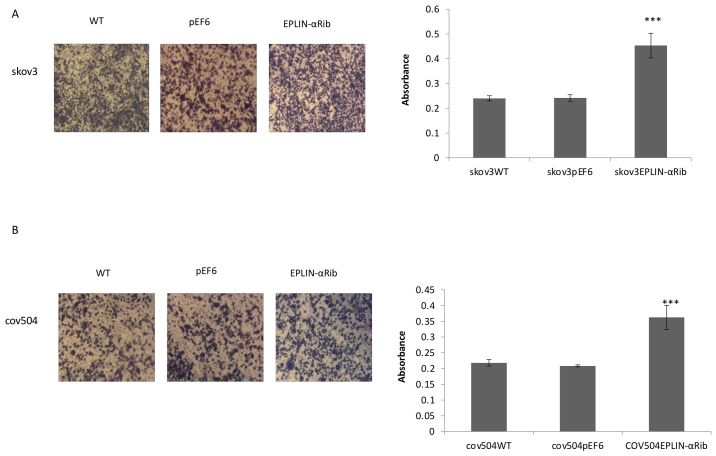 Figure 1
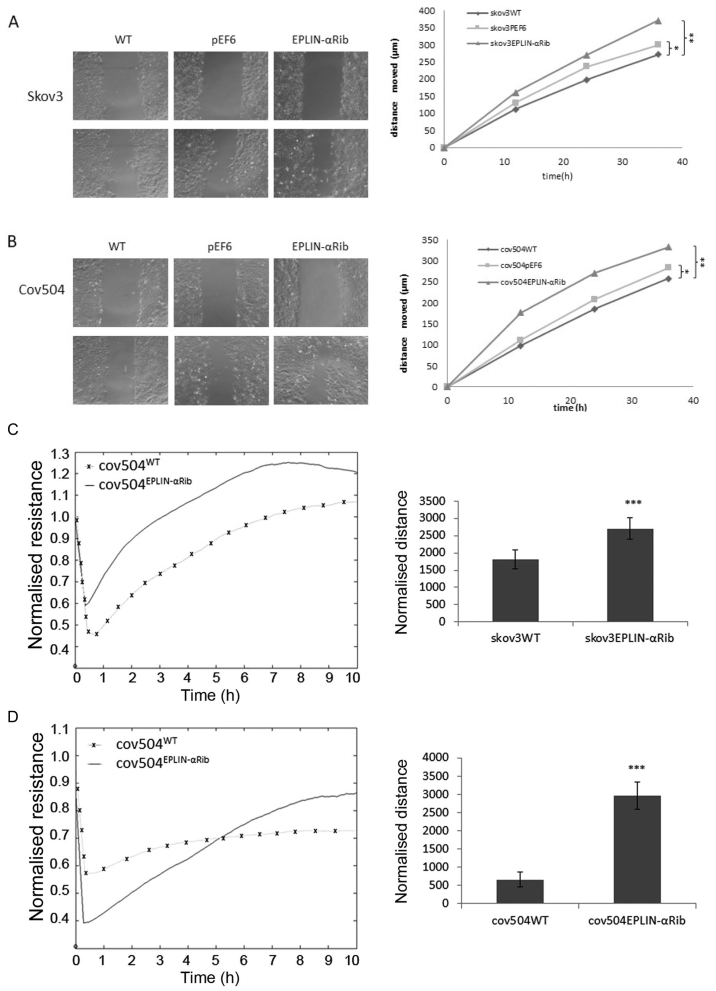 Figure 2
Peer Reviews
No public reviews on file for this paper yet. If you reviewed it on a platform where reviews are public (OpenReview, ICLR, NeurIPS, ICML), you can paste yours below so the community can read it here.
Videos
No videos yet. Explain this paper in a talk, walkthrough, or lecture? Add one.
Taxonomy
TopicsOvarian cancer diagnosis and treatment · Cellular transport and secretion · Toxin Mechanisms and Immunotoxins
Int J Oncol 48: 2488-2496, 2016; DOI: 10.3892/ijo.2016.3462
Following the publication of the above article, an interested reader drew to the authors' attention that, regarding the cell invasion assay experiments shown in Fig. 5A on p. 2493, the 'WT' and 'pEF6' data panels were strikingly similar, albeit the coloration of the images differed slightly from each other, suggesting that these images were derived from the same original source. A second reader also noted that, concerning the scratch-wound assay experiments shown in Fig. 6B, the images for the WT and pEF6 experiments at the 0 h (top panels) and 36 h (lower panels) time points contained overlapping sections (specifically, the 'WT/0 h' panel with the pEF6/0 h panel, and the 'WT/36 h' panel with the pEF6/36 h panel), suggesting that the two pairs of panels were likewise derived from the same original sources.
Upon examining their original data, the authors realized that these figures had been inadvertently assembled incorrectly. Revised versions of Figs. 5 and 6, now showing the correct data for the 'WT' panel in Fig. 5A and the pEF/0 h and pEF/36 h panels in Fig. 6B, are shown on the next two pages. Note that the errors made in assembling these figures did not have a gross effect on the conclusions reported in this study. The authors thank the Editor of International Journal of Oncology for granting them the opportunity to publish this corrigendum. All the authors agree with the publication of this corrigendum; furthermore, they apologize to the readership of the journal for any inconvenience caused.