Evaluation of the effect of essential oils of Cinnamomum zeylanicum and Eucalyptus globulus against Salmonella Enteritidis and Salmonella Gallinarum in broilers
Sidra Yasmin, Muhammad Taimoor, Hira Noor, Muhammad Nawaz, Aftab Ahmad Anjum, Kamran Ashraf

TL;DR
This study shows that essential oils from cinnamon and eucalyptus can reduce Salmonella in chickens and improve their growth and immunity, offering a natural alternative to antibiotics.
Contribution
The study demonstrates the effectiveness of Cinnamomum zeylanicum and Eucalyptus globulus essential oils as natural alternatives to antibiotics in controlling Salmonella in broiler chickens.
Findings
Cinnamomum zeylanicum essential oil significantly reduced Salmonella Enteritidis and Salmonella Gallinarum counts in broiler chickens.
Essential oil supplementation improved weight gain and immune response to Newcastle Disease Virus and Infectious Bursal Disease Virus.
EOs enhanced gut morphology by increasing villus length and mucosal surface area in the intestines.
Abstract
This study intended to assess the effect of Cinnamomum zeylanicum and Eucalyptus globulus essential oils (Eos) as an alternative to antibiotics on Salmonella spp. infection, antibiotic growth promotion, and immunomodulation in experimentally infected broiler chickens. Broiler chicks (n = 135) were randomly and equally divided into nine groups. From day 1, experimental groups were dietary supplemented with C. zeylanicum or E. globulus EOs. Salmonella Enteritidis (SE) and Salmonella Gallinarum (SG) counts in droppings, growth performance (weight gain, feed conversion ratio), humoral immune response to Newcastle Disease Virus (NDV) and Infectious Bursal Disease Virus (IBDV), and gut morphology were measured in birds. The antibiotic groups and the positive control group recorded significantly higher SE and SG counts compared to the EO groups. Cinnamomum zeylanicum recorded the highest…
Genes, proteins, chemicals, diseases, species, mutations and cell lines named across the full text — each resolved to its canonical identifier and authoritative record.
Click any figure to enlarge with its caption.
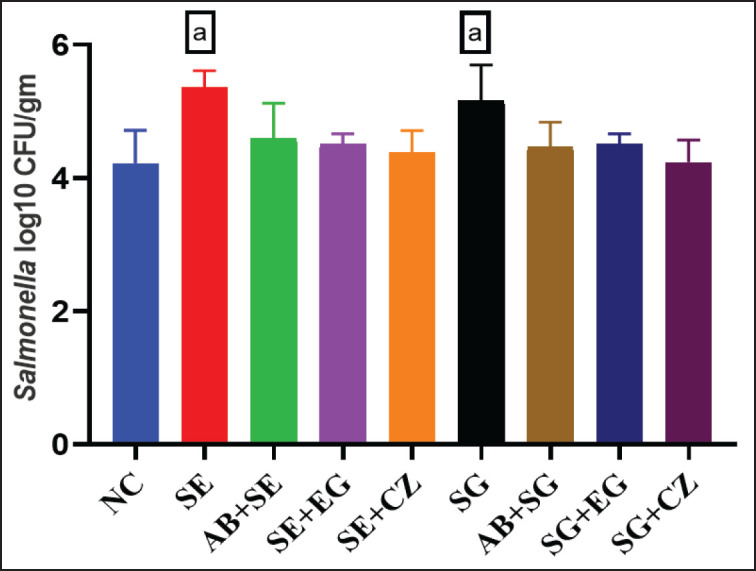 Figure 1
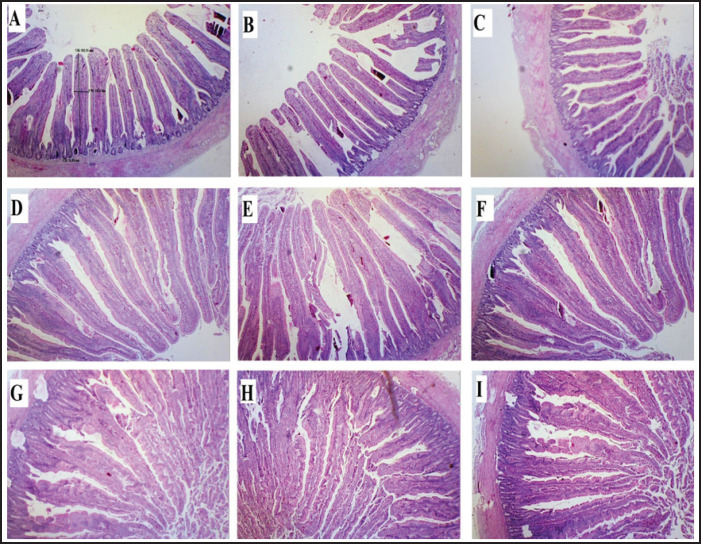 Figure 2
| Experimental plan | Grouping | Treatment |
|---|---|---|
| NC | NC | Group with no treatment |
| Positive control | SE | Group fed on antibiotic-free feed and challenged with SE (1.5×10⁸ CFU) at day 7. |
| SG | Group fed on antibiotic-free feed and challenged with SG (1.5×10⁸ CFU) at day 14 | |
| Preventive groups | SE+AB | Group fed on feed containing antibiotics and challenged with SE (1.5×10⁸ CFU) at day 7. |
| SG+AB | Group fed on feed containing antibiotics and challenged with SG (1.5×10⁸ CFU) at day 14. | |
| Treatment groups | SE+EG | Group challenged with SE and treated with E. globulus oil (1.5×10⁸ CFU/ml), day 7. |
| SE+CZ | Group challenged with SE and treated with C. zeylanicumm oil (1.5×10⁸ CFU/ml), day 7. | |
| SG+EG | Group challenged with SG and treated with E. globulus (1.5×10⁸ CFU/ml) on day 14, | |
| SG+CZ | Group challenged with SG and treated with C. zeylanicumm oil (1.5×10⁸ CFU/ml), day 14. |
| Parameter | Day | NC | SE | SE+AB | SE+EG | SE+CZ | SG | SG+AB | SG+EG | SG+CZ |
|---|---|---|---|---|---|---|---|---|---|---|
| Mean BW (gm) | 0 day | 40.7 ± 0.67a | 41 ± 0.66a | 40.9 ± 0.73a | 41.3 ± 0.48a | 41.3 ± 0.48a | 41 ± 0.66a | 40.6 ± 0.51a | 41 ± 0.66a | 41.1 ± 0.56a |
| 7th day | 144.4 ± 9.32a | 140.2 ± 6.54a | 154.2 ± 7.05a | 145.8 ± 8.77a | 140.1 ± 11.1a | 139.7 ± 1.49a | 150.7 ± 10.49a | 144.4 ± 3.89a | 151.5 ± 7.48a | |
| 14th day | 412 ± 17.5a | 335.7 ± 57.0b | 415 ± 26.3a | 426.9 ± 26.67a | 447.7 ± 31.1a | 367.5 ± 61.84b | 399 ± 20.24a | 398 ± 48.02a | 431.8 ± 20.8a | |
| 21st day | 743.9 ± 50.4a | 783.1 ± 35.9a | 732.4 ± 62.a | 793 ± 54.07a | 821 ± 22.25b | 701 ± 67.45a | 787.2 ± 74.4a | 838.7 ± 35.7b | 817.2 ± 16.6b | |
| 28th day | 1,213.8 ± 61.23a | 1,168 ± 61.48a | 1,236 ± 42.7a | 1,264.8 ± 71.9a | 1,379.6 ± 83.59b | 1,172.8 ± 29.1a | 1,267.9 ± 35.9c | 1,257.8 ± 26.79c | 1,356 ± 95.0b | |
| 35th day | 1,432.9 ± 49.3a | 1,431.2 ± 74.4a | 1,587 ± 27.9b | 1,562 ± 71.9b | 1,650.9 ± 43.8c | 1,360.5 ± 58.4a | 1,504.8 ± 70.5a | 1,586.5 ± 49.65c | 1,627 ± 51.2c | |
| FCR | day 7 | 1.01 | 1.05 | 1 | 1 | 1.03 | 1.01 | 1 | 1.01 | 1 |
| day 14 | 1.2 | 1.22 | 1.2 | 1.18 | 1.13 | 1.2 | 1.21 | 1.2 | 1.15 | |
| day 21 | 1.46 | 1.49 | 1.44 | 1.44 | 1.4 | 1.55 | 1.48 | 1.44 | 1.4 | |
| day 28 | 1.54 | 1.57 | 1.53 | 1.5 | 1.5 | 1.6 | 1.49 | 1.49 | 1.45 | |
| day 35 | 1.87 | 1.93 | 1.83 | 1.74 | 1.73 | 1.97 | 1.8 | 1.76 | 1.75 | |
| Salmonella count (Mean log10CFU/gm ± S.D) | 7th day | 2.53 ± 0.07 | 2.58 ± 0.12 | 2.52 ± 0.11 | 2.55 ± 0.1 | 2.52 ± 0.55 | 2.65 ± 0.12 | 2.52 ± 0.11 | 2.58 ± 0.12 | 2.52 ± 0.37 |
| 8th day | 3.17 ± 0.23 | 3.21 ± 0.22 | 3.11 ± 0.12 | 3.07 ± 0.1 | 2.96 ± 0.07 | 3.07 ± 0.14 | 3.04 ± 0.06 | 2.92 ± 0.11 | 2.93 ± 0.36 | |
| 10th day | 3.53 ± 0.31 | 4.31 ± 0.24 | 4.19 ± 0.27 | 4.07 ± 0.24 | 3.95 ± 0 | 3.4 ± 0.36 | 3.52 ± 0.13 | 3.39 ± 0.11 | 3.3 ± 0.37 | |
| 14th day | 4.7 + 1.95 | 4.8 + 0.91 | 4.62 + 0.87 | 4.36 + 1.19 | 4.25 + 0.73 | 4.53 + 0.99 | 4.52 + 0.97 | 3.99 + 1.05 | 3.95 ± 0 | |
| 17th day | 4.01 + 1.08 | 5.05 + 0.41 | 4.96 + 0.67 | 4.53 + 0.97 | 4.41 + 0.55 | 4.83 + 0.46 | 4.86 + 0.50 | 4.86 + 0.50 | 4.86 ± 0.50 | |
| 21st day | 4.3 ± 1.05 | 5.46 ± .23 | 5.23 ± 0.57 | 4.9 ± 0.55 | 4.72 ± 0.76 | 5.16 ± 0.54 | 5.08 ± 0.44 | 5.03 ± 0.4 | 4.86 ± 0.5 | |
| 28th day | 4.4 ± 0.58 | 5.31 ± 0.44 | 5.03 ± 0.57 | 4.77 ± 0.5 | 4.74 ± 0.43 | 5.1 ± 0.47 | 4.93 ± 0.41 | 4.78 ± 0.33 | 4.6 ± 0.69 | |
| 35th day | 4.22 ± 0.491a | 5.35 ± 0.255b | 4.58 ± 0.53a | 4.5 ± 0.15a | 4.38 ± 0.32a | 5.157 ± 0.54b | 4.46 ± 0.37a | 4.5 ± 0.15a | 4.23 ± 0.33 |
| Parameter | Day | NC | SE | SE +AB | SE+EG | SE+CZ | SG | SG +AB | SG+EG | SG+CZ |
|---|---|---|---|---|---|---|---|---|---|---|
| GMT against the NDV vaccine | 14th day | 13.1 | 13.1 | 22.38 | 15.8 | 38 | 15.8 | 15.8 | 26.3 | 31.62 |
| 21st day | 31.6 | 31.6 | 44.66 | 38 | 44.6 | 26.6 | 44.66 | 31.6 | 44.6 | |
| 28thday | 42.2 | 36.74 | 47.8 | 86 | 96 | 42.2 | 48.48 | 88 | 95.8 | |
| 35thday | 24.15 | 31.9 | 44.6 | 63.7 | 82.6 | 36 | 44.6 | 72.5 | 84 | |
| Antibody titer against IBD vaccine (Mean ± SD) | 21st day | 3,195 ± 34.1a | 3,242.5 ± 99.4a | 3,432.5 ± 49.2a | 3,247.5 ± 103a | 3,194.5 ± 492.4a | 3,135 ± 133.7a | 3,347.5 ± 97a | 3,382.5 ± 75a | 3,478.25 ± 280.4a |
| 28thday | 3,260 ± 158.1a | 3,215 ± 85.4a | 3,375 ± 45a | 3,374.5 ± 81a | 3,395 ± 151.1a | 3,070 ± 183.4a | 3,262.5 ± 120.3a | 3,377.5 ± 113.5a | 3,607.5 ± 374.5a | |
| 35thday | 3,260 ± 71.6a | 3,281.25 ± 56.6a | 3,520 ± 48.9a | 3,367.5 ± 95.3a | 4,074.5 ± 969.2a | 3,192.5 ± 57.3a,b | 3,390 ± 87.5a | 4,299 ± 1546.8a | 4,947 ± 2447a,c |
| NC | SE | SE+AB | SE+EG | SE+CZ | SG | SG+AB | SG+EG | SG+CZ | |
|---|---|---|---|---|---|---|---|---|---|
| Duodenum | |||||||||
| Villus height (µm) | 1,031 ± 9.30a | 1,032.25 ± 14.88a | 839 ± 4.11b | 1,237 ± 5.71c | 1,125.5 ± 13.20d | 825.5 ± 45.23b | 801.5 ± 4.43b | 1,212.5 ± 24.51c | 1,161.75 ± 2.5d |
| Villus width (µm) | 150.5 ± 9.98a | 141 ± 5.77a | 139.5 ± 4.99a | 192.25 ± 3.30b | 179.5 ± 6.60b | 116.5 ± 7.88c | 116 ± 4.43c | 183.5 ± 4.72b | 176.5 ± 3.8b |
| Villussurface area(mm2) | 0.48 ± 0.03a | 0.45 ± 0.01a | 0.48 ± 0.01a | 0.74 ± 0.01b | 0.63 ± 0.01b | 0.43 ± 0.01a | 0.41 ± 0.01a | 0.69 ± 0.02b | 0.63 ± 0.0b |
| Crypt depth (µm) | 165.5 ± 4.43a | 177.2 ± 13.4a | 95.75 ± 3.30b | 144.5 ± 4.12c | 130.5 ± 7.5d | 82.5 ± 6.21e | 80 ± 6.73e | 139.5 ± 7.72c | 133.75 ± 11.08c |
| Villus height: crypt depth | 6.22 ± 0.12a | 5.84 ± 0.42a,b | 5.48 ± 0.07 a,b | 8.56 ± 0.25c | 8.64 ± 0.46c | 6.21 ± 0.37a | 5.89 ± 0.23a | 8.71 ± 0.62c | 8.72 ± 0.75c |
| Jejunum | |||||||||
| Villus height (µm) | 1,007 ± 13.71a | 1,116.25 ± 3.30b | 1,131.25 ± 14.22b | 831.5 ± 35.34c | 801.5 ± 10.87c | 839 ± 8.40c | 974.5 ± 16.05d | 825.5 ± 12.28c | 817 ± 5.29c |
| Villus depth(µm) | 125 ± 11.37a | 135.5 ± 7.72a,b | 144.75 ± 6.70b,c | 117 ± 9.30a | 116 ± 11.43a | 139.5 ± 4.50 a,b | 144.5 ± 3.87 b,c | 116.5 ± 6.45a | 111 ± 11.8a |
| Villus surface area(mm2) | 0.39 ± 0.03a | 0.47 ± 0.02 a | 0.51 ± 0.02 a | 0.2975 ± 0.03a | 0.29 ± 0.02 a | 0.36 ± 0.01 a | 0.28 ± 0.02a | 0.3 ± 0.018 a | 0.28 ± 0.02 a |
| Crypt depth(µm) | 106.5 ± 7.72a | 120.5 ± 3.4b | 125.25 ± 2.5b | 86.75 ± 3.40c | 80 ± 7.83c | 95.75 ± 1.70d | 111.75 ± 6.13a | 82.5 ± 4.43c | 77.5 ± 8.22c |
| Villus height: crypt depth | 9.48 ± 0.6a | 9.26 ± 0.28a | 9.03 ± 0.21a | 9.6 ± 0.8a | 10 ± 1.15a | 8.76 ± 0.12b | 8.74 ± 0.62b | 10 ± 0.6a | 10.63 ± 1.18c |
| Ileum | |||||||||
| Villus height (µm) | 610.5 ± 34.91a | 574.25 ± 63.1a,b | 533 ± 9.41b | 792.75 ± 1.70c | 862.75 ± 1.70d | 604.5 ± 12.87a | 521.5 ± 15.96b | 779.5 ± 9.67c | 851 ± 6.21c,d |
| Villus width (µm) | 83.5 ± 9.03a | 102 ± 7.52b | 80.75 ± 5.25a | 113.5 ± 4.08b,c | 118.5 ± 3.4c | 86.5 ± 3.87a | 77 ± 4.08a | 97 ± 1.91a,b | 96.25 ± 8.65a,b |
| Villus surface area (mm2) | 0.155 ± 0.019a,b | 0.187 ± 0.022a,b | 0.132 ± 0.01a | 0.275 ± 0.005c | 0.312 ± 0.009 | 0.16 ± 0.008a,b | 0.122 ± 0.005a | 0.23 ± 0.014d | 0.252 ± 0.026c,d |
| Crypt depth (µm) | 81.5 ± 3.87a,b | 70.5 ± 16.82a,b | 73.5 ± 4.79a,b | 98.5 ± 5.44c,d | 102 ± 2.16c,d | 83.5 ± 4.43a.b,c | 79 ± 5.47a,b | 97 ± 2.44a,c,d | 98 ± 2.94c,d |
| Villus height: crypt depth | 6.62 ± 0.52a | 8.42 ± 1.67b | 7.93 ± 0.25a | 7.25 ± 0.46a,c | 8.455 ± 0.193b | 7.48 ± 0.38c | 7.27 ± 0.5a,c | 8.06 ± 0.45b,c | 8.685 ± 0.228b |
Peer Reviews
No public reviews on file for this paper yet. If you reviewed it on a platform where reviews are public (OpenReview, ICLR, NeurIPS, ICML), you can paste yours below so the community can read it here.
Videos
No videos yet. Explain this paper in a talk, walkthrough, or lecture? Add one.
Taxonomy
TopicsEssential Oils and Antimicrobial Activity · Animal Nutrition and Physiology · Salmonella and Campylobacter epidemiology
Introduction
Poultry meat is among the most widely consumed sources of animal protein and has remained a significant contributor to food security, particularly in developing nations [1]. In Pakistan, the poultry industry accounts for approximately 40% of total meat production, sustaining over 1.5 million people [2]. Although this has improved, several health issues persist in the industry, and one of the most severe is salmonellosis [3]. In addition to increasing morbidity and mortality rates in poultry [4], Salmonella is a zoonotic bacterium that poses a threat to public health by transmitting through contaminated poultry products [5].
Antibiotics have been widely used in poultry farms to treat and prevent bacterial infections, as well as to promote growth [6,7]. Nevertheless, they have contributed to the current worldwide issue of antimicrobial resistance [8] and to the occurrence of drug residues in meat, which causes food safety concerns [9]; that is why the need to research safer and more sustainable alternatives to antibiotics is pressing indeed. Some of the methods that have been investigated include nanoparticles, probiotics, prebiotics, pharmaceutical plants, and phytogenic feed additives [10,11]. Among them, the increasing popularity of essential oils (EOs) has been attributed to their natural antimicrobial, antioxidant, and growth-promoting properties.
EOs are volatile plant compounds that are often based on terpenes, aldehydes, phenolic compounds, and flavonoids [12]. They are able to disrupt the cell walls of bacteria, leading to leakage of cellular content, interference with enzymes, and even disruption of quorum sensing and biofilm formation [13]. EOs have been demonstrated to cause a decline in gut pathogens and enhance nutrient intake, as well as enhance the immune system in poultry [14–16]. Their anti-inflammatory and antioxidant properties also reinforce their capabilities as promising alternatives to antibiotic growth promoters [17,18].
Among many other EOs, cinnamon (Cinnamomum zeylanicum) and eucalyptus (Eucalyptus globulus) stand out. Cinnamon oil contains cinnamaldehyde, which is a potent antimicrobial and antifungal agent. It has been attributed to improved gut health and improved growth in poultry [19]. While eucalyptus oil contains 1,8-cineole (eucalyptol), phenolic acids, and flavonoids. These components make it anti-bacterial, anti-oxidant, and anti-inflammatory [20].
There is limited information available on the use of cinnamon and eucalyptus oils against Salmonella Enteritidis (SE) and Salmonella Gallinarum (SG) in broilers under local production conditions, despite some encouraging reports. With this consideration, the current experiment aimed to assess the impact of C. zeylanicum and E. globulus EOs on growth performance, intestinal morphology, Salmonella shedding, and humoral immune response to Newcastle Disease (ND) and Infectious Bursal Disease (IBD) vaccines in experimentally challenged broilers.
Materials and Methods
Ethics approval
The research was conducted in accordance with the ethical standards established by the Ethical Review Committee of the University of Veterinary and Animal Sciences (UVAS), Lahore, Pakistan [Approval No. DR/1103, dated October 11, 2017].
Study design
The EOs of C. zeylanicum and E. globulus used in this study were from the same batch that was previously extracted, characterized, and evaluated for antimicrobial activity against SEand SGin our earlier published study [21]. Summarily, the plant materials were purchased at local herbal markets in Lahore, Pakistan, and verified at the Department of Botany at Government College University, Lahore. The plant parts were dried in the shade and reduced to a fine powder. The EOs were collected through the steam distillation process using a Clevenger-type distillation apparatus. Here, 300 gm of the dried vegetative material were distilled using 600 ml of distilled water within 4 to 5 h. The oils were extracted and dehydrated with anhydrous sodium sulfate, and afterwards placed in amber glass bottles at 4°C awaiting further investigation. To detect the chemical composition, gas chromatography-mass spectrometry was performed using an Agilent 6890N gas chromatograph, coupled with an Agilent 5973N mass selective detector and an HP-5MS capillary column. The injector and detector were preheated to temperatures of 240°C and 300°C, respectively. The oven temperature was then raised in programmed steps to 60°C, followed by 160°C, 450°C, and finally 600°C. The identification of compounds was done using retention indices and a mass spectral match with reference libraries. The EO of C. zeylanicum was found to be rich in cinnamaldehyde (64.14%) and eugenol (8.9%), while E. globulus predominantly contained eucalyptol (82.85%) and 1R-α-pinene (13.78%). The antimicrobial potential of the oils was determined using the agar well diffusion and broth microdilution methods. Cinnamomum zeylanicum and E. globulus showed inhibitory zones against Salmonella in an agar well diffusion assay at 26 ± 7.6 mm and 16 ± 6.8 mm, respectively. The minimum inhibitory concentrations against multidrug-resistant isolates of Salmonella were 64.1 ± 32.1 µg/ml for C. zeylanicum and 68.9 ± 32.9 µg/ml for E. globulus.
This experiment was conducted on day-old broiler chicks (n = 135) reared for 35 days in an experimental room designated at the Institute of Microbiology, University of Veterinary and Animal Sciences, Lahore. Antibiotic-free ad libitum feed and water were made available during the experiment. Birds were fed with two types of diets; the starter diet was provided till 21 days, followed by the finisher diet till the 35th day. The chicks were randomly divided into nine treatment groups, each containing 15 birds, as listed in Table 1. A randomized complete block design was used in the study. For the evaluation of anti-Salmonella activity, selected oils (E. globulus and C. zeylanicum) were administered in the feed of broiler birds from the 1st day. Test groups were challenged with SE(day 7) and SG(day 14) isolates that were isolated and characterized for their in vitro activities. Positive control groups received a bacterial challenge with ordinary feed, while the negative control (NC) group received no treatment. The study design is presented in Table 1. Chickens of all groups were vaccinated against ND and IBD according to the routine vaccination program for broilers. The ND vaccine includes the administration of a live virus “Lasota” vaccine via the eye drop route, followed by a booster dose, as listed in Table 1.
Body weight (BW) gain
BW gain was measured weekly by weighing all birds in each treatment group. For monitoring feed intake (FI) and water consumption, data were collected daily [22]. The calculation of FI was performed by measuring the difference between the feed offered to the birds and the leftover feed [23].
Feed conversion ratio (FCR)
The calculation of the FCR was done by dividing the feed consumed by the BW gained [23]. At the end of the week, FCR was calculated for each experimental group.
Challenge with Salmonella strains
The strain used in this experiment was isolated in our previous study, and its in vitro activity against the EO was also investigated in our previous study [21,24]. The stored cultures were revived on Salmonella-Shigella agar. Birds were administered an oral dose of 10^8^ CFU of SEandSGon day 6. Cloacal swabs (n = 4) from each group were used to enumerate Salmonella before challenge and on day 15. While four birds from each group were slaughtered on day 35, the cecal contents were processed for enumeration. Salmonella counts were performed on freshly passed fecal samples using the serial dilution method and expressed as log10 colony-forming units per gram of dropping contents [25,26].
Immunomodulatory effects against Newcastle disease virus (NDV)
The immunomodulatory effect of EOs in broiler chicks against NDV was determined every week (at 14, 21, 28, and 35 days) throughout the experiment by collecting blood and processing serum samples for the determination of serum antibody titers against NDV by using the hemagglutination inhibition assay [27].
Antibody titer against infectious bursal disease virus
Antibody titers against IBD were determined on days 7, 14, 21, and 28 using an ELISA Synbiotic kit (San Diego, USA) according to the manufacturer’s guidelines.
Analysis of intestinal morphometric parameters
After completion of the experimental duration, i.e., the 35th day, five (05)birds from each group were randomly selected, slaughtered for the collection of tissue samples (5 cm) from the small intestine (ileum, jejunum, and duodenum), and preserved in 10% formalin. Tissue sections (2 cm) of the small intestine were processed using paraffin embedding techniques, followed by staining of the prepared slides with hematoxylin and eosin. Different histomorphometric parameters of the small intestines, including villus width, villus height, crypt depth, and villus height ratio, as well as lamina propria width, were determined using Labomed Pixel Pro software. Images were captured at 4x magnification (Labomed microscope) with a microscopic camera. The measurements of each intestinal segment were calculated individually. The mean values were calculated with standard deviations (SD). The significance of the differences between the data was estimated using a t-test in SPSS version 20.
Statistical analysis
Optical density measurements were presented as mean ± SD, and comparisons among experimental groups were made using one-way ANOVA followed by Tukey’s post hoc test. Similarly, Salmonella counts were reported as the mean ± SD in log_10_ CFU per gram or milliliter, and statistical analysis was performed using one-way ANOVA with Tukey’s test at a significance level of p < 0.05, employing SPSS software version 20.
Results
BW and FCR
The impact of EO supplementation on the average BW of birds was assessed weekly, as illustrated in Table 2 and Figure 1. The results showed no statistically significant difference (p < 0.05) in mean BW between the control and treatment groups on days 1 and 7. Significantly higher BW (1,379.6 ± 83.59) was observed in the group challenged with SEand treated with C. zeylanicum (SE+CZ) oil compared with the control groups. The results of day 35 show that the group in which birds were challenged with SEand treated with C. zeylanicum oil has a significantly higher BW (1,650.9 ± 43.8 gm) compared to the groups treated with antibiotics and E. globulus oil. Furthermore, it was revealed that treatment groups, including antibiotic treatment (SE+AB), E. globulus treatment (SE+EG), and C. zeyalinicum treatment (SE+CZ), had significantly higher weights (1,587 ± 27.9, 1,562 ± 71.9, and 1,650.9 ± 43.8 gm, respectively) compared to the SEgroup (1,431.2 ± 74.4 gm). Similarly, groups treated with antibiotics (SG+AB), E. globulus treatment (SG+EG), and C. zeyalinicum treatment (SG+CZ) had significantly higher weights (1,504.8 ± 70.5, 1,586.5 ± 49.65, and 1,627 ± 51.2 gm, respectively) compared to the group challenged with SG(1,360.5 ± 58.4 gm). The effect of C. zeylanicumm on the weight gain of broilers was significantly higher as compared to the effect of E. globulus in broilers challenged with SE(1,650.9 ± 43.8 vs. 1,562 ± 71.9 gm) and non-significantly higher in broilers challenged with SG(1,627 ± 51.2 vs. 1,586.5 ± 49.65 gm). The effect of EO on the FCR is presented in Table 2, which indicates that the NC group had a better FCR (1.87) compared to the SE and SG challenge (1.92 and 1.97, respectively). Groups treated with antibiotics, E.* globulus,* and C.* zeylanicum* after challenge with SEand SG had better FCR as compared to the respective challenge group. A higher FCR was observed in groups treated with C.* zeylanicum* oil and E.* globulus* oil.
*Effect of EOs on cloacal Salmonella count in broiler chicks challenged with SE and SG as determined by mean ± SD log10 CFU/gm on day 35. NC: Group with no treatment; SE: Salmonella Enteritidis; SE+AB: Salmonella Enteritidis + Antibiotic; SE+EG: Salmonella Enteritidis + Eucalyptus globulus; SE+CZ: Salmonella Enteritidis + Cinnamomum zeylanicum; SG: Salmonella Gallinarum; SG+AB: Salmonella Gallinarum + Antibiotic; SG+EG: Salmonella Gallinarum + Eucalyptus globulus; SG+CZ: Salmonella Gallinarum + Cinnamomum zeylanicum; a: statistically significant difference between control and challenge alone groups. *, *, *** Statistically significant difference between respective challenge group and treatment groups at p values ≤ 0.05, 0.005, and 0.001, respectively.
Effect of EOs on Salmonella count
The findings showed that broiler birds infected with SEhad a significantly elevated bacterial load compared to the NC group (5.35 ± 0.255 log_10_vs. 4.22 ± 0.491 log_10_ CFU/gm). Salmonella count was significantly decreased (p < 0.05) in groups challenged by SEthen treated with C.* zeylanicum* (4.38 ± 0.32 log_10_ CFU/gm) oil as compared to groups challenged with SEalone, and non-significantly lower as compared to groups treated with E. globulus (4.5 ± 0.15 log_10_ CFU/gm) and antibiotics (4.58 ± 0.53 log_10_ CFU/gm). There was a non-significant difference in Salmonella counts between groups treated with C.* zeylanicum* (4.38 ± 0.32 log_10_ CFU/gm) oil and E.* globulus* (4.5 ± 0.15 log_10_ CFU/gm). Similarly, broiler chickens exposed to SG exhibited a higher bacterial count than those in the NC group (5.157 ± 0.54 log_10_ vs. 4.22 ± 0.491 log_10_ CFU/gm). Results indicated that this increase in Salmonella count was significantly ameliorated in groups treated with C.* zeylanicum* oil (4.23 ± 0.33 log_10_ CFU/gm) and non-significantly in E.* globulus* oil (4.5 ± 0.15 log_10_ CFU/gm) and antibiotics (4.46 ± 0.37 log_10_ CFU/gm), as presented in Table 2.
Antibody titer against ND and IBD
The geometric mean titers (GMTs) of birds against the NDV vaccine were significantly higher in groups given different treatments on days 14, 21, 28, and 35 when compared with control groups, as presented in Table 3. The highest titer against live vaccine of ND was obtained on day 28, at 96 and 95.8 in the treatment groups (SE+CZ) and (SG+CZ), respectively. The lowest NDV titer was observed on day 35 in the NC group and the groups challenged with SE and SG. At Day 35, GMT against the NDV vaccine in different groups of birds (NC, SE, SE+AB, SE+EG, SE+CZ, SG, SG+AB, SG+EG, and SG+CZ) was 24.15 and 31.9. 44.6. 63.7, 82.6, 36, 44.6, 72.5, and 84, respectively. Results revealed that birds given E.* globulus* and C.* zeyalinicum* had a better GMT against the NDV vaccine compared to other groups. The mean antibody titer of different treatment groups of chicks in various experimental groups against the IBD Virus vaccine at days 21, 28, and 35 is presented in Table 3. At Day 35, the mean antibody titer against the IBD vaccine in different groups of birds (NC, SE, SE+AB, SE+EG, SE+CZ, SG, SG+AB, SG+EG, and SG+CZ) was 3,260 ± 71.6, 3,281.25 ± 56.6, 3,520 ± 48.9, 3,367.5 ± 95.3, 4,074.5 ± 969.2, 3,192.5 ± 57.3, 3,390 ± 87.5, 4,299 ± 1,546.8, and 4,947 ± 2,447, respectively. Antibody titer was non-significantly higher in groups given E.* globulus* (SE+EG; SG+EG) and C.* zeylanicumm* (SE+EG; SG+EG) as compared to the NC group. At day 35, group SG+CZ had a significantly higher (p ≤ 0.05) titer (4,947 ± 2,447) against the IBD vaccine compared to the respective challenge group (3,260 ± 71.6), as shown in Table 3.
Histomorphometric parameters of the small intestine
Histomorphometric measurements of the ileum, jejunum, and duodenum are presented in Table 4, and the histological morphology of different parts of the gut is presented in Figure 2. The birds’ supplementation with EOs of C.* zeylanicum* and E.* globulus* increased villus height and villus surface area in the ileum, jejunum, and duodenum sections of the small intestines when compared to the NC.
Effects of C. zeylanicum on gut morphology in broiler chicks challenged with SE. Cross-section photograph of ileum A = Antibiotic + Salmonella Enteritidis, B = control broilers, C = Salmonella Enteritidis + Cinnamomum zeylanicum; cross-section photograph of Jejunum, D = control broilers, E = Antibiotic + Salmonella Enteritidis, F = Salmonella Enteritidis + Cinnamomum zeylanicum; cross-section photograph of Duodenum, G = Control broilers, H = Antibiotic + Salmonella Enteritidis, I = Salmonella Enteritidis + Cinnamomum zeylanicum.
The histomorohic measurements of the ilium are indicated in Table 4. Among the* Salmonella* Enteritidis-challenged birds’ group (SE+CZ), the maximum increase in villus surface area (0.312 ± 0.009) and villus height was observed, followed by the group (SE+EG). These are the* C*.* zeylanicum* and E.* globulus* oil-treated groups, respectively. Similarly, among SG-challenged birds, the group supplemented with C.* zeylanicum* oil exhibited a significantly greater surface area (0.252 ± 0.026) compared to the E.* globulus* and antibiotic-treated groups (0.122 ± 0.005 and 0.238 ± 0.014, respectively). The villus height-to-crypt depth ratio was significantly elevated in the (SG+CZ) treatment group.
Similarly, supplementation with C. zeylanicum and E.* globulus* oil increased histomorphometric measurements of the jejunum, revealing that the antibiotic-treated group showed the maximum villus surface area (144.75 ± 6.70) compared to other treatment groups.The* C*. zeylanicum-treated group (SG+CZ) has the highest villus height-to-crypt depth ratio, as shown in Table 4.
While comparing the effect of C.* zeylanicum* and E.* globulus* on morphometric measurements of the duodenum, (SE+EG) had maximum villus surface area (0.74 ± 0.01) and villus height (1,131.25 ± 14.22) as compared to all other experimental groups. The group supplemented with* C*.* zeylanicum* oil (SG+CZ) exhibited a statistically significant difference compared to the control group. Histometromorphic measurements of the duodenum are shown in Table 4. The groups supplemented with C.* zeylanicum and E*.* globulus* had a statistically significant effect on duodenum villus height and crypt depth ratio.
Discussion
In the current study, challenging birds with SEhas affected the birds’ performance. Salmonella primarily resides in the caecum of poultry birds and then spreads to other major organs through both circulatory and lymphatic routes [28]. In addition, Salmonella colonizes the reproductive organs of layers, from which it contaminates the eggs [29]. Our results from the poultry bird trial indicate that administering EO in feed significantly reduces Salmonella colonization. In various studies, the oral route has been used to challenge broiler birds with Salmonella. It is suggested as a valuable model for assessing the efficacy of different therapeutics, yielding similar results in terms of reducing Salmonella colonization [30,31]. There is a contradiction in the literature regarding the effect of Salmonella administration on growth performance. According to Vandeplas et al. [32], exposing broiler chickens to Salmonella led to a notable decline in their growth performance. In contrast, another study revealed that challenging broiler birds with Salmonella did not affect their performance [33]. The deteriorated growth performance may be attributed to the fact that the birds’ FI has been reduced due to damage to their intestinal musculature. Variations in findings across different studies may be attributed to the specific Salmonella strains or inoculation doses used, as well as the bird species involved, which can influence the extent of intestinal mucosal damage. Relying solely on feed additives is not sufficient to completely eradicate Salmonella infections. Nonetheless, a reduction in Salmonella load can significantly enhance the microbiological safety of poultry feed.
The application of C.* zeylanicum* EO presents a promising strategy to limit Salmonella colonization. Controlling Salmonella in poultry is particularly important for reducing the incidence of foodborne illness in humans linked to poultry meat consumption. Compounds found in plant-derived oils, such as trans-cinnamaldehyde and eugenol, have demonstrated strong antimicrobial effects against Salmonella in both broiler and layer chickens [25]. The results of our study proved that broilers supplemented with C.* zeylanicum* oil had a reduced number of Salmonella colonies. In the present study, supplementation with C.* zeylanicum* resulted in the highest average daily weight gain and improved FCR, aligning with the findings reported by Ciftci et al. [34]. These outcomes are in agreement with previous studies that documented enhanced growth performance and reduced intestinal Salmonella levels in broilers receiving C.* zeylanicum* supplementation [35,36]. Additionally, various in vitro investigations have demonstrated the antibacterial activity of EOs against Salmonella. Notably, oils derived from bay, thyme, clove, and Cinnamon exhibited strong inhibitory effects on several major foodborne pathogens, including Escherichia coli, SE, Campylobacter jejuni, Staphylococcus aureus, and Listeria monocytogenes [37,38].
The replacement of antibiotic growth promoters with natural plant extracts can be a valuable tool for both the poultry industry and humans. To maintain and improve the general basic health of poultry birds, EOs can play a supportive role as single or mixed preparations. EOs can improve the physiology of the digestive system, enhance blood circulation, exhibit antioxidant properties, reduce the intensity of pathogenic microbes, and effectively invigorate the immune status of poultry birds. In contrast to our findings, some other studies reported that cinnamon oil supplementation in feed did not show any impact on BW gain, FCR, and F) of broiler birds. Various doses of C.* zeylanicum* powder (250, 500, 1,000, or 2,000 mg/kg) or its EO showed no significant impact on the feed consumption or growth performance of broiler chickens [39]. Barreto et al*.* [40]have reported similar findings after the integration of C.* zeylanicum* extract (1,000 ppm) into the diet of poultry birds. The average growth performance of the broiler birds was also not affected after the supplementary diet with the cinnamaldehyde.
Moreover, a blend of EOs of clove and Cinnamon in the diet of broiler birds makes no difference in birds’ performance [41]. Nonetheless, adding a 200 ppm blend of EOs from oregano, Cinnamon, and pepper to the diet led to an improvement in FCR [42]. The reasons behind the inconsistencies observed in various study outcomes remain uncertain; however, they may stem from variations in the dosage of C.* zeylanicum* oil administered, as well as differences in the concentration of key bioactive constituents, such as cinnamaldehyde and eugenol, present in different parts of the plant, like bark, leaves, or flowers. Additional contributing factors could include the duration of oil supplementation, the specific broiler breed used, and the overall feeding regime.
Furthermore, discrepancies in the effectiveness of C.* zeylanicum* oil may also be influenced by factors such as the nutritional composition of the basal diet, the birds’ daily FI, environmental parameters, and the level of farm hygiene. For instance, diets formulated with highly digestible ingredients can reduce bacterial growth in the gut, potentially limiting the antimicrobial efficacy of phytogenic additives. Barbour et al. [43] reported that E.* globulus* EO enhanced weight gain in broilers affected by respiratory infections. Another study reported that the EO of* E*.* globulus* shows antimicrobial and immunostimulatory effects in broilers [44]. Our results also do not align with those of a few previous studies regarding the impact of Eucalyptus oil on weight gain and FCR during the 1–42 day period [45,46].
EOs of various medicinal plants can enhance poultry production, improve immune response, and lead to higher antibody production against different diseases in poultry [47,48]. Our results indicated that Eucalyptus and Cinnamoncan both modulate the immune response against the NDV vaccine in broilers challenged with SEor SG. EO of Cinnamon was a better immune enhancer compared to Eucalyptus. The antimicrobial properties of Cinnamon and Eucalyptus have been previously reported as well [47-50].
The birds’ supplementation with EOs of C.* zeylanicum* and E.* globulus* increased villus height and villus surface area in the ileum, jejunum, and duodenum sections of the small intestines when compared to the NC. Similar results have been reported in a study that found EOs from C.* zeylanicum* and E.* globulus* exhibited remarkable effectiveness against Salmonella, contributing to improved small intestine morphology and enhancing nutrient absorption [51]. Among theSE-challenged birds’ group (SE+CZ), there was a maximum increase in villus surface area and villus height, followed by the group (SE+EG).
These are the* C. zeylanicum* and E.* globulus* oil-treated groups, respectively. Similarly, among SG-challenged birds, the group supplemented with C.* zeylanicum* oil exhibited a significantly greater surface area compared to the E.* globulus* and antibiotic-treated groups, respectively. The Villus height crypt depth ratio was considerably higher in the (SG+CZ) group. A similar study was conducted to investigate the effect of EO delivery routes on the intestinal morphology of broilers, revealing that the overall mucosal thickness of the ileum was enhanced in the treated groups [52]. The addition of C.* zeylanicum* and E.* globulus* oils to the diet resulted in improved jejunal histomorphology; however, the group fed antibiotics had the highest villus surface area among all treatment groups. The ratio of villus height and crypt depth is the highest in the C.* zeylanicum*-treated group. A research study conducted to investigate the impact of a blend of various EOs on the intestines of broilers revealed that the oils enhanced intestinal development, protected microvilli, and stimulated the release of endogenous enzymes [53]. Cinnamomum zeylanicum and E.* globulus* supplemented groups were found to have significant positive effects on duodenum villus height and crypt depth ratio. Another study found a positive and significant effect of the EO combination on the height of the duodenal villi in broilers. It was demonstrated that the treatment enhanced growth performance in birds, attributed to increased digestion and intestinal absorption, as observed by morphology [54,55].
Although this current study provides promising results on the antibacterial effects of C. zeylanicum and E. globulus EOs in broilers, one of the drawbacks of the study is that a single replicate pen was used per treatment due to resource constraints. Notwithstanding this, the trial has provided useful preliminary information regarding the potential of C. zeylanicum and E. globulus EOs against Salmonella in broilers. To augment these findings, additional research should be conducted with a larger number of replicates and similar sample sizes to further reinforce the results.
Conclusion
In conclusion, C. zeylanicum EO and E. globulus EO were found to have significant in vivo anti-Salmonella activity. Based on these findings, it is recommended that such EOs be further explored and potentially developed as commercial alternatives to antibiotics for managing Salmonella in poultry production.
The reference list from the paper itself. Each links out to its DOI / PubMed record.
- 1Vissamsetti N Simon-Collins M Lin S Bandyopadhyay S Kuriyan R Sybesma Wet al.Local sources of protein in low- and middle-income countries: how to improve the protein quality?Curr Dev Nutr 20248 S 1102049 https://doi.org/10.1016/j.cdnut.2023.1020493847672210.1016/j.cdnut.2023.102049 PMC 10926142 · doi ↗ · pubmed ↗
- 2Pakistan Economic Survey 2024–2025 Government of Pakistan Islamabad, Pakistan
- 3Tariq S Samad A Hamza M Ahmer A Muazzam A Ahmad S et al. Salmonella in poultry: an overview Int J Multidiscip Sci Arts 202211804 https://doi.org/10.47709/ijmdsa.v 1i 1.1706
- 4Gedeno K Hailegebreal G Tanga BM Sulayeman M Sori T Epidemiological investigations of Salmonella and Escherichia coli associated morbidity and mortality in layer chickens in Hawassa city, Southern Ethiopia Heliyon 2022812 e 12140 https://doi.org/10.1016/j.heliyon.2022.e 123023657842310.1016/j.heliyon.2022.e 12302 PMC 9791878 · doi ↗ · pubmed ↗
- 5Galán-Relaño A Díaz AV Lorenzo BH Gómez-Gascón L Rodríguez MA Jiménez EC et al. Salmonella and salmonellosis: an update on public health implications and control strategies Animals 202313233666 https://doi.org/10.3390/ani 132336663806701710.3390/ani 13233666 PMC 10705591 · doi ↗ · pubmed ↗
- 6KolářM Bacterial infections, antimicrobial resistance and antibiotic therapy 2022124468 https://doi.org/10.3390/life 1204046810.3390/life 12040468 PMC 902705235454959 · doi ↗ · pubmed ↗
- 7Collignon P Antibiotic growth promoters J Antimicrob Chemother 2004541272 https://doi.org/10.1093/jac/dkh 2661514086410.1093/jac/dkh 266 · doi ↗ · pubmed ↗
- 8Salam MA Al-Amin MY Salam MT Pawar JS Akhter N Rabaan AA et al.Antimicrobial resistance: a growing serious threat for global public health Healthcare 202311131946 https://doi.org/10.3390/healthcare 111319463744478010.3390/healthcare 11131946 PMC 10340576 · doi ↗ · pubmed ↗