Illuminating the newly produced viruses within the virosphere with bioorthogonal noncanonical amino acid tagging and single-virus genomic sequencing technologies
Maria Alvarez-Sanchez, Francisco Martinez-Hernandez, Aitana Llorenç Vicedo, Marina Vila-Nistal, Alon Philosof, Aditi K Narayanan, Jamie C Tijerina, Oscar Fornas, Manuel Martinez-Garcia, Victoria J Orphan

TL;DR
This study introduces a new method to identify and analyze active viruses in marine environments by labeling and sequencing newly produced viral particles.
Contribution
The paper introduces viral BONCAT-FACS, a novel method combining bioorthogonal tagging and flow cytometry to track active viral infections in natural environments.
Findings
BONCAT-FACS successfully labeled and sorted diverse marine bacteria, microeukaryotic cells, and virioplankton.
Active virocells showed a strong enrichment in viral contigs compared to inactive cells.
The method revealed distinct turnover patterns in specific virus groups like pelagiphages and NCLDV viruses.
Abstract
Marine viruses impact biogeochemical cycles through cell lysis, releasing organic matter and nutrients that fuel ocean productivity. Identifying and quantifying the specific viruses active in these processes remain a priority in the field. Here, we introduce a click-chemistry method to fluorescently label, sort, and sequence the genomes of newly produced viral particles (viral progeny) released from transcriptionally active host microbial cells, alongside the analysis of co-occurring inactive cells and pre-existing viruses in environmental samples. This approach, called viral bioorthogonal noncanonical amino acid tagging (BONCAT)-fluorescence-activated cell sorting (FACS), combines BONCAT with environmental sample incubation, followed by single-virus and single-cell sorting by flow cytometry (FACS). Genomic analysis of translationally active cells and new viral progeny in coastal…
Genes, proteins, chemicals, diseases, species, mutations and cell lines named across the full text — each resolved to its canonical identifier and authoritative record.
Click any figure to enlarge with its caption.
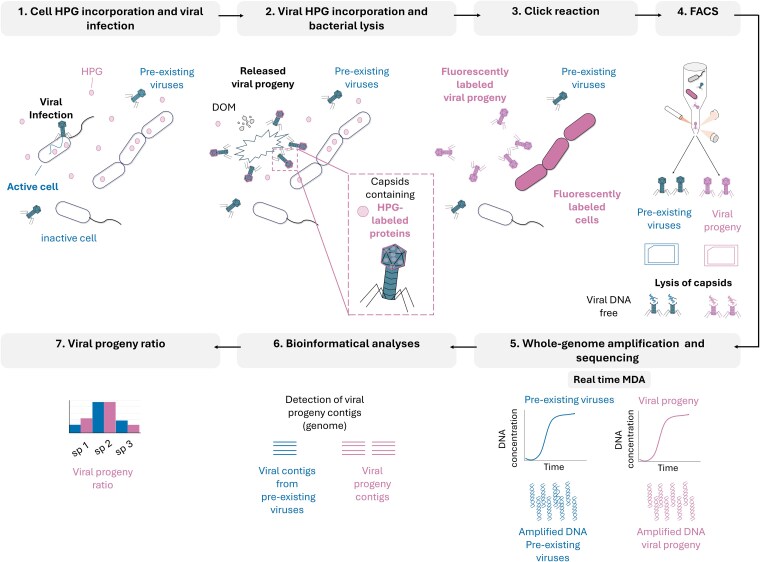 Figure 1
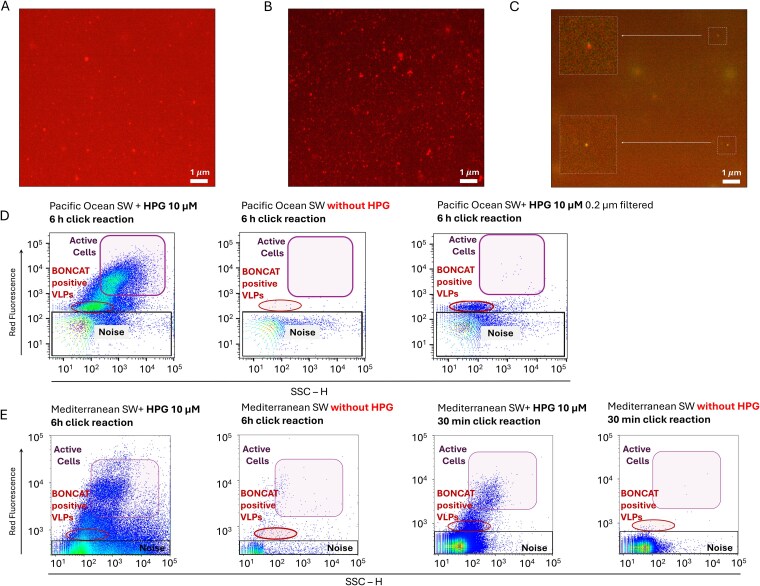 Figure 2
 Figure 3
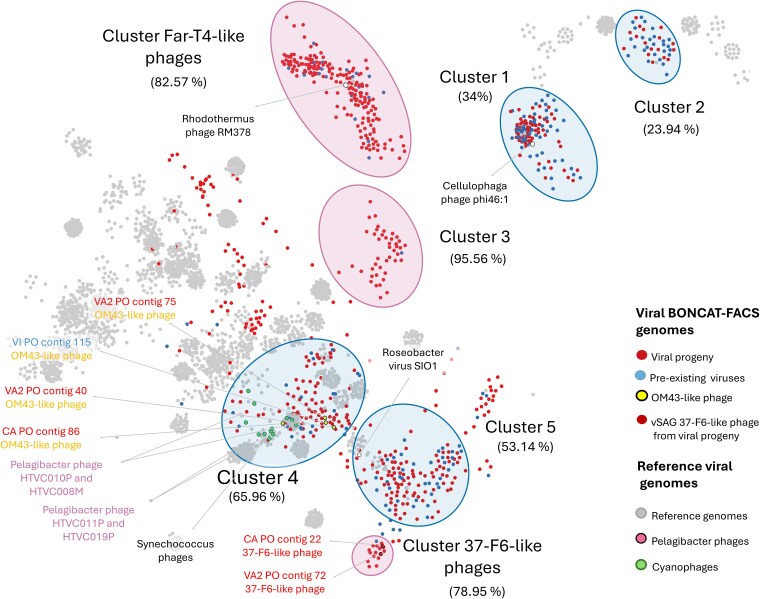 Figure 4
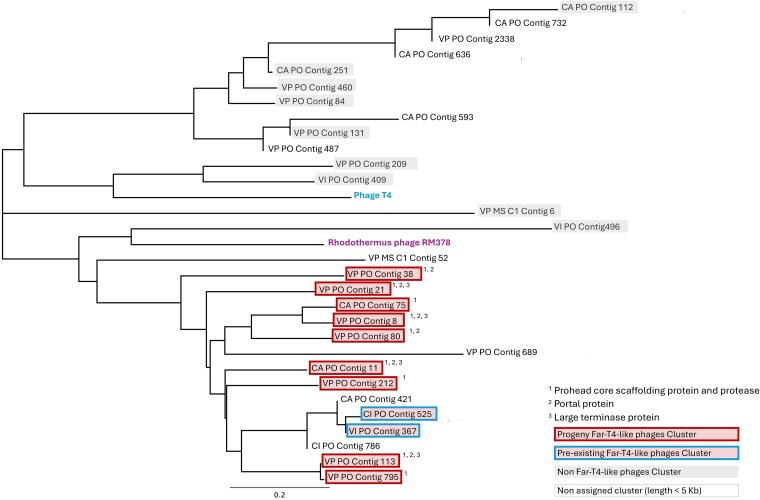 Figure 5
Peer Reviews
No public reviews on file for this paper yet. If you reviewed it on a platform where reviews are public (OpenReview, ICLR, NeurIPS, ICML), you can paste yours below so the community can read it here.
Videos
No videos yet. Explain this paper in a talk, walkthrough, or lecture? Add one.
Taxonomy
TopicsBacteriophages and microbial interactions · Microbial Community Ecology and Physiology · Fecal contamination and water quality