Redox gradients define the ecological niche of ciliates with denitrifying endosymbionts in anoxic lake waters
Linus M Zeller, Sina Schorn, Louison Nicolas-Asselineau, Jakob Zopfi, Soeren Ahmerkamp, Carsten J Schubert, Fabio Lepori, Marcel M M Kuypers, Jon S Graf, Jana Milucka

TL;DR
This study explores how ciliates with denitrifying bacteria live in low-oxygen lakes and how they help consume nitrate.
Contribution
The study identifies the environmental niche and ecological role of ciliates with denitrifying endosymbionts in anoxic lake waters.
Findings
The ciliate hosts thrive in environments with specific sulfide, oxygen, and nitrate conditions.
These ciliates may significantly contribute to nitrate consumption in Lake Zug.
Symbionts divide in coordination with their hosts, suggesting vertical inheritance.
Abstract
Bacterial endosymbionts of the family Candidatus Azoamicaceae obligately associate with anaerobic ciliates belonging to the class Plagiopylea. The symbionts’ unique role for their host involves anaerobic respiration of nitrate and generation of adenosine triphosphate (ATP), analogous to the role of mitochondria in aerobic eukaryotes. As this symbiosis remains so far uncultured, insights into its functioning have been mainly inferred from environmental metagenomes. Here, we investigated the distribution and environmental role of this symbiosis in the anoxic basins of two freshwater lakes, Zug and Lugano (Switzerland), over a course of several years. We found that the environmental niche of the ciliate host is defined by the combined effects of sulfide, oxygen, and nitrate, the latter of which is essential for the symbiont’s respiratory function. Moreover, the distribution and abundance…
Genes, proteins, chemicals, diseases, species, mutations and cell lines named across the full text — each resolved to its canonical identifier and authoritative record.
Click any figure to enlarge with its caption.
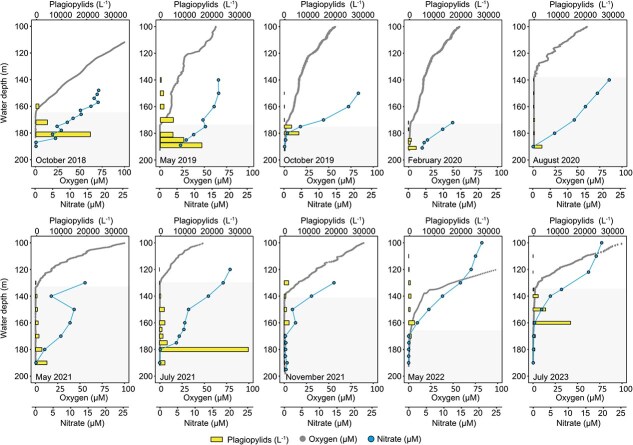 Figure 1
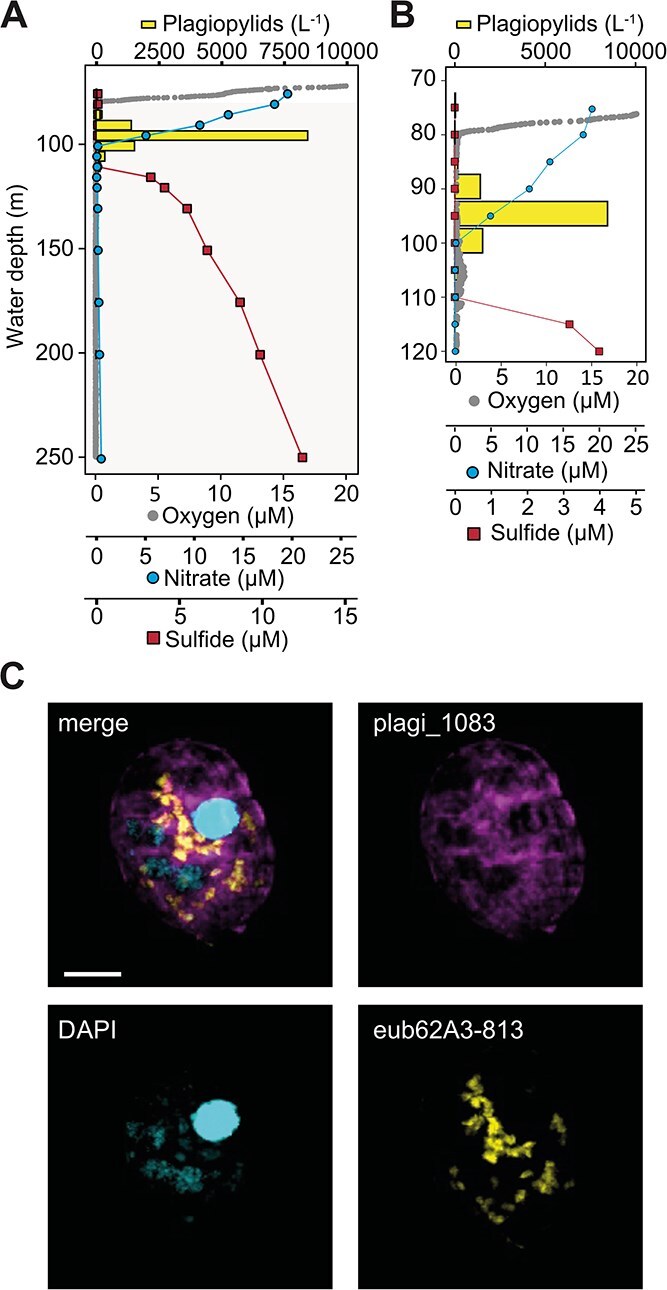 Figure 2
 Figure 3
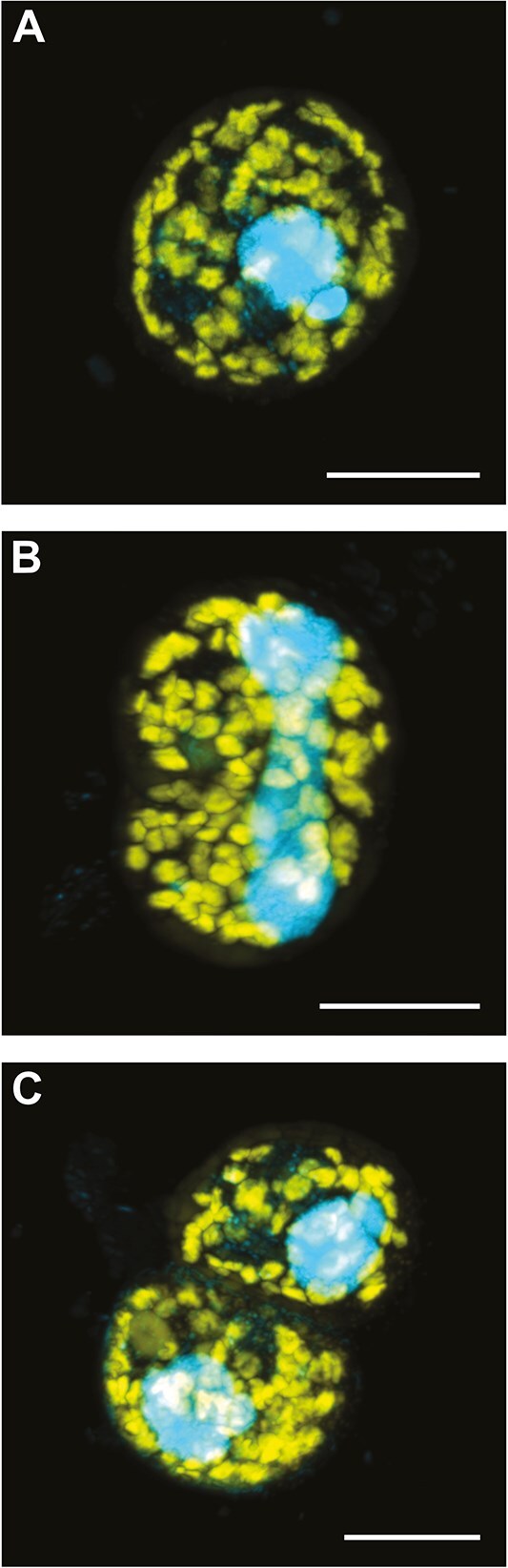 Figure 4
Peer Reviews
No public reviews on file for this paper yet. If you reviewed it on a platform where reviews are public (OpenReview, ICLR, NeurIPS, ICML), you can paste yours below so the community can read it here.
Videos
No videos yet. Explain this paper in a talk, walkthrough, or lecture? Add one.
Taxonomy
TopicsProtist diversity and phylogeny · Microbial Community Ecology and Physiology · Genomics and Phylogenetic Studies