The etiology of exudative cutaneous ulcers in a yaws-endemic community prior to receipt of antimicrobials is similar to that found in communities after mass treatment with azithromycin
Julie A. Brothwell, Evelyn Toh, Yue Xing, Qunfeng Dong, Linda H. Xu, Lorenzo Giacani, Camila G. Beiras, Oriol Mitjà, Xiang Gao, Stanley M. Spinola

TL;DR
This study finds that the same bacteria cause skin ulcers in children in a yaws-endemic area, regardless of whether they received mass antibiotic treatment.
Contribution
The study demonstrates that TPE, HD, and SP are primary causes of cutaneous ulcers in an untreated population, confirming findings from a previously treated area.
Findings
TPE, HD, and SP DNAs were detected in 31.9%, 28.1%, and 25.4% of specimens respectively.
Mixed infections with two or three pathogens occurred in 16.5% of cases.
Idiopathic ulcers were found in 31.5% of specimens, with Arcanobacterium haemolyticum as the most abundant taxon.
Abstract
Mass drug administration (MDA) of azithromycin (AZ) and case finding and treatment of children with cutaneous ulcers (CUs) have been trialed as strategies to eliminate yaws. Metagenomic sequencing of CU swabs obtained from children 3 to 4 years after the initiation of a yaws elimination campaign on Lihir Island showed enrichment for Treponema pallidum subsp. pertenue (TPE), Haemophilus ducreyi (HD), Streptococcus pyogenes (SP), and several anaerobic bacteria. Whether these results were influenced by AZ pressure or are generalizable to other populations is unknown. Here, we performed quantitative PCR (qPCR) for TPE, HD, and SP DNAs and metagenomic sequencing on 260 CU specimens collected from children on New Britain Island, whose inhabitants had not received MDA of AZ. Based on qPCR results, specimens were classified as containing no pathogens, a single pathogen, or multiple pathogens.…
Genes, proteins, chemicals, diseases, species, mutations and cell lines named across the full text — each resolved to its canonical identifier and authoritative record.
Click any figure to enlarge with its caption.
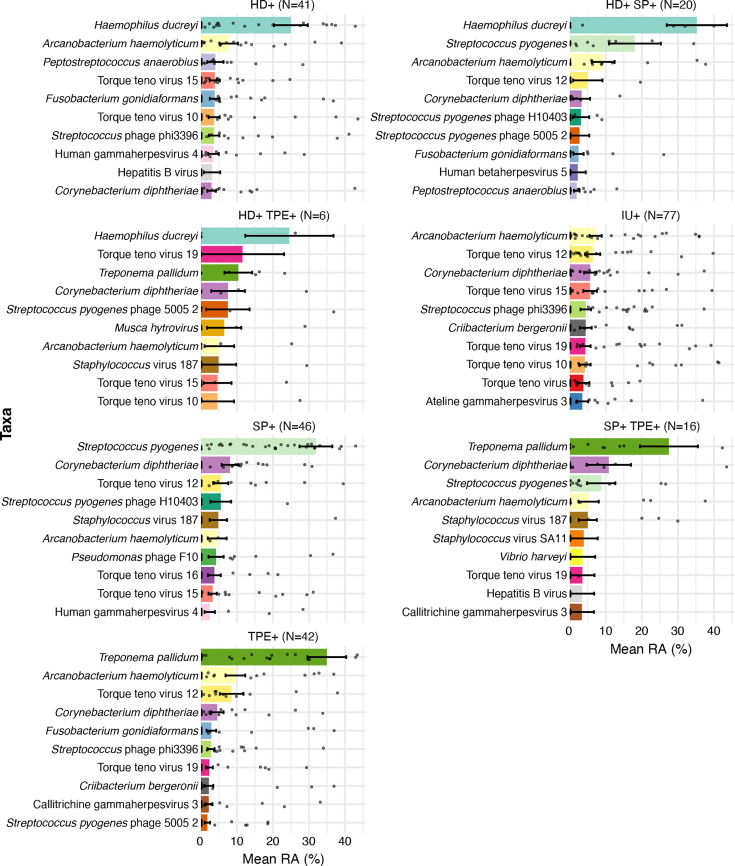 Figure 1
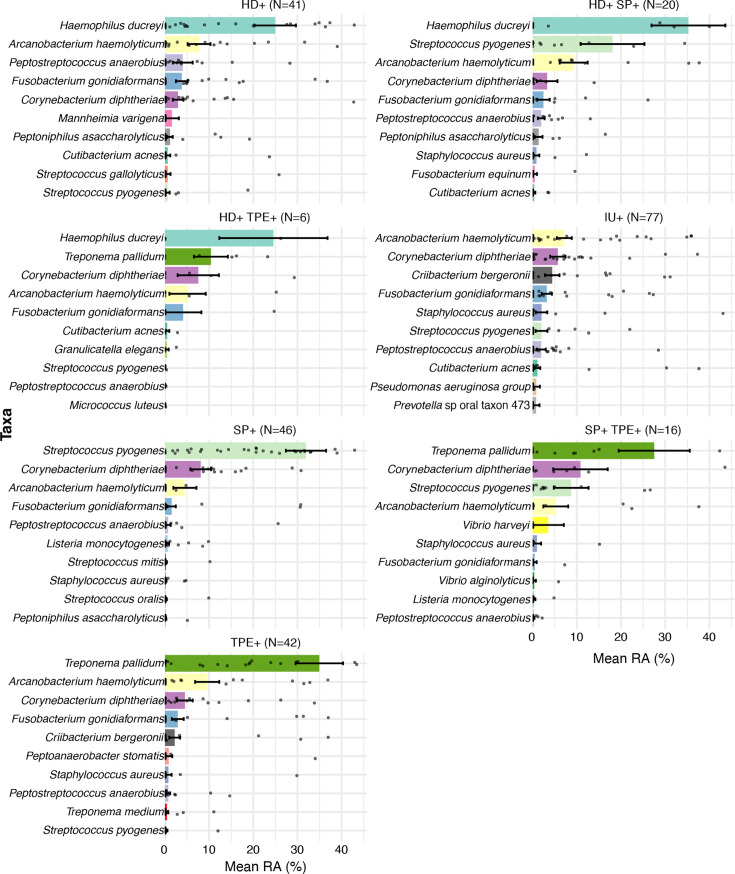 Figure 2
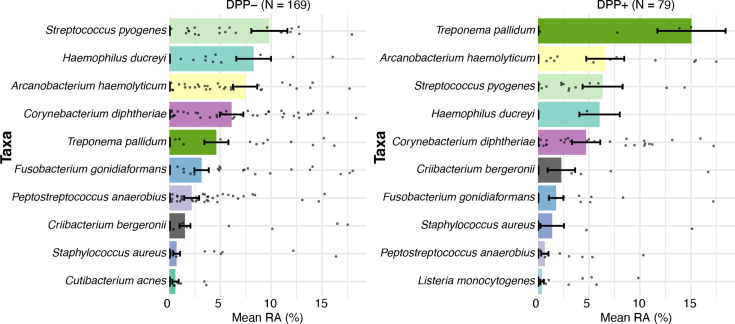 Figure 3
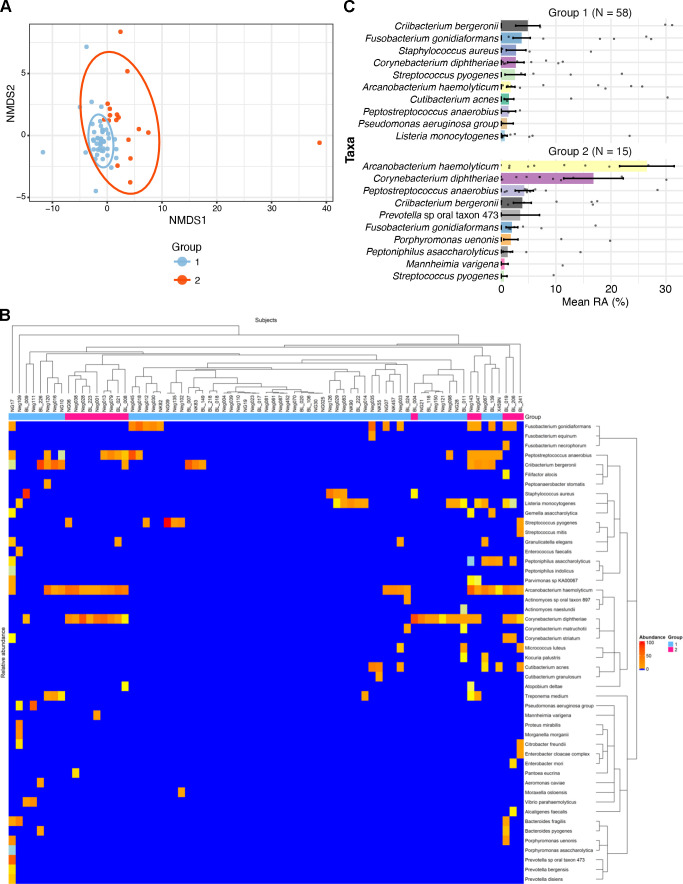 Figure 4
Peer Reviews
No public reviews on file for this paper yet. If you reviewed it on a platform where reviews are public (OpenReview, ICLR, NeurIPS, ICML), you can paste yours below so the community can read it here.
Videos
No videos yet. Explain this paper in a talk, walkthrough, or lecture? Add one.
Taxonomy
TopicsAntimicrobial Resistance in Staphylococcus · Streptococcal Infections and Treatments · Pneumonia and Respiratory Infections