Bis‐Dichlorosilyl Functionalized C4‐Cumulene With Unique Bonding Scenario
Saroj Kumar Kushvaha, Harsha S. Karnamkkott, Sangita Mondal, Paula A. M. Stark, Selvakumar Arumugam, Prakash Chandra Joshi, Sai Manoj N. V. T. Gorantla, Regine Herbst‐Irmer, Kartik Chandra Mondal, Dietmar Stalke, Herbert W. Roesky

TL;DR
This paper describes a new compound with unique silicon-carbon bonding and explains its structure and bonding using advanced computational methods.
Contribution
The paper reveals unprecedented chemical bonding in a silylene-functionalized C4-cumulene using EDA-NOCV analysis.
Findings
Compound 2 has electron-sharing and dative covalent sigma bonds between the Ph2C4 fragment and silyl-amidine groups.
The bonding is due to the electron-deficient olefin and electron-rich N-donating groups on silicon atoms.
Compound 2 shows unique bonding compared to previously reported compound 3.
Abstract
This work reports the preparation and computational investigation of a bis‐dichlorosilyl functionalized C4‐cumulene (2), which was synthesized by employing Amidinato‐chlorosilylene, L(Cl)Si: (L = PhC(N t Bu)2). Compound 2 was characterized by single‐crystal X‐ray diffraction, mass spectrometry, and NMR spectroscopy. The stability, distribution of spin densities, and the nature of Si‐C bonds of 2 were studied by employing natural bond orbital (NBO) analysis, atoms in molecules (AIM), and energy decomposition analysis‐natural orbital for chemical valence (EDA‐NOCV). The EDA‐NOCV analysis showed that compound 2 possesses electron‐sharing covalent sigma and dative covalent sigma bonds (Si↔C and C→Si) between the Ph2C4 fragment in the anionic doublet state and silyl‐amidine groups in the cationic doublet state. This may be due to the electron‐deficient nature of olefin and electron‐rich…
Genes, proteins, chemicals, diseases, species, mutations and cell lines named across the full text — each resolved to its canonical identifier and authoritative record.
Click any figure to enlarge with its caption.
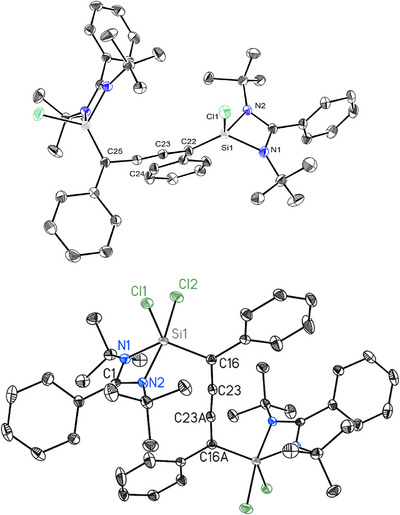 Figure 1
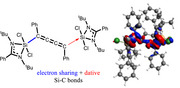 Figure 2
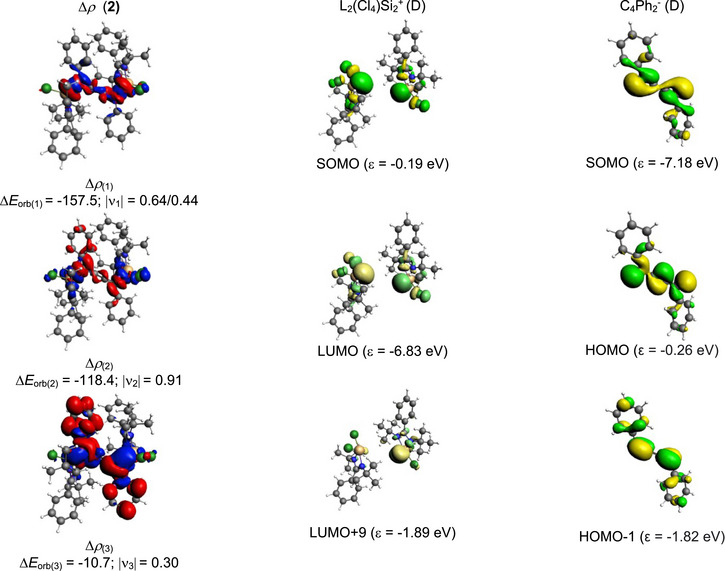 Figure 3
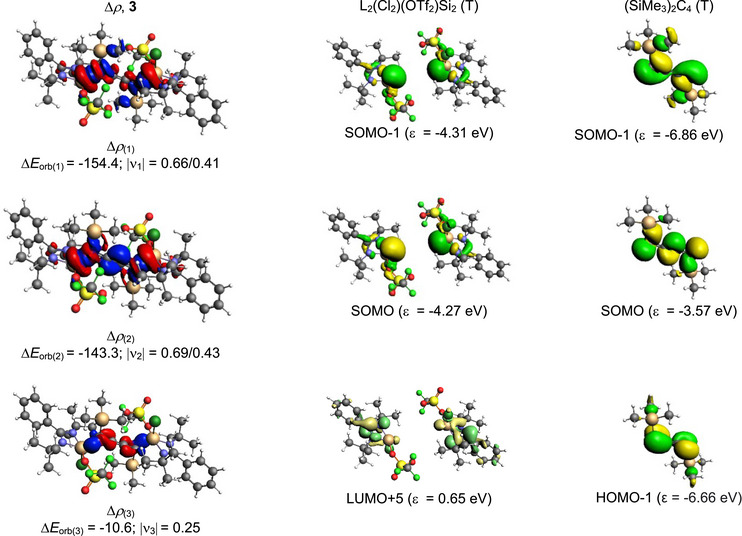 Figure 4
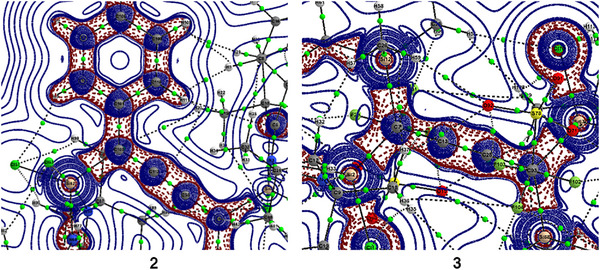 Figure 5
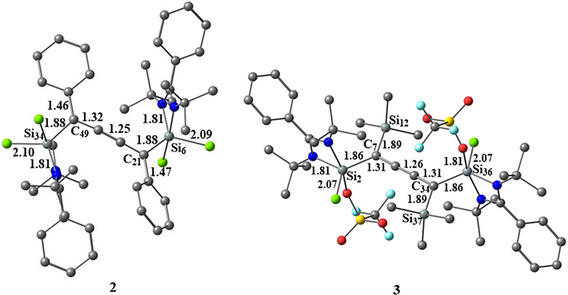 Figure 6
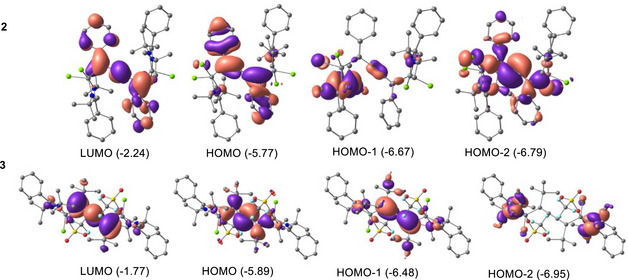 Figure 7
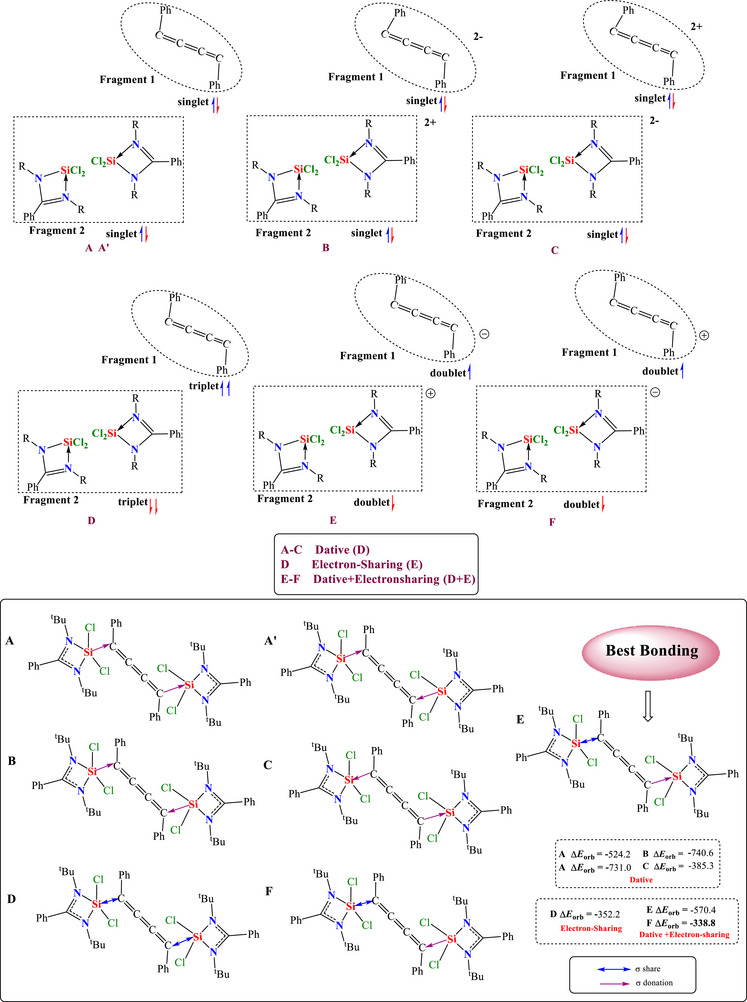 Figure 8
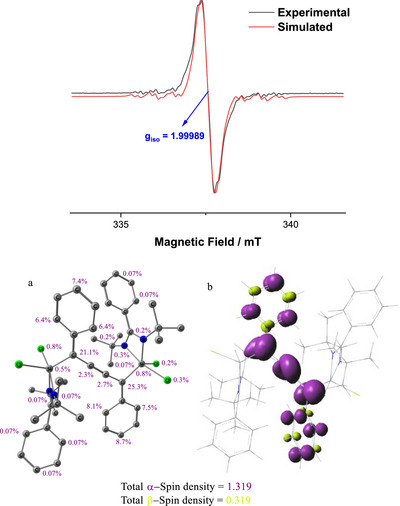 Figure 9
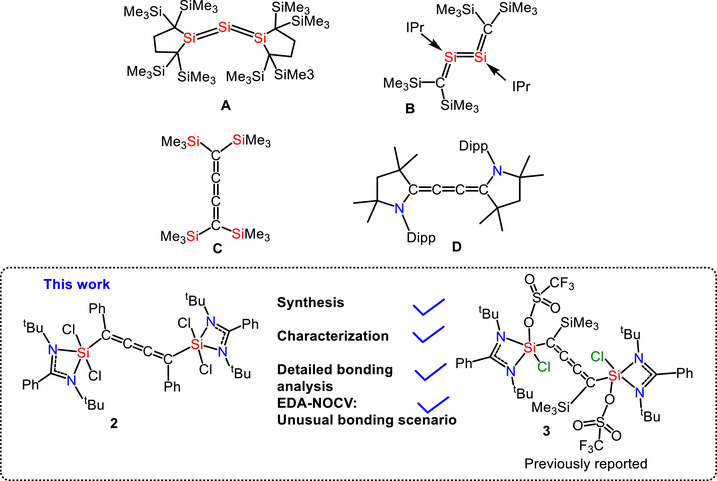 Figure 10
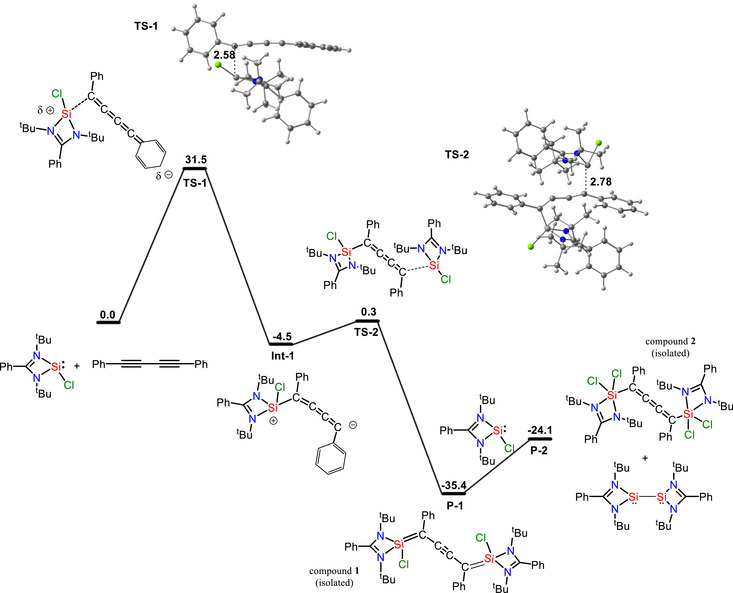 Figure 11
 Figure 12
Peer Reviews
No public reviews on file for this paper yet. If you reviewed it on a platform where reviews are public (OpenReview, ICLR, NeurIPS, ICML), you can paste yours below so the community can read it here.
Videos
No videos yet. Explain this paper in a talk, walkthrough, or lecture? Add one.
Taxonomy
TopicsSynthesis and characterization of novel inorganic/organometallic compounds · Synthesis and Properties of Aromatic Compounds · Organoboron and organosilicon chemistry