Management of first‐time shoulder dislocations: A survey of sport medicine physician perceptions
Danielle Dagher, Ethan Mewhinney, Peter MacDonald, Rachel M. Frank, Xinning Li, Wade Elliott, Katie Dalziel, Moin Khan

TL;DR
This study explores how sports medicine physicians worldwide manage first-time shoulder dislocations, highlighting treatment trends and the influence of personal experience versus guidelines.
Contribution
The study identifies global management strategies for first-time shoulder dislocations and factors influencing treatment choices among sports medicine physicians.
Findings
Immobilization followed by physical therapy is the most common management strategy for FTSDs.
Geographic differences exist in imaging preferences, with North Americans favoring radiography and Europeans preferring MRI.
Surgical decisions are most influenced by bony injury, patient age, and sports participation.
Abstract
The purpose of this study was to survey sport medicine physicians globally to evaluate how they treat patients with a first‐time shoulder dislocation (FTSD), specifically exploring the most common management strategies, the evidence or guidelines guiding these decisions, and the influence of demographic factors on these strategies and perceptions. A cross‐sectional survey was developed and distributed globally from 14 October 2024 through 22 March 2025 to sport medicine physicians involved in the management of shoulder instability. The questionnaire assessed respondents' demographics, preferred management strategies for FTSDs, and perceptions regarding the evidence supporting various treatment approaches. Descriptive statistics were used to summarize the data, and regression analyses were conducted to explore associations between demographic variables and management practices and…
Genes, proteins, chemicals, diseases, species, mutations and cell lines named across the full text — each resolved to its canonical identifier and authoritative record.
Click any figure to enlarge with its caption.
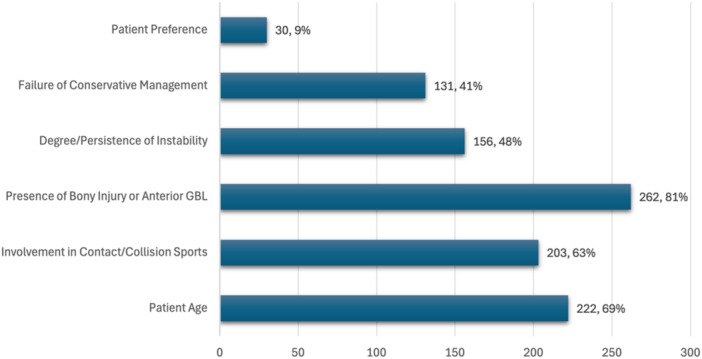 Figure 1
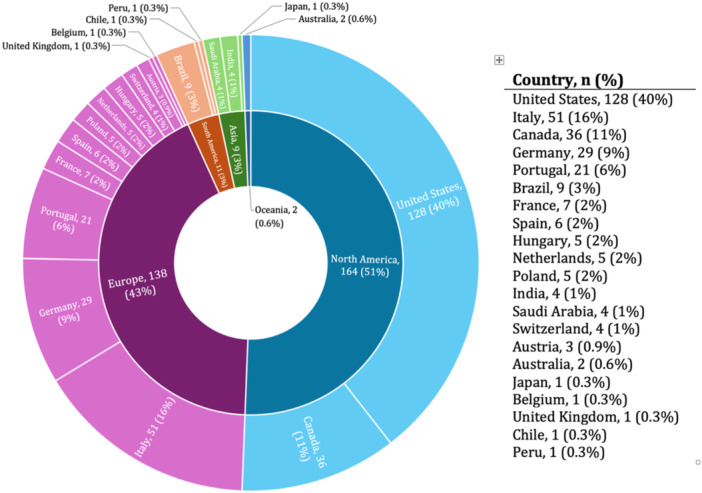 Figure 2
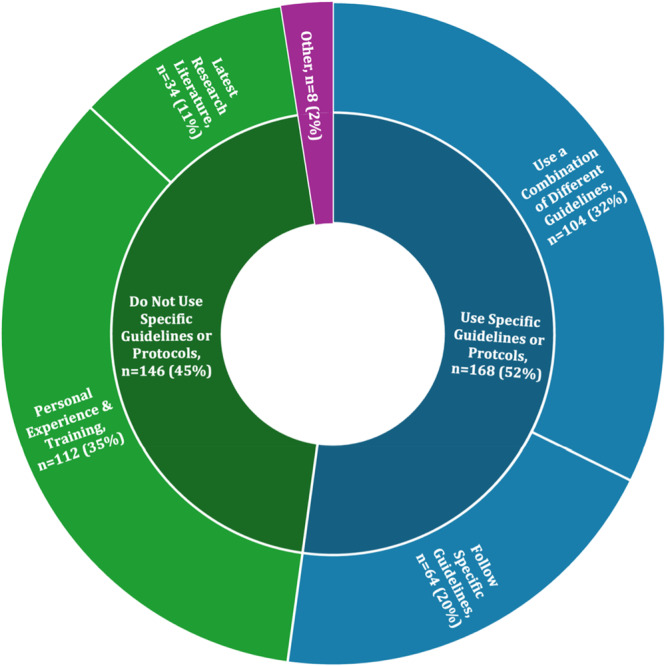 Figure 3
Peer Reviews
No public reviews on file for this paper yet. If you reviewed it on a platform where reviews are public (OpenReview, ICLR, NeurIPS, ICML), you can paste yours below so the community can read it here.
Videos
No videos yet. Explain this paper in a talk, walkthrough, or lecture? Add one.
Taxonomy
TopicsShoulder Injury and Treatment · Nerve Injury and Rehabilitation · Shoulder and Clavicle Injuries