l‐Leucine‐Based Layered Coordination Polymer Supports for Immobilizing Basic Salts to Yield Solid CO2 Adsorbents Resistant to Moisture and Oxidation
Yuki Kohno, Takuji Ikeda, Takashi Makino

TL;DR
A new material made from amino acids can hold basic salts and capture CO2 efficiently even in humid and oxidative conditions.
Contribution
A modular coordination polymer platform for immobilizing basic salts to create durable CO2 sorbents.
Findings
Zn(Leu)2 supports diverse basic salts and maintains solid form under DAC conditions.
CO2 uptake ranges from 0.17 to 1.04 mmol g−1 under relevant conditions.
The sorbent retains CO2 capacity after oxidative aging, unlike conventional polyamine sorbents.
Abstract
We demonstrate that amino acid‐based coordination polymers can serve as supports for a variety of basic salts. A layered framework, bis(l‐leucinato)zinc(II), Zn(Leu)2, prepared by an aqueous, base‐mediated procedure, provides crystallographically defined, carboxylato‐bridged two‐dimensional layered structures with intersheet surfaces. The interlayer spacing is molecularly tunable, and immobilizing potassium l‐leucinate increases the interlayer spacing in two discrete steps. Using this host, diverse basic salts can be immobilized to give solid sorbents that remain macroscopic solids under humid, DAC‐relevant conditions (400 ppm CO2, 293 K dew point, 313 K) while delivering equilibrium CO2 uptakes of 0.17–1.04 mmol g−1. After accelerated oxidative aging in simulated air (400 ppm CO2, 21% O2, 293 K dew point) at 393 K for 24 h, the amino acid‐based sorbent shows high retention in CO2…
Genes, proteins, chemicals, diseases, species, mutations and cell lines named across the full text — each resolved to its canonical identifier and authoritative record.
Click any figure to enlarge with its caption.
 Figure 1
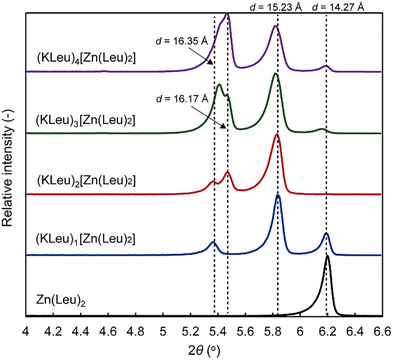 Figure 2
 Figure 3
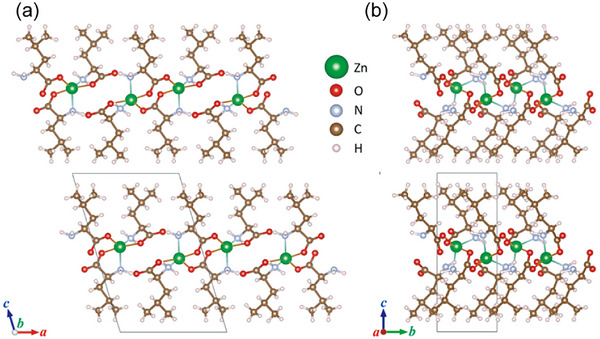 Figure 4
 Figure 5
 Figure 6
 Figure 7
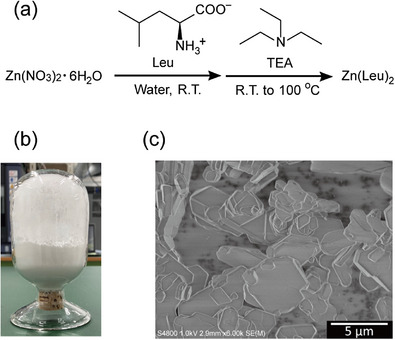 Figure 8
 Figure 9
 Figure 10
 Figure 11
 Figure 12
 Figure 13
 Figure 14
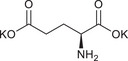 Figure 15
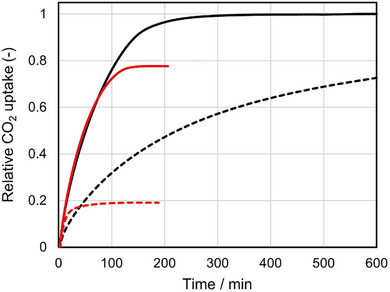 Figure 16
 Figure 17
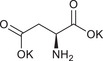 Figure 18
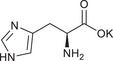 Figure 19
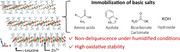 Figure 20
Peer Reviews
No public reviews on file for this paper yet. If you reviewed it on a platform where reviews are public (OpenReview, ICLR, NeurIPS, ICML), you can paste yours below so the community can read it here.
Videos
No videos yet. Explain this paper in a talk, walkthrough, or lecture? Add one.
Taxonomy
TopicsMetal-Organic Frameworks: Synthesis and Applications · Carbon Dioxide Capture Technologies · Covalent Organic Framework Applications