Usability of a virtual reality circle drawing task to assess upper-limb motor performance in children and young people with cerebral palsy: pilot study
Mohammed M. Alrashidi, Jack O. Evans, Richard J. Tomlinson, Craig A. Williams, Gavin Buckingham

TL;DR
A virtual reality circle drawing task was tested as a usable and effective method to assess upper-limb motor performance in children with cerebral palsy.
Contribution
This is the first pilot study to evaluate the usability of an iVR circle drawing task for assessing upper-limb motor function in children with CP.
Findings
The iVR task had a high usability score (74 on the SUS) and no adverse effects were reported.
Strong correlations were found between iVR metrics and established clinical assessments like the BBT and DHI.
The task showed promise for capturing motor performance through metrics like velocity and roundness.
Abstract
Cerebral palsy (CP) is a major cause of upper-limb impairments. Immersive virtual reality (iVR) is emerging as an adjunct to traditional CP rehabilitation methods. However, the potential utility of iVR for assessing upper -limb motor function in CP remains unexplored. The aim of this study was to evaluate the usability of an iVR circle drawing task in assessing the upper-limb motor function of children with CP. Nine children with CP (age: 13 ± 2.9 y) completed an iVR circle drawing task delivered through a Meta-Quest-2 headset. Outcomes were children’s rating of the iVR task in the System Usability Scale (SUS), in addition to circle drawing metrics (movement time, mean velocity and circle roundness) derived from the position of the controllers during the task, which were correlated with scores from the Box and Block Test (BBT) and the Duruoz Hand Index (DHI). The average score for the…
Genes, proteins, chemicals, diseases, species, mutations and cell lines named across the full text — each resolved to its canonical identifier and authoritative record.
Click any figure to enlarge with its caption.
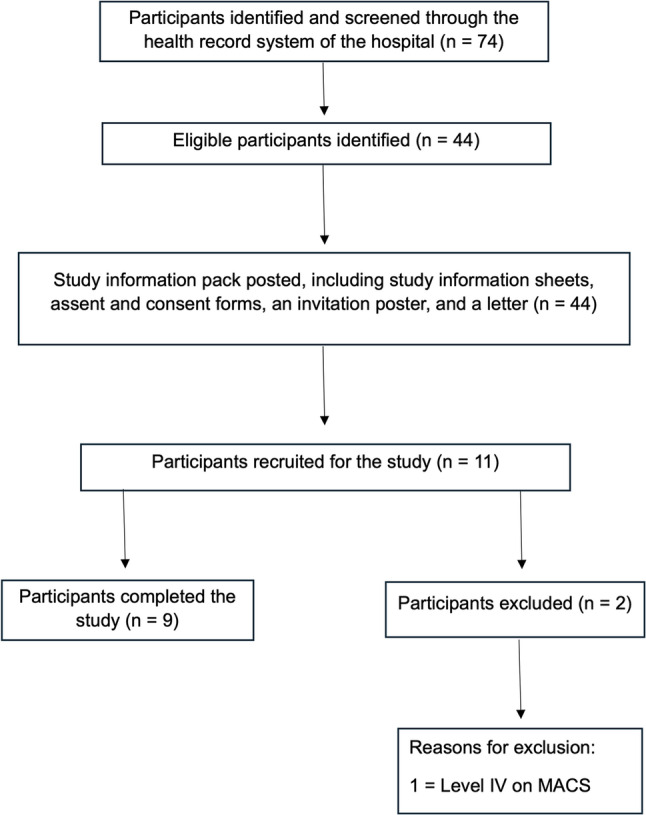 Figure 1
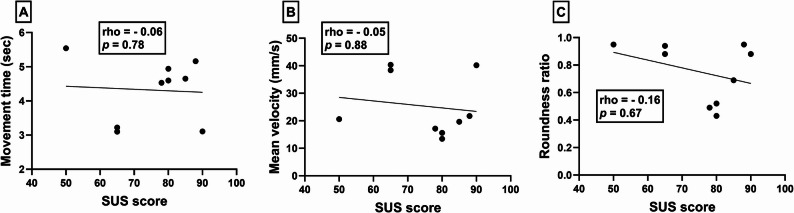 Figure 2
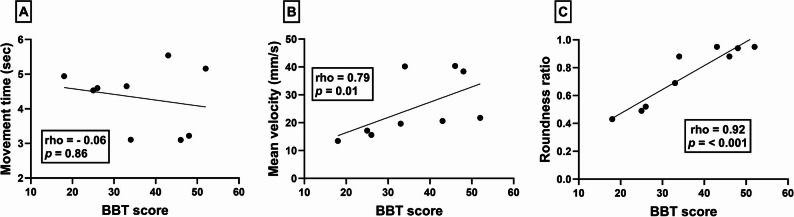 Figure 3
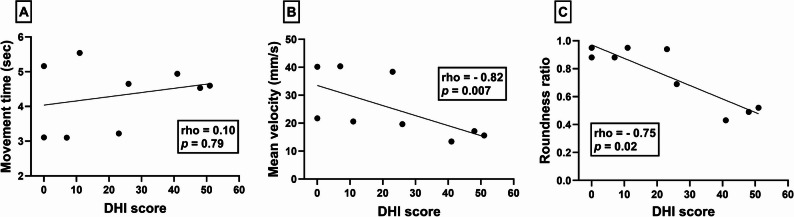 Figure 4
Peer Reviews
No public reviews on file for this paper yet. If you reviewed it on a platform where reviews are public (OpenReview, ICLR, NeurIPS, ICML), you can paste yours below so the community can read it here.
Videos
No videos yet. Explain this paper in a talk, walkthrough, or lecture? Add one.
Taxonomy
TopicsCerebral Palsy and Movement Disorders · Stroke Rehabilitation and Recovery · Botulinum Toxin and Related Neurological Disorders