First human cell-based cultivation system for the syphilis spirochete Treponema pallidum
Juraj Bosák, Matěj Hrala, Petra Pospíšilová, Michaela Bosakova, David Šmajs

TL;DR
Researchers developed a human cell-based system to grow the syphilis-causing bacterium, improving the study of its interactions with human cells.
Contribution
The first human cell-based cultivation system for Treponema pallidum is established.
Findings
Human foreskin fibroblasts supported T. pallidum growth for up to ten weeks.
DAL-1 cultures were maintained on human fibroblasts for over one year.
Nichols-like strains showed higher replication rates than SS14-like strains in human cells.
Abstract
Treponema pallidum subsp. pallidum (T. pallidum), the etiological agent of syphilis, was first isolated from infected humans in the early 20th century and, for decades, could only be propagated in laboratory rabbits. In 2018, a reproducible in vitro cultivation system was established using rabbit epithelial Sf1Ep cells and a complex culture medium, allowing stable growth of T. pallidum. While in vitro cultivation has revolutionized T. pallidum research, further humanization of this system is necessary to study host–pathogen interactions. We evaluated three human foreskin fibroblast cell lines (HFF1, HFFC, and MoNa) for their ability to support in vitro growth of T. pallidum as an alternative to rabbit Sf1Ep cells. All human cell lines displayed typical fibroblast morphology and showed growth rates comparable to or slower than Sf1Ep cells, a feature favorable for treponemal propagation.…
Genes, proteins, chemicals, diseases, species, mutations and cell lines named across the full text — each resolved to its canonical identifier and authoritative record.
Click any figure to enlarge with its caption.
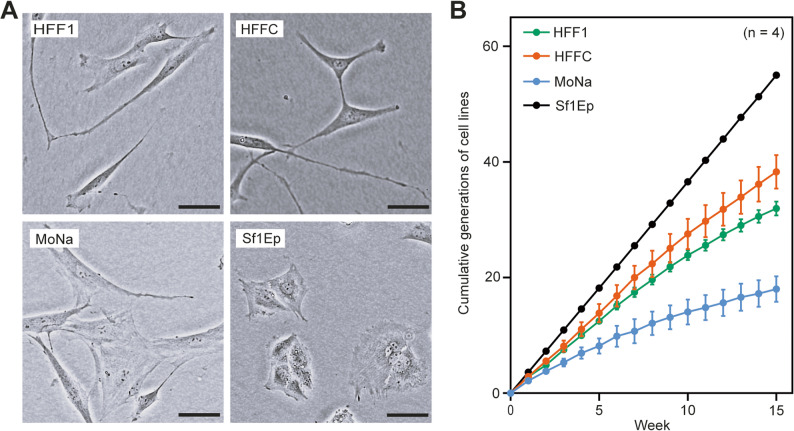 Figure 1
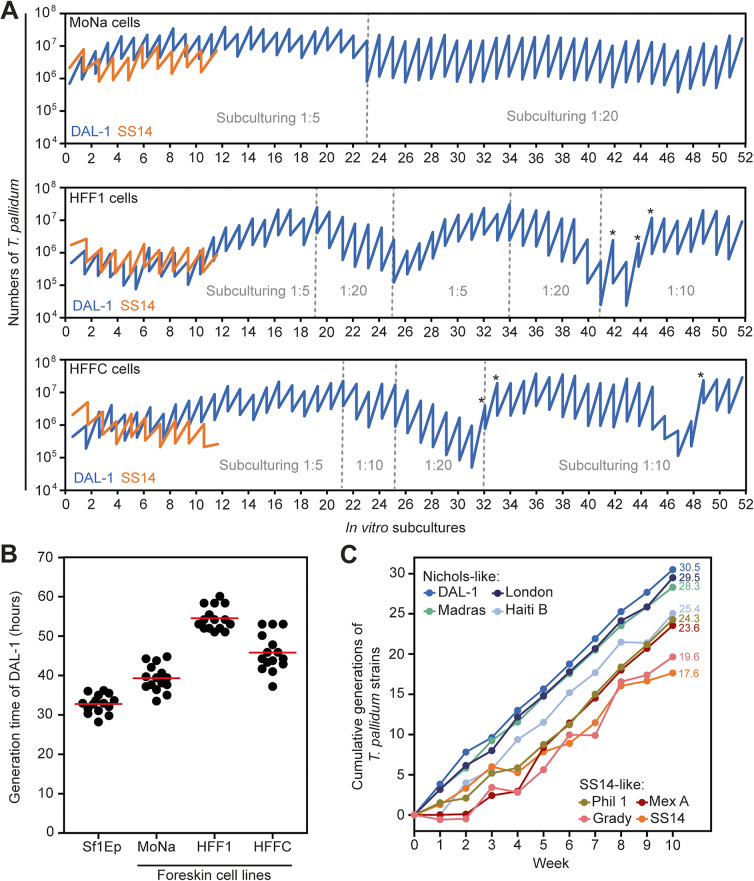 Figure 2
Peer Reviews
No public reviews on file for this paper yet. If you reviewed it on a platform where reviews are public (OpenReview, ICLR, NeurIPS, ICML), you can paste yours below so the community can read it here.
Videos
No videos yet. Explain this paper in a talk, walkthrough, or lecture? Add one.
Taxonomy
TopicsSyphilis Diagnosis and Treatment · Reproductive tract infections research · Hypertrophic osteoarthropathy and related conditions