Regional oximetry for diagnosing compartment syndrome: a scoping review
Linda Yuhan Tang, Dave Osinachukwu Duru, Andrew Browne, Andrew Kailin Zhou, Saroop Nandra, Matija Krkovic

TL;DR
This review explores how regional oximetry, specifically using near-infrared spectroscopy, could help diagnose compartment syndrome by measuring tissue oxygen levels, though results are mixed and more research is needed.
Contribution
The study systematically evaluates the diagnostic potential of NIRS for compartment syndrome, highlighting variability and the need for standardized protocols.
Findings
NIRS showed mixed correlation with perfusion pressure and ICP in acute compartment syndrome.
Pooled analysis in chronic exertional compartment syndrome revealed lower baseline StO2 and greater exercise-induced deoxygenation compared to controls.
Device variability and patient factors like skin pigmentation affect NIRS reliability.
Abstract
Diagnosis of compartment syndrome remains challenging, as intracompartmental pressure (ICP) monitoring measures mechanical pressure rather than tissue perfusion. Near-infrared spectroscopy (NIRS) enables non-invasive, continuous assessment of tissue oxygen saturation (StO2), potentially identifying ischemia earlier. However, its diagnostic accuracy remains uncertain. Following PRISMA-ScR guidelines, PubMed, EMBASE, Cochrane Library, ClinicalTrials.gov, and WHO-ICTRP were searched to April 2025 for studies evaluating NIRS in acute (ACS) or chronic exertional (CECS) compartment syndrome. Data on diagnostic accuracy, device protocols, and patient characteristics were extracted. Studies reporting comparable StO2 data in CECS and controls were pooled using a random-effects meta-analysis. Twenty-three studies (n = 1000) were included. In ACS, some demonstrated strong correlation with…
Genes, proteins, chemicals, diseases, species, mutations and cell lines named across the full text — each resolved to its canonical identifier and authoritative record.
Click any figure to enlarge with its caption.
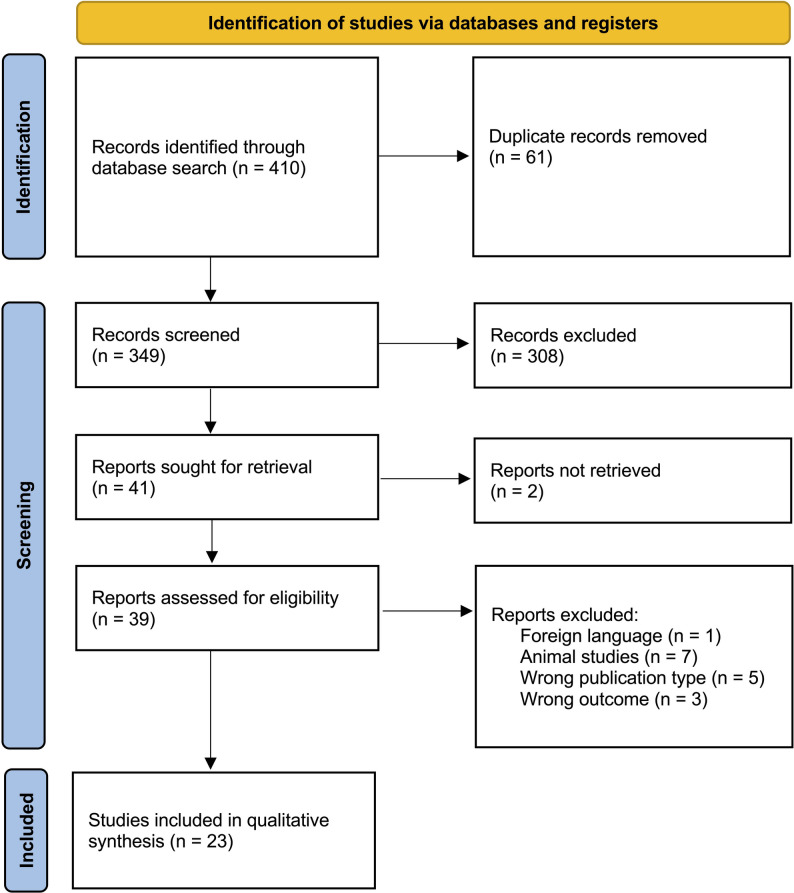 Figure 1
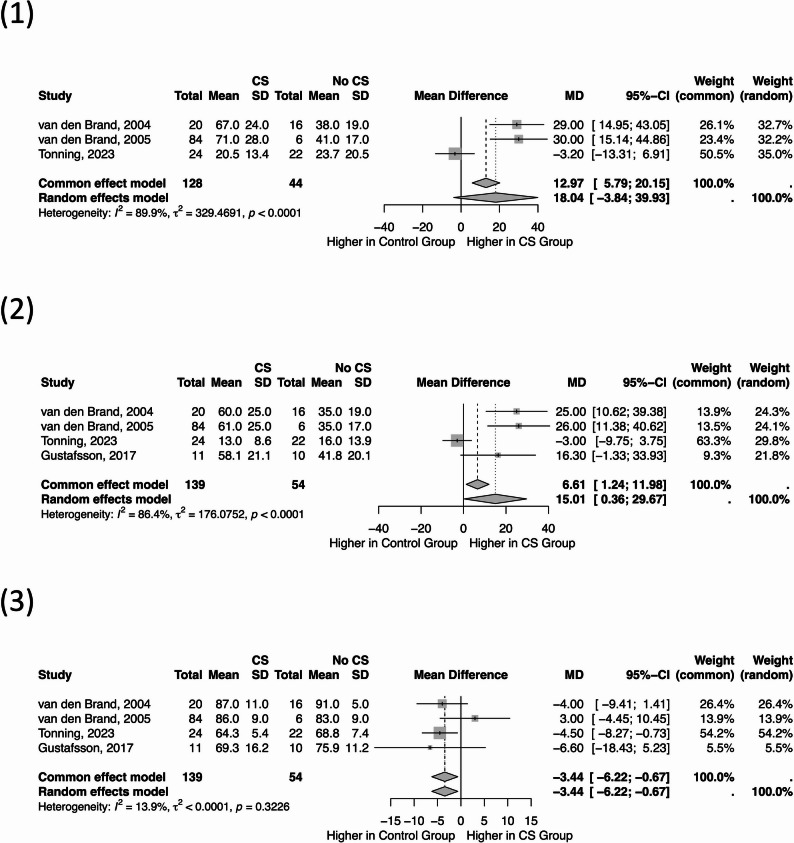 Figure 2
Peer Reviews
No public reviews on file for this paper yet. If you reviewed it on a platform where reviews are public (OpenReview, ICLR, NeurIPS, ICML), you can paste yours below so the community can read it here.
Videos
No videos yet. Explain this paper in a talk, walkthrough, or lecture? Add one.
Taxonomy
TopicsMuscle and Compartmental Disorders · Abdominal Surgery and Complications · Respiratory Support and Mechanisms