Survival and complications in older adult patients with resectable gastric cancer according to number of resected lymph nodes: a cohort study
Camilo Ramírez-Giraldo, Isabella Van-Londoño, Maria Victoria Brina, Juliana Bueno-Marin, Camilo Bedoya-Motta, Edgar Javier Aguirre-Salamanca, Andrés Isaza-Restrepo

TL;DR
This study examines how the number of lymph nodes removed during surgery affects survival and complications in older adults with gastric cancer.
Contribution
The study provides new insights into the lack of survival benefit from extensive lymph node removal in older gastric cancer patients.
Findings
A higher number of retrieved lymph nodes was not associated with improved overall survival in older gastric cancer patients.
The lymph node ratio was an independent risk factor for overall survival, but lymph node count was not.
Older patients undergoing gastrectomy had a high rate of major postoperative complications.
Abstract
Gastric cancer (GC) incidence in older adults is usually higher than in the general population. Whereas surgical resection accompanied by an extended lymphadenectomy is the current standard treatment for GC, the impact of the extent of lymphadenectomy on survival in older adult patients has not been sufficiently studied and may be associated with a higher rate of complications in this group of patients. An observational retrospective cohort study was performed in patients aged ≥ 75 years with a diagnosis of GC who underwent gastrectomy with curative intent to evaluate the influence of the number of retrieved lymph nodes (< 25 vs. ≥25) on postoperative morbidity and mortality and overall survival (OS). A total of 122 patients were included in this study; 64 were included in the group with ≥ 25 retrieved lymph nodes and 58 in the group with < 25 retrieved nodes. Patients were…
Genes, proteins, chemicals, diseases, species, mutations and cell lines named across the full text — each resolved to its canonical identifier and authoritative record.
Click any figure to enlarge with its caption.
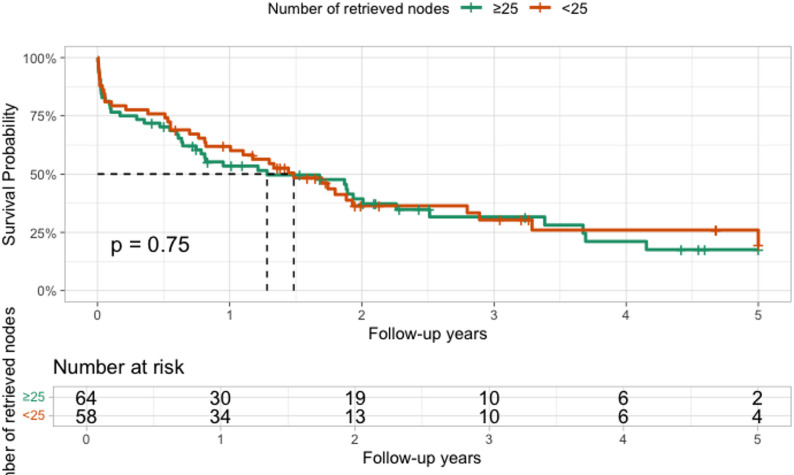 Figure 1
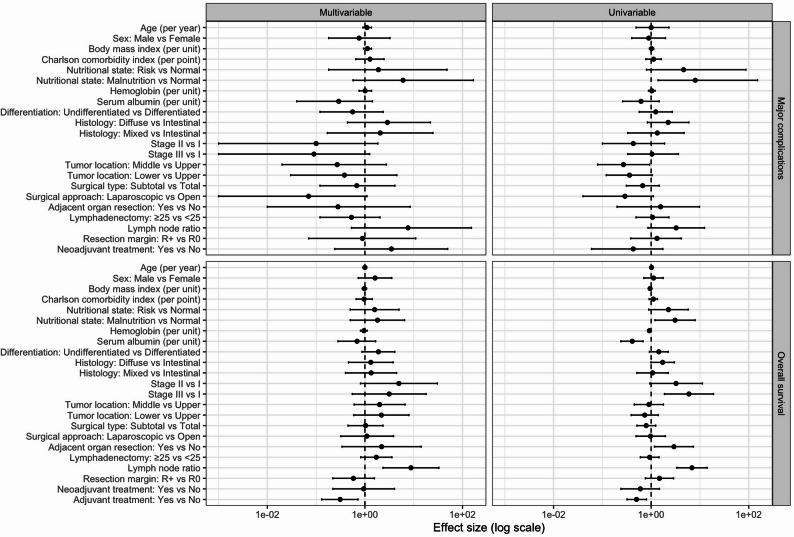 Figure 2
 Figure 3
Peer Reviews
No public reviews on file for this paper yet. If you reviewed it on a platform where reviews are public (OpenReview, ICLR, NeurIPS, ICML), you can paste yours below so the community can read it here.
Videos
No videos yet. Explain this paper in a talk, walkthrough, or lecture? Add one.
Taxonomy
TopicsGastric Cancer Management and Outcomes · Helicobacter pylori-related gastroenterology studies · Esophageal Cancer Research and Treatment