Concurrent high-intensity interval plus resistance training improves vascular health in breast cancer survivors with high chemotherapy exposure
Cristian Álvarez, Carolina Fuentes, Cristóbal Durán-Marín, Pedro Delgado-Floody, Gabriel Rojas-Rojas, Manuel Gomez, Alvaro N. Gurovich, David C. Andrade

TL;DR
An 8-week training program combining high-intensity and resistance exercises improved vascular health in breast cancer survivors, especially those with high chemotherapy exposure.
Contribution
The study shows that concurrent training can improve vascular and muscle outcomes in breast cancer survivors with varying chemotherapy exposure.
Findings
High chemotherapy survivors showed reduced carotid intima-media thickness and improved flow-mediated dilation.
Both groups experienced increased brachial artery diameter and muscle strength.
Vascular improvements were more pronounced in those with higher chemotherapy exposure.
Abstract
The aim was to determine the effects of 8 weeks of concurrent training of abbreviated high-intensity interval-training and low–load resistance training (CTHIIT+RT) on functional and structural vascular outcomes of breast cancer survivors with a history of high or low exposure to chemotherapy sessions. Breast cancer survivor women (n = 21, 58.7 ± 8.7 years) were divided into high– (HVchemo, n = 11) or low–volume chemotherapy groups (LVchemo, n = 10). Pulse wave velocity (PWV) and carotid intima–media maximum (cIMTmax) were the primary outcomes, while flow-mediated dilation (FMD), carotid intima–media average (cIMTav), baseline brachial artery diameter (Dbase), peak diameter (Dpeak), and one-repetition maximum tests for the biceps (1RMbc), shoulder (1RMsp), back (1RMback), and leg extension (1RMLeg) served as secondary outcomes. PWV decreased in the LVchemo group (∆˗1.64 m⋅s− 1, p <…
Genes, proteins, chemicals, diseases, species, mutations and cell lines named across the full text — each resolved to its canonical identifier and authoritative record.
Click any figure to enlarge with its caption.
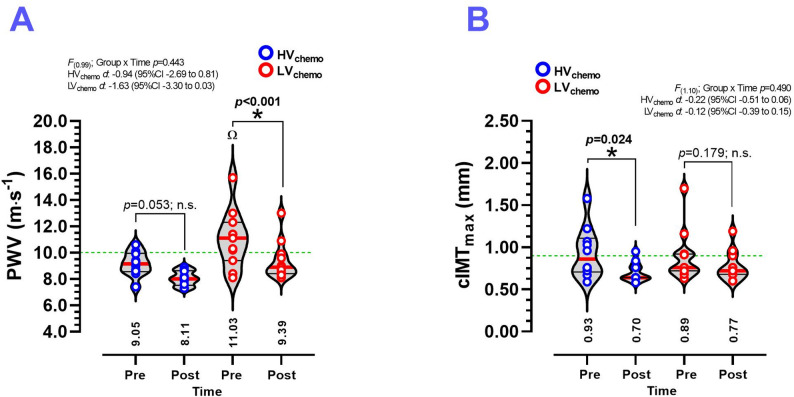 Figure 1
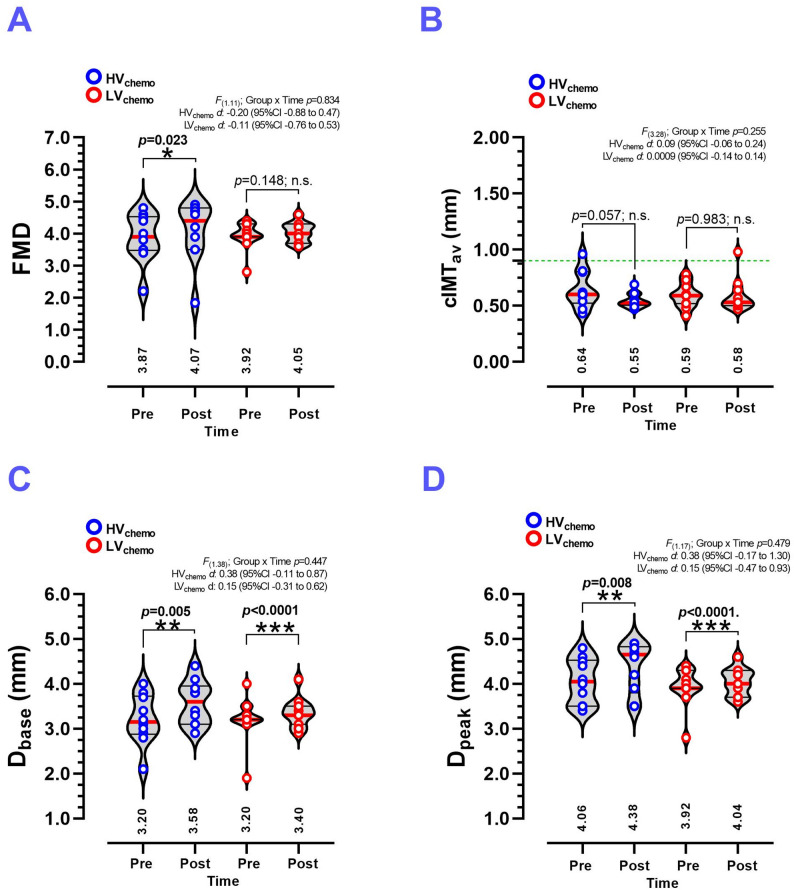 Figure 2
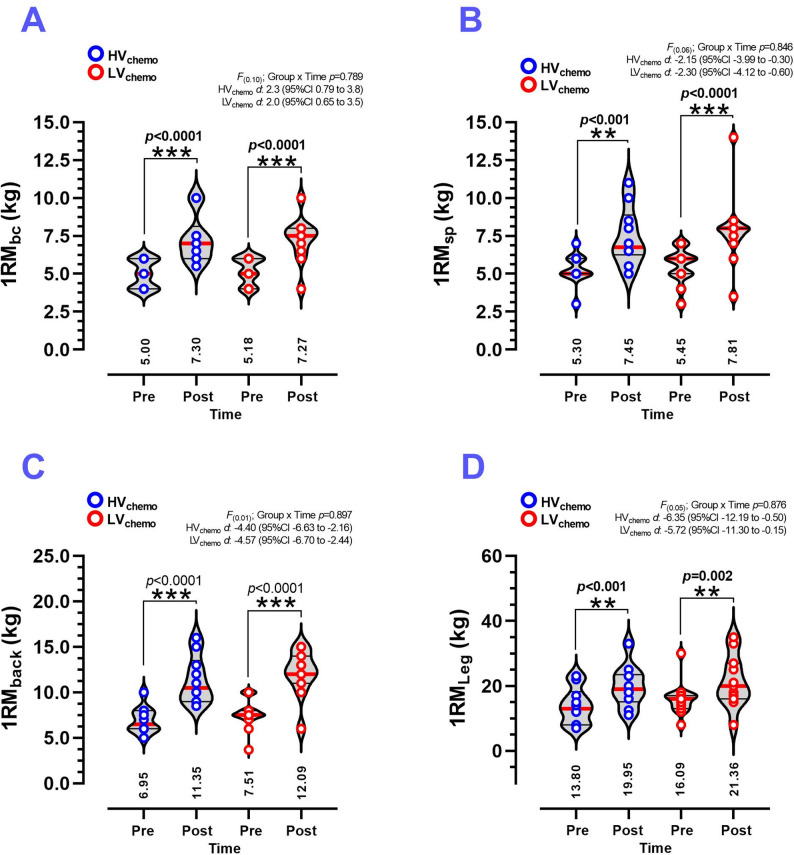 Figure 3
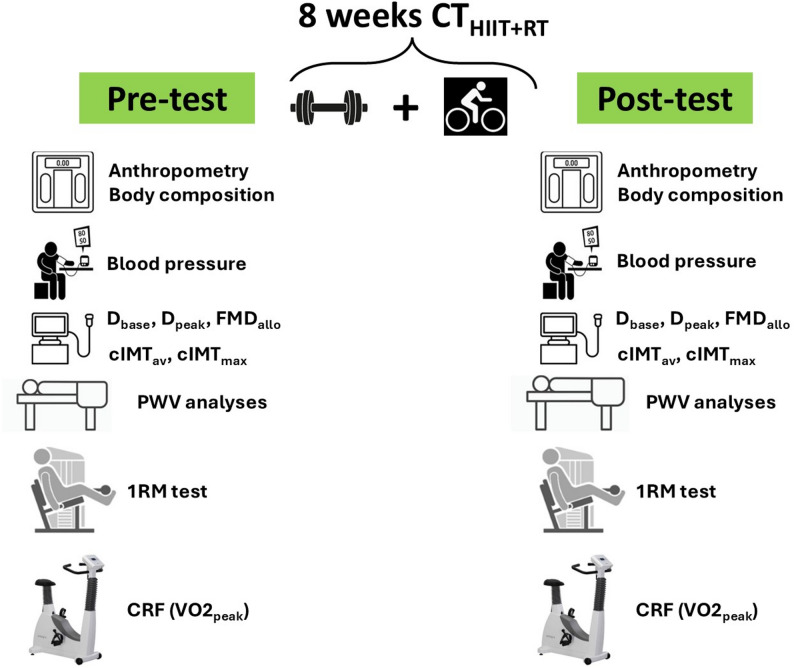 Figure 4
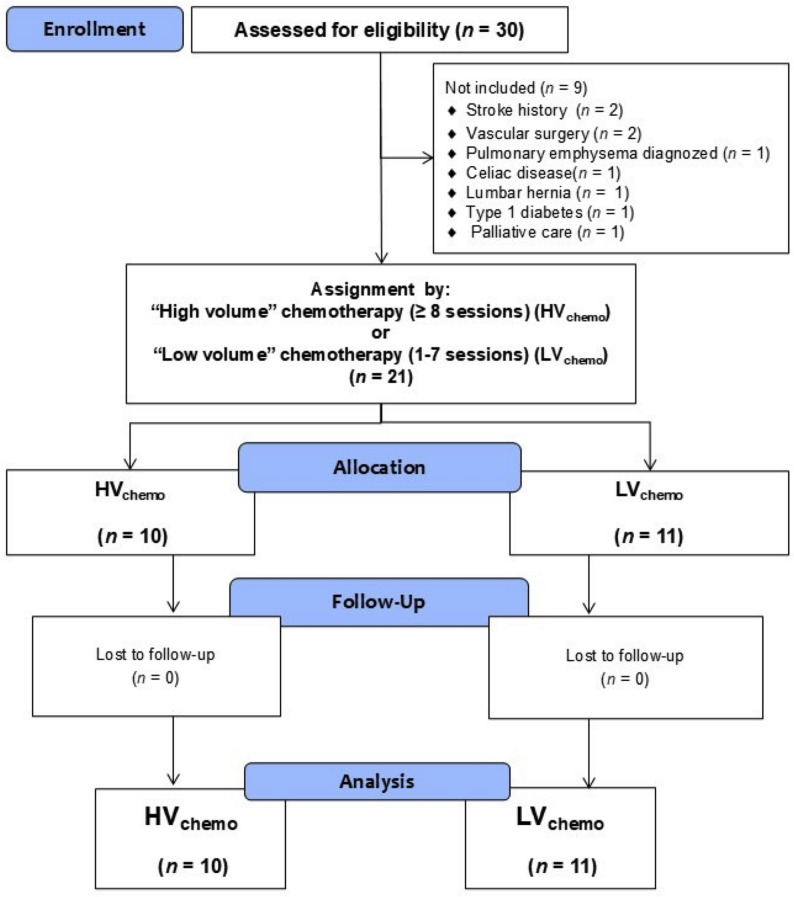 Figure 5
Peer Reviews
No public reviews on file for this paper yet. If you reviewed it on a platform where reviews are public (OpenReview, ICLR, NeurIPS, ICML), you can paste yours below so the community can read it here.
Videos
No videos yet. Explain this paper in a talk, walkthrough, or lecture? Add one.
Taxonomy
TopicsChemotherapy-induced cardiotoxicity and mitigation · Cancer-related cognitive impairment studies · Cancer Treatment and Pharmacology