Optimized murine HFpEF models for translational preclinical studies
Bailey McIntosh, Ali Ali Mohamed Elbassioni, Anmar Raheem, Eilidh A MacDonald, Stuart A Nicklin, Yen Chin Koay, Ewan R Cameron, Christopher M Loughrey, John F O’Sullivan

TL;DR
Researchers improved mouse models of heart failure with preserved ejection fraction to work better across different mouse strains and sexes.
Contribution
Modified 2-hit and 4-hit models to ensure HFpEF induction in multiple C57BL/6 substrains and both sexes.
Findings
HFpEF was successfully induced in C57BL/6J mice with a 13-week 2-hit protocol.
The 4-hit model produced a stable HFpEF phenotype in both C57BL/6 substrains and sexes.
Modifications enhance reproducibility and prevent aldosterone escape in HFpEF models.
Abstract
The most clinically representative murine models of heart failure with preserved ejection fraction (HFpEF) include a ‘2-hit’ model combining nitrosative stress with metabolic perturbation and a ‘3-hit’ model that also includes ageing. Both models have important limitations with regard to substrain and sex. The 2-hit model protocol was modified to reproduce HFpEF in both C57BL/6N and 6J mice by increasing L-NAME doses (0.5 g/L to 1.75 g/L) and protocol lengths (7 weeks to 13 weeks). For the 3-hit model, in addition to deoxycorticosterone pivalate (DOCP), we added 1% NaCl drinking water to enhance and prolong the effect of DOCP (‘4-hit’). To maintain the phenotype, a second bolus of DOCP was administered after 8 weeks. HFpEF was successfully induced in C57BL/6J mice when exposed to a 13-week 2-hit L-NAME protocol with gradually increasing dosage from 1.0 to 1.75 g/L. For the 4-hit mice,…
Genes, proteins, chemicals, diseases, species, mutations and cell lines named across the full text — each resolved to its canonical identifier and authoritative record.
Click any figure to enlarge with its caption.
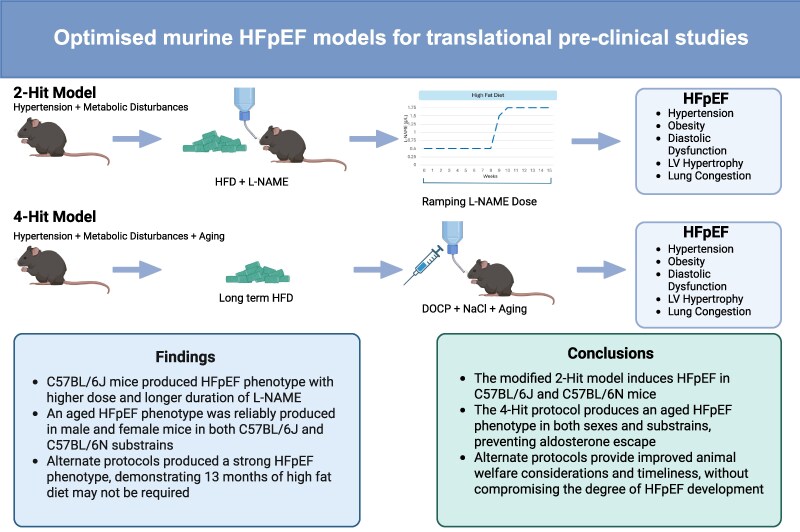 Figure 1
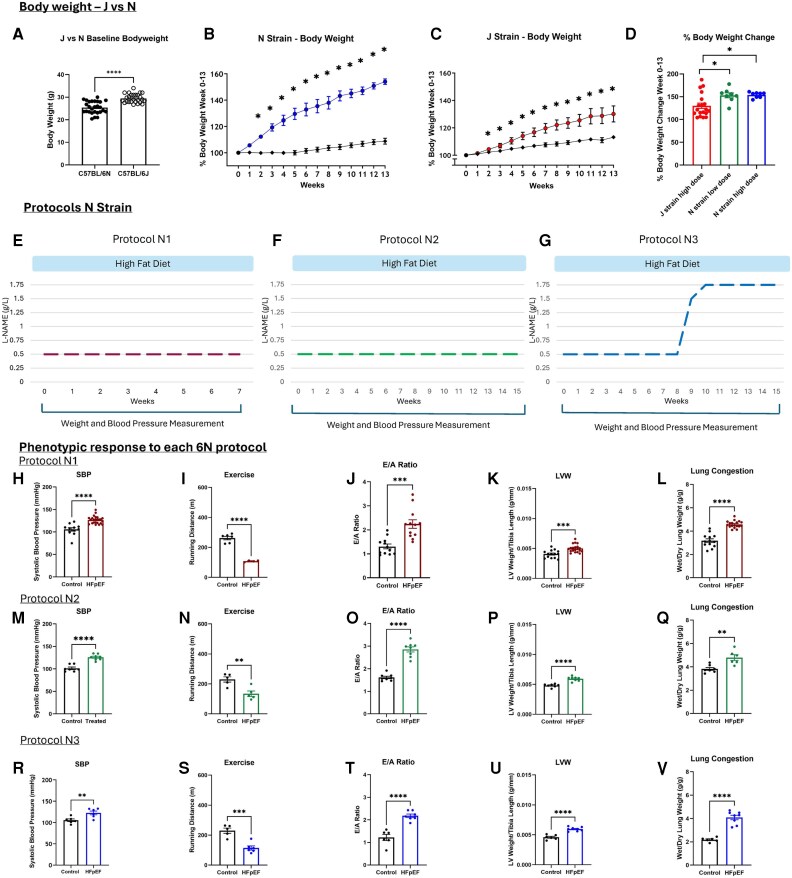 Figure 2
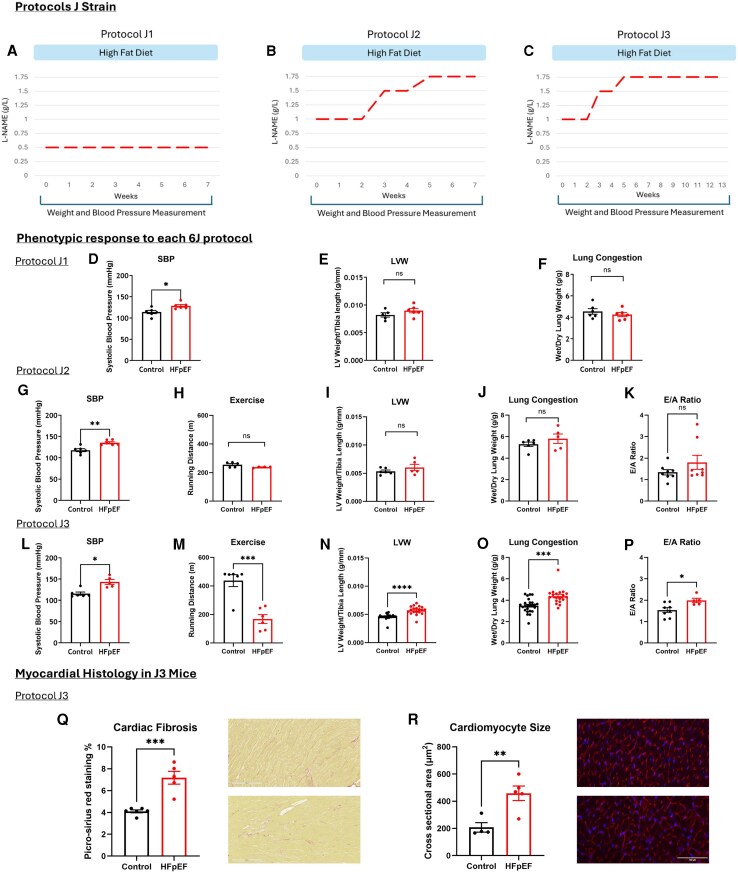 Figure 3
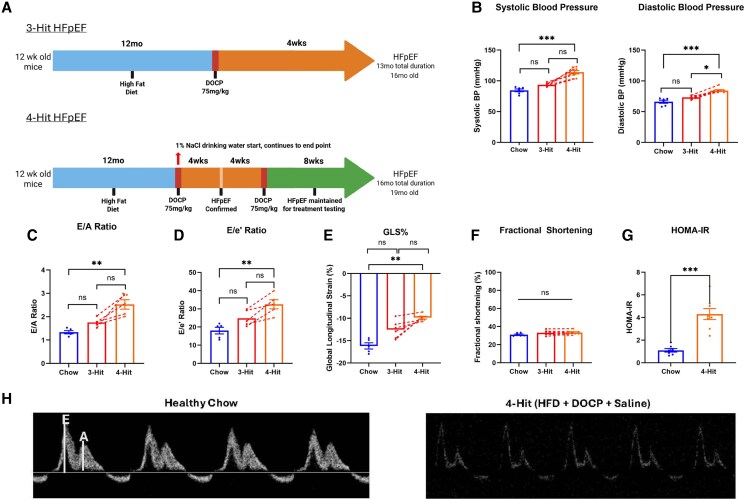 Figure 4
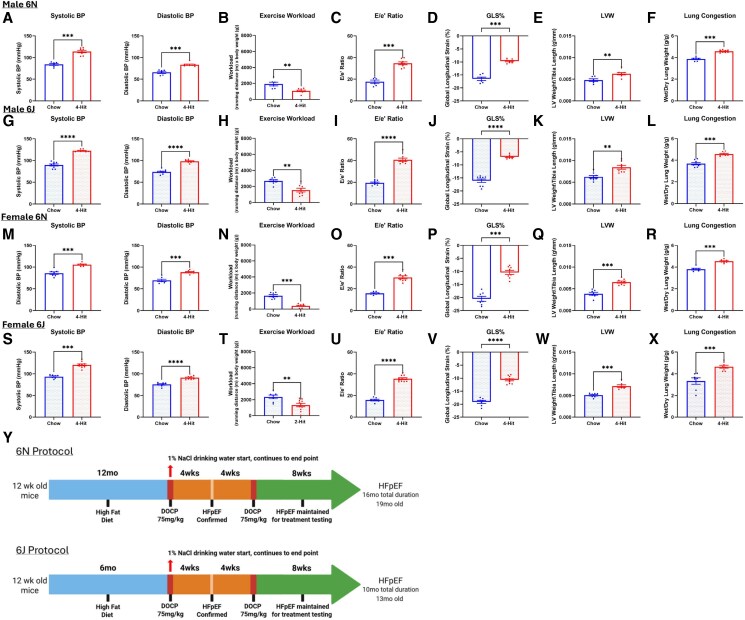 Figure 5
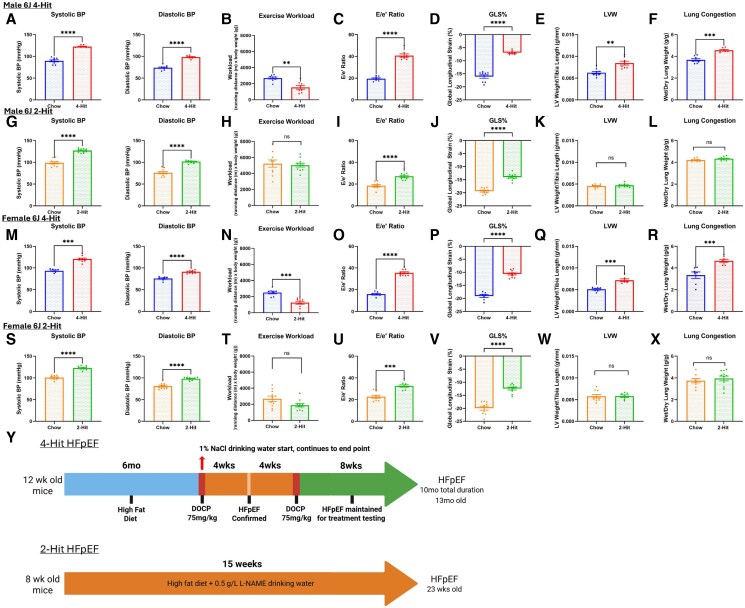 Figure 6
Peer Reviews
No public reviews on file for this paper yet. If you reviewed it on a platform where reviews are public (OpenReview, ICLR, NeurIPS, ICML), you can paste yours below so the community can read it here.
Videos
No videos yet. Explain this paper in a talk, walkthrough, or lecture? Add one.
Taxonomy
TopicsHormonal Regulation and Hypertension · Receptor Mechanisms and Signaling · Estrogen and related hormone effects