Genetic Dereplication of Multiple Penicillium expansum Biosynthetic Gene Clusters Reveals Cryptic Penta-Cyclopeptide Production
Mira Syahfriena Amir Rawa, Benjamin J. Haefner, Grant R. Nickles, Enrique Aguilar-Ramírez, Nancy P. Keller, Justin L. Eagan

TL;DR
By deleting genes responsible for known compounds in Penicillium expansum, researchers discovered new cyclopeptides and confirmed a key biosynthetic gene.
Contribution
A novel penta-cyclopeptide and its analogues were identified using genetic dereplication in Penicillium expansum.
Findings
A flatline strain of Penicillium expansum produced increased levels of five-residue cyclopeptides containing pipecolic acid.
Two new cyclopeptide analogues, 3-hydroxy-MBJ-0110 and Val-MBJ-0110, were identified.
The NRPS gene mbjA was confirmed as essential for the biosynthesis of these cyclopeptides.
Abstract
Genetic dereplication by targeted deletion of major secondary metabolite biosynthetic pathways is an effective strategy to uncover novel compounds and cryptic biosynthetic gene clusters (BGCs). In this study, we engineered a “flatline” strain of Penicillium expansum by knocking out key biosynthetic genes responsible for producing citrinin, patulin, roquefortine C, andrastin A, and communesins. Comparative metabolomic profiles between the flatline and wild-type strains revealed a marked increase in the production of five-residue cyclopeptides featuring the nonproteinogenic amino acid pipecolic acid in the flatline strain when cultivated on a rice medium. Further analysis led to the identification of known cyclopeptide MBJ-0110 and its new analogues assigned as 3-hydroxy-MBJ-0110 (1) and Val-MBJ-0110 (2). Their associated BGC was predicted using antiSMASH, whereby deletion of the…
Genes, proteins, chemicals, diseases, species, mutations and cell lines named across the full text — each resolved to its canonical identifier and authoritative record.
Click any figure to enlarge with its caption.
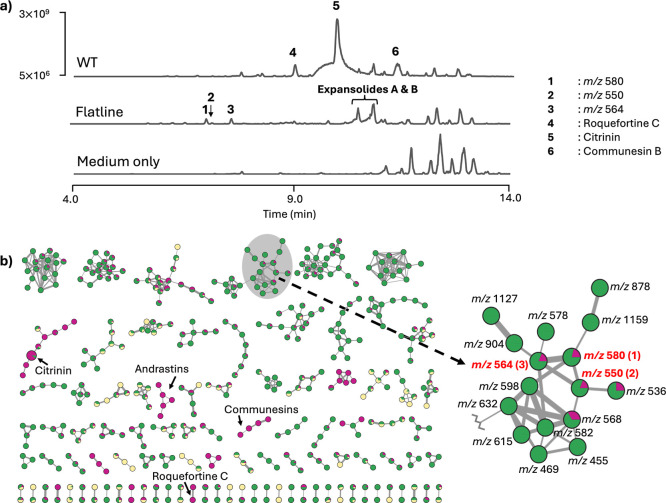 Figure 1
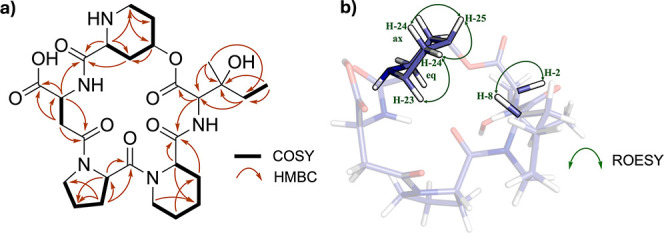 Figure 2
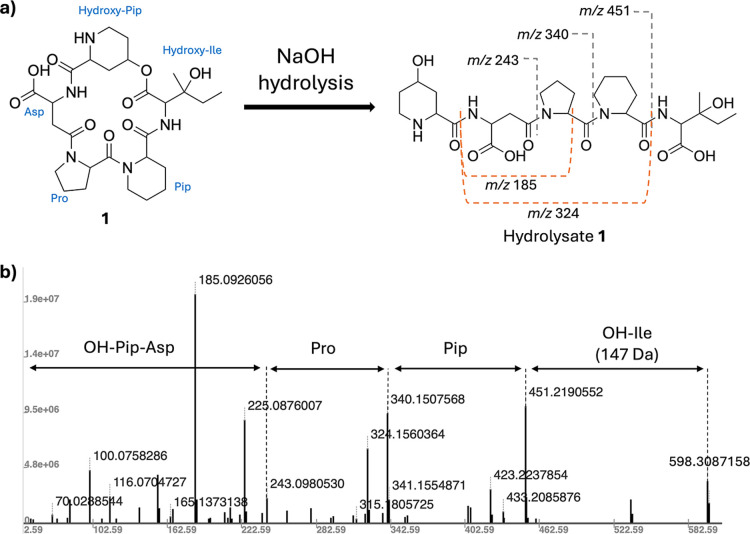 Figure 3
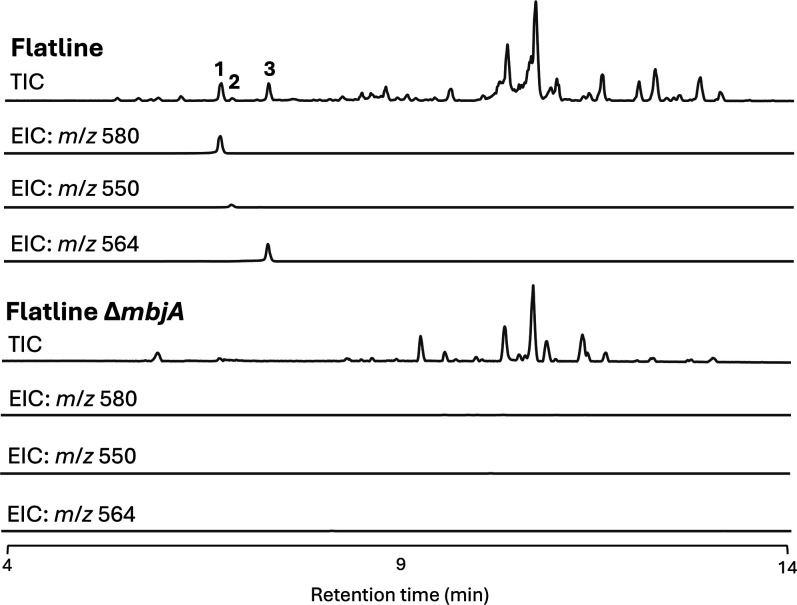 Figure 4
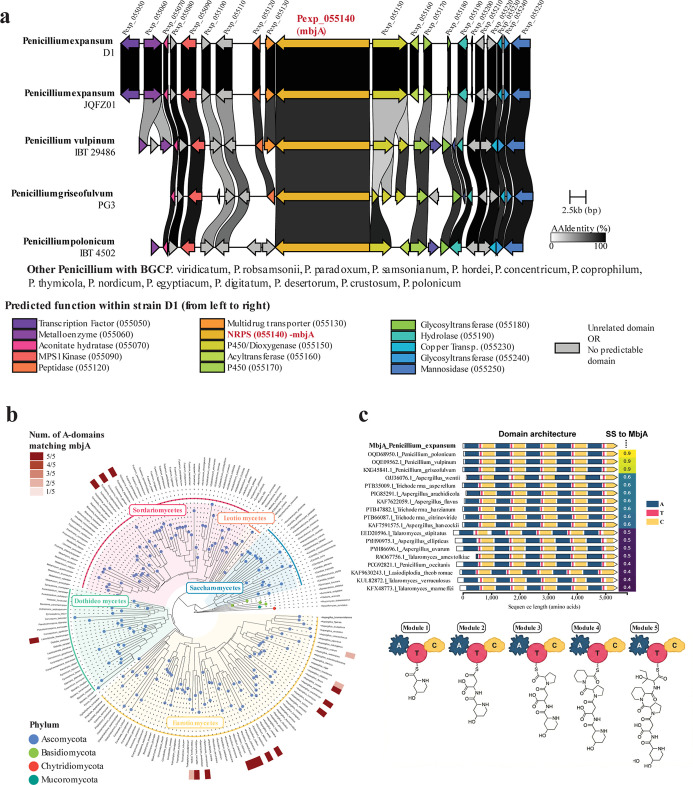 Figure 5
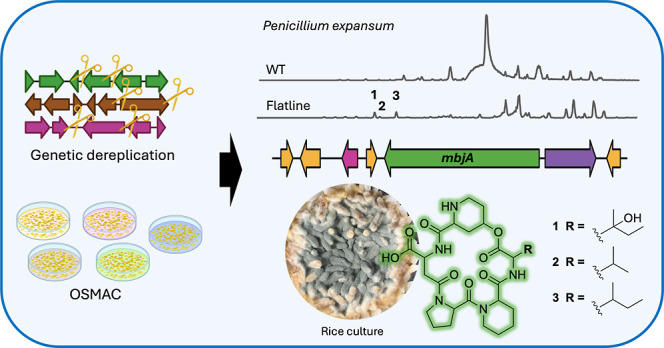 Figure 6
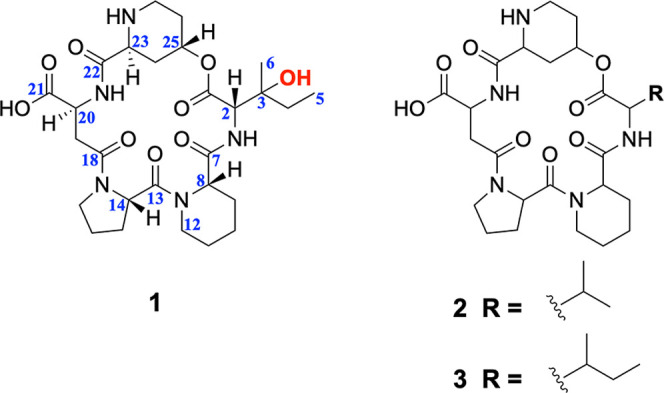 Figure 7
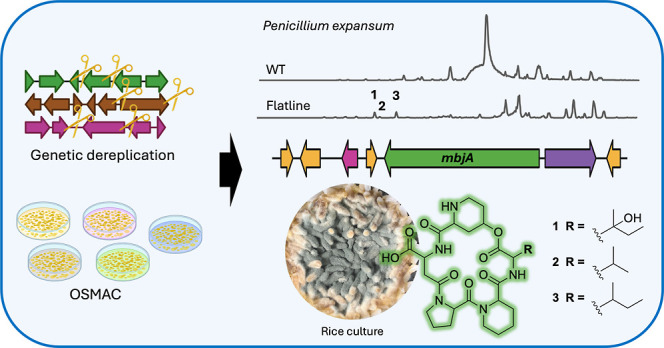 Figure 8
Peer Reviews
No public reviews on file for this paper yet. If you reviewed it on a platform where reviews are public (OpenReview, ICLR, NeurIPS, ICML), you can paste yours below so the community can read it here.
Videos
No videos yet. Explain this paper in a talk, walkthrough, or lecture? Add one.
Taxonomy
TopicsMicrobial Natural Products and Biosynthesis · Microbial Metabolism and Applications · Fungal and yeast genetics research