Tunable Aromatic Sulfoxides and Sulfones as Cysteine-Targeting Warheads: Exploring the Structure–Reactivity Relationship
Hampus Nyström, Anna P. Valaka, Hanna A. Kalesse, Liliana Håversen, Thomas Olsson, Anders Gunnarsson, Fritz Schweikart, Jan Borén, Morten Grøtli

TL;DR
This paper explores how to design covalent chemical probes that selectively target cysteine residues in proteins, particularly kinases like BTK, using tunable aromatic sulfoxide and sulfone warheads.
Contribution
The study introduces a 48-member library of SNAr warheads with tunable reactivity and demonstrates their use in creating traceless covalent probes for kinases.
Findings
Structure–reactivity relationships were established for aromatic sulfoxide and sulfone warheads.
A pyrazine-based warhead was identified as effective for cellular labeling of BTK.
The ibrutinib-derived probe Ibr-2 enabled potent and traceless BTK labeling while preserving enzymatic activity.
Abstract
Covalent modalities are powerful tools in medicinal chemistry and chemical biology, enabling selective protein inhibition and functional labeling through precise tuning of warhead reactivity. We report the design and synthesis of a 48-member library of aromatic sulfoxide and sulfone warheads capable of nucleophilic aromatic substitution (SNAr). Systematic variation of the aromatic core, leaving-group electronics, and sulfur oxidation state revealed structure–reactivity relationships, correlating intrinsic reactivity with structural features. Kinetic assays demonstrated chemoselectivity toward cysteine thiols, with rates primarily dictated by the aromatic scaffold. Selected warheads were incorporated into ligand-directed probes targeting Bruton’s tyrosine kinase (BTK), identifying a pyrazine-based warhead suitable for cellular applications. Molecular dynamics guided the design of the…
Genes, proteins, chemicals, diseases, species, mutations and cell lines named across the full text — each resolved to its canonical identifier and authoritative record.
Click any figure to enlarge with its caption.
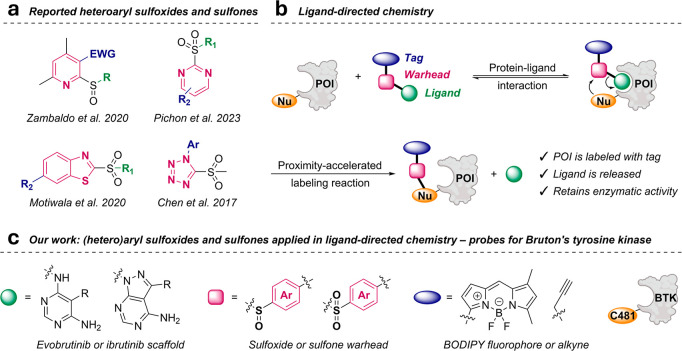 Figure 1
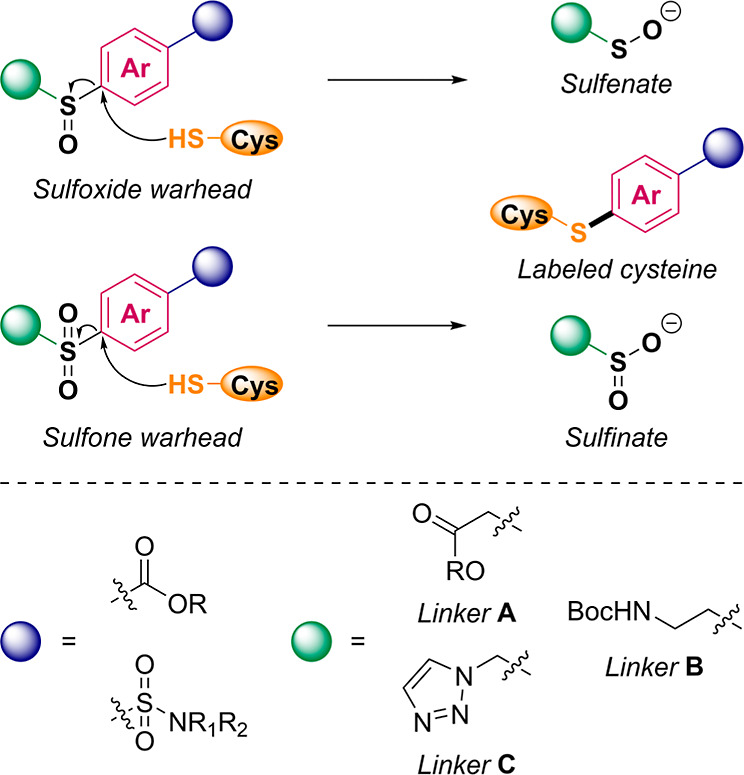 Figure 2
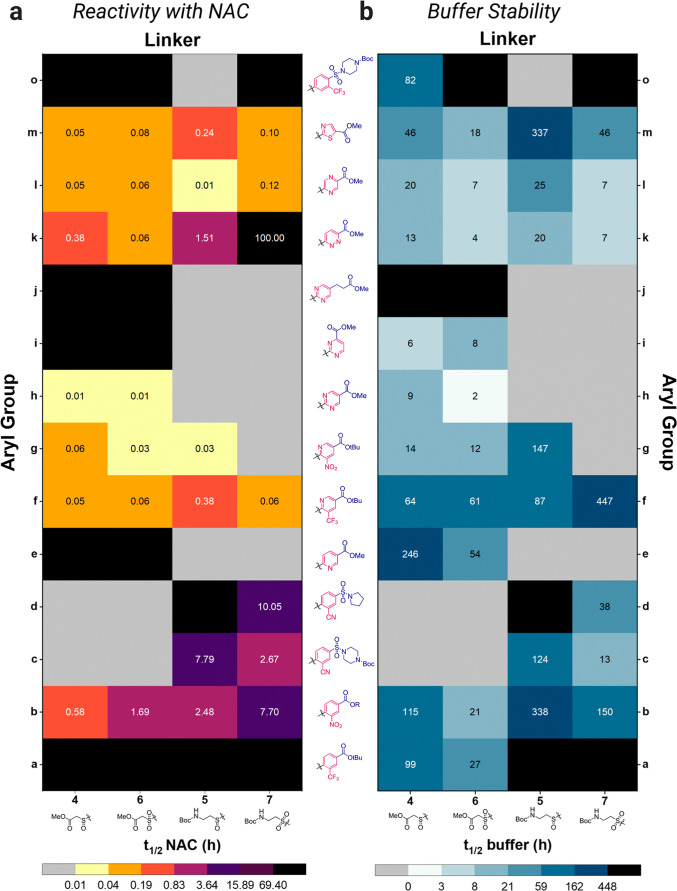 Figure 3
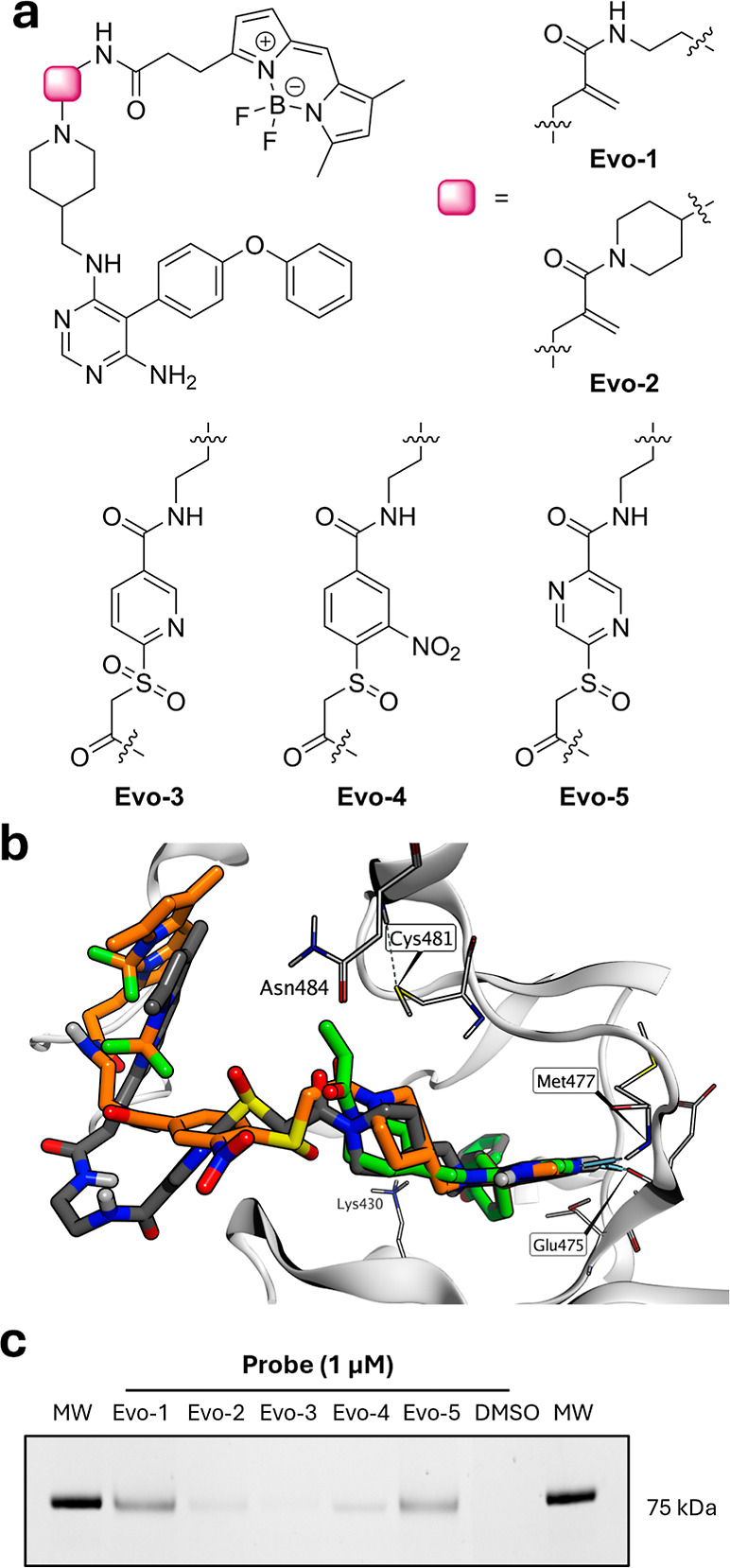 Figure 4
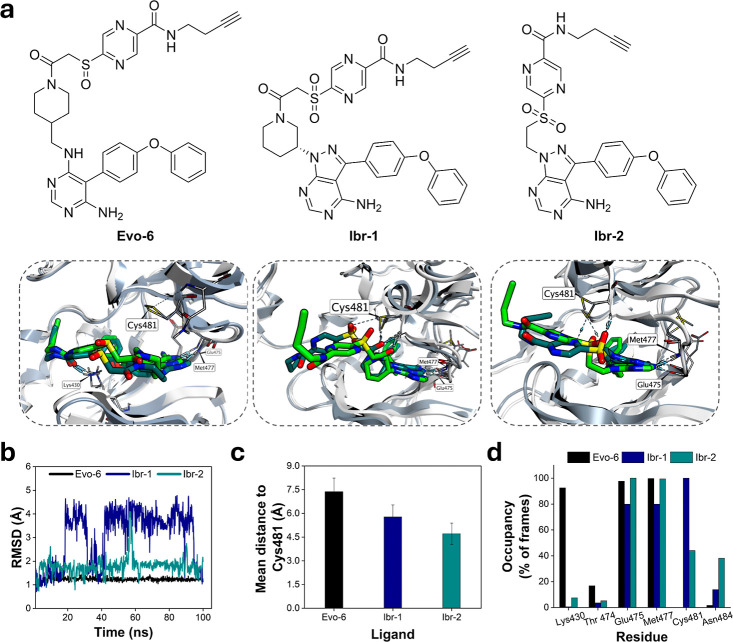 Figure 5
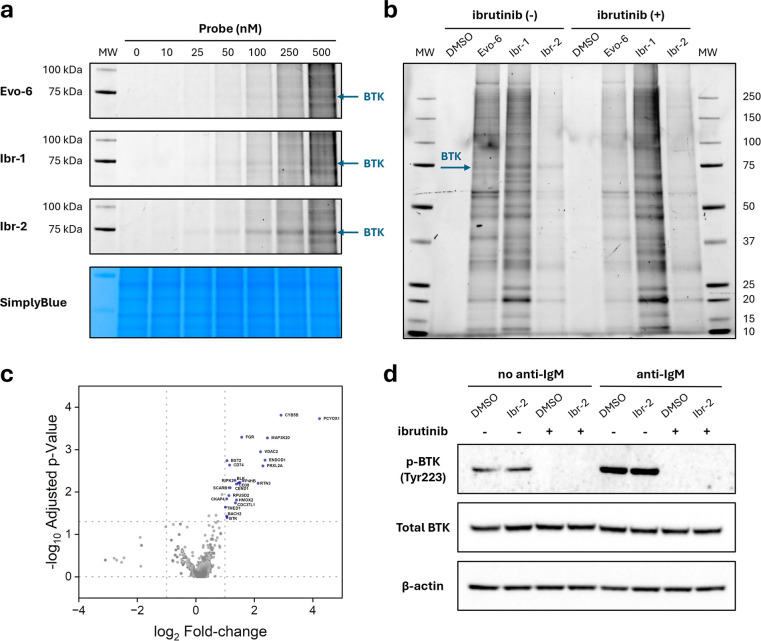 Figure 6
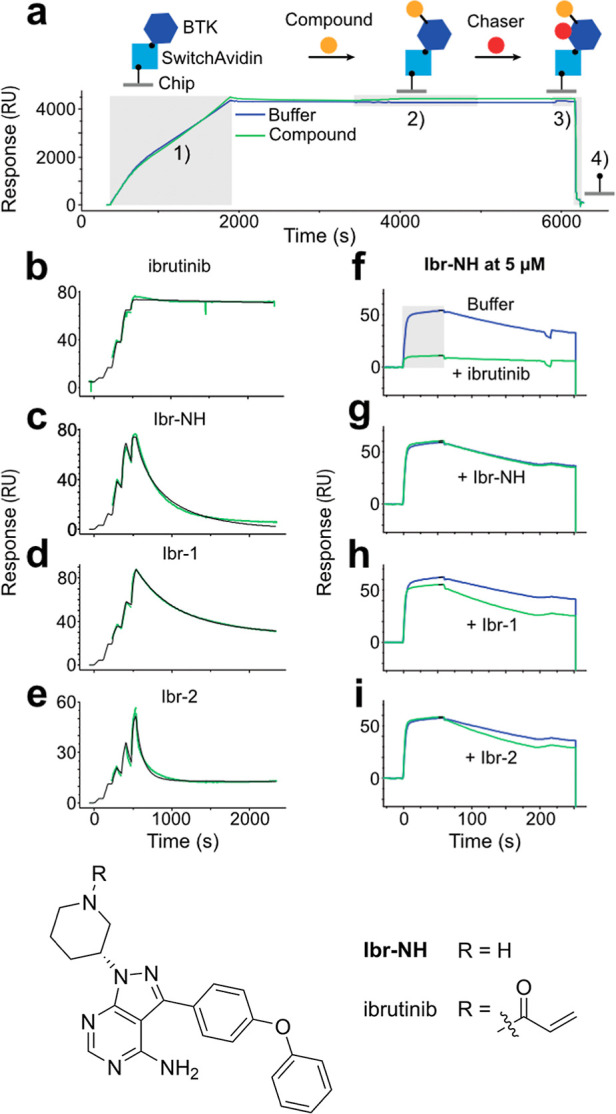 Figure 7
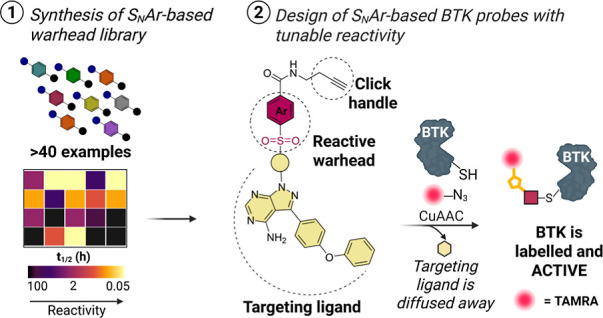 Figure 8
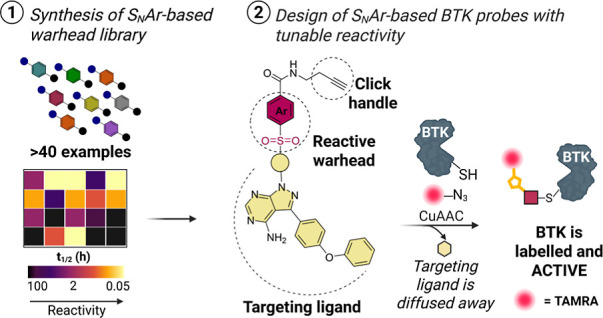 Figure 9
Peer Reviews
No public reviews on file for this paper yet. If you reviewed it on a platform where reviews are public (OpenReview, ICLR, NeurIPS, ICML), you can paste yours below so the community can read it here.
Videos
No videos yet. Explain this paper in a talk, walkthrough, or lecture? Add one.
Taxonomy
TopicsClick Chemistry and Applications · Chemical Synthesis and Analysis · Protein Degradation and Inhibitors