Gigobolins A–C, New Ophiobolins with Anticancer Activity from the Phytopathogenic Fungus Drechslera gigantea
Marianna Carbone, Sridharan Jayamohan, Amelia Scott, Angela Boari, Ryan J. Rutledge, Nadia Cacciapuoti, Vamika Gautam, Jaquelin Aroujo, Tania Betancourt, Daniel Romo, Gangadhara Reddy Sareddy, Joseph H. Taube, Alexander Kornienko, Antonio Evidente, Maria Letizia Ciavatta

TL;DR
Scientists discovered new anticancer compounds from a plant-damaging fungus that show promise against resistant cancer cells.
Contribution
Gigobolins A–C are new ophiobolins with antiproliferative activity against cancer stem cells and resistant cancer cell lines.
Findings
Gigobolins A and B, along with maydispenoid A, showed significant antiproliferative activity against glioblastoma and breast cancer cells.
The compounds were effective against chemoresistant cancer stem cell populations.
Drechslera gigantea is identified as a source of potential anti-cancer agents targeting therapeutic resistance.
Abstract
Three new sesterterpenoids, gigobolins A to C (1–3), along with six known ophiobolins, were isolated and structurally characterized from the culture filtrate of the phytopathogenic fungus Drechslera gigantea. The structures were elucidated using extensive spectroscopic analysis, including 1D and 2D NMR, and HRESIMS, to disclose A/B ring conformation and reveal rings C and D side chain modifications of the ophiobolin tricyclic core structure. Gigobolins A (1) and B (2) together with known maydispenoid A (9) were evaluated for their antiproliferative activity against aggressive glioblastoma multiforme (GBM) and breast cancer cell lines, with a focus on their efficacy against chemoresistant cancer stem cell (CSC) populations. Notably, gigobolin B (2) and maydispenoid A (9) demonstrated significant activity against both GBM CSCs and multiple breast cancer cell lines. These results…
Genes, proteins, chemicals, diseases, species, mutations and cell lines named across the full text — each resolved to its canonical identifier and authoritative record.
Click any figure to enlarge with its caption.
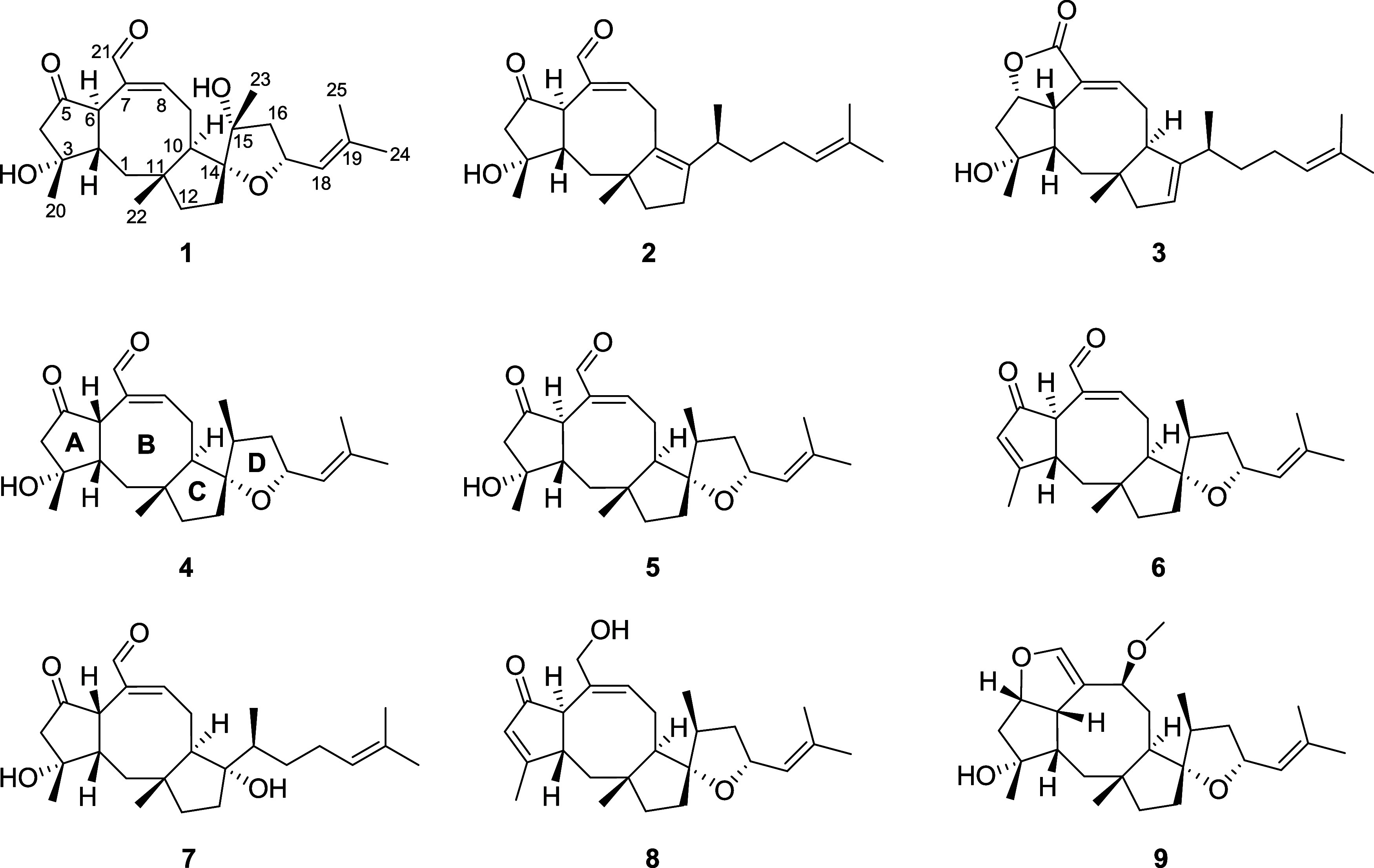 Figure 1
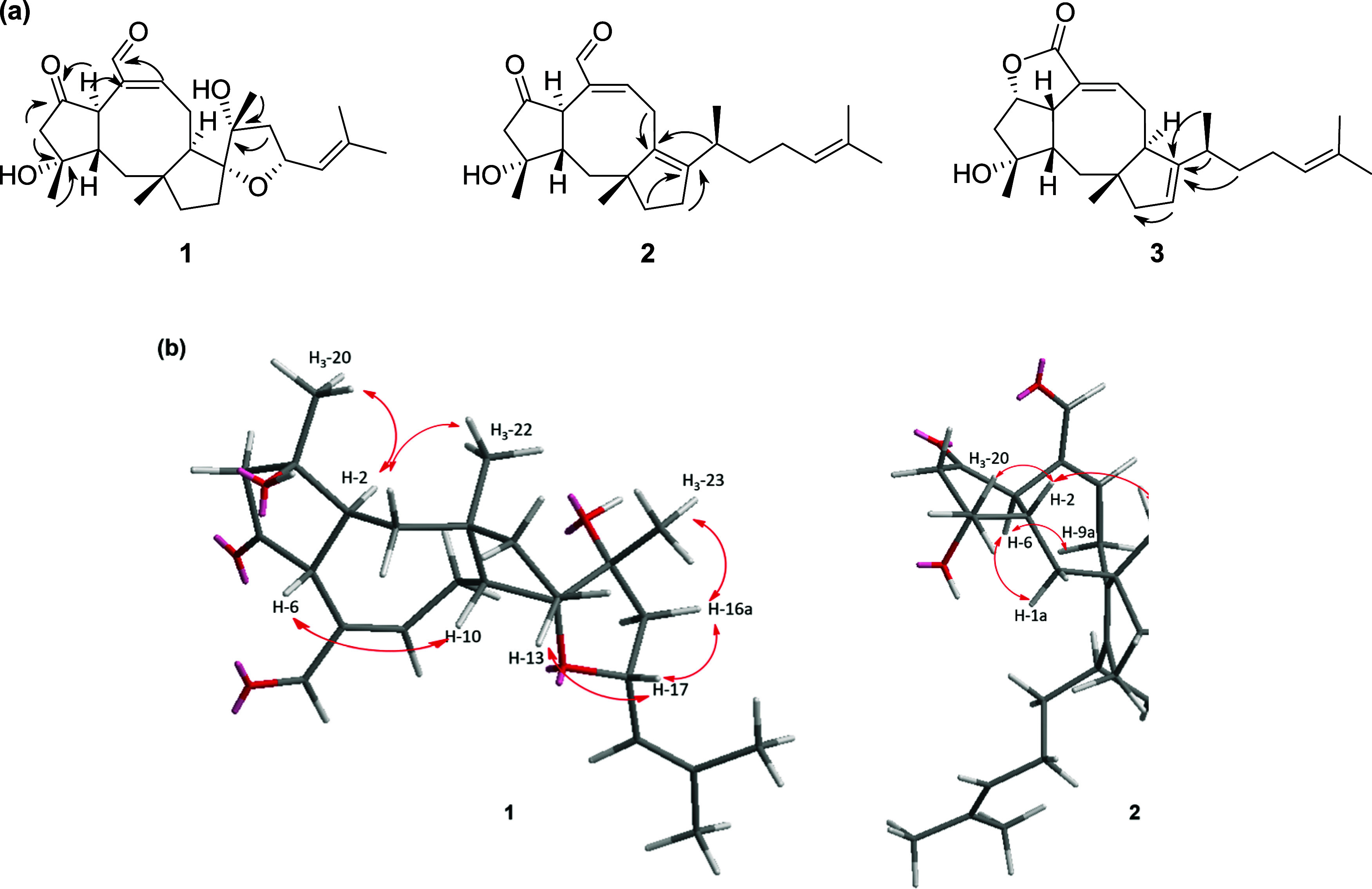 Figure 2
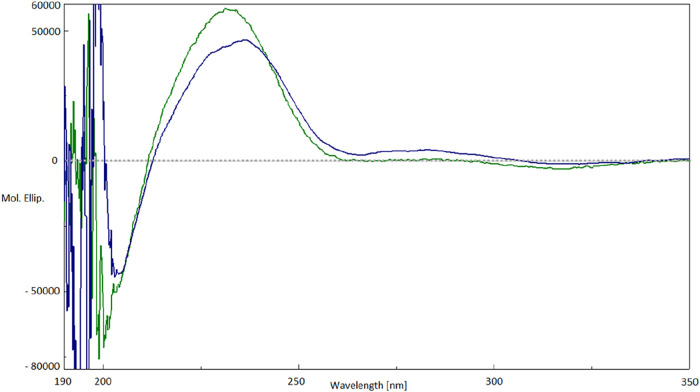 Figure 3
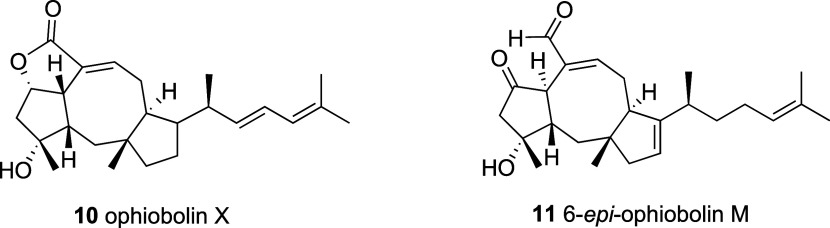 Figure 4
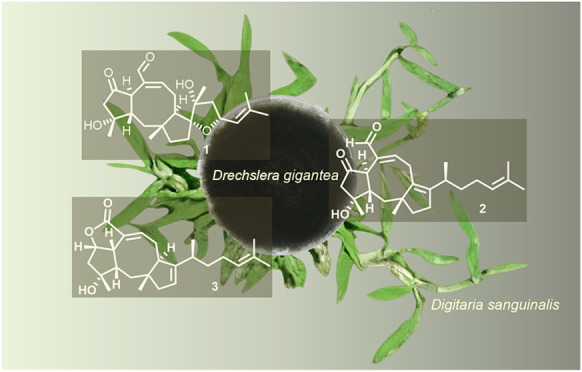 Figure 5
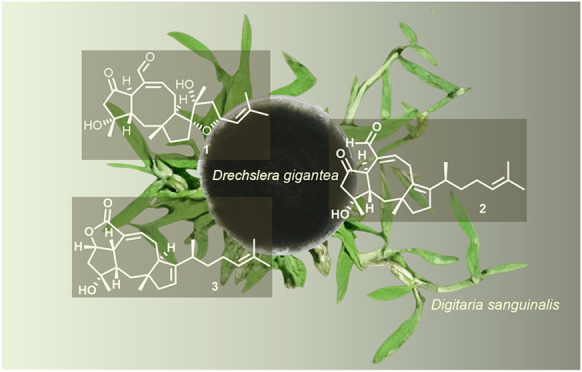 Figure 6
Peer Reviews
No public reviews on file for this paper yet. If you reviewed it on a platform where reviews are public (OpenReview, ICLR, NeurIPS, ICML), you can paste yours below so the community can read it here.
Videos
No videos yet. Explain this paper in a talk, walkthrough, or lecture? Add one.
Taxonomy
TopicsMicrobial Natural Products and Biosynthesis · Synthetic Organic Chemistry Methods · 14-3-3 protein interactions