Bifid mandibular condyle: investigating the association with temporomandibular joint disorders on three-dimensional T2-weighted SPACE sequences performed for brain magnetic resonance radiological scanning techniques
Rumeysa Samanci, Hayri Ogul, Sarfinaz Ataoglu

TL;DR
This study investigates if a rare jaw bone variation called bifid mandibular condyle is linked to temporomandibular joint disorders using brain MRI scans.
Contribution
The study is the first to use 3D T2-weighted SPACE MRI sequences for brain scans to evaluate TMJ abnormalities in patients with BMC.
Findings
82.8% of patients with BMC showed at least one TMJ-related abnormality on MRI.
Disc degeneration was the most common TMJ abnormality observed in BMC patients.
BMC was found bilaterally in 41.4% of patients, and more common in females than males.
Abstract
Background: Bifid mandibular condyle (BMC) is a rare anatomical variation whose cause has not been fully understood. It has been hypothesized that BMC may be associated with an increased frequency of temporomandibular joint (TMJ) abnormalities. The aim of the study was to comparatively review the magnetic resonance imaging (MRI) archives of the hospital focusing on patients with BMC who underwent brain MRI using the T2-weighted 3D sampling perfection with application-optimised contrast using different flip angle evolutions (SPACE) radiological scanning techniques. Methods: The TMJ was thoroughly evaluated in patients diagnosed with BMC. Pathological findings were categorized into six classes: disc degeneration, disc displacement, disc deformation, degenerative osteoarthritis, effusion, and subluxation. Results: A total of 29 patients with BMC were identified, including 9…
Genes, proteins, chemicals, diseases, species, mutations and cell lines named across the full text — each resolved to its canonical identifier and authoritative record.
Click any figure to enlarge with its caption.
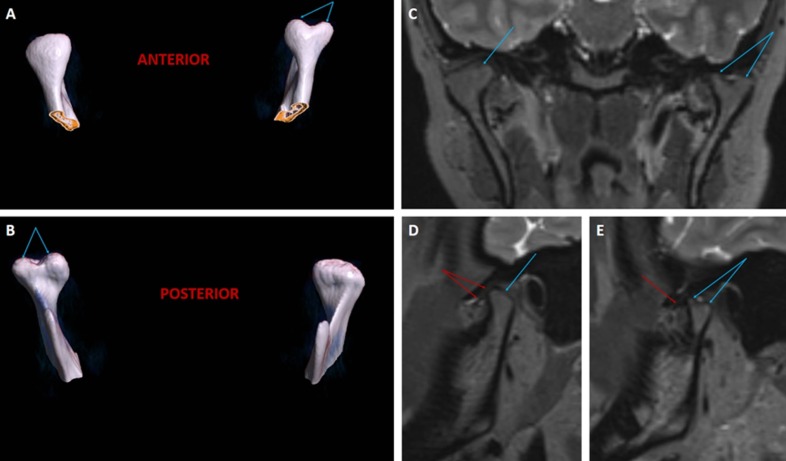 Figure 1
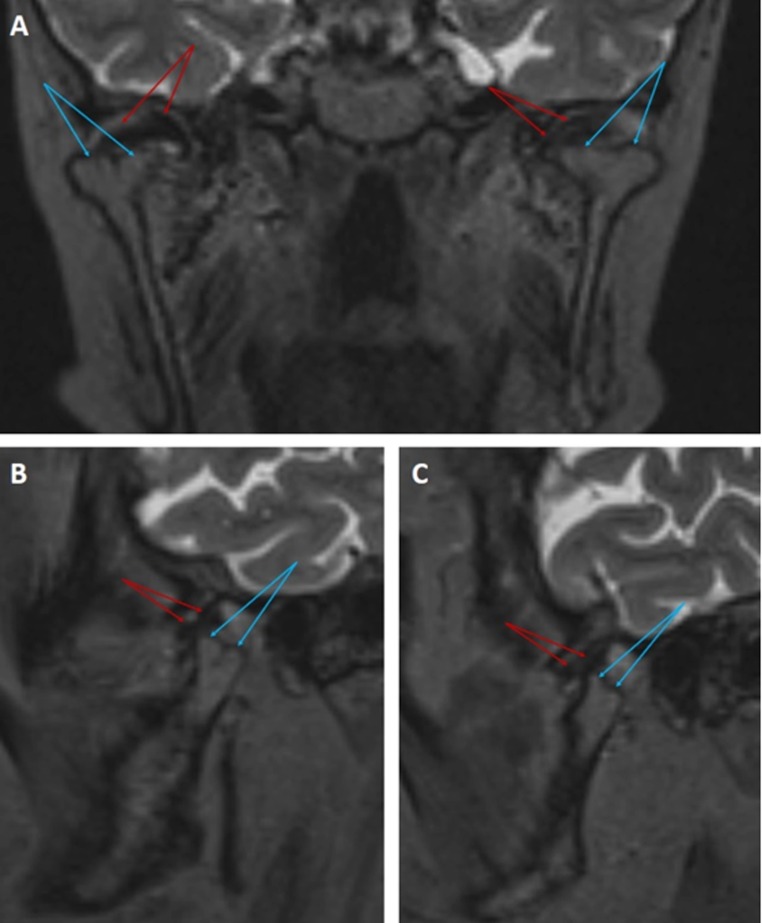 Figure 2
Peer Reviews
No public reviews on file for this paper yet. If you reviewed it on a platform where reviews are public (OpenReview, ICLR, NeurIPS, ICML), you can paste yours below so the community can read it here.
Videos
No videos yet. Explain this paper in a talk, walkthrough, or lecture? Add one.
Taxonomy
TopicsTemporomandibular Joint Disorders · Trigeminal Neuralgia and Treatments · Oropharyngeal Anatomy and Pathologies