Clinical predictors of propranolol responsiveness in pediatric migraine: a prospective observational study
Müge Baykan, Elif Didinmez Taşkırdı, Özge Baykan Çopuroğlu, Pınar Gençpınar, Nihal Olgaç Dündar

TL;DR
This study found that propranolol and behavioral therapy both reduce migraine severity in children, with vitamin deficiencies and certain conditions predicting treatment response.
Contribution
The study identifies clinical and biochemical predictors of propranolol responsiveness in pediatric migraine patients.
Findings
Both propranolol and behavioral therapy significantly reduced migraine frequency and disability in children.
Vitamin D and B12 deficiencies were linked to poorer treatment outcomes in propranolol-treated patients.
Benign paroxysmal vertigo and essential tremor predicted better propranolol response in children with migraines.
Abstract
Background: This study aimed to evaluate the comparative effectiveness of propranolol therapy and structured behavioral interventions in reducing headache severity in pediatric patients and to identify predictors of treatment response. Methods: In this prospective, single-center study, 178 pediatric patients diagnosed with migraine based on the International Classification of Headache Disorders, 3rd edition (ICHD-3) criteria were enrolled. Participants were allocated into two groups according to baseline Pediatric Migraine Disability Assessment Scale (PedMIDAS) scores: Group 1 (PedMIDAS <15, n = 88) received standardized behavioral therapy, while Group 2 (PedMIDAS ≥15, n = 90) received propranolol (1–3 mg/kg/day) for 12 weeks. Primary outcomes were predefined as changes in monthly migraine attack frequency, PedMIDAS scores, and Visual Analog Scale (VAS)-measured headache…
Genes, proteins, chemicals, diseases, species, mutations and cell lines named across the full text — each resolved to its canonical identifier and authoritative record.
Click any figure to enlarge with its caption.
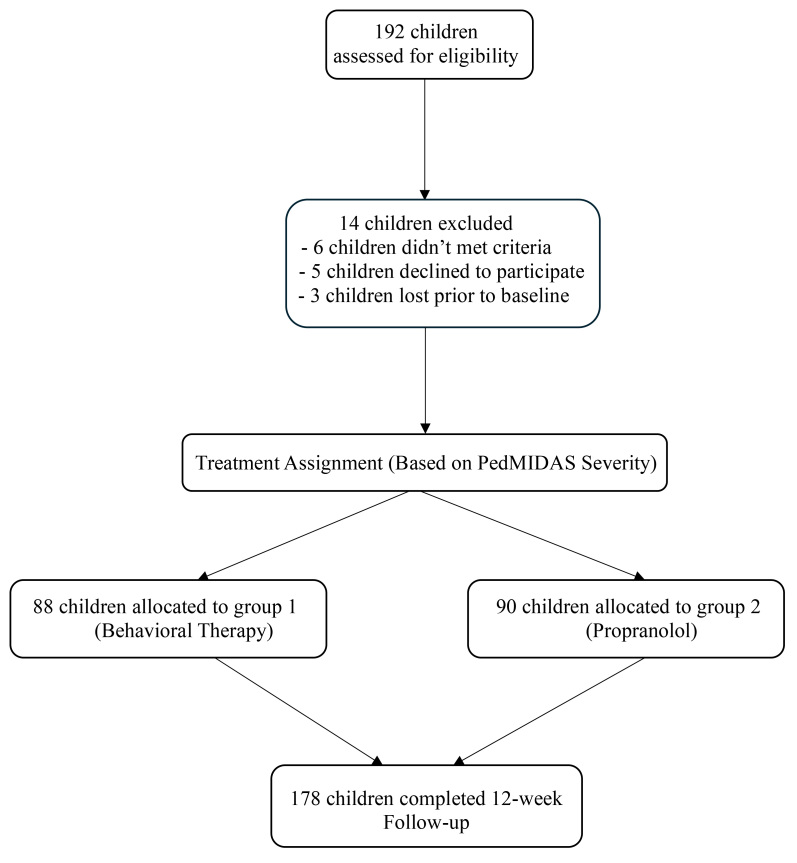 Figure 1
Peer Reviews
No public reviews on file for this paper yet. If you reviewed it on a platform where reviews are public (OpenReview, ICLR, NeurIPS, ICML), you can paste yours below so the community can read it here.
Videos
No videos yet. Explain this paper in a talk, walkthrough, or lecture? Add one.
Taxonomy
TopicsMigraine and Headache Studies · Vestibular and auditory disorders · Neurological Complications and Syndromes