Effects of HCl concentration and immersion time on physicochemical properties, BMP-2 detection, degradation, and osteoblast response of human demineralized tooth matrix
Anupong Jeerachaipansakul, Narit Leepong, Srisurang Suttapreyasri

TL;DR
This study examines how different HCl concentrations and immersion times affect the properties of human demineralized tooth matrix, finding that a 0.5M HCl for 20 minutes offers optimal results for bone graft applications.
Contribution
The study identifies an optimal HCl demineralization protocol that balances collagen preservation, degradation, and osteoblast proliferation for tooth-derived grafts.
Findings
A 0.5M HCl for 20 minutes protocol preserved collagen and supported favorable osteoblast proliferation.
Higher HCl concentration increased degradation and microcracking, while longer immersion increased BMP-2 detection.
Both HCl concentration and immersion time had significant independent and interactive effects on hDTM properties.
Abstract
Human demineralized tooth matrix (hDTM) is a promising tooth-derived graft material; however, demineralization protocols vary widely and may alter matrix structure, degradation behavior, and growth factor detectability. This study investigates the combined effects of hydrochloric acid (HCl) concentration (0.5 vs 1.0M) and immersion time (10 vs 20 min) on the physicochemical characteristics, Bone Morphogenetic Protein-2 (BMP-2) detection, degradation behavior and osteoblast response of hDTM. Caries-free permanent teeth (particle size 500–1000 μm) were demineralized using four HCl protocols: 0.5M/10 min, 0.5M/20 min, 1M/10 min, and 1M/20 min. Morphology, crystallinity, and surface features were characterized by scanning electron microscopy (SEM), X-ray diffraction, X-ray fluorescence, and Brunauer-Emmett-Teller analysis. Total protein and BMP-2 were quantified using Bradford and…
Genes, proteins, chemicals, diseases, species, mutations and cell lines named across the full text — each resolved to its canonical identifier and authoritative record.
Click any figure to enlarge with its caption.
 Figure 1
 Figure 2
 Figure 3
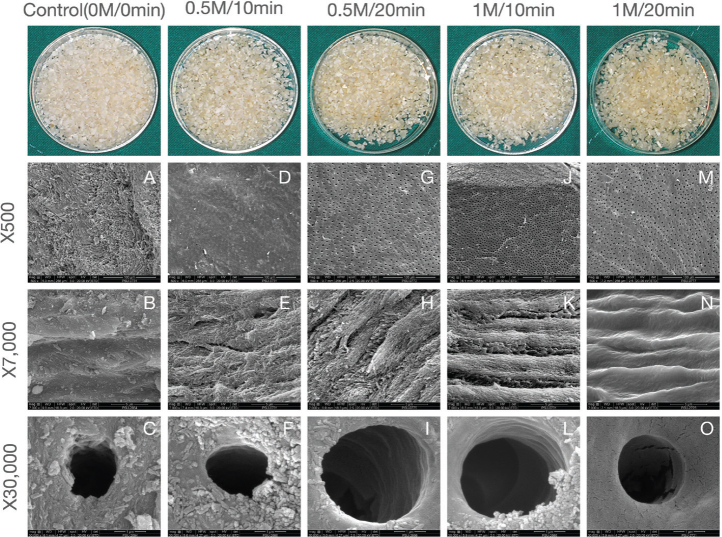 Figure 4
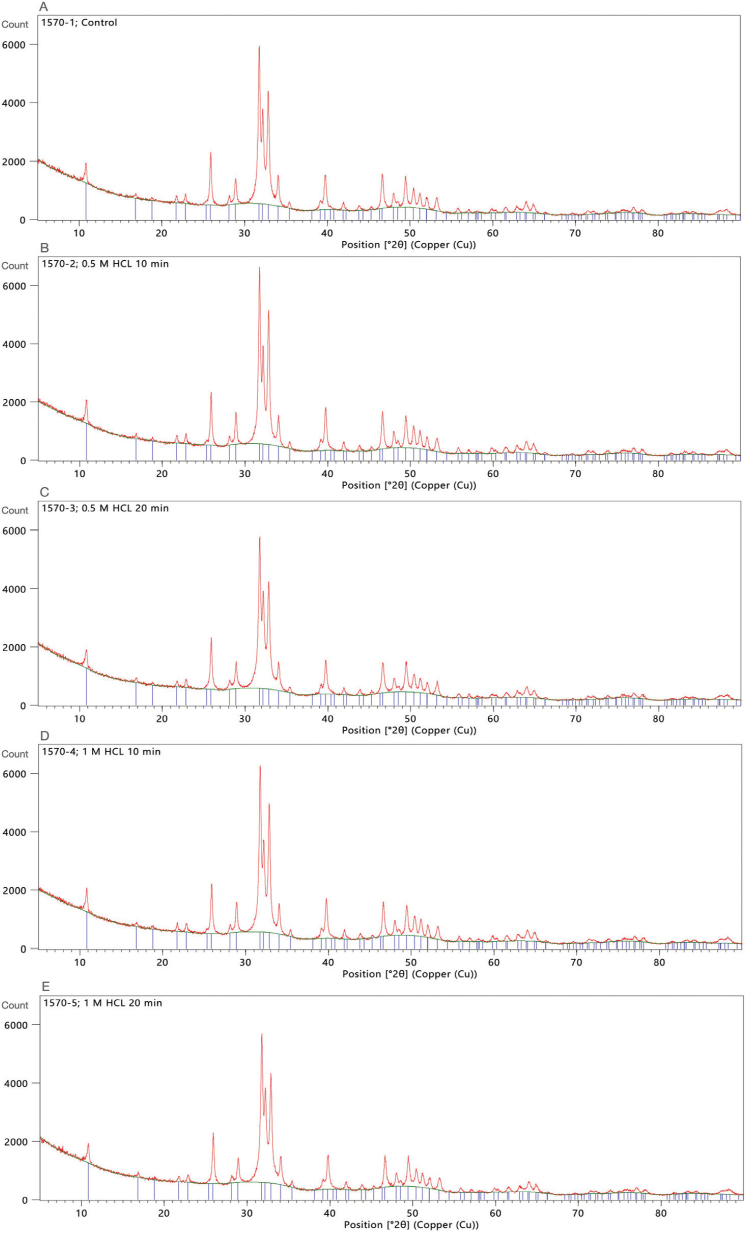 Figure 5
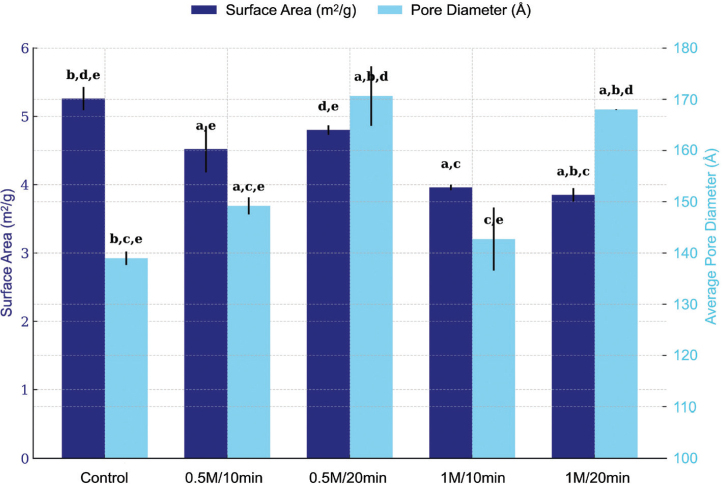 Figure 6
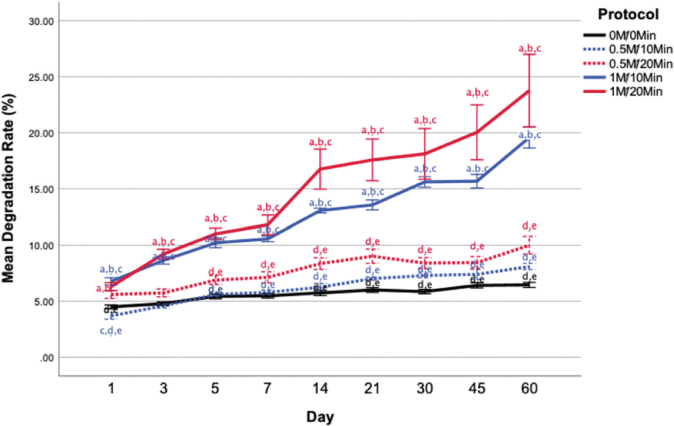 Figure 7
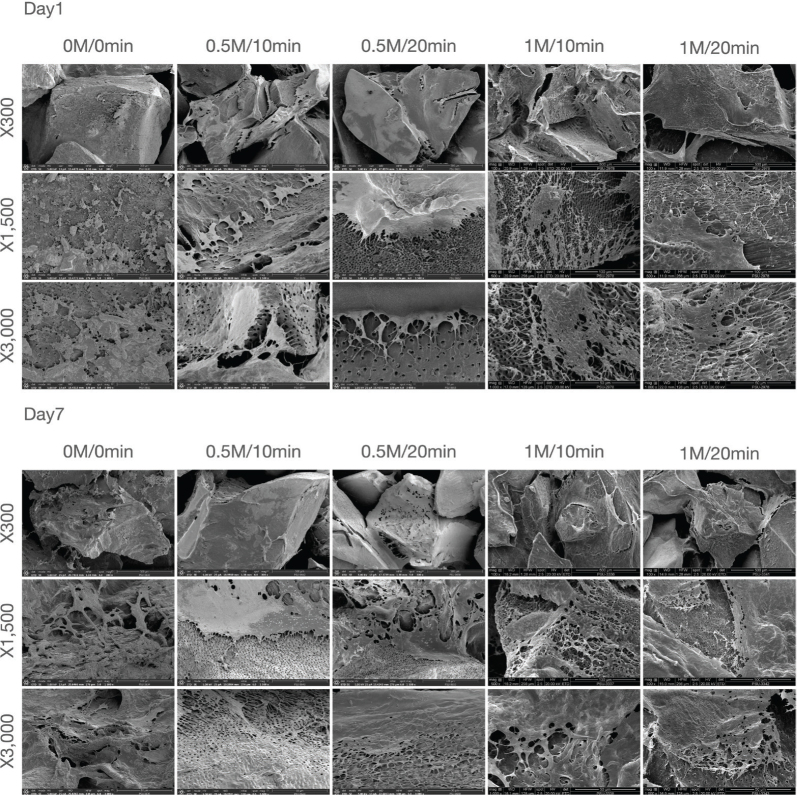 Figure 8
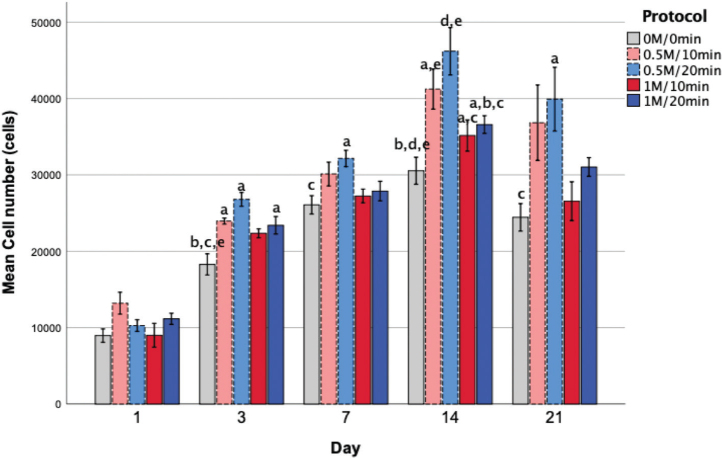 Figure 9
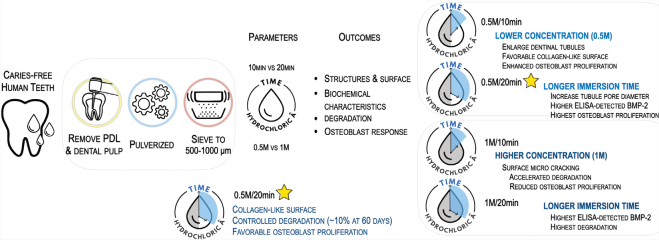 Figure 10
Peer Reviews
No public reviews on file for this paper yet. If you reviewed it on a platform where reviews are public (OpenReview, ICLR, NeurIPS, ICML), you can paste yours below so the community can read it here.
Videos
No videos yet. Explain this paper in a talk, walkthrough, or lecture? Add one.
Taxonomy
TopicsDental materials and restorations · Periodontal Regeneration and Treatments · Tissue Engineering and Regenerative Medicine