Morphometric Variations of Extraocular Muscles in a Caucasian Cohort: A Pilot Study on the Surgical Implications of Ethnic Diversity
Vinesh Mistry, Naila Ali, Karuna Katti

TL;DR
This pilot study compares the anatomy of eye muscles in Caucasians with East Asian populations, finding ethnic differences that could impact strabismus surgery.
Contribution
This study provides the first morphometric data on Caucasian extraocular muscles and highlights inter-ethnic anatomical differences relevant to strabismus surgery.
Findings
Caucasian extraocular muscles showed significantly more posterior insertions in three recti muscles compared to East Asian populations.
The inter-recti distance between the inferior and medial rectus was the narrowest surgical corridor in Caucasians.
Morphometric variations, especially in the Spiral of Tillaux, suggest the need for tailored surgical approaches based on ethnicity.
Abstract
Precise anatomical knowledge of the extraocular muscles (EOMs) is crucial, particularly for managing “slipped” or “lost” muscles in strabismus surgery. This pilot study provides the first morphometric data for Caucasian-specific, cadaveric orbits, revealing significant deviations from accepted anatomical norms. 6 Caucasian, formalin-embalmed orbits (86-92 years) were dissected using a superior orbitotomy approach at the Human Anatomy Unit, University of Birmingham. Recti and oblique lengths, insertion widths, limbal distances, and inter-recti distances were measured using a triple-observer, string-arc technique to account for scleral curvature. Data on muscle length, width, and limbal distance were compared with Thai, Mexican, Indian, and Taiwanese datasets using Welch’s t-tests; inter-recti spacing was assessed observationally. Significant deviations were observed across all assessed…
Genes, proteins, chemicals, diseases, species, mutations and cell lines named across the full text — each resolved to its canonical identifier and authoritative record.
Click any figure to enlarge with its caption.
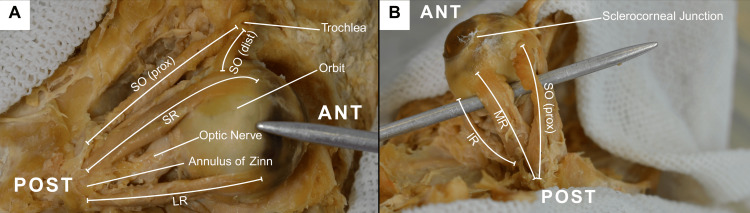 Figure 1
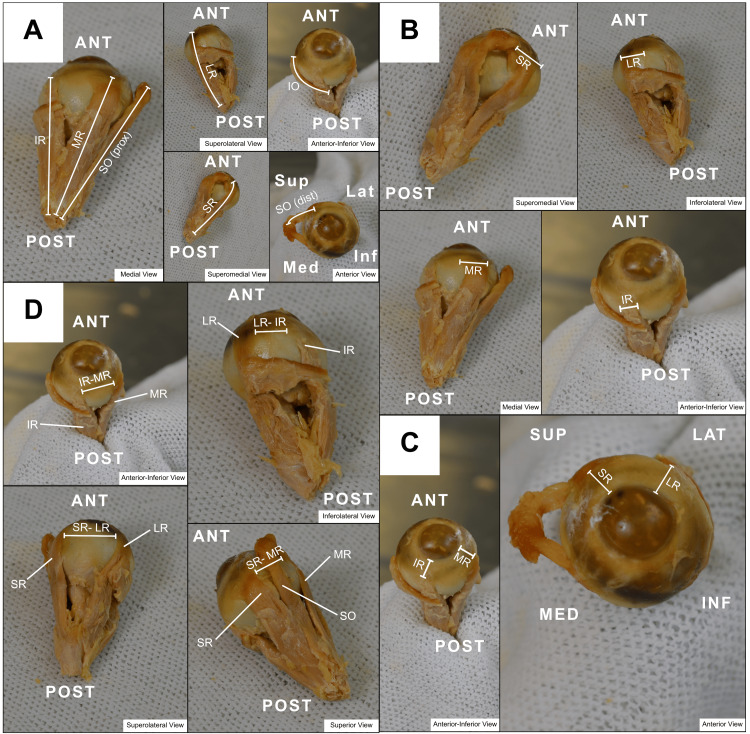 Figure 2
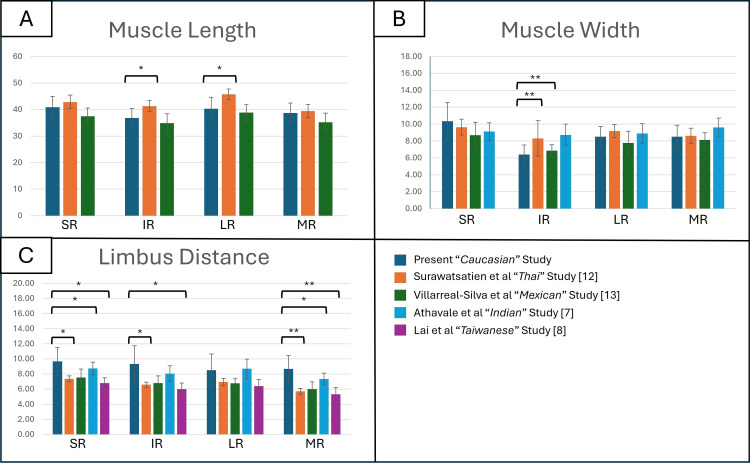 Figure 3
Peer Reviews
No public reviews on file for this paper yet. If you reviewed it on a platform where reviews are public (OpenReview, ICLR, NeurIPS, ICML), you can paste yours below so the community can read it here.
Videos
No videos yet. Explain this paper in a talk, walkthrough, or lecture? Add one.
Taxonomy
TopicsOphthalmology and Eye Disorders · Facial Trauma and Fracture Management · Meningioma and schwannoma management