Evaluation of the Novel Bacteriophage Chage1 and Its Endolysin LysCG1 as Biocontrol Agents against Cronobacter sakazakii in Foods
Jin Seo, Minsuk Kong

TL;DR
This study explores a new bacteriophage and its enzyme to control a harmful bacteria in infant formula and food products.
Contribution
A novel bacteriophage (Chage1) and its endolysin (LysCG1) are evaluated for biocontrol of Cronobacter sakazakii in food.
Findings
Chage1 is stable across a wide range of temperatures and pH levels and inhibits C. sakazakii growth for up to 24 hours.
LysCG1, derived from Chage1, shows broader antibacterial activity against multiple Gram-negative bacteria.
Chage1 and LysCG1 demonstrate antibacterial effects in powdered infant formula and milk samples.
Abstract
Cronobacter sakazakii is a foodborne pathogen transmitted through powdered infant formula (PIF) and consequently leads to illness in infants. Owing to the pathogen’s occasional antibiotic resistance, bacteriophages offer a promising strategy for controlling this pathogen. Therefore, this study characterized a novel virulent phage (Chage1) that specifically infects C. sakazakii cells. Chage1 exhibited stability across a temperature range of 4–50°C and pH conditions of 4–11. Moreover, Chage1 inhibited bacterial growth for up to 24 h when inoculated into C. sakazakii at a multiplicity of infection (MOI) of 1. Chage1 (MOI of 105) also showed antibacterial activity against two C. sakazakii strains in PIF and milk samples for 8 h at 37°C. Whole genome sequencing of Chage1 revealed a 52,653 bp DNA genome with 72 predicted open reading frames (ORF) containing an endolysin gene (ORF 60). The…
Genes, proteins, chemicals, diseases, species, mutations and cell lines named across the full text — each resolved to its canonical identifier and authoritative record.
Click any figure to enlarge with its caption.
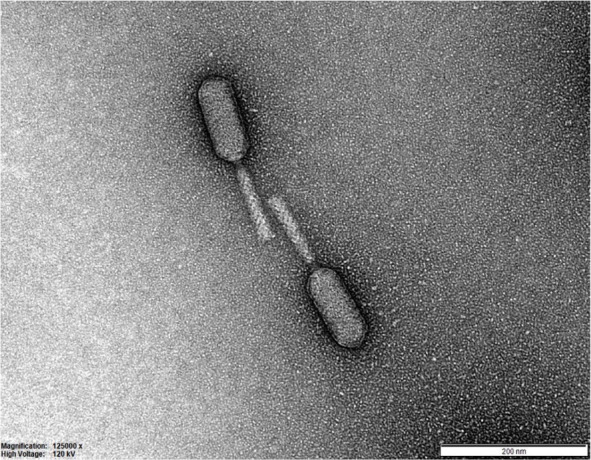 Figure 1
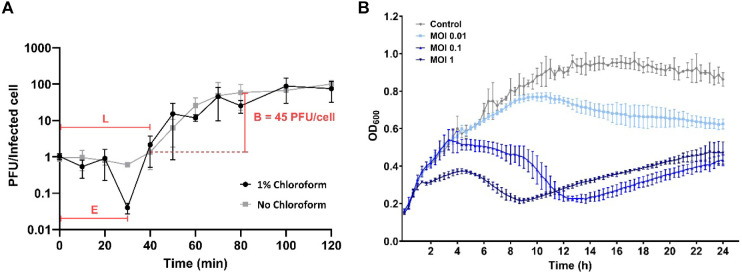 Figure 2
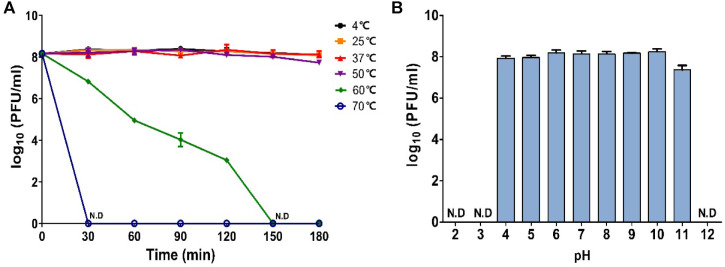 Figure 3
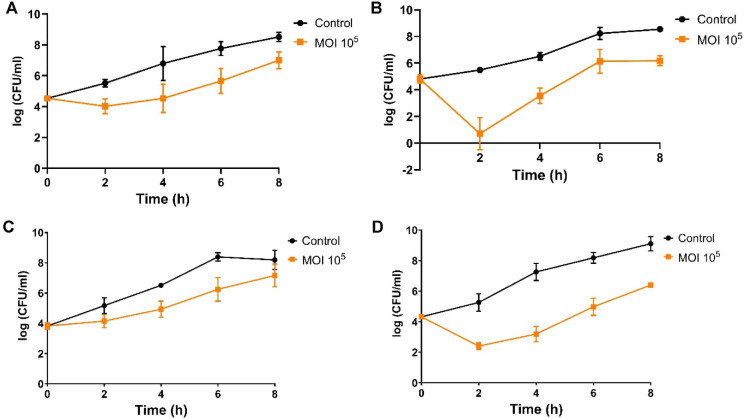 Figure 4
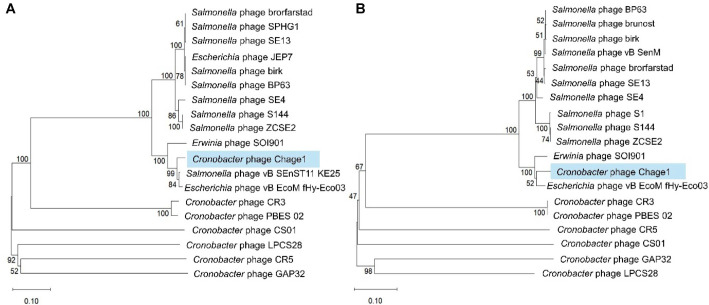 Figure 5
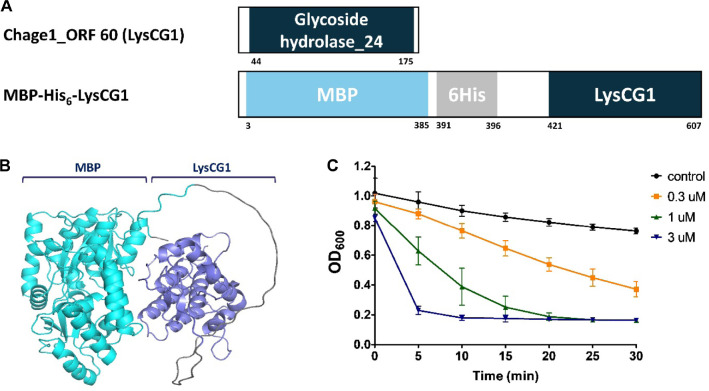 Figure 6
 Figure 7
 Figure 8
Peer Reviews
No public reviews on file for this paper yet. If you reviewed it on a platform where reviews are public (OpenReview, ICLR, NeurIPS, ICML), you can paste yours below so the community can read it here.
Videos
No videos yet. Explain this paper in a talk, walkthrough, or lecture? Add one.
Taxonomy
TopicsEnterobacteriaceae and Cronobacter Research · Bacteriophages and microbial interactions · Vibrio bacteria research studies