Placental monoamine oxidase A activity in pregnancies complicated by maternal overweight/obesity and gestational diabetes mellitus
Maja Perić, Marina Horvatiček, Kristina Nikolić, Lipa Čičin-Šain, Jasminka Štefulj

TL;DR
This study examines placental monoamine oxidase A (MAO-A) activity in pregnancies affected by maternal overweight/obesity and gestational diabetes, finding subtle changes in substrate affinity for GDM but not for obesity.
Contribution
The study introduces a high-throughput fluorimetric assay to measure placental MAO-A activity and reveals how metabolic conditions affect its function.
Findings
Gestational diabetes mellitus (GDM) is associated with a modest increase in MAO-A substrate affinity (Km), but not with changes in maximum velocity (Vmax).
In metabolically healthy pregnancies, placental MAOA mRNA levels correlate with MAO-A catalytic capacity, but this relationship is absent in pregnancies with maternal overweight/obesity or GDM.
Abstract
The human placenta is a major site of metabolic transformation, synthesizing and catabolizing a wide range of bioactive compounds and thereby contributing to pregnancy success. Monoamine oxidase (MAO) is an important component of placental catabolic systems, catalyzing the oxidative deamination of biogenic monoamines, including serotonin and catecholamines. We developed a high-throughput fluorimetric assay using six concentrations of kynuramine as substrate to determine the kinetic parameters - maximum velocity (Vmax) and Michaelis affinity constant (Km) - of MAO activity in human placental tissue. Pharmacological experiments with selective MAO-A and MAO-B inhibitors identified MAO-A as the sole catalytically active MAO isoform in human term placenta. We applied the assay to placental samples from 93 women to assess whether maternal overweight/obesity (OWO) and/or gestational diabetes…
Genes, proteins, chemicals, diseases, species, mutations and cell lines named across the full text — each resolved to its canonical identifier and authoritative record.
Click any figure to enlarge with its caption.
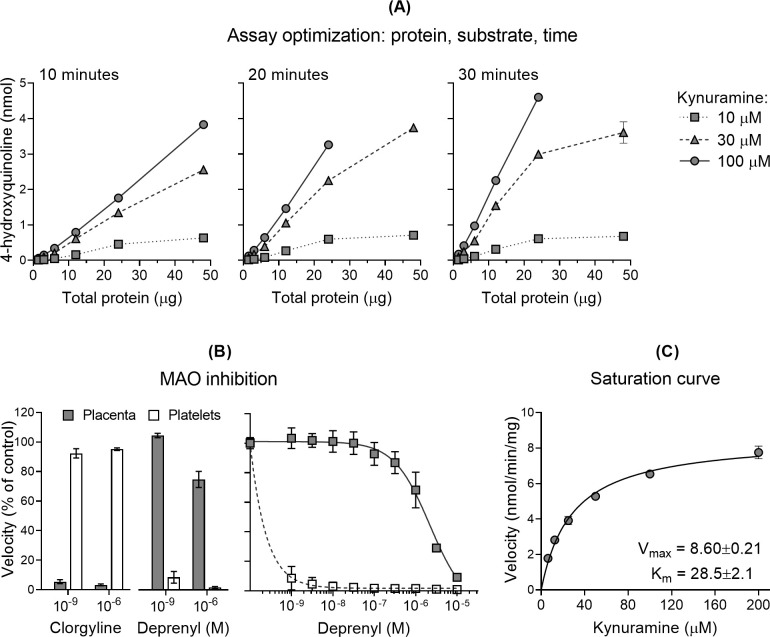 Figure 1
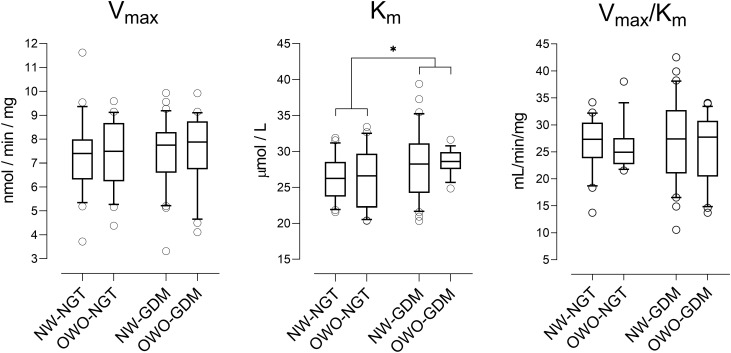 Figure 2
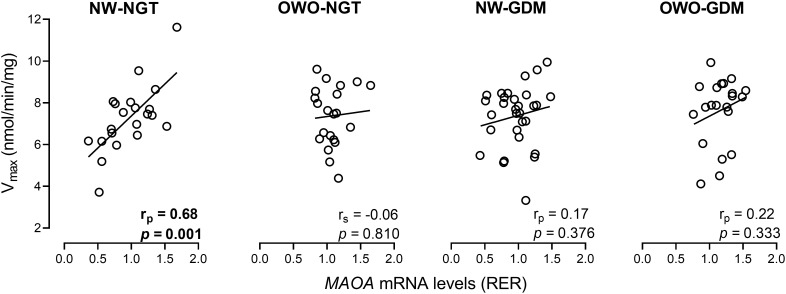 Figure 3
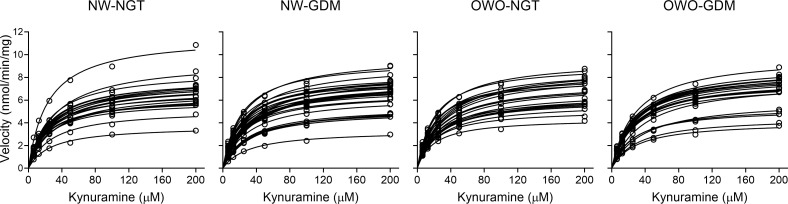 Figure 4
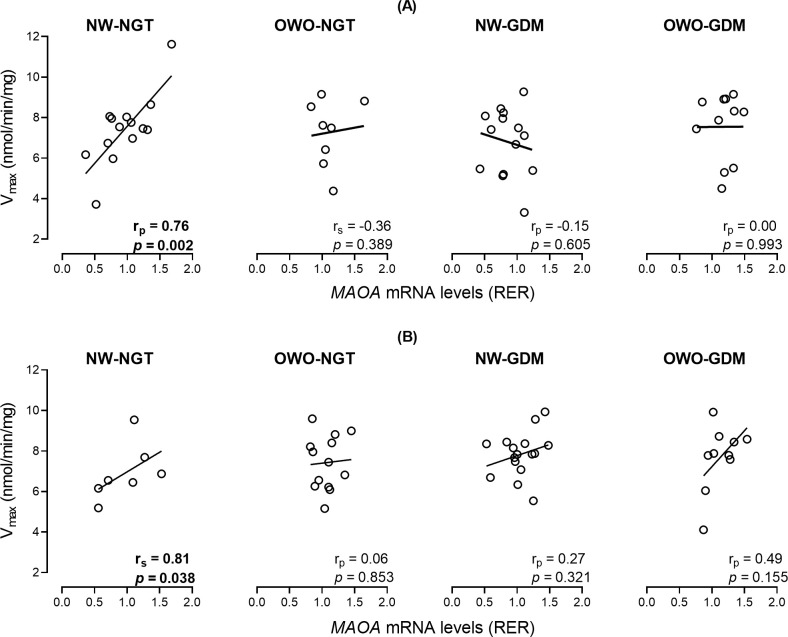 Figure 5
Peer Reviews
No public reviews on file for this paper yet. If you reviewed it on a platform where reviews are public (OpenReview, ICLR, NeurIPS, ICML), you can paste yours below so the community can read it here.
Videos
No videos yet. Explain this paper in a talk, walkthrough, or lecture? Add one.
Taxonomy
TopicsTryptophan and brain disorders · Neurotransmitter Receptor Influence on Behavior · Gestational Diabetes Research and Management