Informing spatial conservation prioritization with species’ traits
Liam A. Trethowan, Laura Jennings, Haerul Arifin, Renata Borosova, Gemma L. C. Bramley, Marie Briggs, Osanna Chu, Ruth P. Clark, Sally Dawson, Kiran L. Dhanjal‐Adams, Yance de Freitas, James Hartup, Edward G. E. Heatubun, Cecilia Lee‐Grant, Laurensia V. Mapandin, Jonni Marwa

TL;DR
The study uses plant species traits to improve conservation planning in New Guinea, helping prioritize areas for protection based on biodiversity and deforestation risk.
Contribution
The novel approach integrates plant traits into conservation models, enhancing predictions and prioritizing areas with high biodiversity and deforestation risk.
Findings
Including plant traits improved co-occurrence models for ∼800 species across a 100,000-km² area.
Leaf size and red flower color were the most effective traits for predicting species occurrence.
Trait diversity increased the likelihood of selecting high-risk deforestation areas for conservation.
Abstract
New Guinea, the most botanically diverse island on the planet, is the location for one of the boldest conservation initiatives. The Manokwari Declaration aims to achieve 70% conservation designation for the Bird's Head Peninsula. This is 40% higher than the 2022 Global Biodiversity Framework target. However, there is a lack of species occurrence data to support evidence of where biodiversity can be best protected. To address this, we integrated plant trait data from taxonomic descriptions in species occurrence models that can inform conservation planning. Inclusion of traits improved the performance of co‐occurrence models of ∼800 plant species across the 100,000‐km2 landscape. Traits generally improved model performance, but not all traits contributed equally (e.g., leaf size and red flower color most improved accuracy of occurrence prediction). Likewise, trait‐parameterized models…
Genes, proteins, chemicals, diseases, species, mutations and cell lines named across the full text — each resolved to its canonical identifier and authoritative record.
Click any figure to enlarge with its caption.
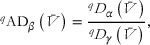 Figure 1
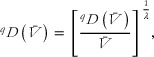 Figure 2
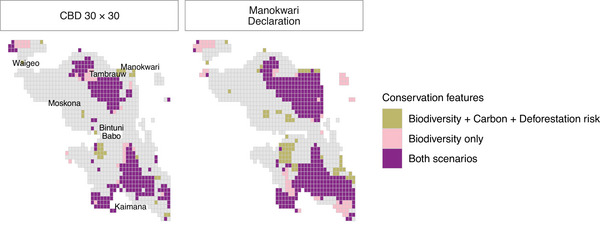 Figure 3
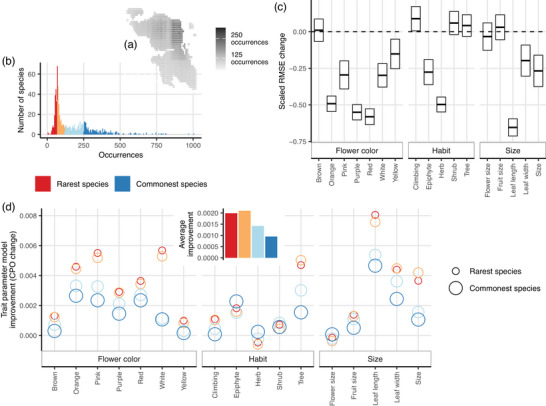 Figure 4
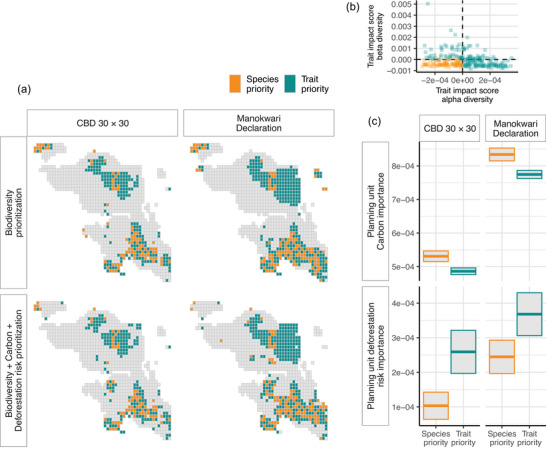 Figure 5
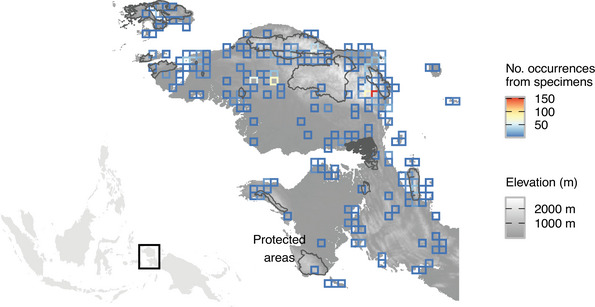 Figure 6
Peer Reviews
No public reviews on file for this paper yet. If you reviewed it on a platform where reviews are public (OpenReview, ICLR, NeurIPS, ICML), you can paste yours below so the community can read it here.
Videos
No videos yet. Explain this paper in a talk, walkthrough, or lecture? Add one.
Taxonomy
TopicsSpecies Distribution and Climate Change · Ecology and Vegetation Dynamics Studies · Animal and Plant Science Education