Exploring the formation of public acceptability of biodiversity offsetting in Finland
Tuija Seppälä, Kaisa Raatikainen, Liisa Varumo, Iikka Oinonen, Heidi Lehtiniemi, Riikka Paloniemi, Suvi Huttunen

TL;DR
This study explores how the public in Finland accepts biodiversity offsetting, finding that people generally support it despite limited knowledge, and that their acceptance is influenced by hopefulness and perceived benefits.
Contribution
The study empirically examines the factors influencing public acceptability of biodiversity offsetting in Finland, including the role of hopefulness and perceived impacts.
Findings
Biodiversity offsetting was largely unknown to the public but was generally judged to be highly acceptable.
Acceptability was positively related to the belief that offsetting resolves conservation conflicts and negatively related to concerns about land use restrictions and nature degradation.
Hopefulness amplified the positive effect of concern for biodiversity on acceptability.
Abstract
Public acceptance of nature conservation instruments is critical for their effective and fair implementation. Understanding conservation governance as a rational activity aligns with the view that citizens base their judgments of conservation instruments on a critical evaluation of the anticipated ecological, economic, and social impacts. However, although citizens generally consider various conservation instruments acceptable, their awareness and knowledge about the instruments are often limited, suggesting that the judgments may also be influenced by factors other than knowledge. We explored acceptability of voluntary biodiversity offsetting in Finland that was written into law in 2023. We hypothesized that public acceptability of the instrument hinges partially on the level of concern for biodiversity loss and of hopefulness that biodiversity loss can be halted and that level of…
Genes, proteins, chemicals, diseases, species, mutations and cell lines named across the full text — each resolved to its canonical identifier and authoritative record.
Click any figure to enlarge with its caption.
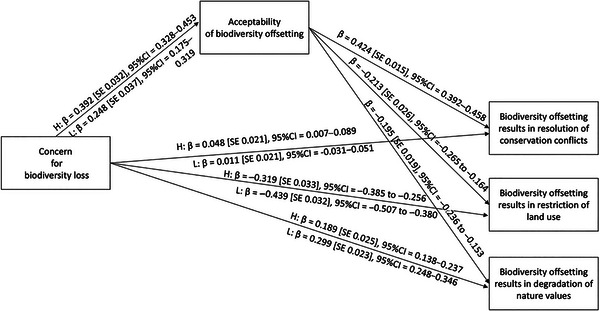 Figure 1
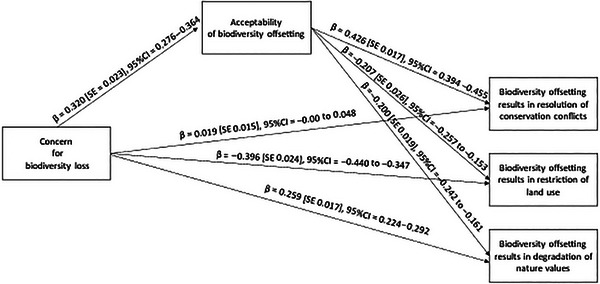 Figure 2
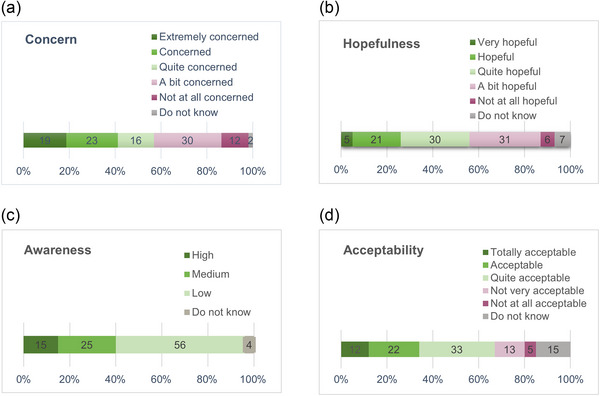 Figure 3
Peer Reviews
No public reviews on file for this paper yet. If you reviewed it on a platform where reviews are public (OpenReview, ICLR, NeurIPS, ICML), you can paste yours below so the community can read it here.
Videos
No videos yet. Explain this paper in a talk, walkthrough, or lecture? Add one.
Taxonomy
TopicsEnvironmental Conservation and Management · Economic and Environmental Valuation · Environmental Philosophy and Ethics