Robust Emax model fitting: Addressing nonignorable missing binary outcome in dose–response analysis
Jiangshan Zhang, Vivek Pradhan, Yuxi Zhao

TL;DR
This paper introduces a new method to handle missing data in dose-response studies, improving accuracy and reducing bias in drug development analysis.
Contribution
A novel penalized likelihood-based method is proposed to address nonignorable missing data and separation issues in dose-response analysis.
Findings
The proposed method outperforms existing approaches like non-responder imputation in simulation studies.
The method is successfully applied to real-world Phase II clinical trial data.
A new R package, ememax, is developed to implement the proposed method.
Abstract
The Binary Emax model is widely employed in dose–response analysis during drug development, where missing data often pose significant challenges. Addressing nonignorable missing binary responses—where the likelihood of missing data is related to unobserved outcomes—is particularly important, yet existing methods often lead to biased estimates. This issue is compounded when using the regulatory-recommended ‘‘imputing as treatment failure’’ approach, known as non-responder imputation (NRI). Moreover, the problem of separation, where a predictor perfectly distinguishes between outcome classes, can further complicate likelihood maximization. In this paper, we introduce a penalized likelihood-based method that integrates a modified expectation-maximization (EM) algorithm in the spirit of Ibrahim and Lipsitz to effectively manage both nonignorable missing data and separation issues. Our…
Genes, proteins, chemicals, diseases, species, mutations and cell lines named across the full text — each resolved to its canonical identifier and authoritative record.
Click any figure to enlarge with its caption.
 Figure 1
 Figure 2
 Figure 3
 Figure 4
 Figure 5
 Figure 6
 Figure 7
 Figure 8
 Figure 9
 Figure 10
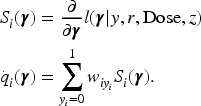 Figure 11
 Figure 12
 Figure 13
 Figure 14
 Figure 15
 Figure 16
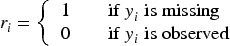 Figure 17
 Figure 18
 Figure 19
 Figure 20
 Figure 21
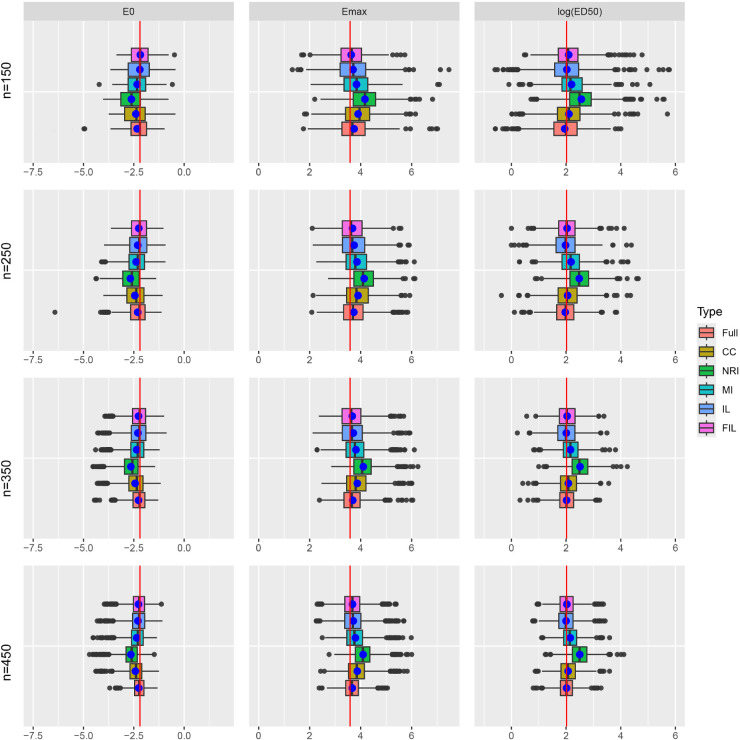 Figure 1
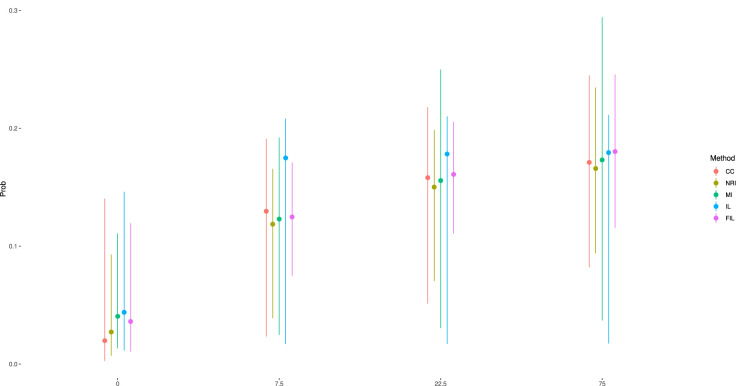 Figure 2
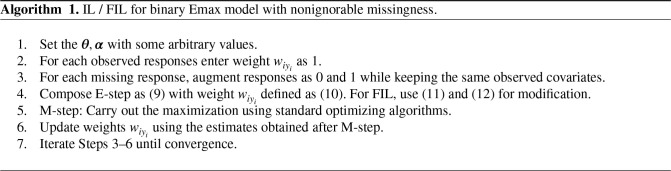 Figure 24
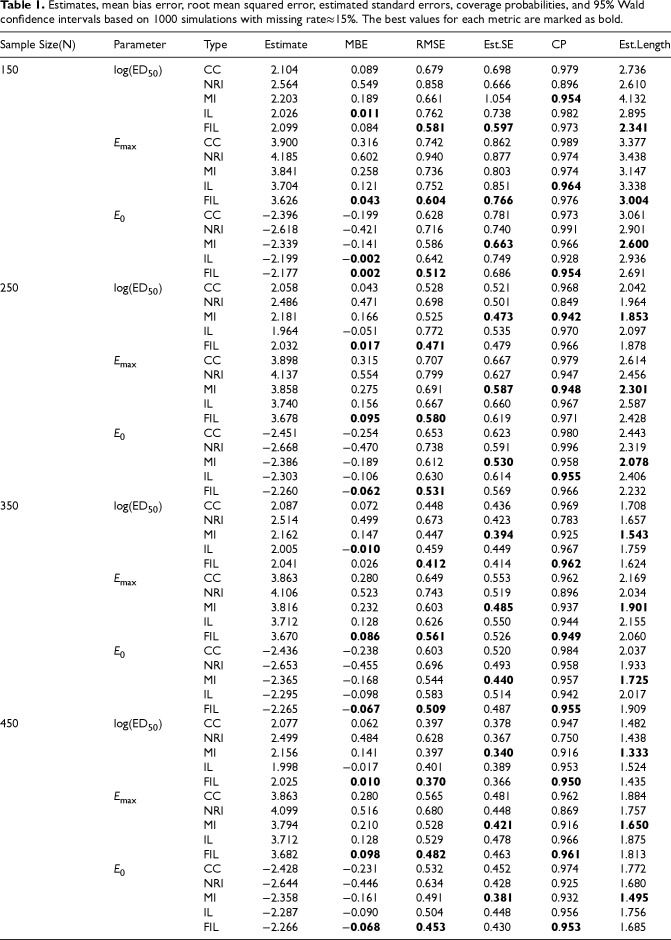 Figure 25
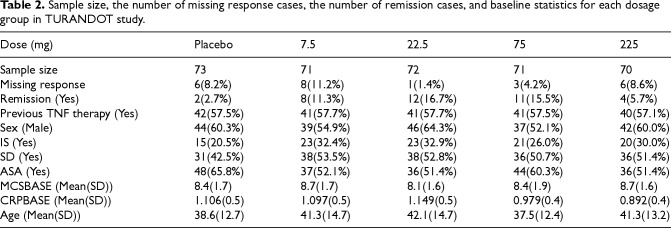 Figure 26
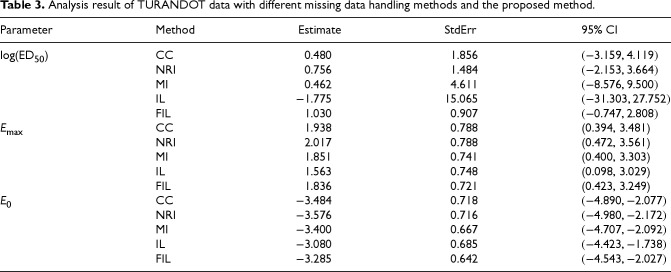 Figure 27
 Figure 28
Peer Reviews
No public reviews on file for this paper yet. If you reviewed it on a platform where reviews are public (OpenReview, ICLR, NeurIPS, ICML), you can paste yours below so the community can read it here.
Videos
No videos yet. Explain this paper in a talk, walkthrough, or lecture? Add one.
Taxonomy
TopicsStatistical Methods in Clinical Trials · Advanced Causal Inference Techniques · Statistical Methods and Bayesian Inference