Distinct gut and oral microbial profiles differentiate patients with symmetric/asymmetric Parkinson’s disease
Jia-Ying Jin, Dan Li, Shuang Qian, Fan Gao, Zong-Qin Li, Jin-Ru Zhang, Hong Jin, Fen Wang, Cheng-Jie Mao, Chun-Feng Liu, Xiao-Yu Cheng

TL;DR
The study finds that gut and oral microbiota differ between symmetric and asymmetric Parkinson’s disease patients, suggesting distinct disease origins.
Contribution
The paper provides novel evidence linking PD subtypes to distinct microbial and functional profiles in gut and oral microbiota.
Findings
Symmetric PD patients showed higher H-Y stage and worse scores on motor and cognitive scales compared to asymmetric PD patients.
Gut microbiota in symmetric PD had higher α-diversity and enrichment of Desulfobacterota, while asymmetric PD was associated with butyrate-producing bacteria.
Oral microbiota in symmetric PD showed nine enriched metabolic pathways, whereas asymmetric PD gut microbiota had six enriched pathways.
Abstract
Parkinson’s disease (PD) presents heterogeneous motor patterns. Symmetric and asymmetric phenotypes potentially reflect distinct pathogenic origins as proposed by the Synuclein Origin and Connectome (SOC) model. However, differences in gut and oral microbiota between these PD subtypes remain unclear. To compare gut and oral microbiota characteristics in symmetric and asymmetric PD patients and explore correlations with clinical features. Thirty symmetric and twenty-three asymmetric PD patients were enrolled. Fecal and salivary microbiota were analyzed using 16S rRNA sequencing, and clinical features were evaluated using standard motor and non-motor scales. The symmetric group showed higher H–Y stage and scores of MDS-UPDRS II, DSFS, MMSE, and MoCA than the asymmetric group (all p < 0.05). Gut and oral microbiota structures differed significantly, with higher gut microbial α-diversity…
Genes, proteins, chemicals, diseases, species, mutations and cell lines named across the full text — each resolved to its canonical identifier and authoritative record.
Click any figure to enlarge with its caption.
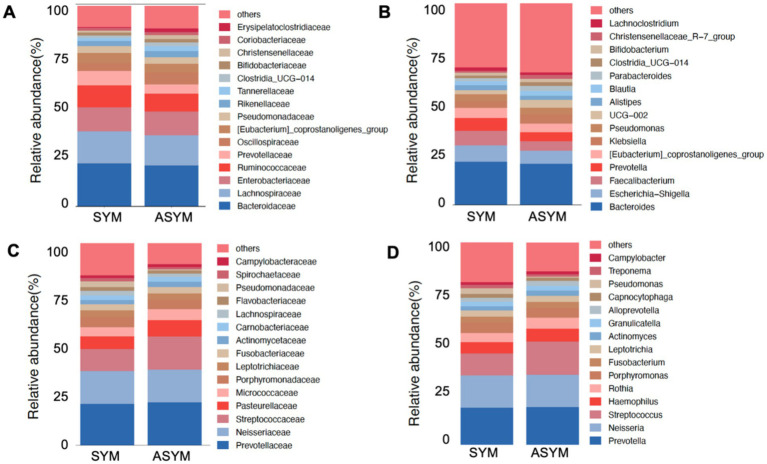 Figure 1
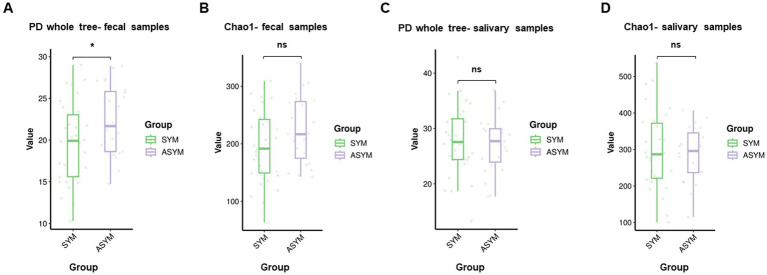 Figure 2
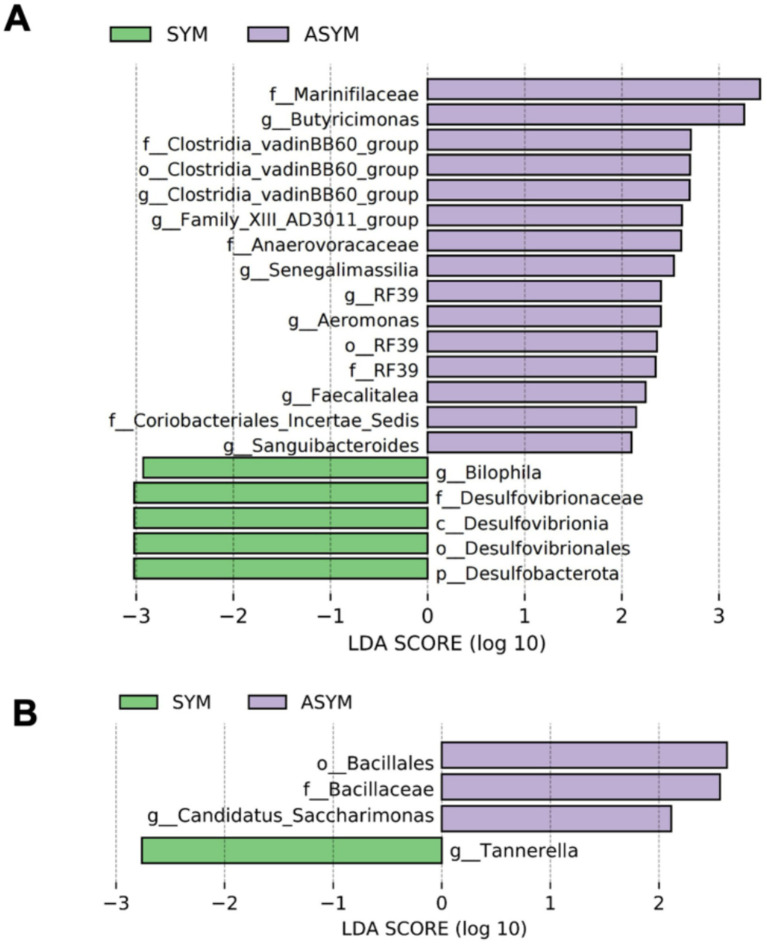 Figure 3
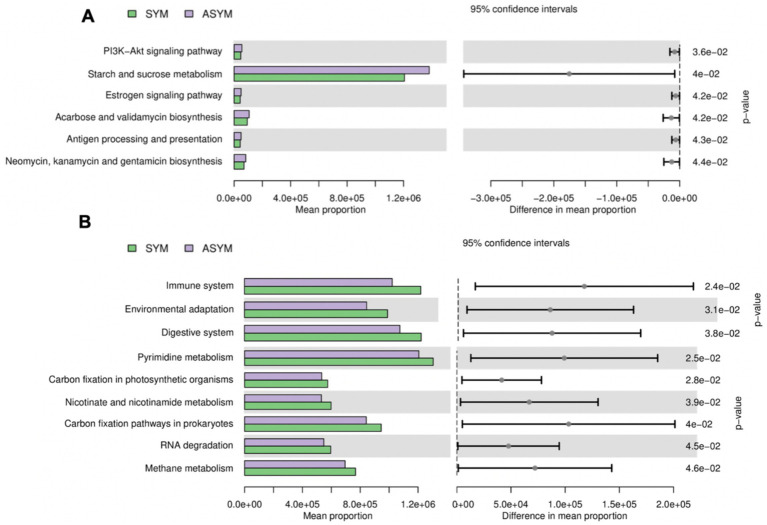 Figure 4
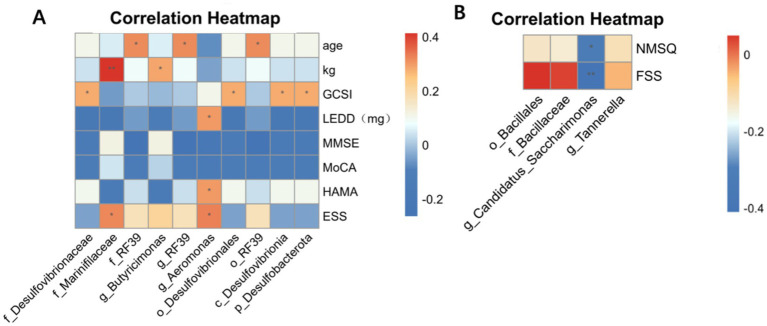 Figure 5
Peer Reviews
No public reviews on file for this paper yet. If you reviewed it on a platform where reviews are public (OpenReview, ICLR, NeurIPS, ICML), you can paste yours below so the community can read it here.
Videos
No videos yet. Explain this paper in a talk, walkthrough, or lecture? Add one.
Taxonomy
TopicsParkinson's Disease Mechanisms and Treatments · Gut microbiota and health · Dysphagia Assessment and Management