Computational modeling of spatiotemporal afterimage visual perception with spiking neural networks
Irena Byzalov, Hadar Cohen Duwek, Elishai Ezra Tsur

TL;DR
Researchers created a spiking neural network that models how the brain perceives color afterimages, showing how complex visual illusions can emerge from neural dynamics.
Contribution
A biologically plausible spiking neural network that models chromatic afterimages and their temporal evolution, including dual polarity effects.
Findings
The model reproduces positive, negative, and combined afterimage configurations through spiking dynamics.
It captures the temporal evolution of perceived color and alternating polarity effects from successive contours.
The model suggests a unified neural process, chromatic filling-in, underlies various afterimage phenomena.
Abstract
Contour-induced afterimages constitute an important class of chromatic visual illusions, in which an illusory color percept emerges post-exposure to a chromatic field. Their striking feature is dual polarity (the perception of both complementary and inducer hues) and the capacity for extending to naive, non-adapted regions, indicating the involvement of neural mechanisms that extend beyond established models of simple neural adaptation. In this work, we realized the perceptual afterimage effect with a biologically plausible spiking neural network. We compared the results with experimental findings with human participants, demonstrating how a complex temporal evolution of a visual illusion can emerge from the dynamics of its constituent spiking dynamics. Our neural design models a wide range of phenomena, including positive, negative, and combined afterimage configurations, as well as…
Genes, proteins, chemicals, diseases, species, mutations and cell lines named across the full text — each resolved to its canonical identifier and authoritative record.
Click any figure to enlarge with its caption.
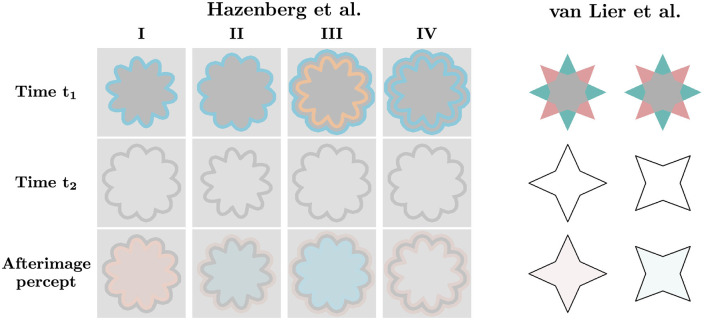 Figure 1
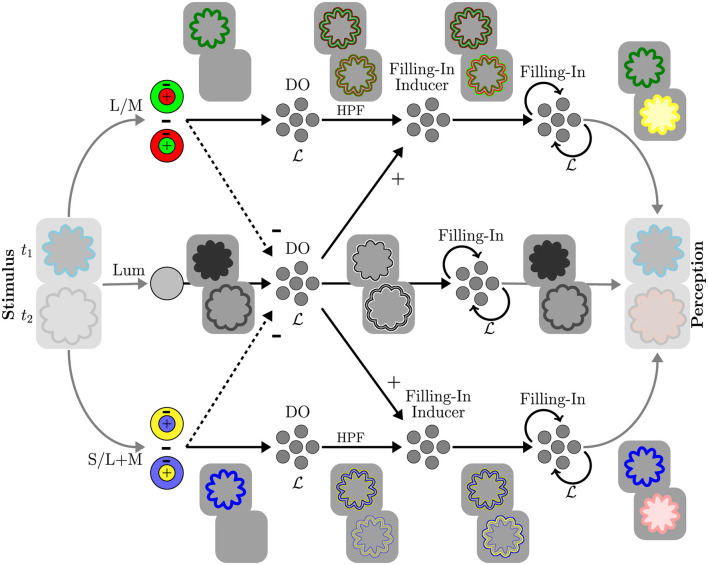 Figure 2
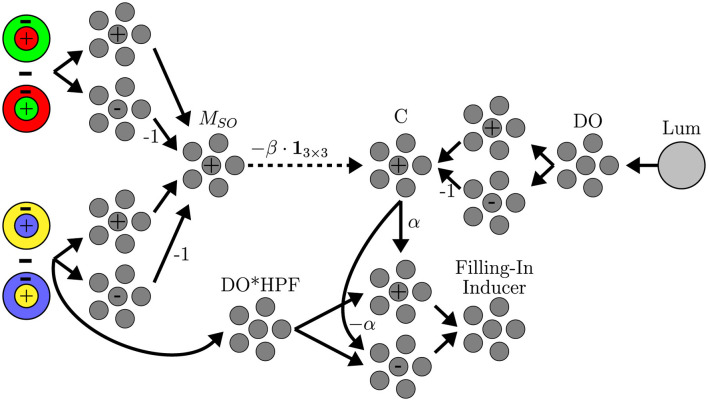 Figure 3
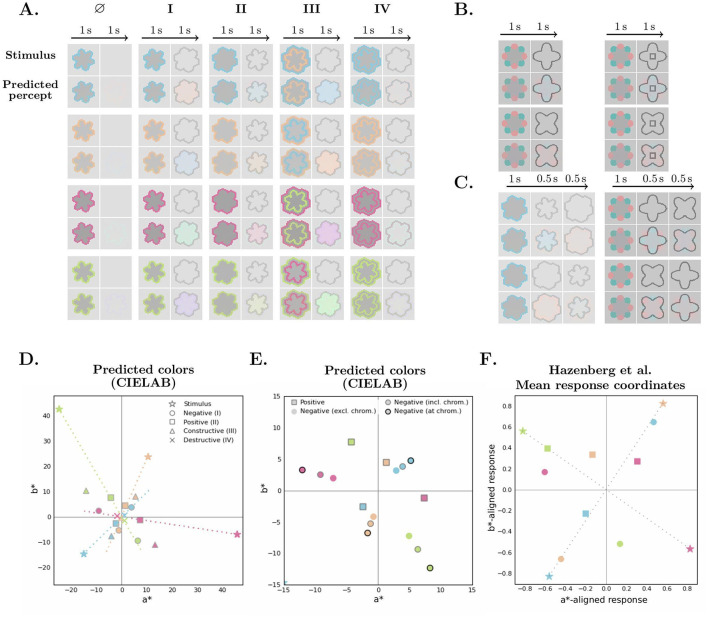 Figure 4
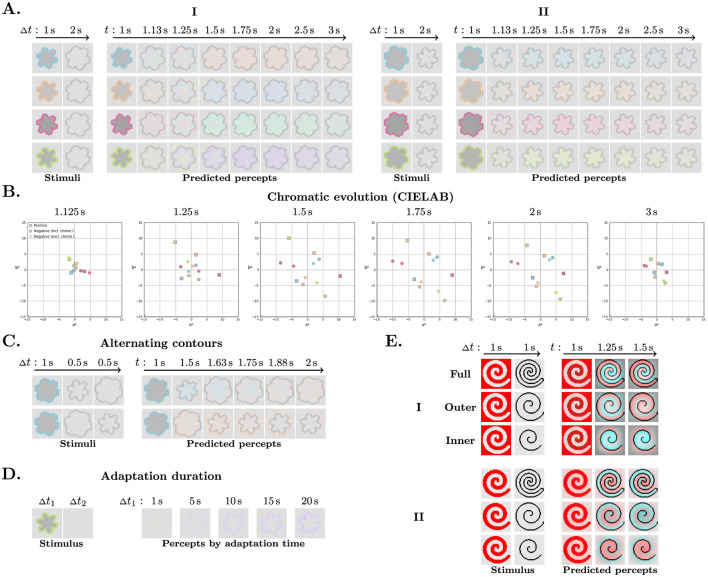 Figure 5
Peer Reviews
No public reviews on file for this paper yet. If you reviewed it on a platform where reviews are public (OpenReview, ICLR, NeurIPS, ICML), you can paste yours below so the community can read it here.
Videos
No videos yet. Explain this paper in a talk, walkthrough, or lecture? Add one.
Taxonomy
TopicsVisual perception and processing mechanisms · Advanced Memory and Neural Computing · Multisensory perception and integration