Belief inflexibility reduces the impact of allostatic overload on psychotic-like experiences among Ukrainian refugees
Julian Maciaszek, Julia Aleinikova, Agnieszka Dybek, Błażej Misiak

TL;DR
This study explores how stress and rigid thinking affect psychosis-like symptoms in Ukrainian refugees, finding that rigid beliefs reduce the impact of stress on these symptoms.
Contribution
The study reveals a novel interaction between allostatic load, belief inflexibility, and refugee status in predicting psychosis-like experiences.
Findings
Refugees showed higher levels of stress, anxiety, and belief inflexibility compared to controls.
Higher belief inflexibility reduced the impact of physiological stress on psychosis-like experiences.
The interaction between stress and cognitive rigidity was stronger in refugees.
Abstract
Refugees are chronically exposed to cumulative stress, which may increase allostatic load (AL) and vulnerability to psychotic-like experiences (PLEs). Belief inflexibility, reflecting difficulties in revising beliefs in response to new information, may influence how physiological stress affects psychosis proneness. This study examined whether AL index interacts with cognitive biases and refugee status in predicting PLEs. Sixty Ukrainian refugees and fifty matched controls underwent psychiatric evaluation, assessment of cognitive biases, and measurement of AL biomarkers. Refugees had fewer years of education and showed higher depressive, anxiety, PLEs, trauma-related symptoms, greater belief inflexibility and elevated AL index. Significant positive correlations were found between AL index and PLEs and between AL index and belief inflexibility. Moderation analyses revealed that both AL…
Genes, proteins, chemicals, diseases, species, mutations and cell lines named across the full text — each resolved to its canonical identifier and authoritative record.
Click any figure to enlarge with its caption.
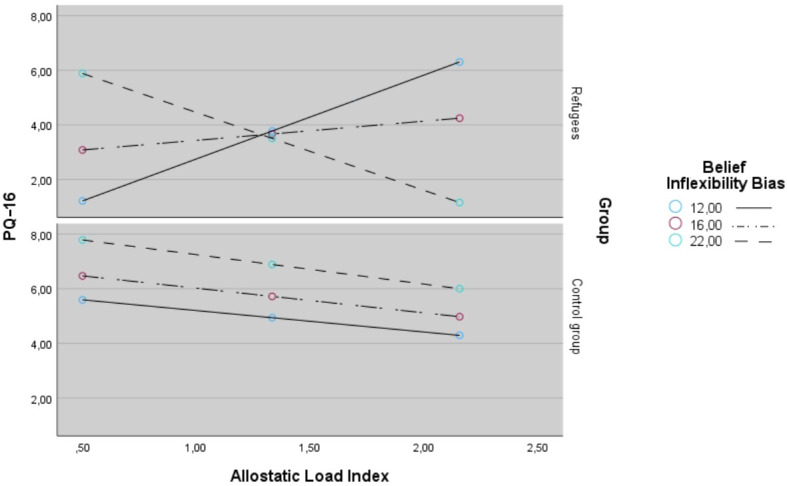 Figure 1
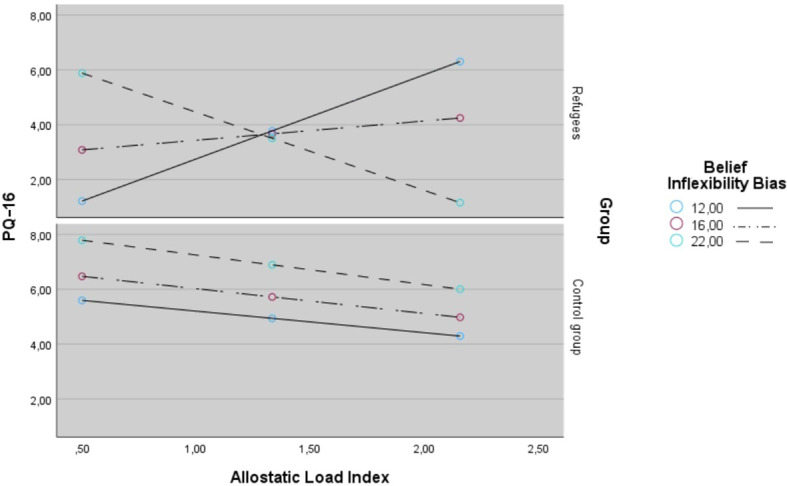 Figure 2
Peer Reviews
No public reviews on file for this paper yet. If you reviewed it on a platform where reviews are public (OpenReview, ICLR, NeurIPS, ICML), you can paste yours below so the community can read it here.
Videos
No videos yet. Explain this paper in a talk, walkthrough, or lecture? Add one.
Taxonomy
TopicsSchizophrenia research and treatment · Tryptophan and brain disorders · Stress Responses and Cortisol