High-altitude thrombosis: divergent pathophysiological mechanisms and preventive strategies in acutely exposed population and native highlanders
Meiquan Li, Jinrui Guo, Meiwei Zhao, Yalan Han, Fuqing Ji, Zichao Liu

TL;DR
This review explains how high-altitude exposure increases blood clot risk differently in newcomers and long-term residents, and suggests tailored prevention strategies for each group.
Contribution
The paper highlights divergent pathophysiological mechanisms and population-specific preventive strategies for high-altitude thrombosis.
Findings
Acute high-altitude exposure increases thrombosis risk through hypoxia-induced inflammation and blood viscosity changes.
High-altitude natives have protective adaptations, but extreme conditions can still cause hyperviscosity and clotting risks.
Population-specific prevention strategies, such as acclimatization for newcomers and monitoring for natives, are recommended.
Abstract
High-altitude environments pose distinct physiological challenges, with marked differences in the thrombotic responses between high-altitude acutely exposed individuals (HAAEI) and long-term high-altitude natives (HAN). This narrative review explores the divergent mechanisms underlying thrombosis in these two populations, aiming to deepen understanding of hypoxia-induced vascular risk. Acute high-altitude exposure elicits a cascade of responses—including sympathetic overactivation, inflammation, polycythemia, increased blood viscosity, and endothelial dysfunction—that collectively heighten thrombosis risk. Central to this process is the hypoxia-mediated interaction of HIF with NF-κB pathways, which fosters a proinflammatory and procoagulant milieu characterized by cytokine upregulation, enhanced platelet activation, and suppressed fibrinolysis. Conversely, HAN exhibit genetic and…
Genes, proteins, chemicals, diseases, species, mutations and cell lines named across the full text — each resolved to its canonical identifier and authoritative record.
Click any figure to enlarge with its caption.
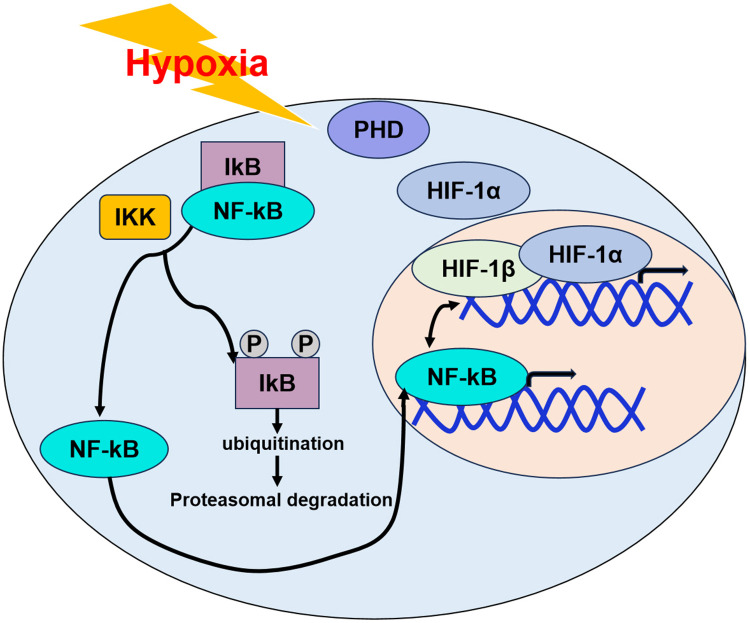 Figure 1
Peer Reviews
No public reviews on file for this paper yet. If you reviewed it on a platform where reviews are public (OpenReview, ICLR, NeurIPS, ICML), you can paste yours below so the community can read it here.
Videos
No videos yet. Explain this paper in a talk, walkthrough, or lecture? Add one.
Taxonomy
TopicsHigh Altitude and Hypoxia · Heme Oxygenase-1 and Carbon Monoxide · Venous Thromboembolism Diagnosis and Management