Pharmacological modulation of stress granules via G3BP1/2: A pathway to treat cancer, inflammatory disease, and neurodegeneration
Jinhua Yang, Fenfei Gao

TL;DR
This paper reviews how targeting G3BP1/2 proteins, which control stress granules, could lead to new treatments for cancer, inflammation, and neurodegenerative diseases.
Contribution
The paper provides a comprehensive synthesis of pharmacological modulators of G3BP1/2 and their role in stress granule regulation, addressing gaps in prior reviews.
Findings
G3BP1/2 are central to stress granule formation and link to disease pathways like cGAS–STING.
Pharmacological modulators of G3BP1/2 can control stress granule assembly and downstream signaling.
The paper compiles both inhibitors and activators of G3BP1/2, highlighting their mechanisms and therapeutic potential.
Abstract
Stress granules (SGs) are membraneless ribonucleoprotein condensates formed by liquid–liquid phase separation of non-translating mRNAs under stress, acting as dynamic platforms for translational reprogramming and cytoprotection. Ras-GAP SH3 domain-binding proteins 1 and 2 (G3BP1/2) are core nucleators of mammalian SGs–their dual knockout almost abolishes SG assembly, while G3BP1 overexpression alone can drive SG assembly. By sensing cytosolic RNA, G3BP1/2 couple the cyclic GMP–AMP synthase (cGAS)–STING innate immune pathway to stress signaling in cancer and neurodegeneration, positioning these proteins as central hubs linking stress-responsive translation control to disease phenotypes. Recent years have witnessed growing interest in targeting the G3BP–SG axis pharmacologically. Small molecules and peptides that bind G3BP1/2 have revealed that manipulating SG assembly/disassembly is…
Genes, proteins, chemicals, diseases, species, mutations and cell lines named across the full text — each resolved to its canonical identifier and authoritative record.
Click any figure to enlarge with its caption.
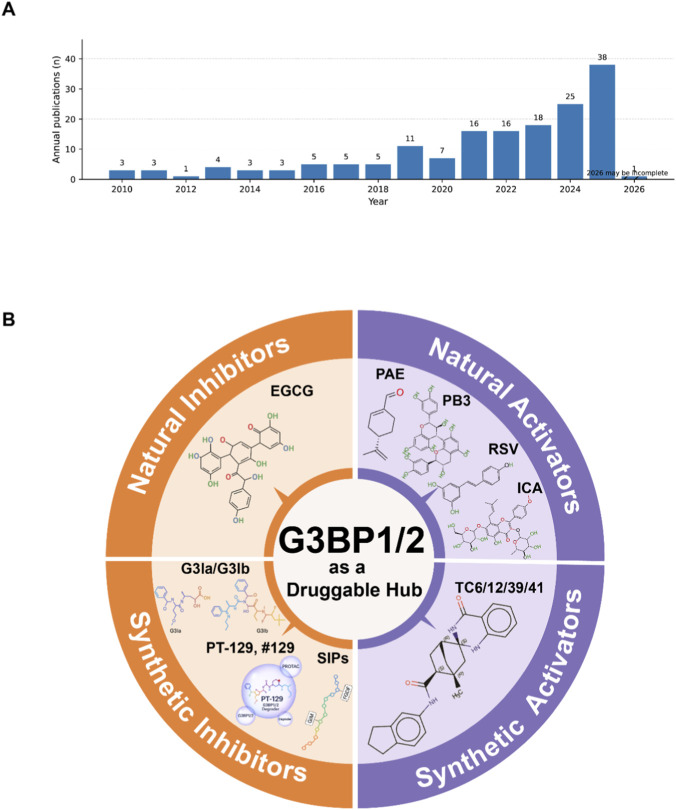 Figure 1
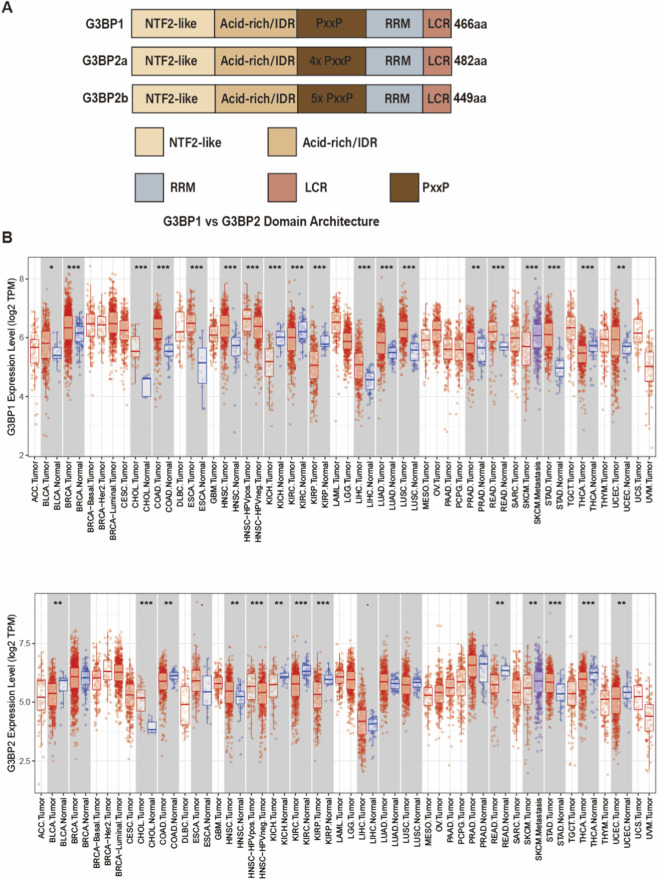 Figure 2
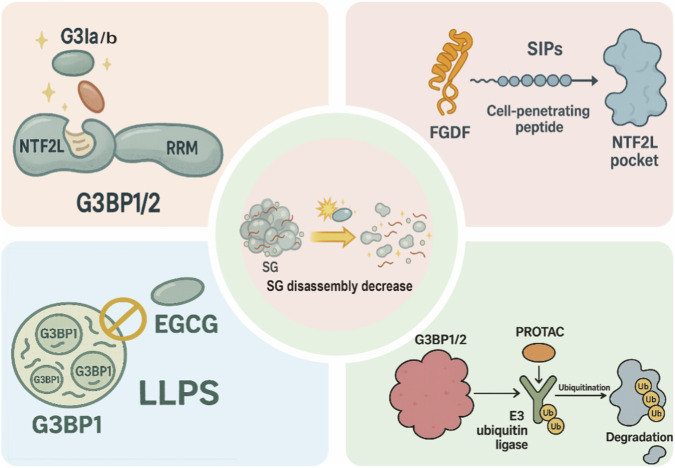 Figure 3
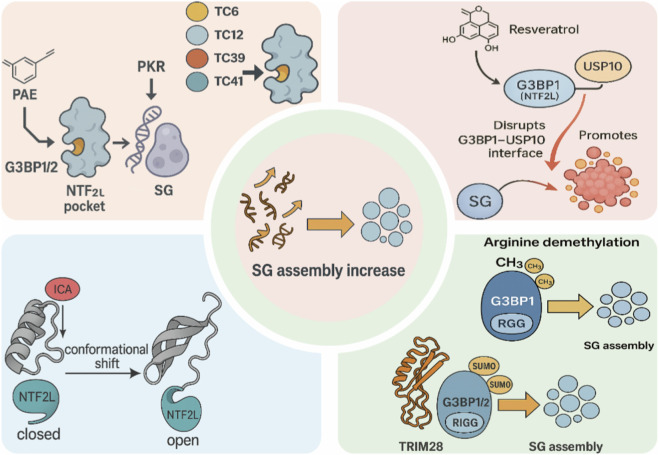 Figure 4
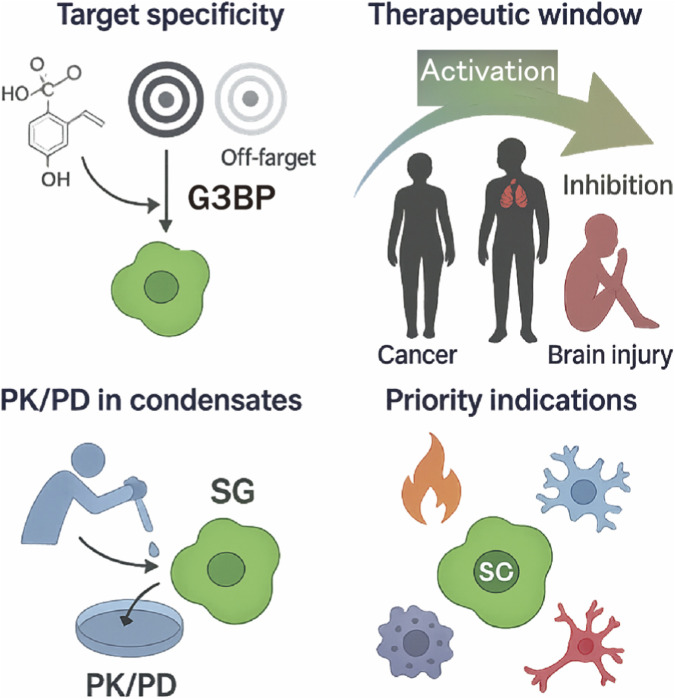 Figure 5
Peer Reviews
No public reviews on file for this paper yet. If you reviewed it on a platform where reviews are public (OpenReview, ICLR, NeurIPS, ICML), you can paste yours below so the community can read it here.
Videos
No videos yet. Explain this paper in a talk, walkthrough, or lecture? Add one.
Taxonomy
TopicsRNA Research and Splicing · interferon and immune responses · RNA and protein synthesis mechanisms