Polyclonal glycine receptor aAbs: a challenge for personalized epitope characterization
Anna-Lena Wiessler, Inken Stahl, Natascha Schaefer, Vera Rauschenberger, Ivan Talucci, Hans M. Maric, Betül Baykan, Erdem Tüzün, Claudia Sommer, Carmen Villmann

TL;DR
This study explores the challenge of identifying specific epitopes for glycine receptor antibodies in patients, aiming to improve targeted treatments.
Contribution
The study identifies patient-specific epitopes and structural binding patterns of glycine receptor antibodies using mutagenesis and peptide microarrays.
Findings
Peptide microarrays identified key residues in the GlyRα1 subunit for antibody binding.
Overlapping peptides partially neutralized antibodies but failed complete neutralization.
Patient-specific antibody binding patterns suggest polyclonal or structural epitope recognition.
Abstract
Patients with glycine receptor (GlyR) aAbs suffer from various diseases, including stiff-person syndrome (SPS), and currently, no cure exists. Several treatment options exist; however, these treatment options lack specificity. To date, only one common epitope has been mapped for GlyR aAbs in the far N-terminal region of the GlyRα1 subunit. However, some patient sera also bind GlyRα2, GlyRα3, or GlyRβ. Therefore, more than one common epitope may exist. Unraveling these epitopes will help generate more specific treatment approaches. Here, we constructed GlyRa1 and GlyRa3 variants by site-directed mutagenesis using amino acid differences between these two subunits within their extracellular domains. Peptide microarrays, which have shown that an epitope including the binding site of a commercial pan-a antibody (96PDLFFANEKS105) and its surrounding residues is highly relevant for aAb…
Genes, proteins, chemicals, diseases, species, mutations and cell lines named across the full text — each resolved to its canonical identifier and authoritative record.
Click any figure to enlarge with its caption.
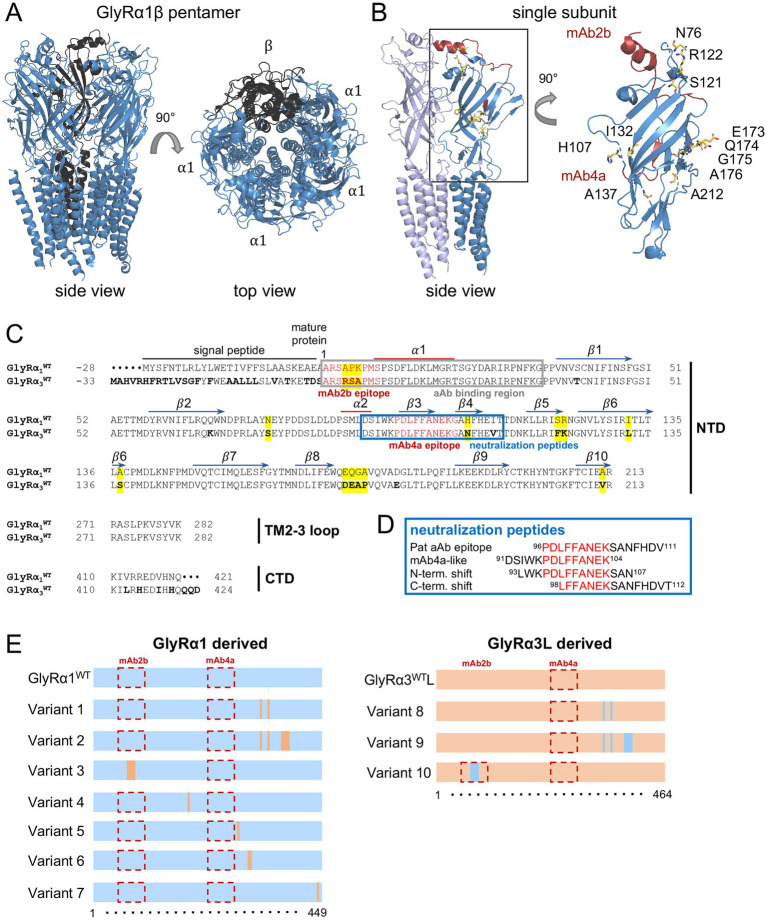 Figure 1
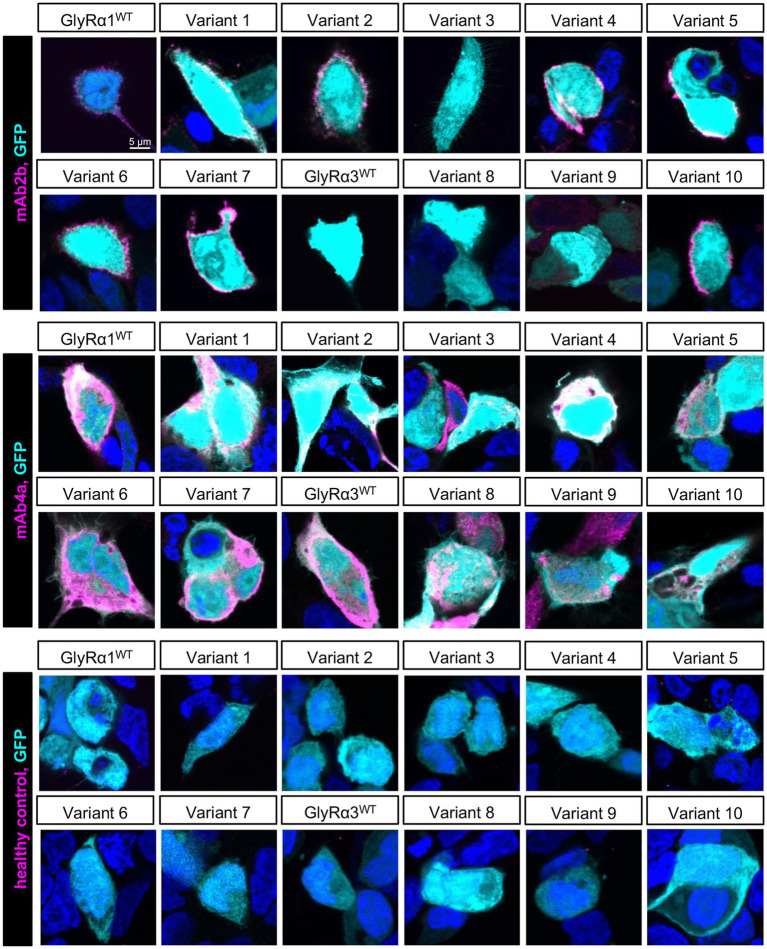 Figure 2
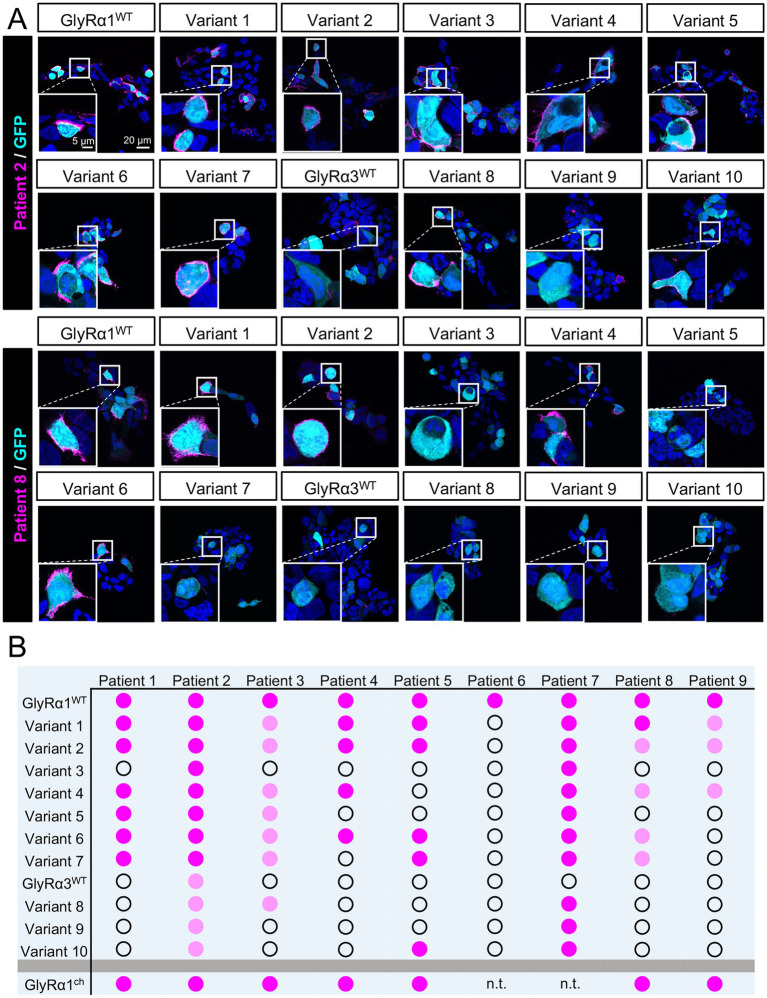 Figure 3
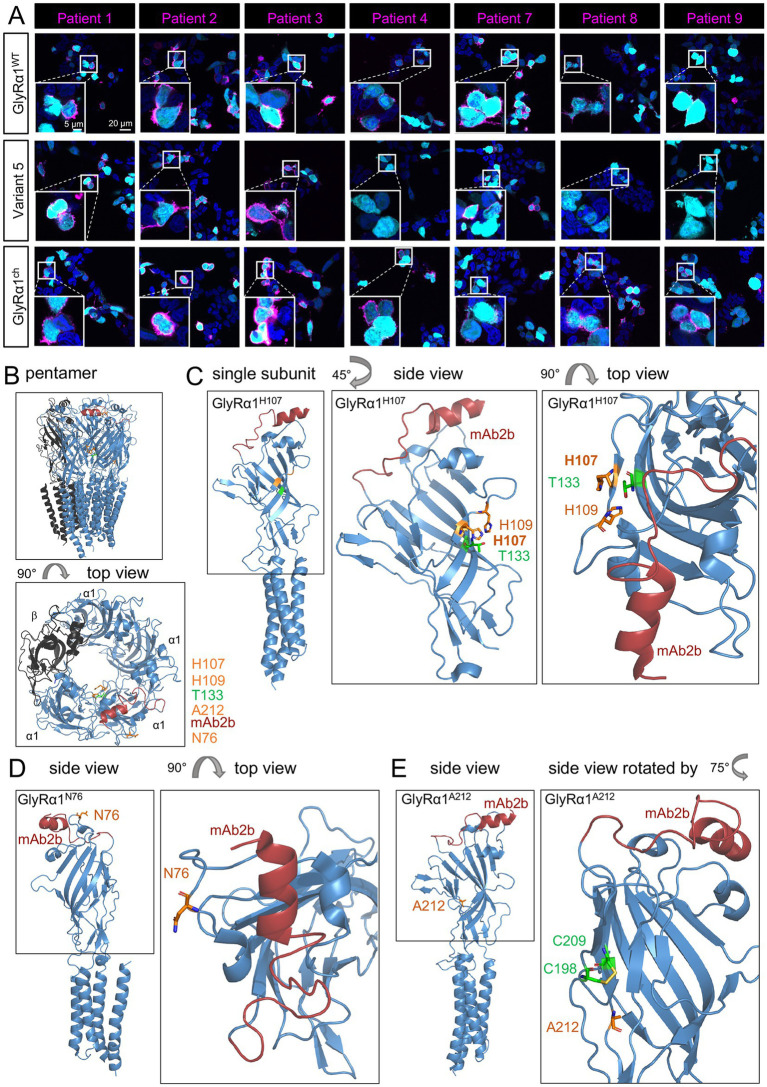 Figure 4
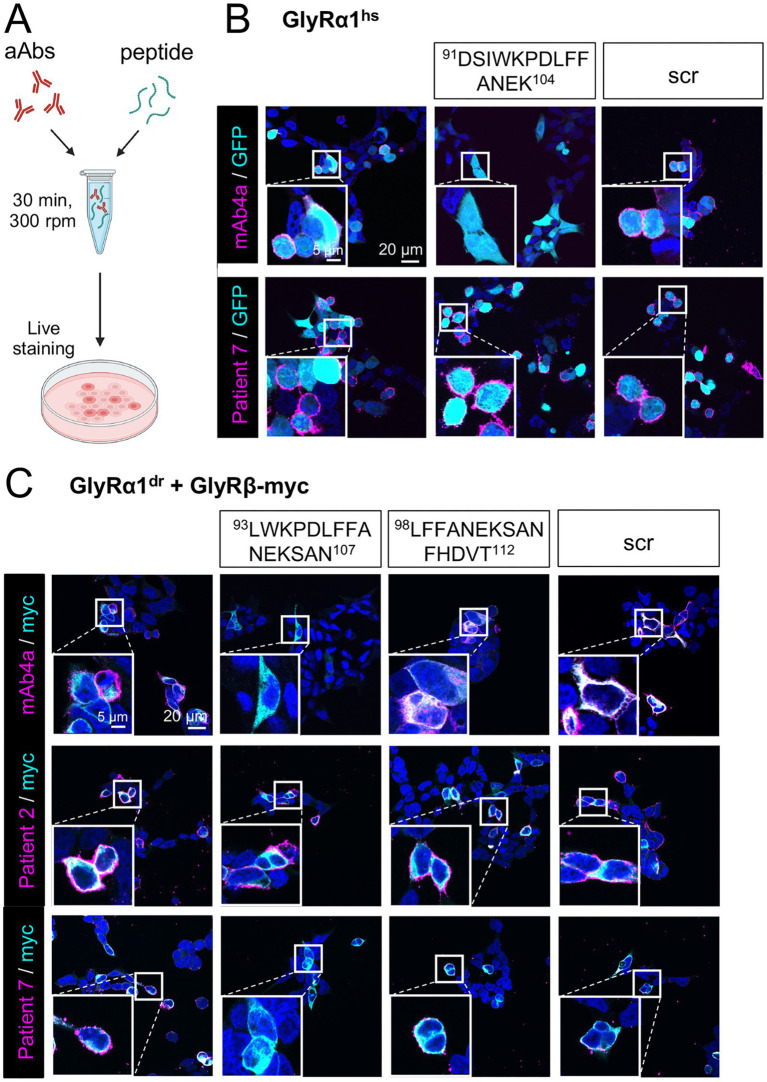 Figure 5
Peer Reviews
No public reviews on file for this paper yet. If you reviewed it on a platform where reviews are public (OpenReview, ICLR, NeurIPS, ICML), you can paste yours below so the community can read it here.
Videos
No videos yet. Explain this paper in a talk, walkthrough, or lecture? Add one.
Taxonomy
TopicsAutoimmune Neurological Disorders and Treatments · Monoclonal and Polyclonal Antibodies Research · Nicotinic Acetylcholine Receptors Study