Inferring an ancestral alginate lyase for improved stability and high-level expression using fed-batch fermentation
Hongxiao Mu, Renquan Guo, Beichen Zhao, Zhuang Huang, Mingda Lei, Lei Lei, Jun Liu, Xing Wang, Zhenggang Xie

TL;DR
Scientists improved an enzyme called alginate lyase by engineering ancestral versions and optimizing fermentation, leading to higher activity and stability for industrial use.
Contribution
The study introduces ancestral sequence inference and fed-batch fermentation to enhance alginate lyase stability and production efficiency.
Findings
Two ancestral variants of alginate lyase showed 132.4% and 87.3% higher catalytic activity than the wild-type.
AncAlyA2 retained 60% activity under extreme thermal and pH conditions.
Fed-batch fermentation achieved 5164.8 U/mL and 4220.1 U/mL enzyme activity for the two variants.
Abstract
Alginate lyases are valuable biocatalysts, but their industrial application is often constrained by limited stability and low production efficiency. In this study, an alginate lyase from Flavobacterium sp. was heterologously expressed in different host systems, among which Escherichia coli exhibited the highest enzymatic activity. Ancestral sequence inferring was subsequently applied to engineer improved variants, which were expressed and purified in E. coli. Two variants, AncAlyA1 and AncAlyA2, showed significantly enhanced catalytic activities, with increases of 132.4 and 87.3%, respectively, compared with the wild-type. Both variants also exhibited markedly improved thermal and pH stability. Notably, AncAlyA2 retained approximately 60% of its activity after incubation under extreme conditions, including 60 °C and pH 4.0 or 10.0. In addition, a fed-batch fermentation strategy based on…
Genes, proteins, chemicals, diseases, species, mutations and cell lines named across the full text — each resolved to its canonical identifier and authoritative record.
Click any figure to enlarge with its caption.
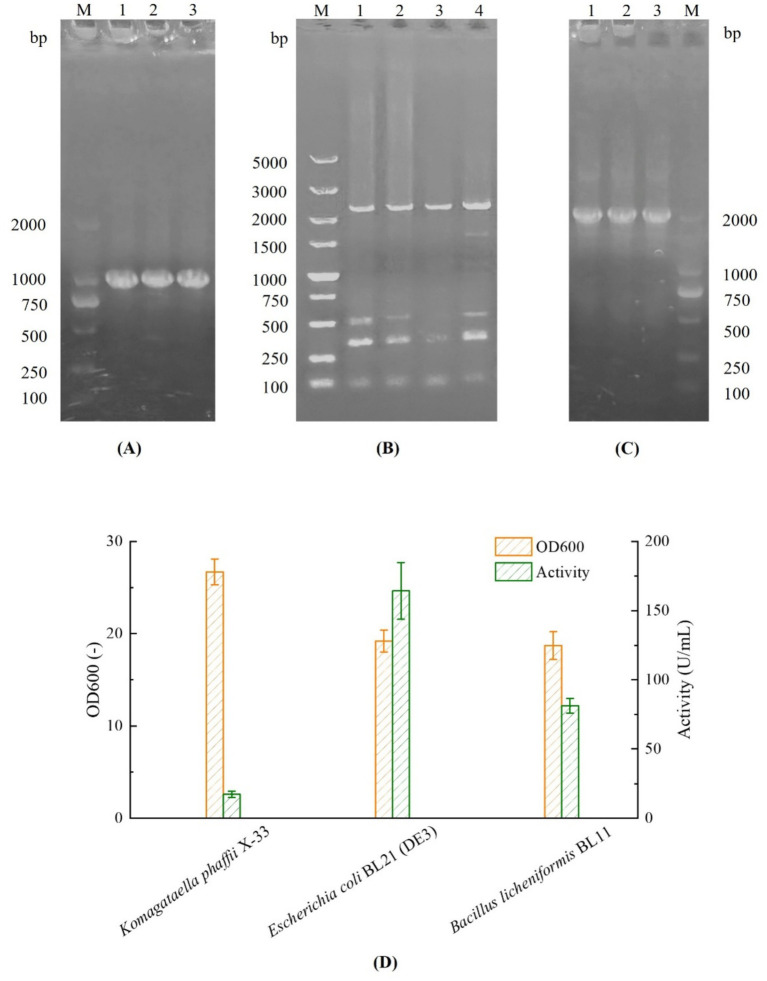 Figure 1
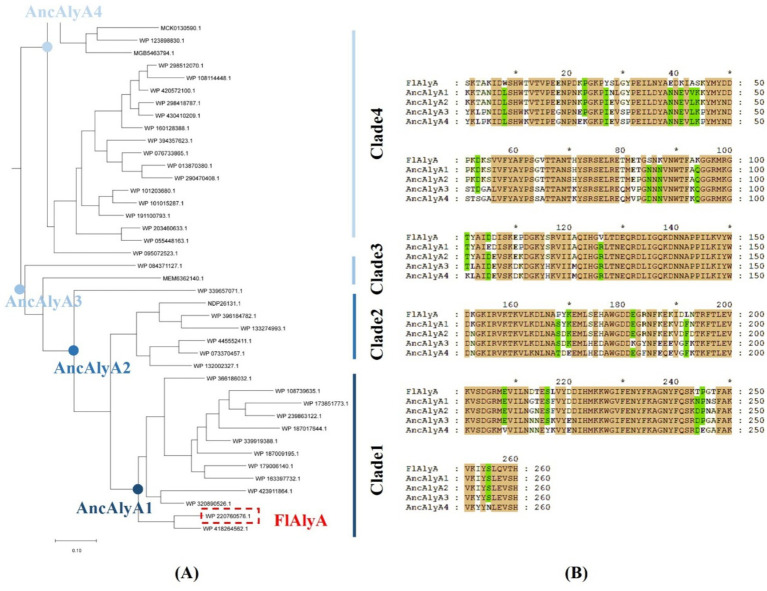 Figure 2
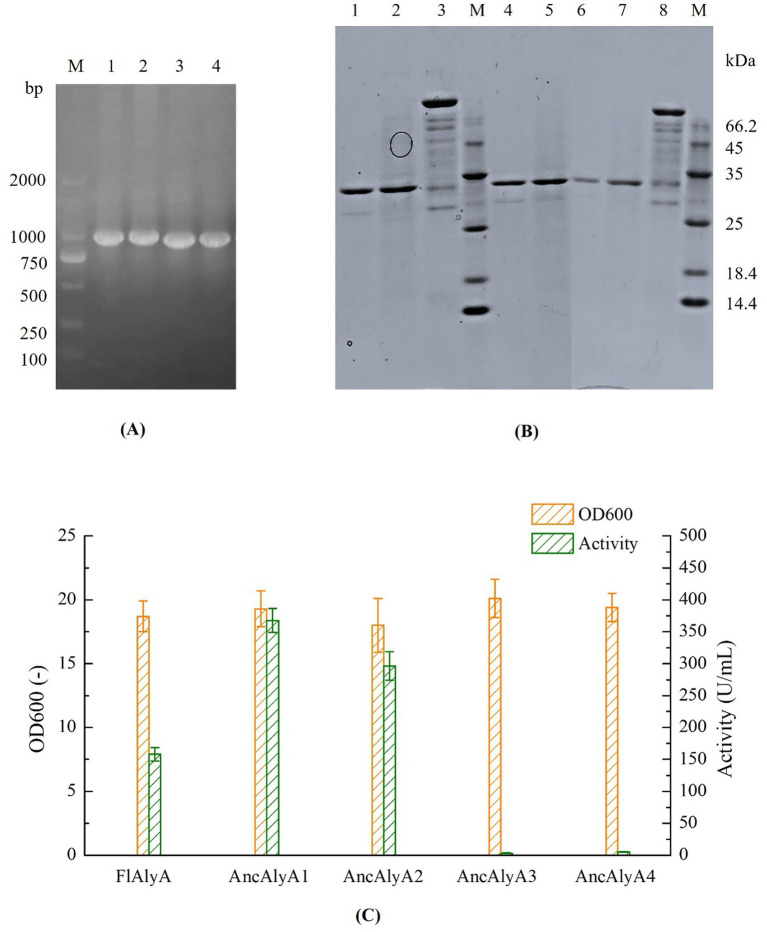 Figure 3
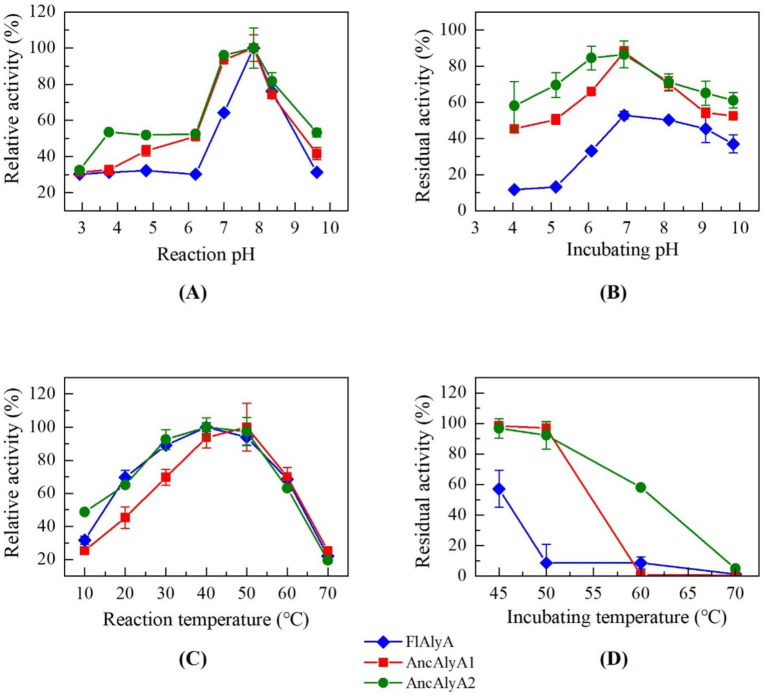 Figure 4
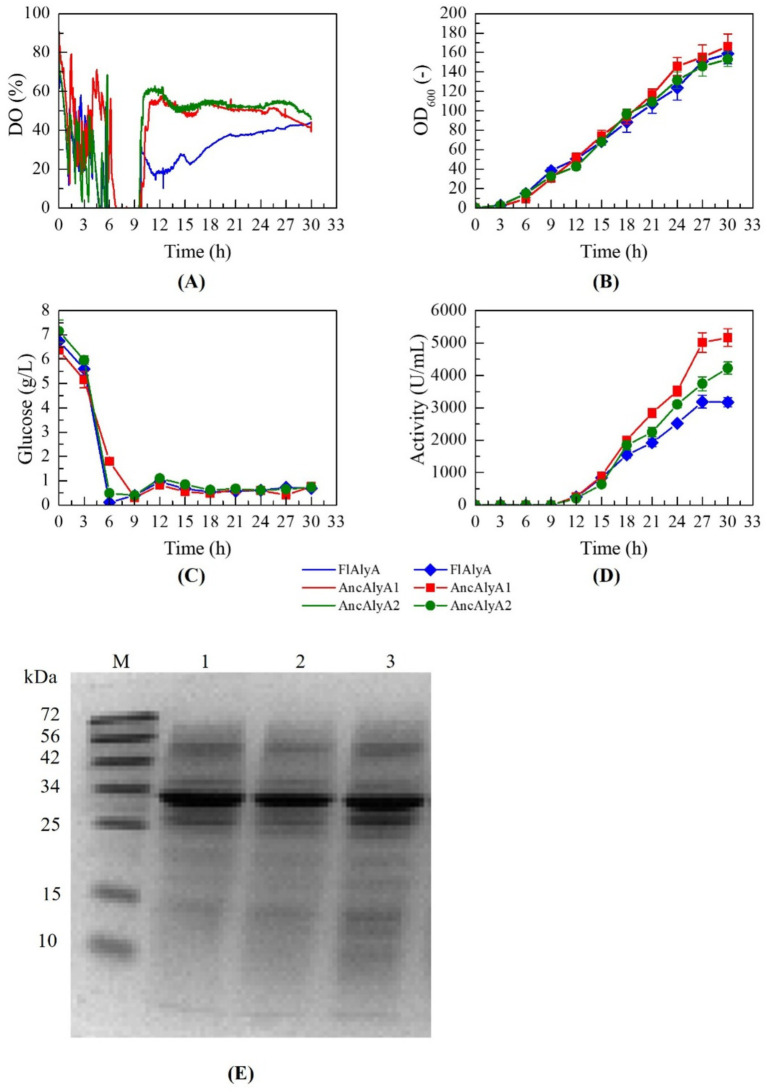 Figure 5
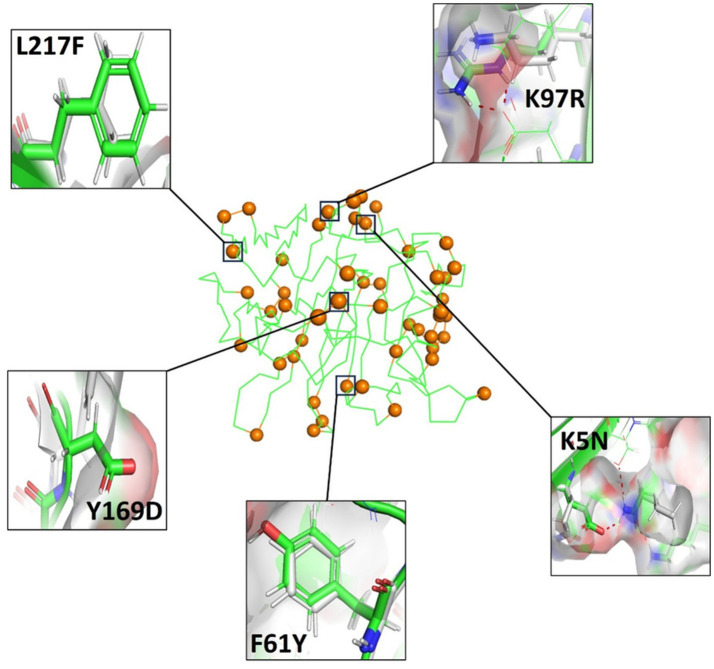 Figure 6
Peer Reviews
No public reviews on file for this paper yet. If you reviewed it on a platform where reviews are public (OpenReview, ICLR, NeurIPS, ICML), you can paste yours below so the community can read it here.
Videos
No videos yet. Explain this paper in a talk, walkthrough, or lecture? Add one.
Taxonomy
TopicsSeaweed-derived Bioactive Compounds · Polysaccharides and Plant Cell Walls · Enzyme Production and Characterization