Sex-specific diagnostic trajectories and time to transition from non-SMI to severe mental illness in Chinese adolescent inpatients
Xiang Kong, Mingjian Cai, Wenjuan Liu, You Xu, Ning Ren, Hongjing Mao

TL;DR
The study finds that Chinese adolescent inpatients with non-severe mental illness have distinct sex-specific diagnostic paths and a higher risk of transitioning to severe mental illness 4-8 years after initial diagnosis.
Contribution
This is the first longitudinal study in a non-Western population to identify sex-specific diagnostic trajectories and a 4-8 year high-risk window for transitioning from non-SMI to SMI in adolescents.
Findings
SMI diagnoses (schizophrenia spectrum and bipolar disorders) showed high stability over time.
Males with externalizing or obsessive-compulsive disorders and females with internalizing or stress-related disorders were more likely to transition to SMI.
Each 1-year increase in baseline age was associated with a 38% higher risk of transitioning to SMI.
Abstract
Adolescence is a high-risk period for mental disorders, and early clinical presentations often show uncertainty and pluripotentiality. Longitudinal evidence on transitions from non-specific diagnoses to severe mental illness (SMI—defined as schizophrenia spectrum and bipolar disorders) in non-Western populations remains limited. Using real-world data, we aimed to characterize diagnostic stability, transitions from non-SMI to SMI, and sex- and age-related predictors in Chinese adolescent inpatients. This retrospective longitudinal cohort study utilized electronic medical records from a large tertiary psychiatric hospital in Eastern China (2010–2026). We included 884 first-time inpatients aged 12–17 years with ≥3 years of follow-up and at least two complete inpatient records. ICD-10 diagnoses were grouped into SMI and non-SMI categories. Sankey diagrams and transition matrices were used…
Genes, proteins, chemicals, diseases, species, mutations and cell lines named across the full text — each resolved to its canonical identifier and authoritative record.
Click any figure to enlarge with its caption.
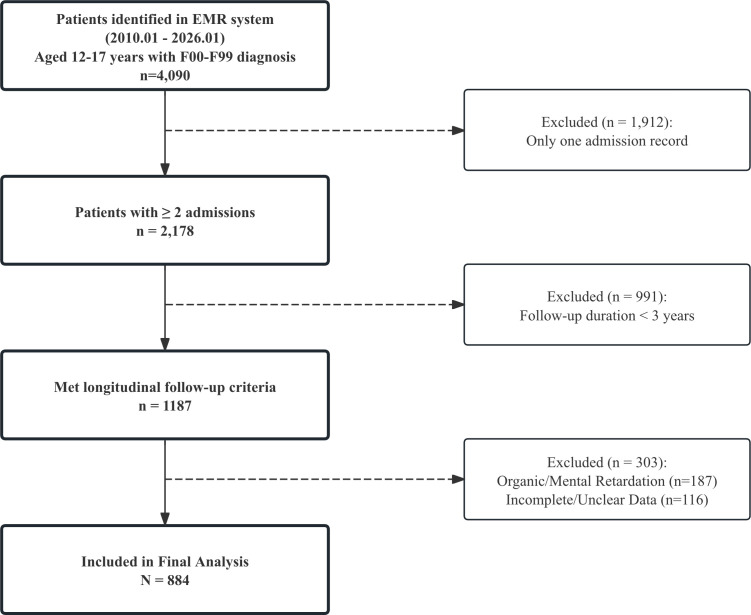 Figure 1
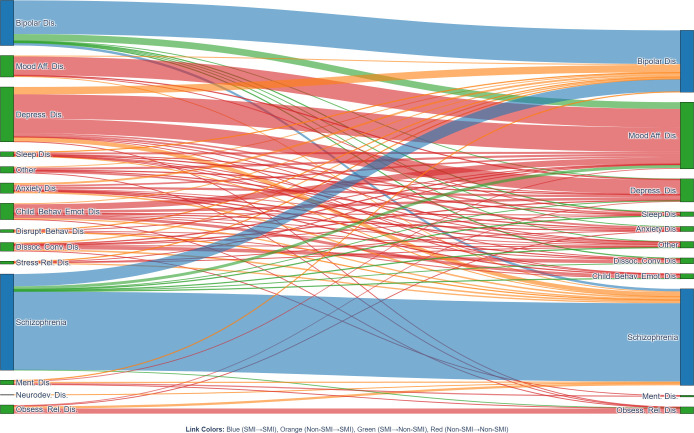 Figure 2
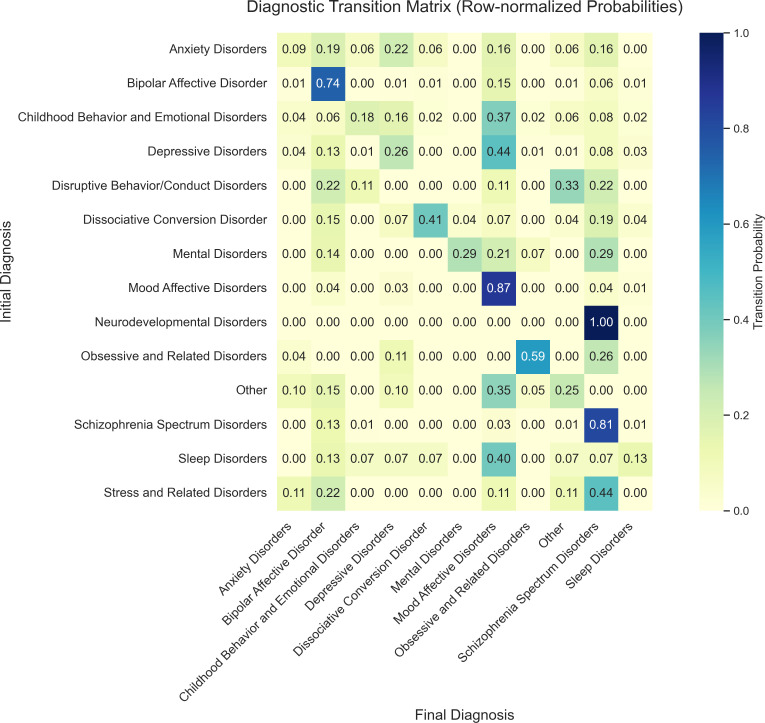 Figure 3
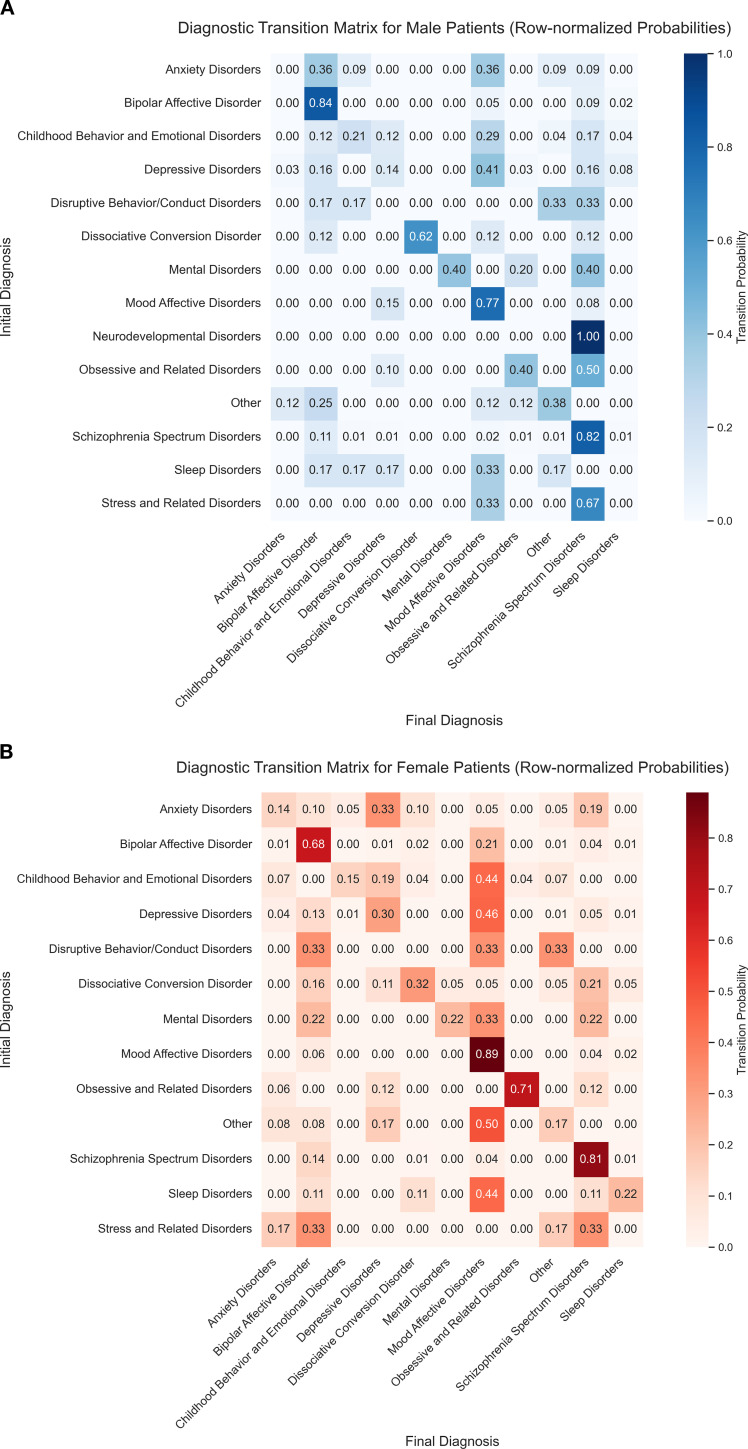 Figure 4
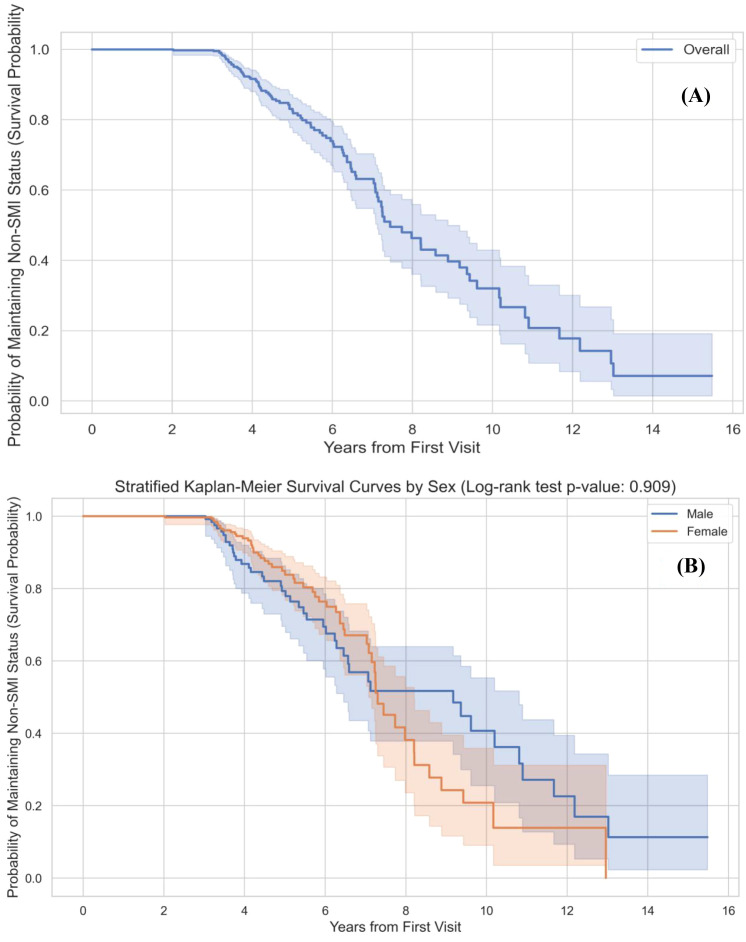 Figure 5
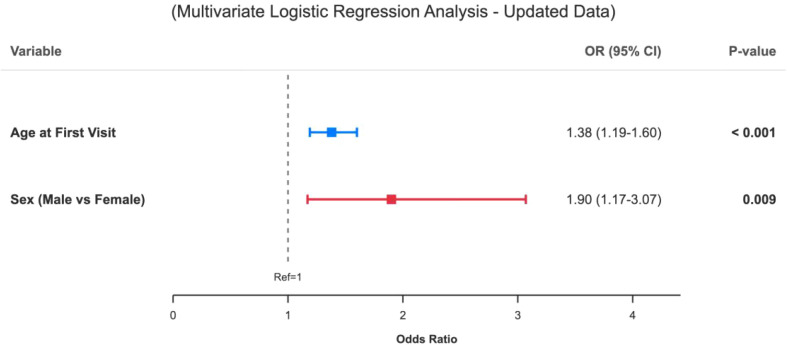 Figure 6
Peer Reviews
No public reviews on file for this paper yet. If you reviewed it on a platform where reviews are public (OpenReview, ICLR, NeurIPS, ICML), you can paste yours below so the community can read it here.
Videos
No videos yet. Explain this paper in a talk, walkthrough, or lecture? Add one.
Taxonomy
TopicsBipolar Disorder and Treatment · Schizophrenia research and treatment · Child and Adolescent Psychosocial and Emotional Development