The iron-sulfur accelerator YgfZ modulates genome-wide IHF-binding dynamics to regulate replication initiation in Escherichia coli
Kazutoshi Kasho, Rion Satomura, Mizuki Yoshida, Ryuki Murofushi, Ikuha Kitamura, Sho Nakagawa, Wataru Nakagaki, Tsutomu Katayama

TL;DR
The protein YgfZ in E. coli helps control DNA replication by managing how another protein, IHF, binds to DNA, influencing replication timing and cell metabolism.
Contribution
YgfZ modulates IHF binding genome-wide to regulate replication initiation, linking metabolism and replication control.
Findings
YgfZ downregulates the DDAH system by repressing datA-IHF binding independently of MiaB.
MnmA also moderately downregulates datA-IHF binding.
YgfZ globally reduces IHF binding but preserves its function at key replication sites.
Abstract
In Escherichia coli, chromosome replication is regulated through ATP/ADP state of the DnaA initiator. The DDAH system inactivates DnaA in the post-initiation stage by promoting ATP hydrolysis through timely binding of the DNA-bending protein IHF to the datA locus, while the DARS2 locus reactivates DnaA in the pre-initiation stage via binding of IHF and another nucleoid protein Fis. The iron-sulfur cluster [(Fe-S)] assembly factor YgfZ is known to sustain replication initiation, central carbon metabolism, redox state and modification of tRNA A37 residues by MiaB, but the link between initiation and the others remains unclear. This study shows that YgfZ regulates initiation primarily by downregulating the DDAH system by repressing datA-IHF binding in a manner independent of MiaB. Also, the [Fe-S]-binding protein MnmA moderately downregulates datA-IHF binding. Furthermore, YgfZ globally…
Genes, proteins, chemicals, diseases, species, mutations and cell lines named across the full text — each resolved to its canonical identifier and authoritative record.
Click any figure to enlarge with its caption.
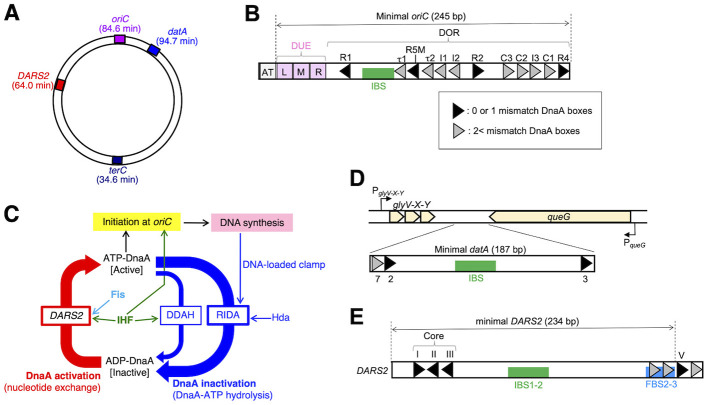 Figure 1
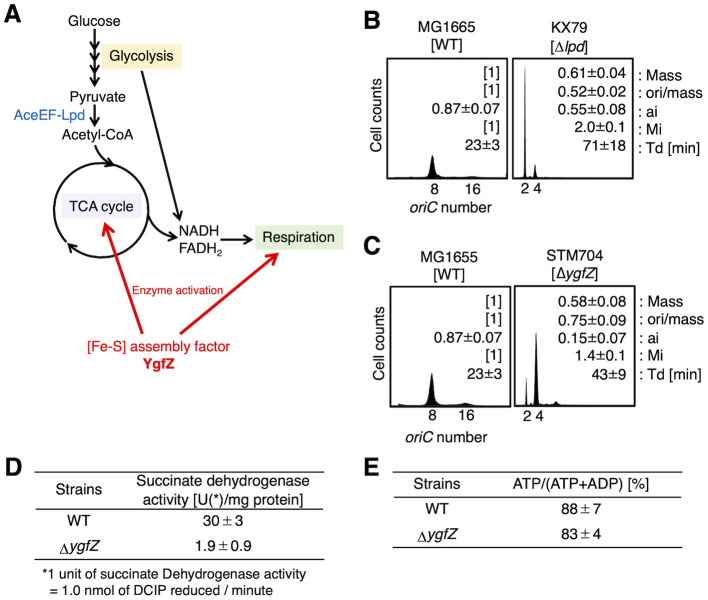 Figure 2
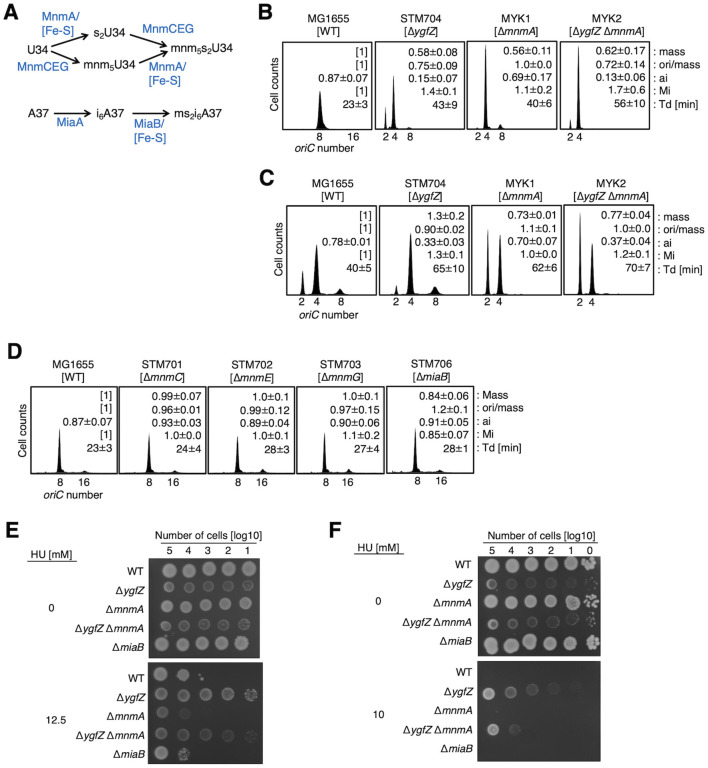 Figure 3
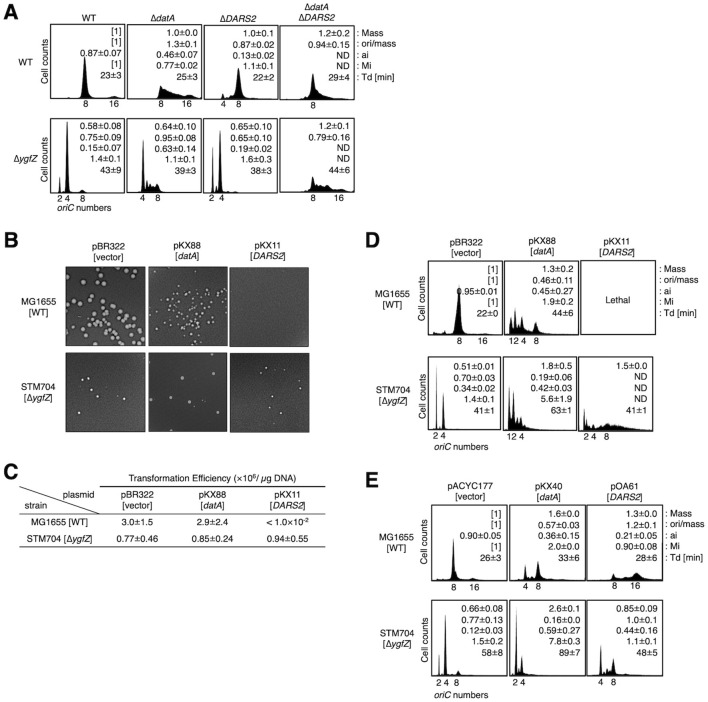 Figure 4
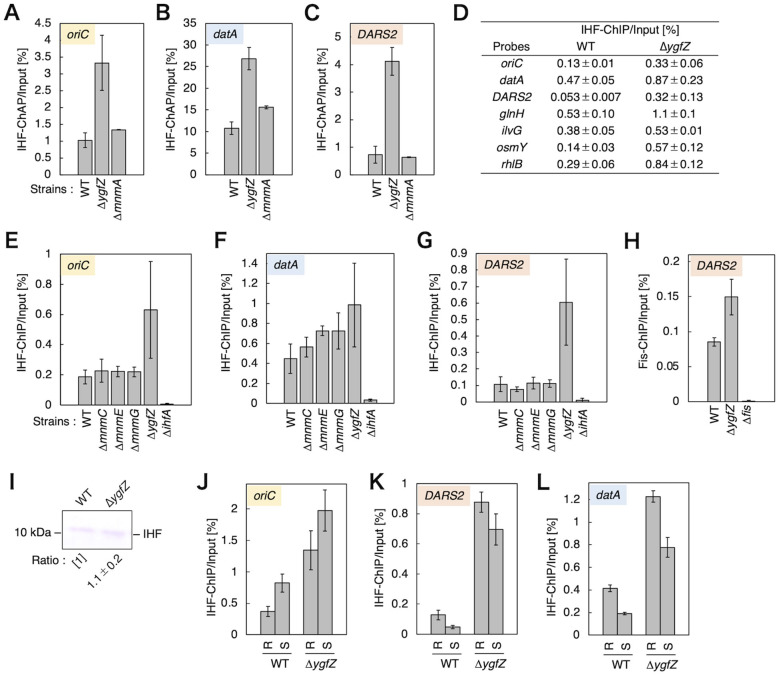 Figure 5
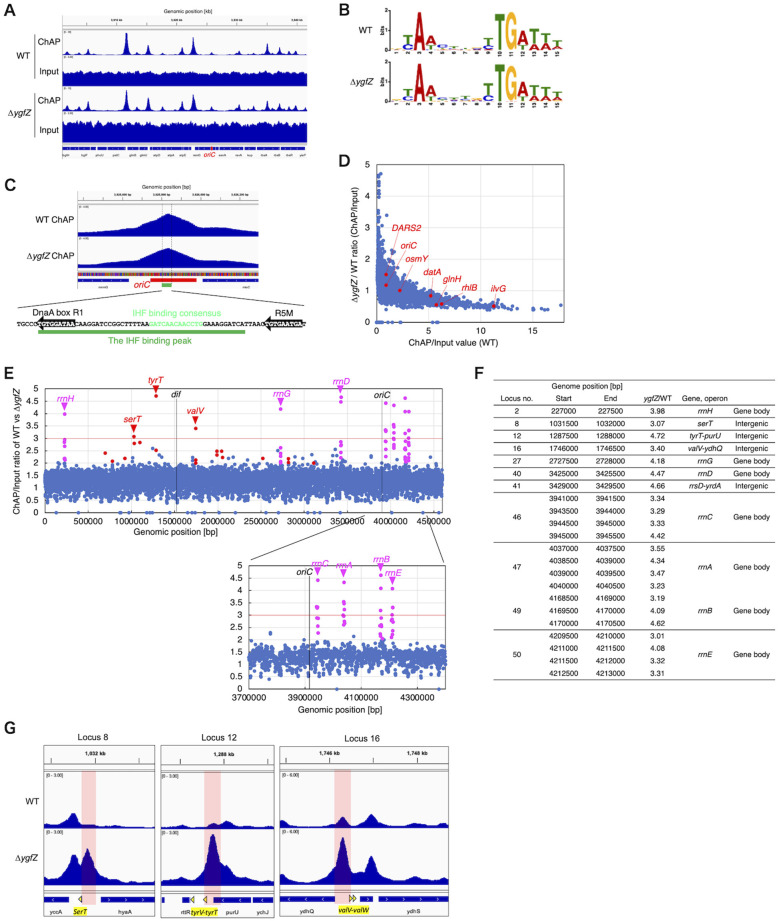 Figure 6
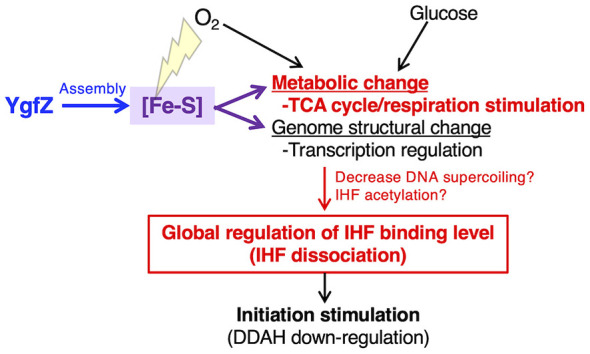 Figure 7
Peer Reviews
No public reviews on file for this paper yet. If you reviewed it on a platform where reviews are public (OpenReview, ICLR, NeurIPS, ICML), you can paste yours below so the community can read it here.
Videos
No videos yet. Explain this paper in a talk, walkthrough, or lecture? Add one.
Taxonomy
TopicsMetalloenzymes and iron-sulfur proteins · DNA Repair Mechanisms · Bacterial Genetics and Biotechnology