Targeting in vitro vasculogenic mimicry and associated stemness transcriptional signature in human ovarian cancer cell models: new emerging roles of caffeic acid phenethyl ester synthetic analogs
Mohamed Touaibia, Anes Boudah, Alain Zgheib, Bogdan Alexandru Danalache, Borhane Annabi

TL;DR
This study explores how synthetic versions of a plant compound can target cancer stem cells and reduce tumor growth in ovarian cancer by inhibiting vasculogenic mimicry.
Contribution
The study identifies two synthetic ketone analogs of caffeic acid phenethyl ester with distinct effects on cancer stem cell networks and vasculogenic mimicry in ovarian cancer.
Findings
Ketone analog (5) strongly inhibits vasculogenic mimicry and represses key stemness markers in both ovarian cancer cell models.
Ketone analog (4) shows moderate, pathway-selective inhibition of vasculogenic mimicry, mainly in one cell model.
Both analogs inhibit cell migration, but only analog (5) broadly suppresses developmental signaling and epithelial-mesenchymal transition drivers.
Abstract
Cancer stem cells (CSC) can sustain tumor growth and therapeutic resistance in part through their contribution to vasculogenic mimicry (VM) in ovarian cancers. Pharmacological targeting of CSC-associated transcriptional programs could represent a promising strategy to overcome recurrence and metastasis. While preclinical studies show caffeic acid phenethyl ester (CAPE), a plant-derived metabolite, can sensitize tumors to chemotherapy and radiotherapy, little is known about its anti-VM properties. CAPE (1) and four closely related synthetic analogs were evaluated for their ability to inhibit in vitro VM on Matrigel and to remodel CSC molecular signature at the transcriptomic level in human SKOV3 ovarian adenocarcinoma cells and in human ES-2 ovarian clear cell carcinoma. The best analogs were further used for transcriptomic profiling of an 89-gene CSC panel using hierarchical clustering…
Genes, proteins, chemicals, diseases, species, mutations and cell lines named across the full text — each resolved to its canonical identifier and authoritative record.
Click any figure to enlarge with its caption.
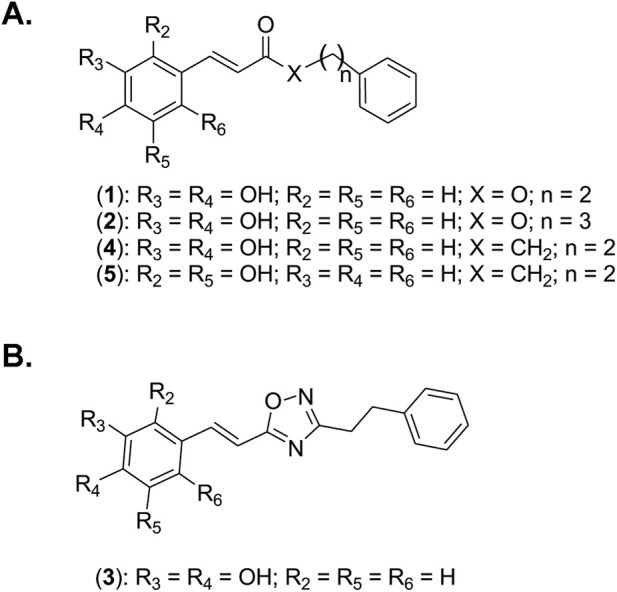 Figure 1
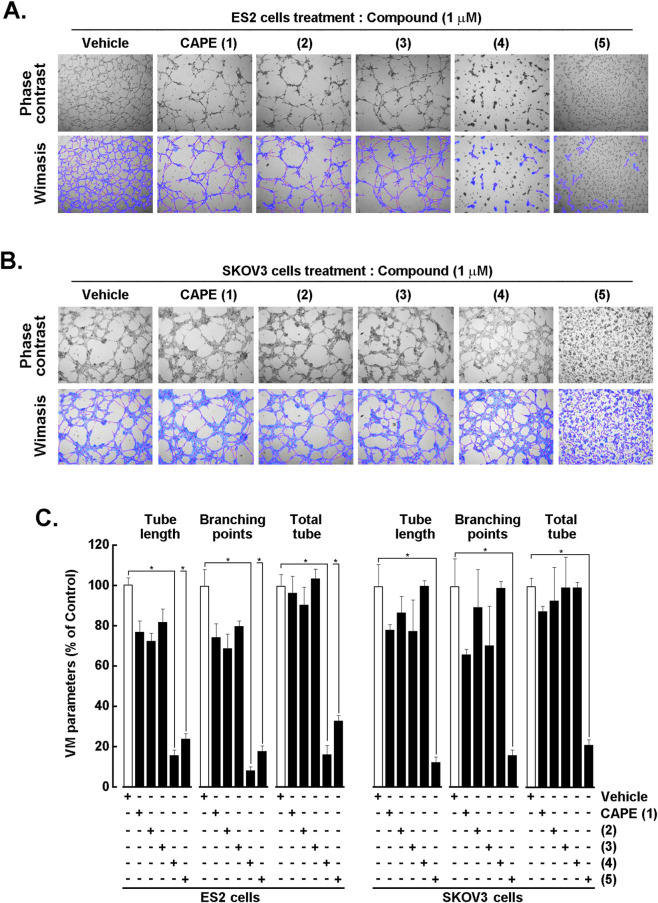 Figure 2
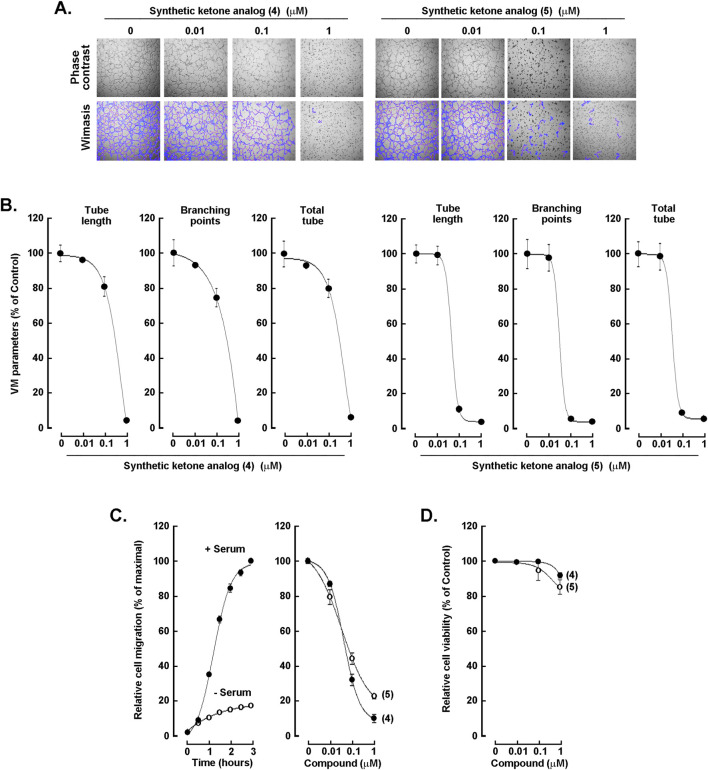 Figure 3
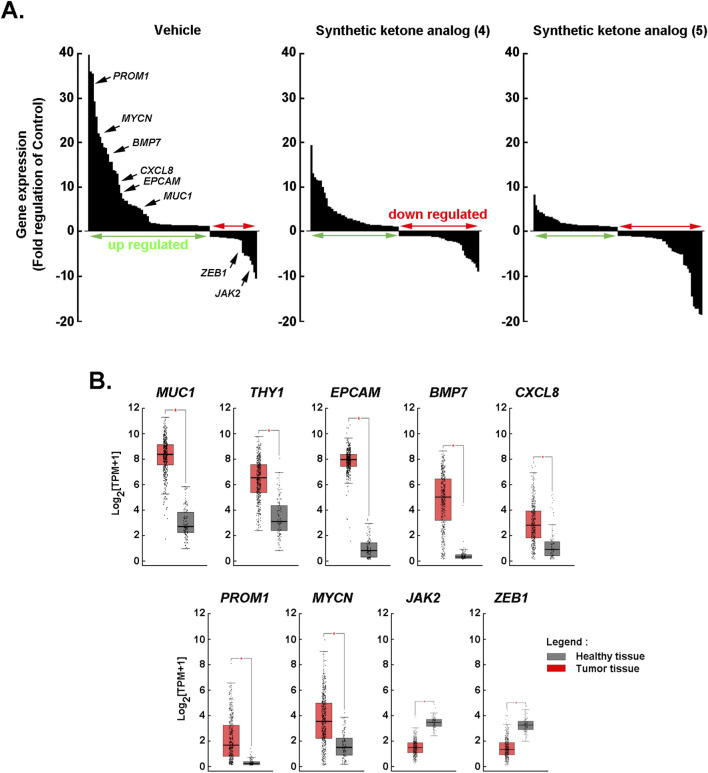 Figure 4
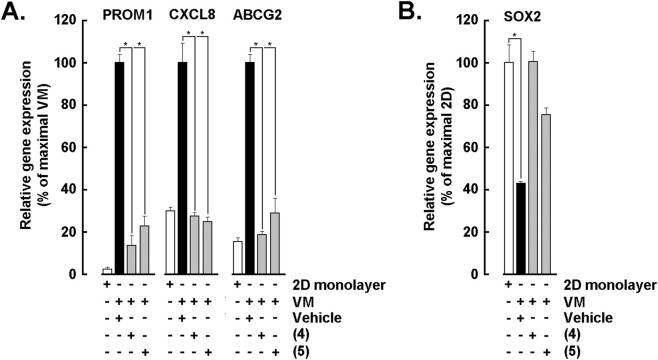 Figure 5
Peer Reviews
No public reviews on file for this paper yet. If you reviewed it on a platform where reviews are public (OpenReview, ICLR, NeurIPS, ICML), you can paste yours below so the community can read it here.
Videos
No videos yet. Explain this paper in a talk, walkthrough, or lecture? Add one.
Taxonomy
TopicsAngiogenesis and VEGF in Cancer · Nuts composition and effects · Lymphatic System and Diseases