Serum lipoprotein(a) levels are inversely associated with metabolic dysfunction-associated steatosis liver disease progression: two cross-sectional studies and a longitudinal study
Wen Guo, Fei Lin, Chengxiao Yu, Jing Lu, Pei Qin, Xin Zhao, Xiaona Li, Qun Zhang

TL;DR
Higher levels of a blood protein called Lp(a) are linked to slower progression of liver disease related to metabolic issues, suggesting it could help track disease changes.
Contribution
This study is the first to show a consistent inverse relationship between serum Lp(a) levels and MASLD progression across cross-sectional and longitudinal analyses.
Findings
Elevated Lp(a) levels were inversely correlated with liver fat and fibrosis severity in cross-sectional data.
Lower baseline Lp(a) levels predicted new-onset and non-regression of MASLD in longitudinal analysis.
A linear dose-response relationship between Lp(a) and MASLD transitions was confirmed using restricted cubic spline analysis.
Abstract
Given that abnormal lipid metabolism is a hallmark of metabolic dysfunction-associated steatotic liver disease (MASLD), this study seeks to investigate the relationship between serum lipoprotein(a) [Lp(a)] levels and the progression or regression of MASLD. A total of 12,962 participants undergoing transient elastography at the Health Promotion Center of the First Affiliated Hospital of Nanjing Medical University were included in the first cross-sectional study (Study 1). The longitudinal study (Study 2) included 17,661 individuals from the same center, each with at least two health check-ups involving abdominal ultrasonography. Another cross-sectional study (Study 3) included 5,927 individuals from the UK Biobank cohort who had undergone both magnetic resonance imaging proton density fat fraction (MRI-PDFF) and Lp(a) testing. Cross-sectional analysis (Study 1) revealed that elevated…
Genes, proteins, chemicals, diseases, species, mutations and cell lines named across the full text — each resolved to its canonical identifier and authoritative record.
Click any figure to enlarge with its caption.
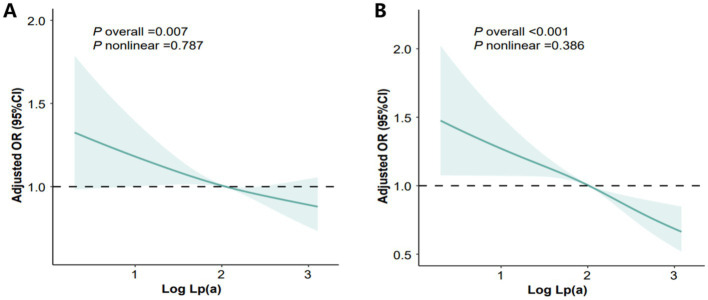 Figure 1
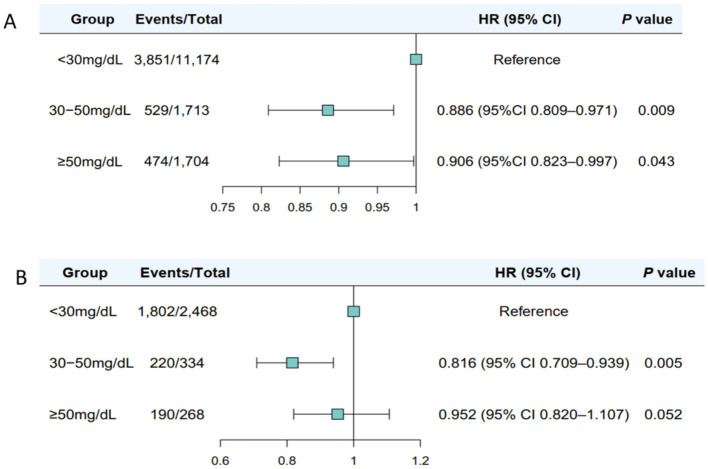 Figure 2
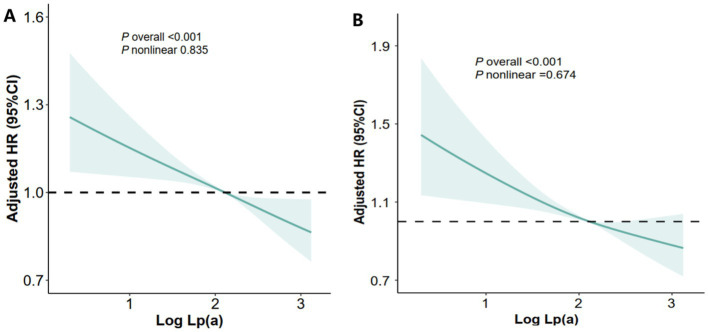 Figure 3
Peer Reviews
No public reviews on file for this paper yet. If you reviewed it on a platform where reviews are public (OpenReview, ICLR, NeurIPS, ICML), you can paste yours below so the community can read it here.
Videos
No videos yet. Explain this paper in a talk, walkthrough, or lecture? Add one.
Taxonomy
TopicsLipoproteins and Cardiovascular Health · Liver Disease Diagnosis and Treatment · Diabetes, Cardiovascular Risks, and Lipoproteins