Untargeted plasma metabolomics in canine cognitive dysfunction: the naturally occurring Alzheimer’s disease analog in dogs
Tonatiuh Melgarejo, Scarlett Harrison, Yan Chang, Miriam Munoz, Maya Kim, Youna Choi, Joyce G. Riveroll-Gonzalez, Barbara Natterson-Horowitz, Annika Linde

TL;DR
This study identifies metabolic changes in dogs with cognitive dysfunction, which could help understand and treat Alzheimer's disease in humans.
Contribution
The first untargeted plasma metabolomic profiling of dogs with CCD, revealing metabolic signatures relevant to Alzheimer's disease.
Findings
Fifteen metabolites across seven chemical classes were significantly altered in CCD dogs.
Elevated lysophosphatidic acid and reduced ubiquinone-2 suggest dysregulation in neuroinflammatory and oxidative stress pathways.
Cholesterol showed the highest fold change and VIP scores, linking it to AD pathogenesis.
Abstract
Canine Cognitive Dysfunction (CCD) is an increasingly prevalent naturally occurring neurodegenerative condition in senescent dogs that share neuropathological and clinical features with human Alzheimer’s disease (AD). Metabolic profiling allows for identification of new candidates for AD biomarkers, diagnostics, and therapeutics. Despite its translational potential, plasma metabolomic profiling of dogs with CDD has not been previously characterized. This case–control study analyzed plasma samples from ten client-owned geriatric dogs, including five with severe CCD and five age-matched, clinically healthy controls. Untargeted plasma metabolomics was performed using ultra-performance liquid chromatography–mass spectrometry (UPLC–MS). Multivariate and univariate statistical analyses identified significant metabolic differences between the groups. Metabolites were considered significant…
Genes, proteins, chemicals, diseases, species, mutations and cell lines named across the full text — each resolved to its canonical identifier and authoritative record.
Click any figure to enlarge with its caption.
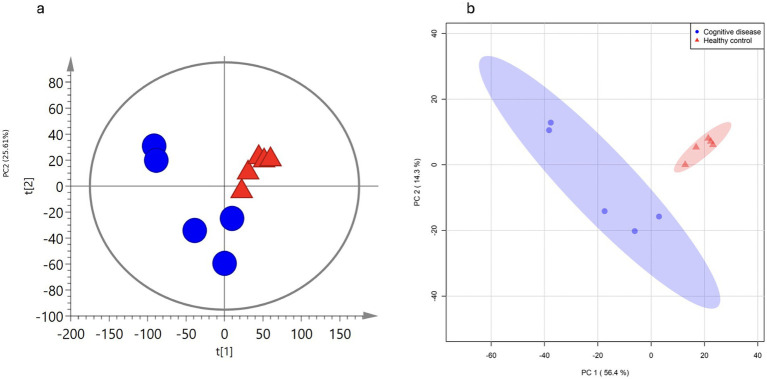 Figure 1
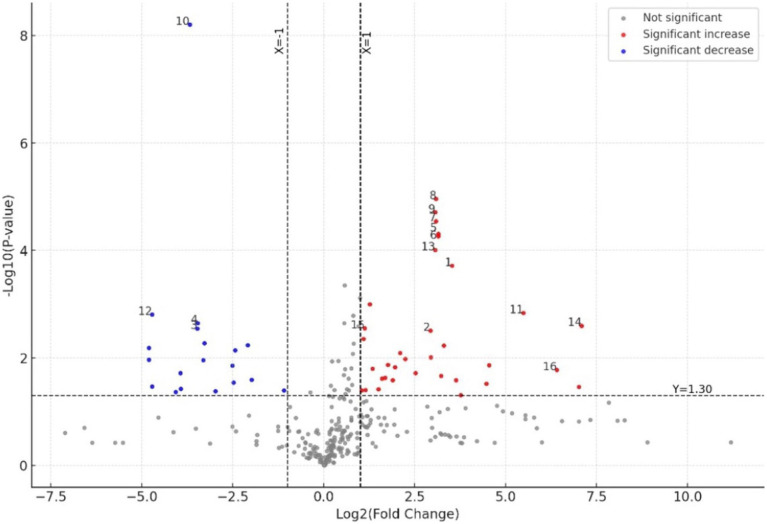 Figure 2
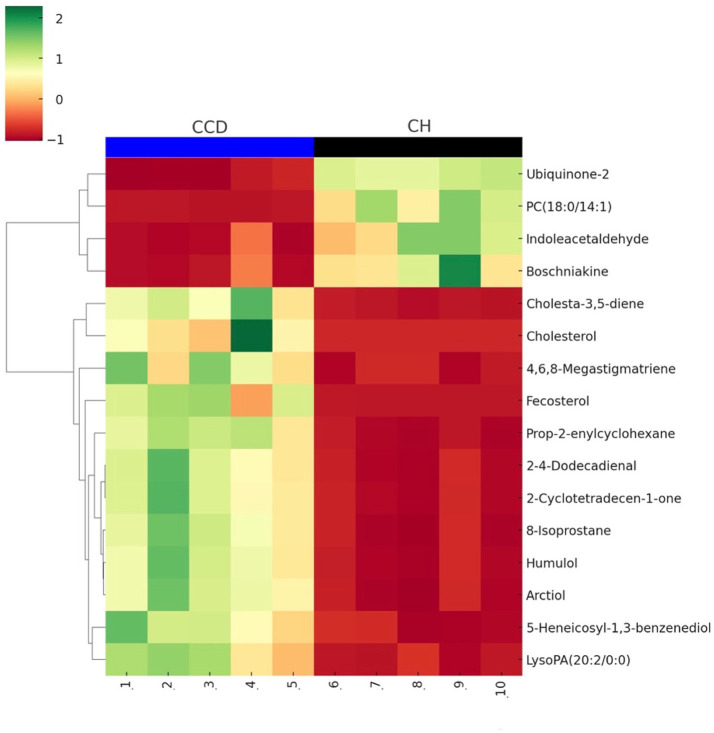 Figure 3
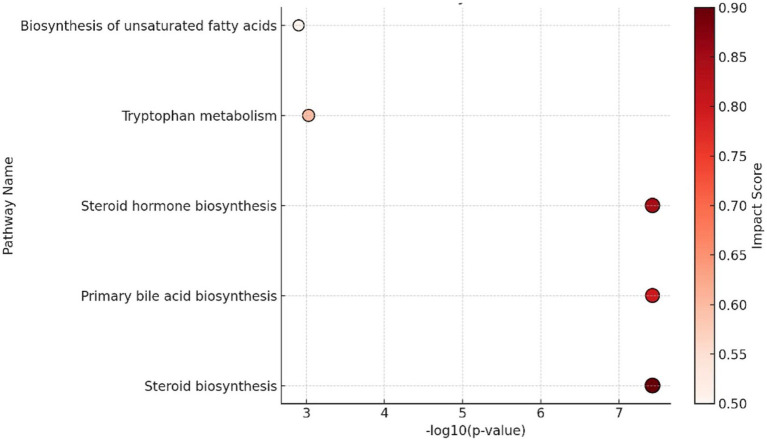 Figure 4
 Figure 5
 Figure 6
Peer Reviews
No public reviews on file for this paper yet. If you reviewed it on a platform where reviews are public (OpenReview, ICLR, NeurIPS, ICML), you can paste yours below so the community can read it here.
Videos
No videos yet. Explain this paper in a talk, walkthrough, or lecture? Add one.
Taxonomy
TopicsHuman-Animal Interaction Studies · Veterinary Medicine and Surgery · Veterinary Oncology Research