TRACE: reconstructing fragmented microbial landscapes for high-resolution antimicrobial resistance surveillance
Xiaolu Bai, Jinli Zhang, Zongli Jiang, Zhihan Jiang, Haoran Liu

TL;DR
TRACE is a new computational framework that improves the detection of antimicrobial resistance by reconstructing fragmented clinical data into detailed microbial profiles.
Contribution
TRACE introduces a novel triple-based reconstruction framework that combines clinical data aggregation with in silico simulation to recover lost microbial signals.
Findings
TRACE achieves a Macro-F1 score of 15.4% and Precision@5 of 70.3% on the MIMIC-IV dataset.
The framework successfully disentangles clinically similar but biologically distinct resistance phenotypes.
TRACE reduces misidentification of rare pathogen-drug combinations by capturing subtle resistance patterns.
Abstract
Comprehensive mapping of Antimicrobial Resistance (AMR) dynamics is a cornerstone of systems microbiology and global health security. However, the precise characterization of microbial interactions within clinical ecosystems is severely confined by the fragmentation of phenotypic evidence. Critical data points, including pathogen identity, anatomical niche, and susceptibility profiles, are often buried within unstructured clinical narratives. This fragmentation creates a blind spot in surveillance, where the ecological signals of rare but critical resistance phenotypes are lost, preventing a systems-level understanding of microbial evolution. To bridge this gap, we propose the Triple-based Reconstruction for Antimicrobial Clinical Evidence (TRACE) framework, a systems-computational approach that treats clinical records as unstructured microbiological sensors. Unlike traditional…
Genes, proteins, chemicals, diseases, species, mutations and cell lines named across the full text — each resolved to its canonical identifier and authoritative record.
Click any figure to enlarge with its caption.
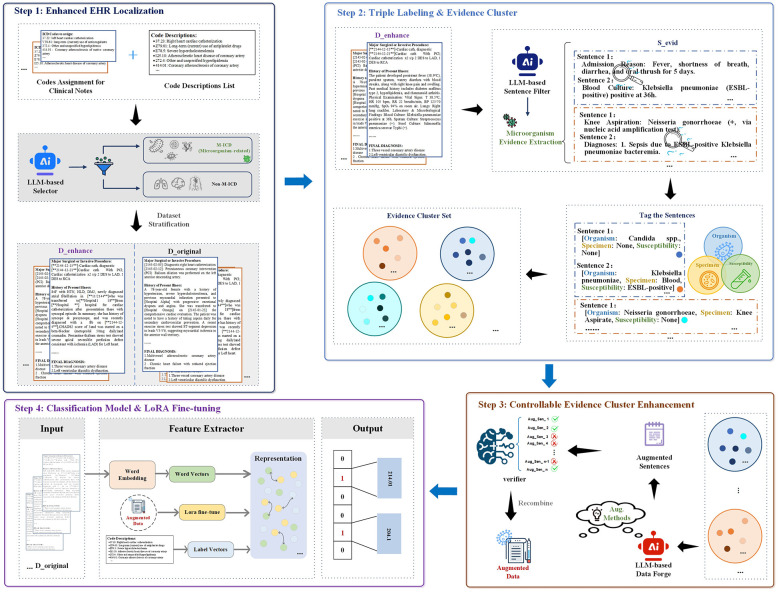 Figure 1
 Figure 2
 Figure 3
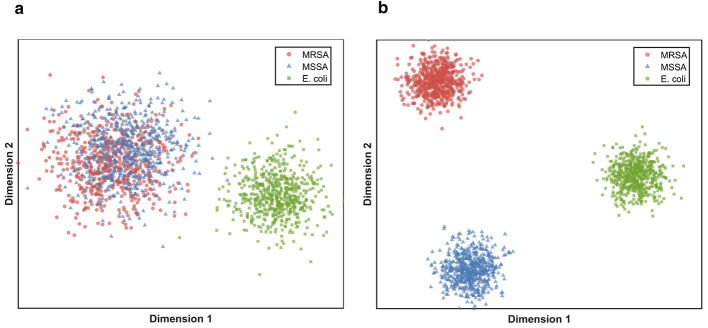 Figure 4
Peer Reviews
No public reviews on file for this paper yet. If you reviewed it on a platform where reviews are public (OpenReview, ICLR, NeurIPS, ICML), you can paste yours below so the community can read it here.
Videos
No videos yet. Explain this paper in a talk, walkthrough, or lecture? Add one.
Taxonomy
TopicsAntibiotic Use and Resistance · Bacterial Identification and Susceptibility Testing · Computational Drug Discovery Methods