A countercurrent microflow strategy for simultaneous high selectivity and conversion in aromatic nitration
Jing Song, Yongqi Pan, Ruobing Xin, Zifei Yan, Tianyao Tang, Kai Wang, Yujun Wang, Jian Deng, Guangsheng Luo

TL;DR
A new microflow strategy improves both conversion and selectivity in aromatic nitration, solving a long-standing trade-off issue.
Contribution
A two-stage countercurrent microflow strategy is introduced to simultaneously enhance conversion and selectivity in aromatic nitration.
Findings
The countercurrent microflow strategy increases spatiotemporal conversion rate by over five times compared to single-stage co-current microflow.
The inhibition mechanism of over-nitration is identified, involving in situ H2O reducing nitroaromatic dissolution.
The microflow strategy achieves high conversion and selectivity without trade-offs across various aromatic substrates.
Abstract
Aromatic nitration, a hazardously complex process, poses serious risks. A major challenge for the reaction is the trade-off effect between spatiotemporal conversion rate and selectivity, particularly the over-nitration side reactions that have plagued the field for nearly 200 years. We propose a countercurrent microflow mode between two microreactors, which boosts spatiotemporal conversion rate by over five times compared to the normal single-stage co-current microflow mode, and two orders of magnitude compared to traditional batch reactors. Meanwhile, we identify an inhibition mechanism of over-nitration. The generated H2O in the main reaction can in situ reduce the dissolution of nitroaromatics in the aqueous phase and effectively prevent over-nitration. Through synergistic control of both kinetics and thermodynamics in the microreaction process, high spatiotemporal conversion and…
Genes, proteins, chemicals, diseases, species, mutations and cell lines named across the full text — each resolved to its canonical identifier and authoritative record.
Click any figure to enlarge with its caption.
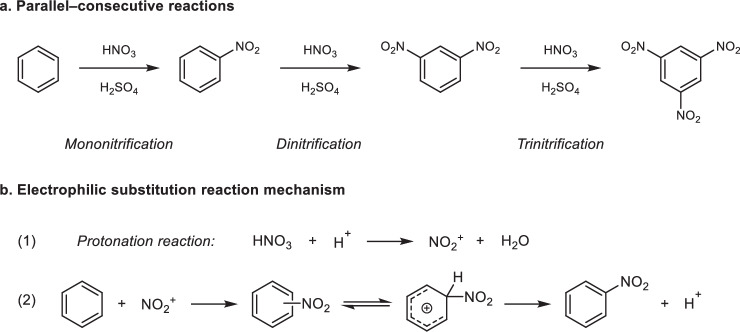 Figure 1
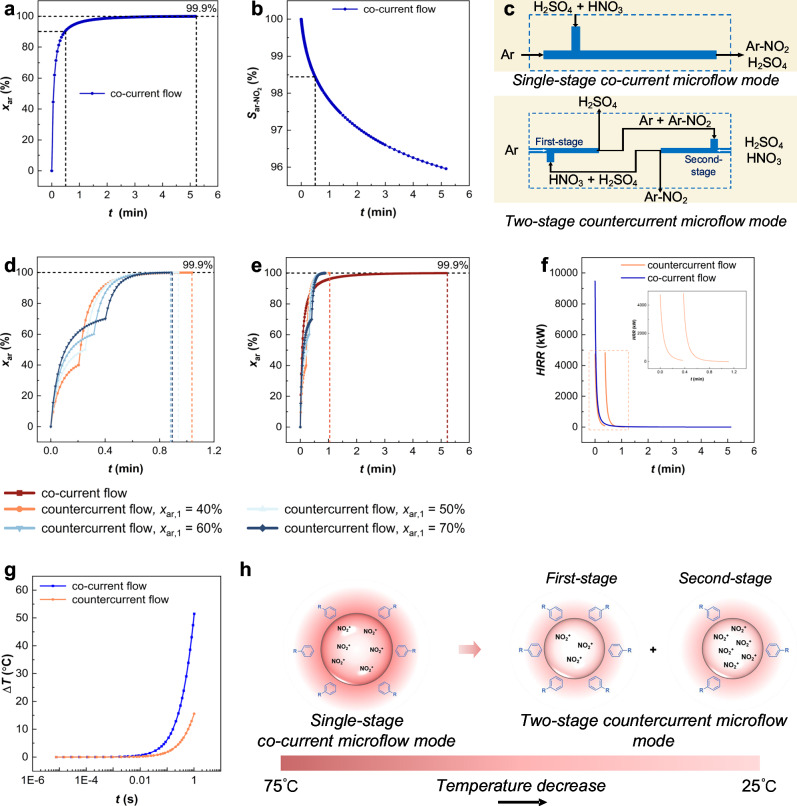 Figure 2
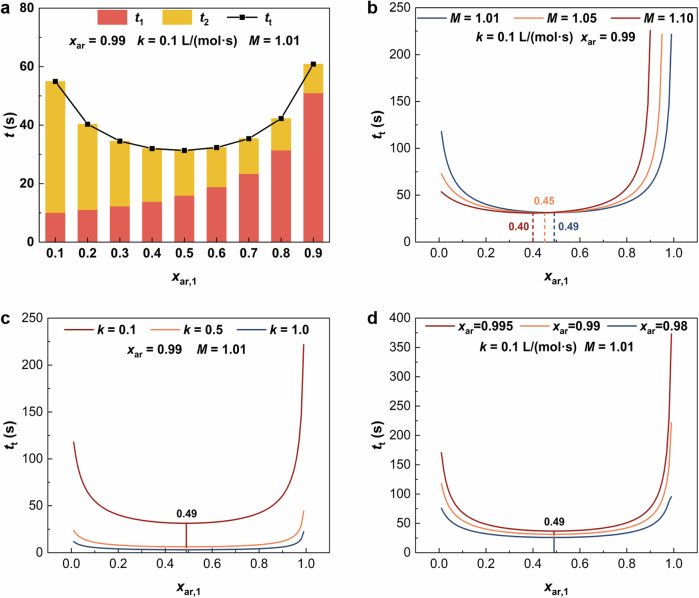 Figure 3
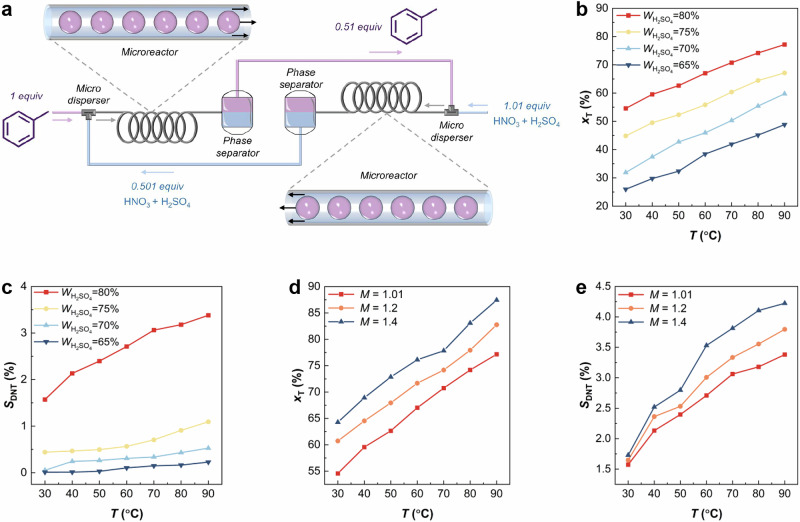 Figure 4
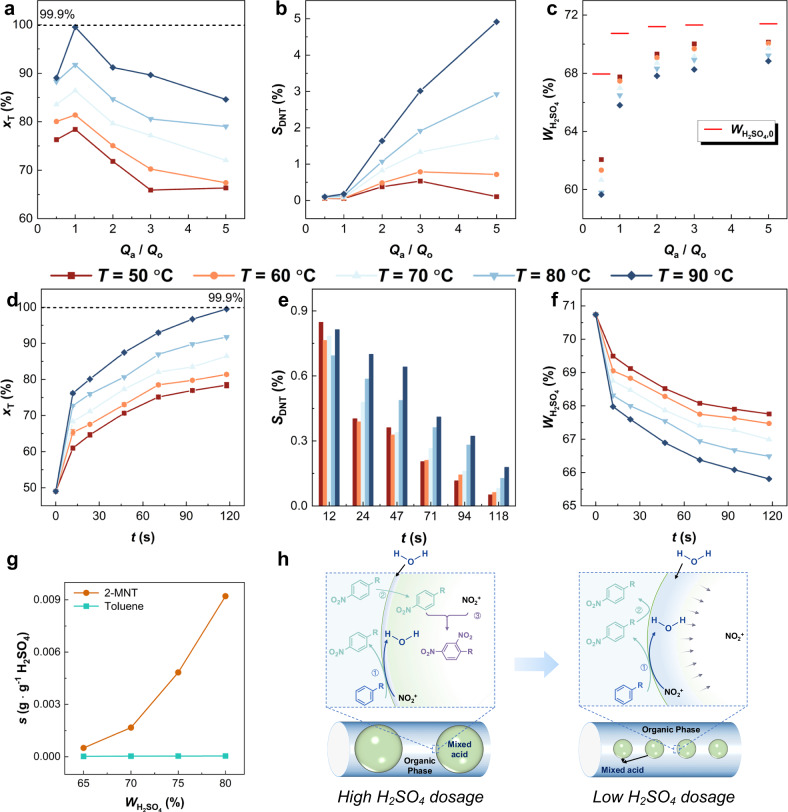 Figure 5
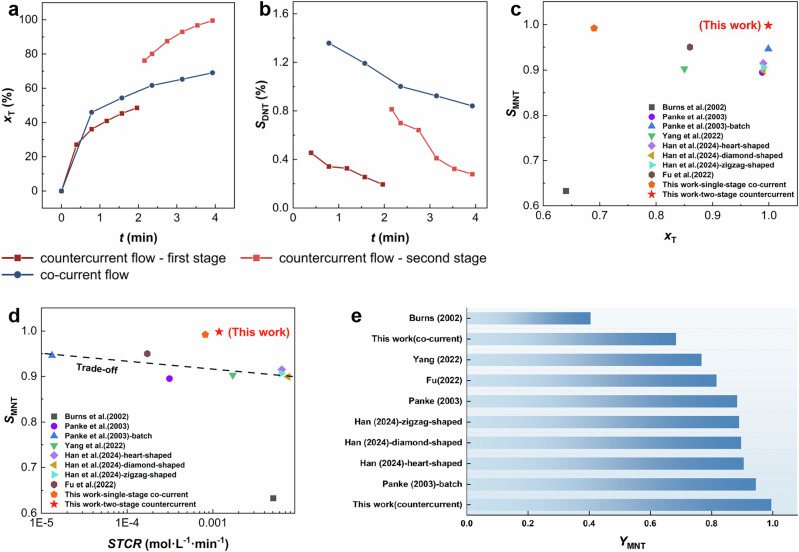 Figure 6
Peer Reviews
No public reviews on file for this paper yet. If you reviewed it on a platform where reviews are public (OpenReview, ICLR, NeurIPS, ICML), you can paste yours below so the community can read it here.
Videos
No videos yet. Explain this paper in a talk, walkthrough, or lecture? Add one.
Taxonomy
TopicsInnovative Microfluidic and Catalytic Techniques Innovation · Nanomaterials for catalytic reactions · Environmental remediation with nanomaterials