Eco-sustainable magnetoresistive sensors towards disposable magnetoelectronics
Lin Guo, Rui Xu, Proloy Taran Das, Eduardo Sergio Oliveros-Mata, Xuan Peng, Oleksandr V. Pylypovskyi, René Hübner, Fabian Ganss, Xiaotao Wang, Yi Li, Sebastian Gepp, Yevhen Zabila, Xilai Bao, Shengbin Li, Qihao Zhang, Igor Veremchuk, Željko Janićijević, Larysa Baraban

TL;DR
This paper introduces eco-friendly magnetoresistive sensors made with sustainable materials and high sensitivity, enabling disposable electronics that are biodegradable and safe for the environment.
Contribution
The novel contribution is the development of biodegradable, high-performance magnetoresistive sensors using eco-friendly materials and printing techniques.
Findings
The sensors are fabricated using screen-printing with eco-friendly inks containing Fe/Fe3O4 core-shell particles and biodegradable binders.
The sensors exhibit an order-of-magnitude improvement in low-field sensitivity compared to traditional printed magnetoresistive sensors.
The approach enables disposable magnetoelectronics with biocompatibility and environmental sustainability.
Abstract
This work presents a holistic integration of environmental sustainability and enhanced sensing performance throughout the full lifecycle of magnetoresistive sensors. Utilizing industry-scale screen-printing techniques combined with eco-friendly inks (formulated from engineered Fe/Fe3O4 core-shell magnetic microparticles, bioderived polymeric binders, and water solvent), the fabrication process avoids harsh treatments and hazardous chemicals. The resulting sensors, constructed entirely from naturally sourced materials, inherently exhibit biocompatibility, biodegradability, and environmentally benign recyclability. These properties collectively demonstrate key attributes for a sustainable life cycle. Through rational engineering of the Fe/Fe3O4 core-shell structure particles, two synergistic mechanisms are activated within the composite: spin-dependent hopping across Fe3O4 shell grain…
Genes, proteins, chemicals, diseases, species, mutations and cell lines named across the full text — each resolved to its canonical identifier and authoritative record.
Click any figure to enlarge with its caption.
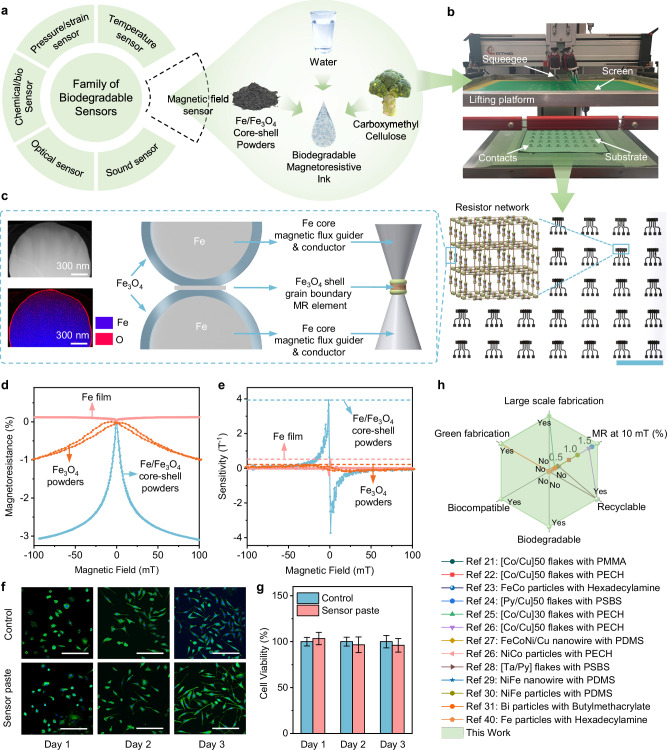 Figure 1
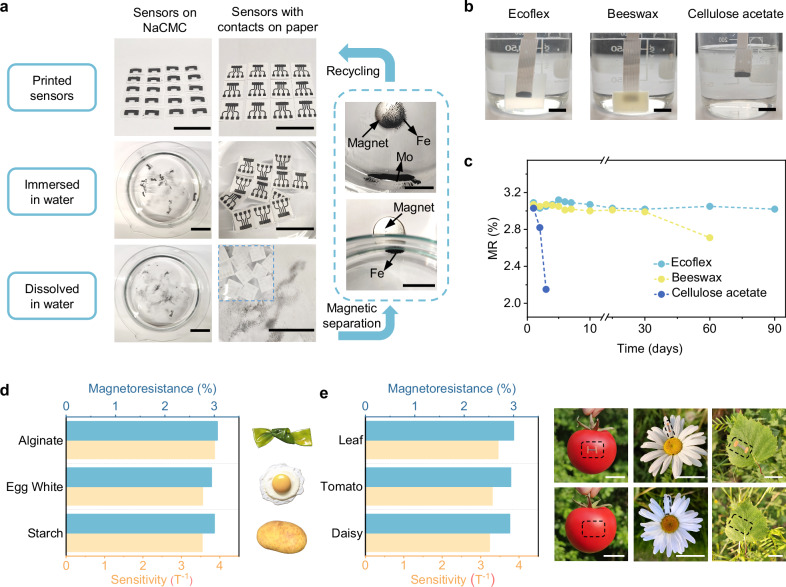 Figure 2
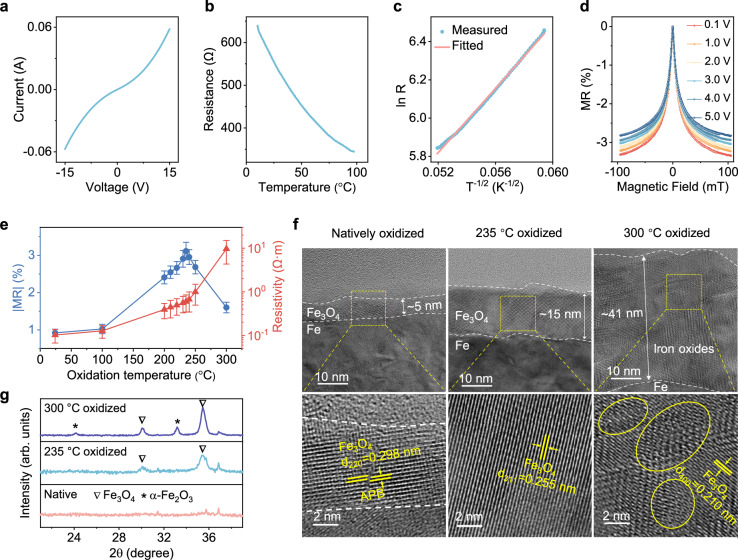 Figure 3
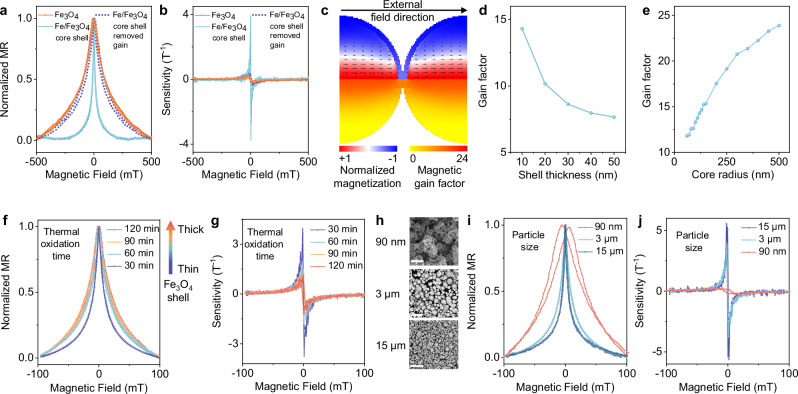 Figure 4
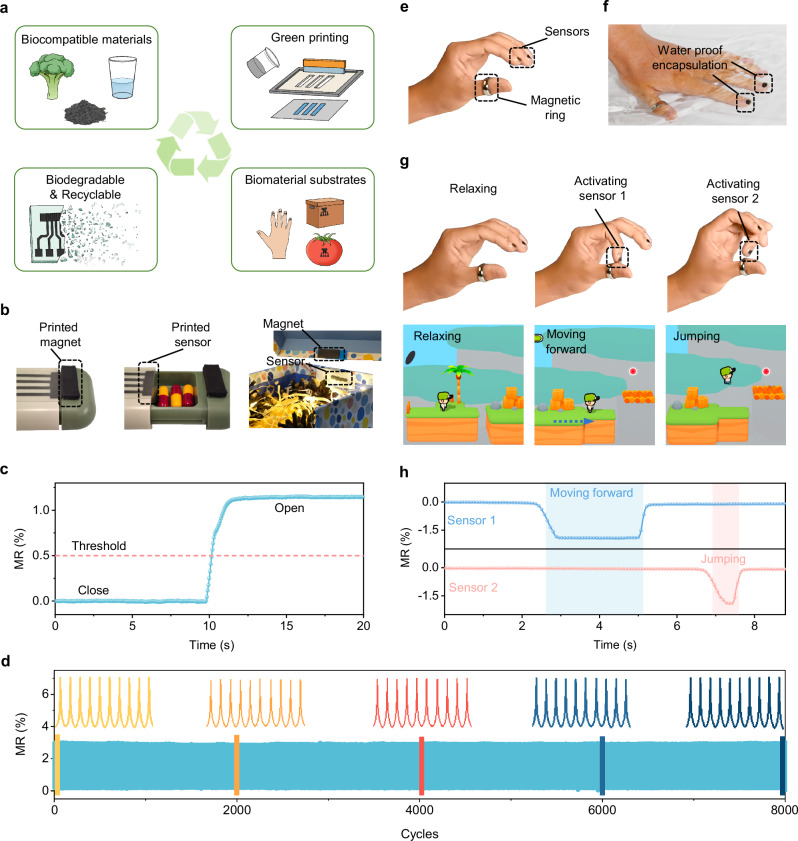 Figure 5
Peer Reviews
No public reviews on file for this paper yet. If you reviewed it on a platform where reviews are public (OpenReview, ICLR, NeurIPS, ICML), you can paste yours below so the community can read it here.
Videos
No videos yet. Explain this paper in a talk, walkthrough, or lecture? Add one.
Taxonomy
TopicsAdvanced Sensor and Energy Harvesting Materials · Magnetic Properties and Synthesis of Ferrites · Nanomaterials and Printing Technologies